What are common causes of a wide QRS complex?
Bundle branch block
Fascicular block
Pacing
Pre-excitation / WPW
Drug-induced
if electrical activity has to travel outside of the ventricular conduction system, this makes the ____ wide.
QRS
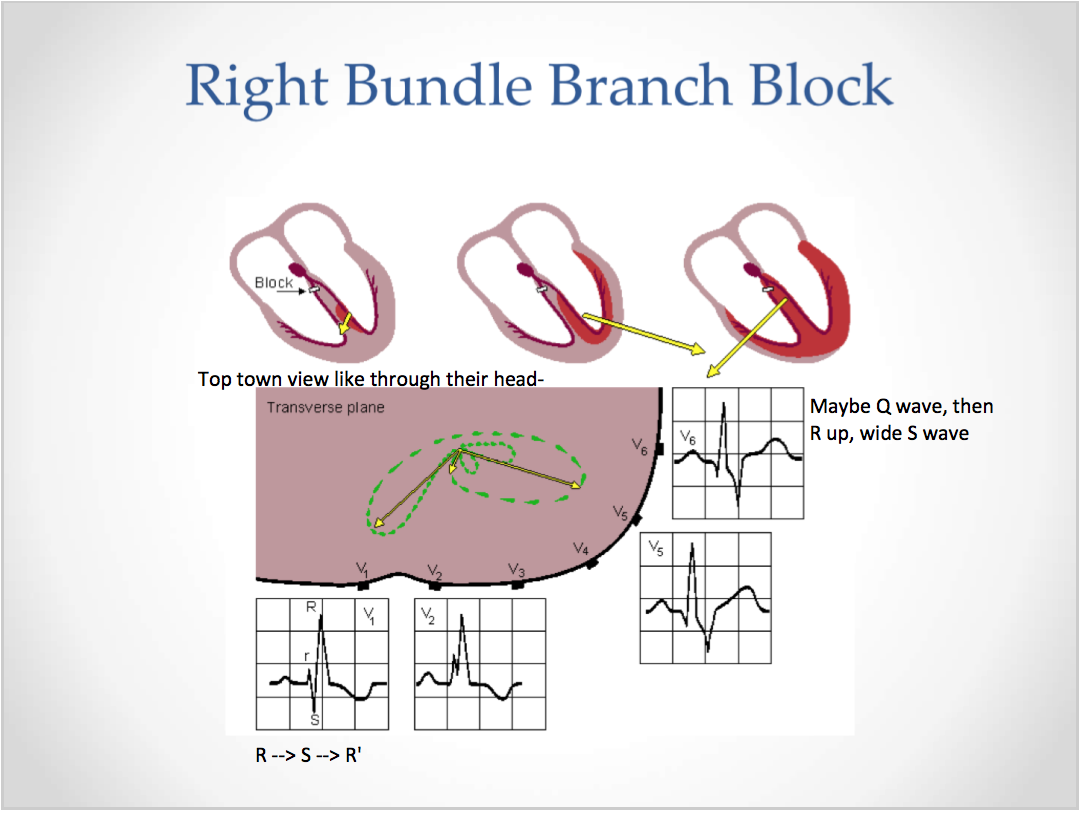
What EKG findings are characteristic of a right bundle branch block?
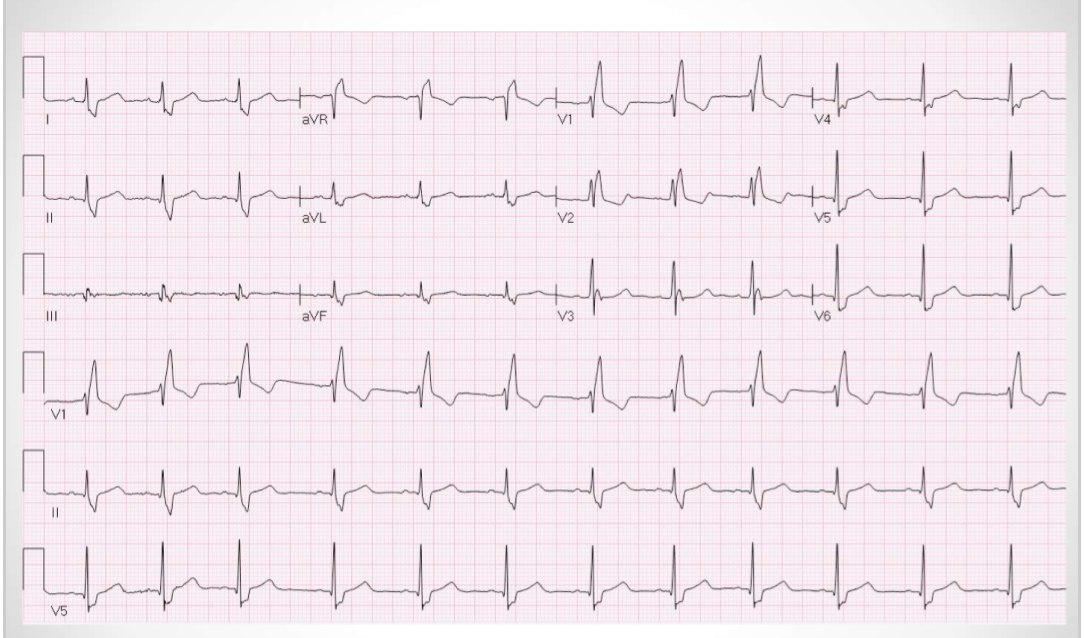
Prolongation of QRS to >120ms
rSR’ pattern or notched R wave in V1
Wide S wave in Lead I and V6
- (if this same pattern exists but the QRS is between 100-120ms, this is an incomplete RBBB. )*
- (Secondary T wave inversions in the right precordial that show a dominant R’ (V1-3)*
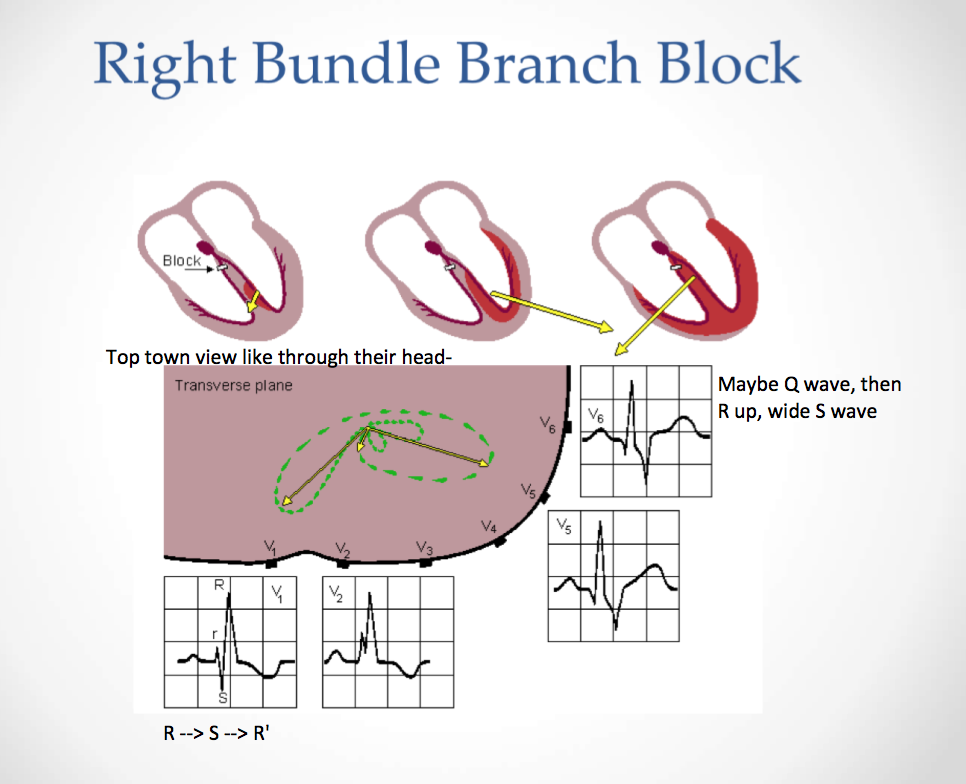
Findings in V1 with RBBB:
rSR’ pattern or notched R wave
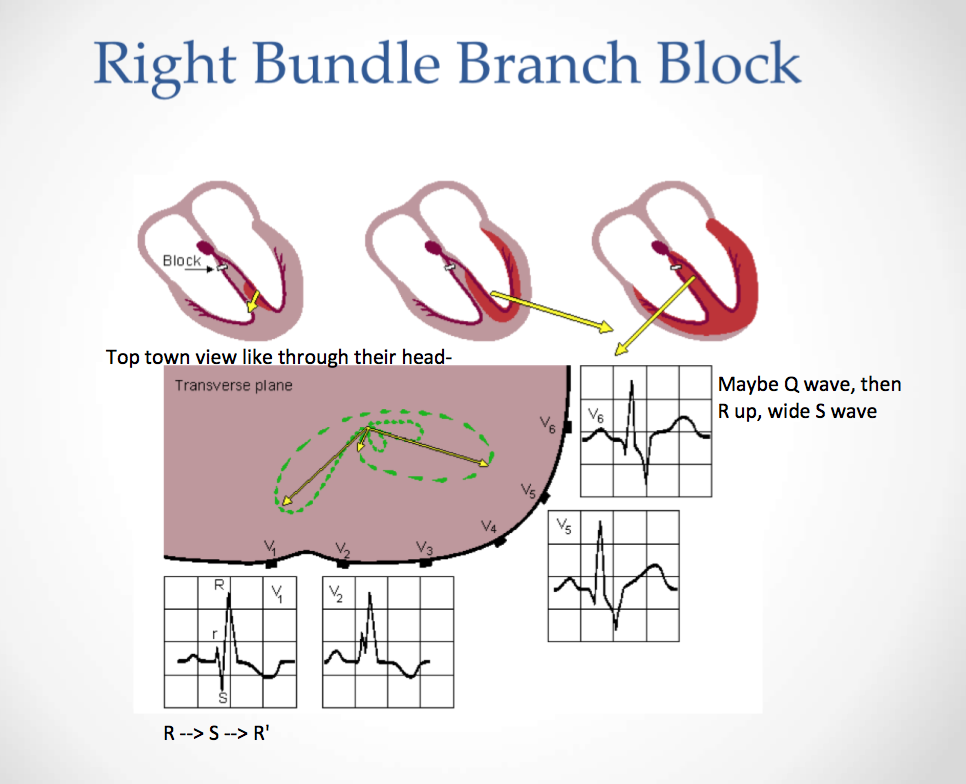
Findings in V6 with RBBB:
Wide S wave
What are potential clinical causes of a RBBB?
(Normal in ~3%)
Organic heart disease
- Atrial septal defect
- Pulmonary hypertension
- Valvular lesions
Degenerative changes in conduction system
Chronic coronary artery disease
Pulmonary embolism
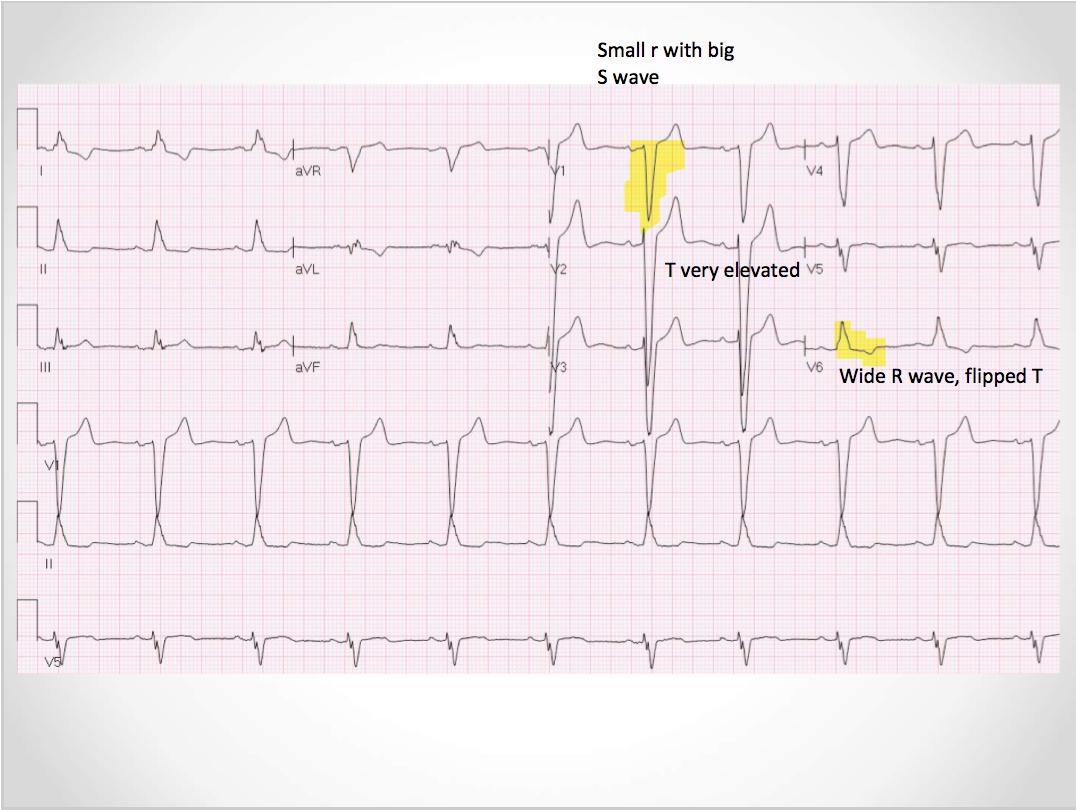
What EKG findings are characteristic of a LBBB?
Prolongation of QRS to >120 ms
rS or QS wave in V1
Broad and notched or slurred R wave in Lead I and V6
Absence of Q waves in Lead I and V6
- (if same pattern but QRS is between 100-120ms = incomplete LBBB)*
- (T wave changes opposite to the major QRS deflection)*
What are potential clinical causes of a LBBB?
Organic disease
- Hypertensive heart disease
- Coronary artery disease
- Cardiomyopathy
- Valvular heart disease (aortic stenosis)
Degenerative changes in conduction system
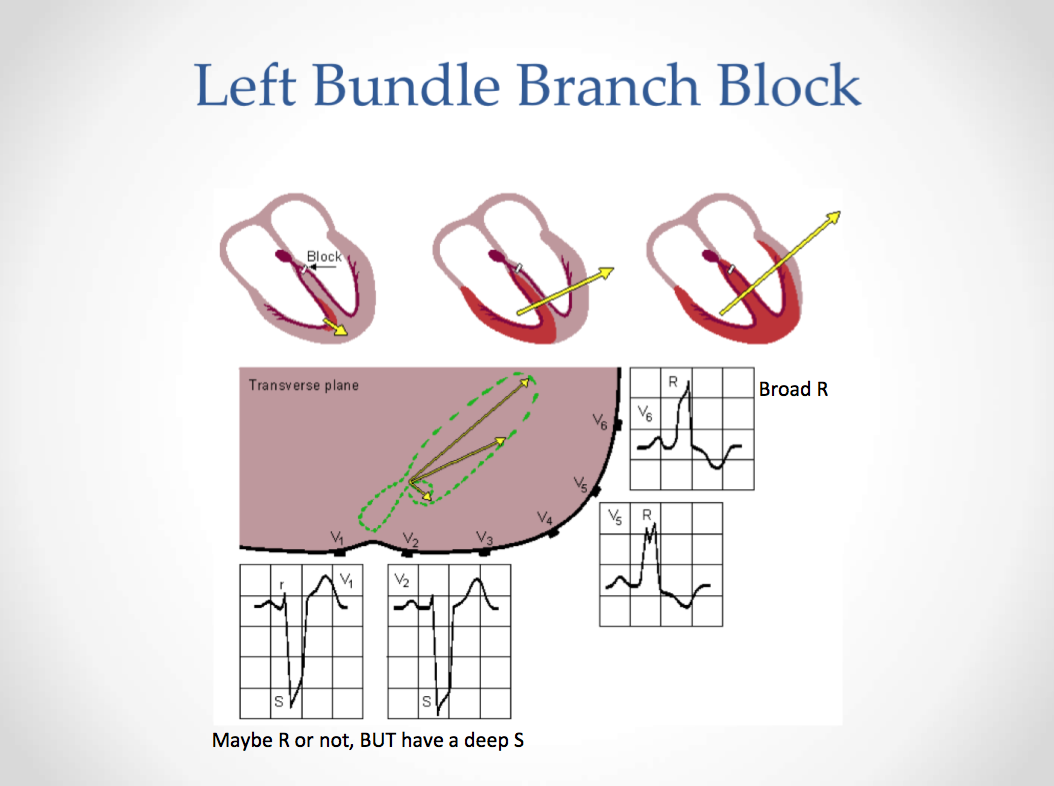
Findings in V1 with LBBB:
rS or QS wave in V1
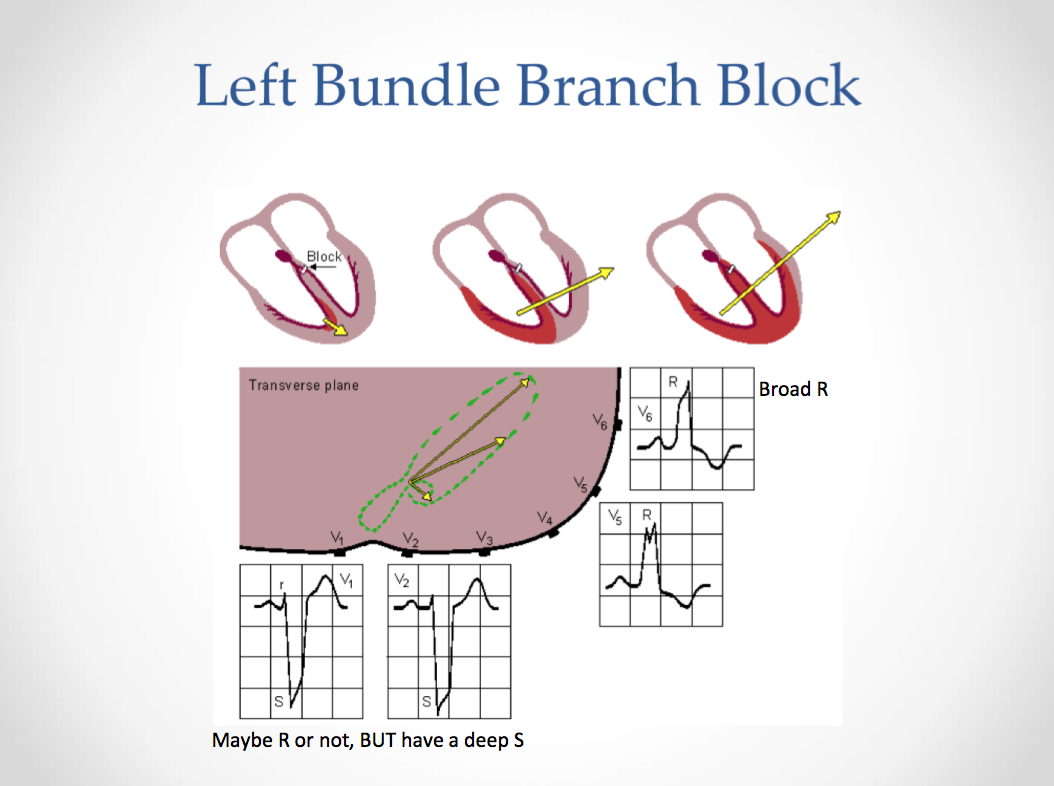
Findings in V6 with LBBB:
Broad and notched or slurred R wave
Absence of Q waves
The left anterior fascicle is ____(superior/inferior) and _____ (leftward/rightward).
The left posterior fascicle is ____(superior/inferior) and _____ (leftward/rightward).
The left anterior fascicle is SUPERIOR and LEFTWARD.
The left posterior fascicle is INFERIOR and RIGHTWARD.
EKG findings of a Left Anterior Fascicular Block:
(Look at limb leads)
QRS width less than 120ms (unless coexistant RBBB)
QRS axis is < -45 or -30 degrees (leftward shift)
qR in aVL
rS in aVF
EKG findings of a Left Posterior Fascicular Block:
Limb leads
QRS width less than 120 ms unless coexistant with RBBB
Axis >120 degrees (right shift)
rS in aVL
qR in aVF
Rare - need to rule out other causes of right axis deviation
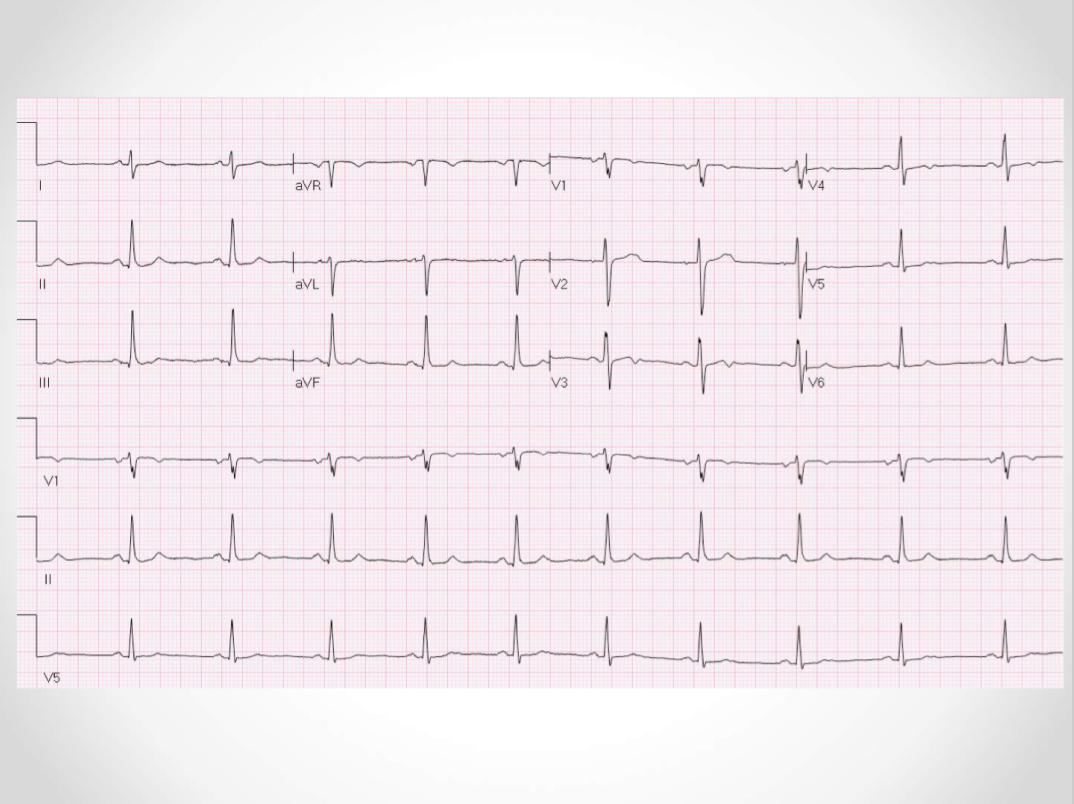
A right axis shift might suggest a _____ block, whereas a left axis shift might suggest a ____ block.
A right axis shift might suggest a left posterior fascicular block, whereas a left axis shift might suggest a left anterior fascicular block.
An isolated fascicular block is usually _____, although it may indicate underlying _____.
An isolated fascicular block is usually insignificant, although it may indicate underlying heart disease.
When a fascicular block is combined with a _____, this is known as a bifascicular block.
When a fascicular block is combined with a RBBB, this is known as a bifascicular block.
When a fascicular block is combined with a RBBB, this is known as a _______.
When a fascicular block is combined with a RBBB, this is known as a bifascicular block.
If a patient with a bifascicular block begins having symptoms (e.g. syncope), theu may need a _____.
pacemaker
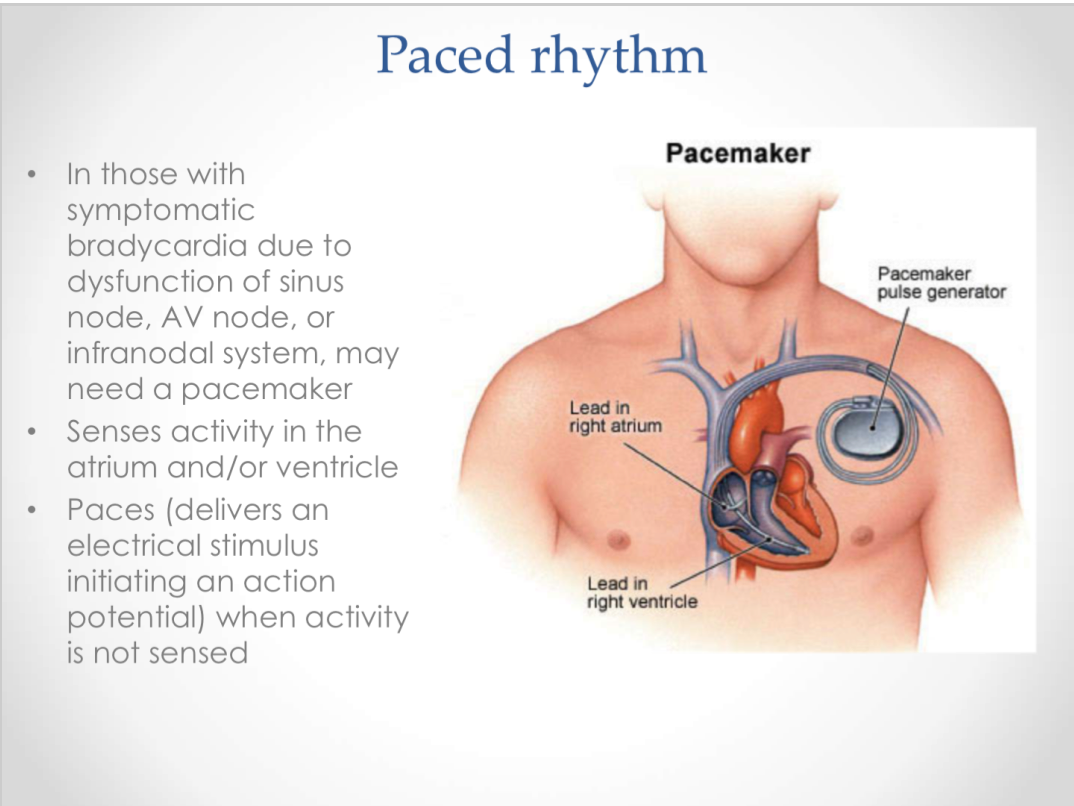
What problems might necessitate a pacemaker?
Symptomatic bradycardia due to dysfunction of:
- sinus node,
- AV node, or
- infranodal system
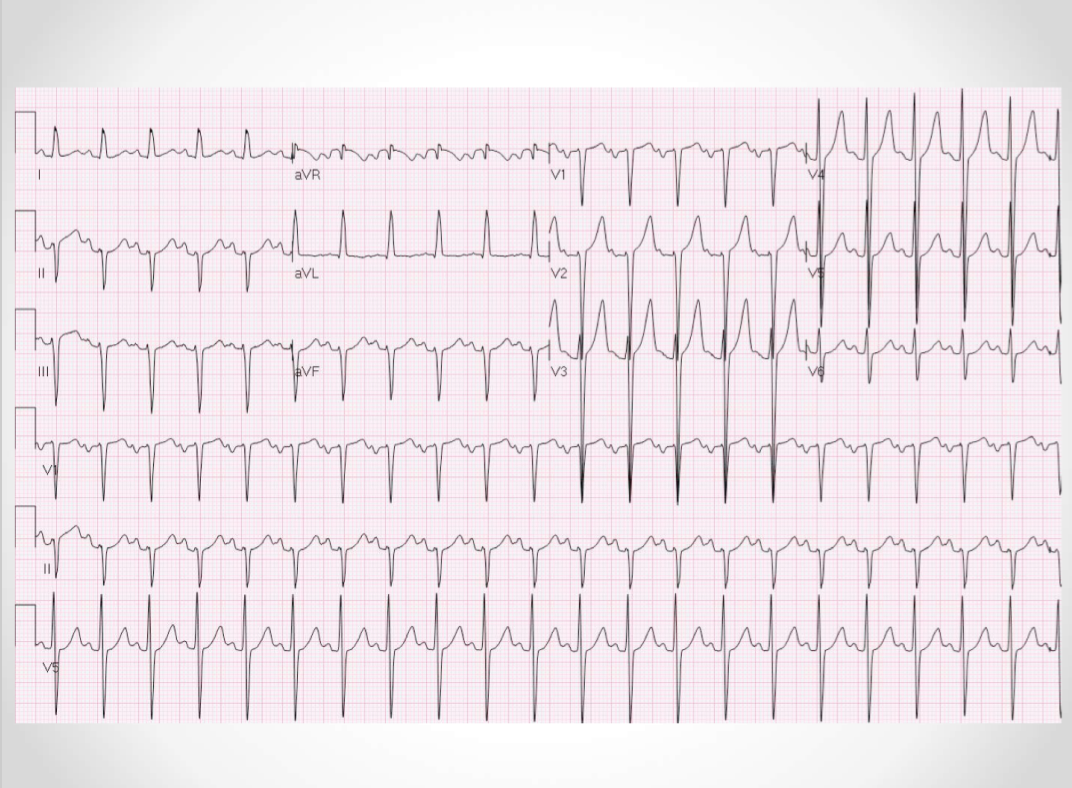
This EKG tracing suggests what about the patient?
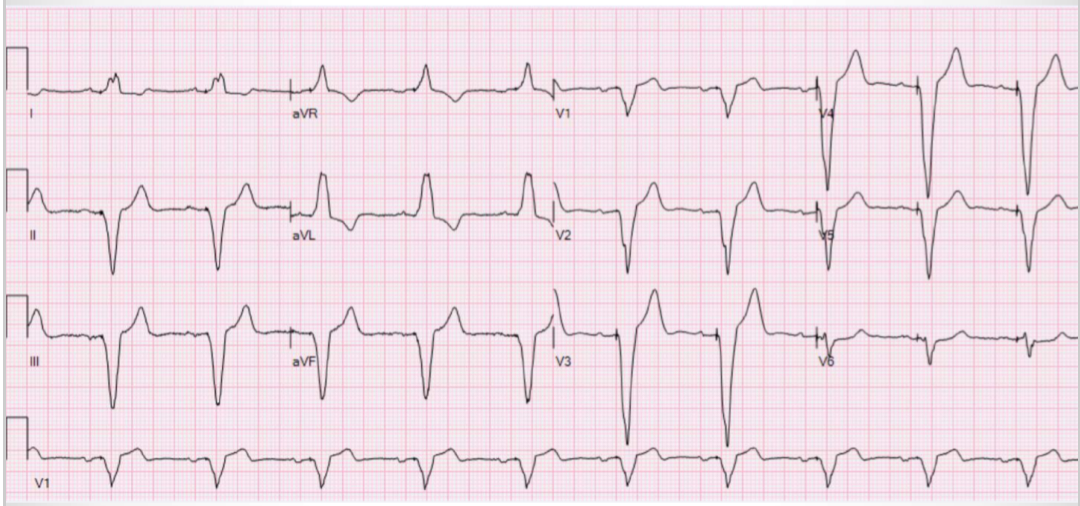
They are being ventricularly paced
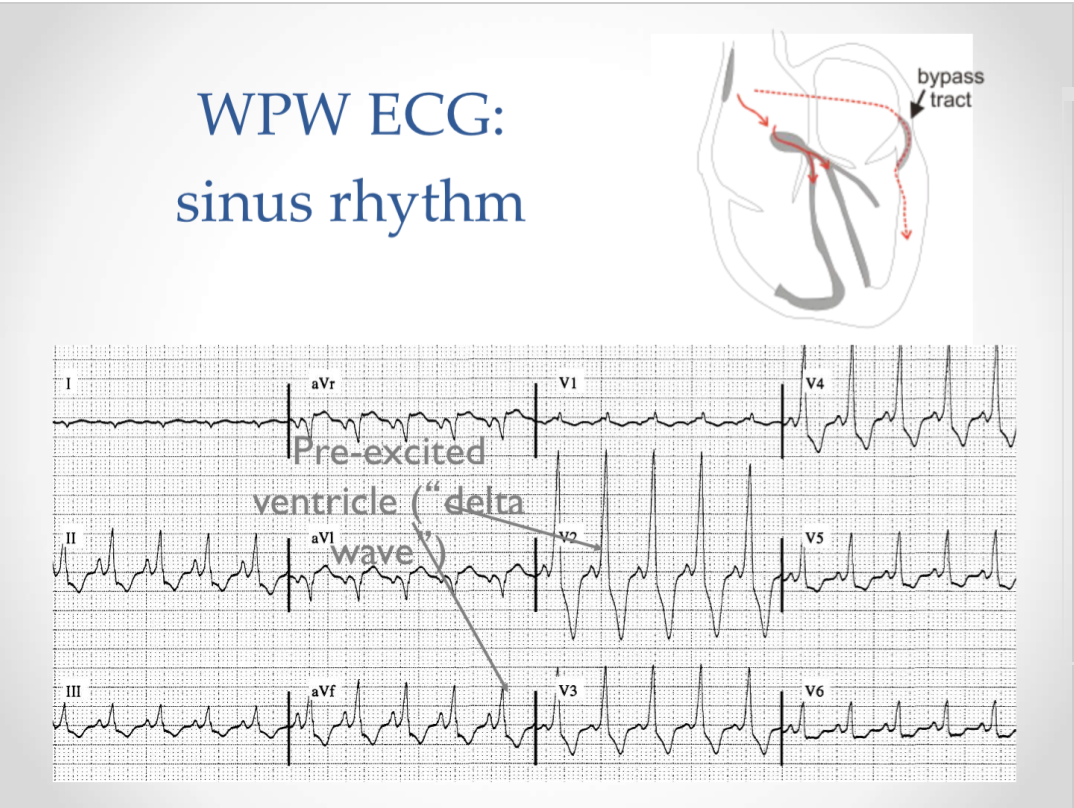
What is structurally abnormal in a WBW patient?
There is a bypass tract present between the atria and ventricles. This allows electrical activity to spread to the AV node normally, but some activity will encounter the bypass tract and travel through this route.
Signals will be appropriately delayed at the AV node but NOT at the bypass tract, so the P wave is immediately followed by the QRS.
The bypass tract depolarizes slowly, however, so the QRS complex is wide.
Drugs that serve as ___-channel blockers might cause a widened QRS complex. Why?
Na-channel blockers
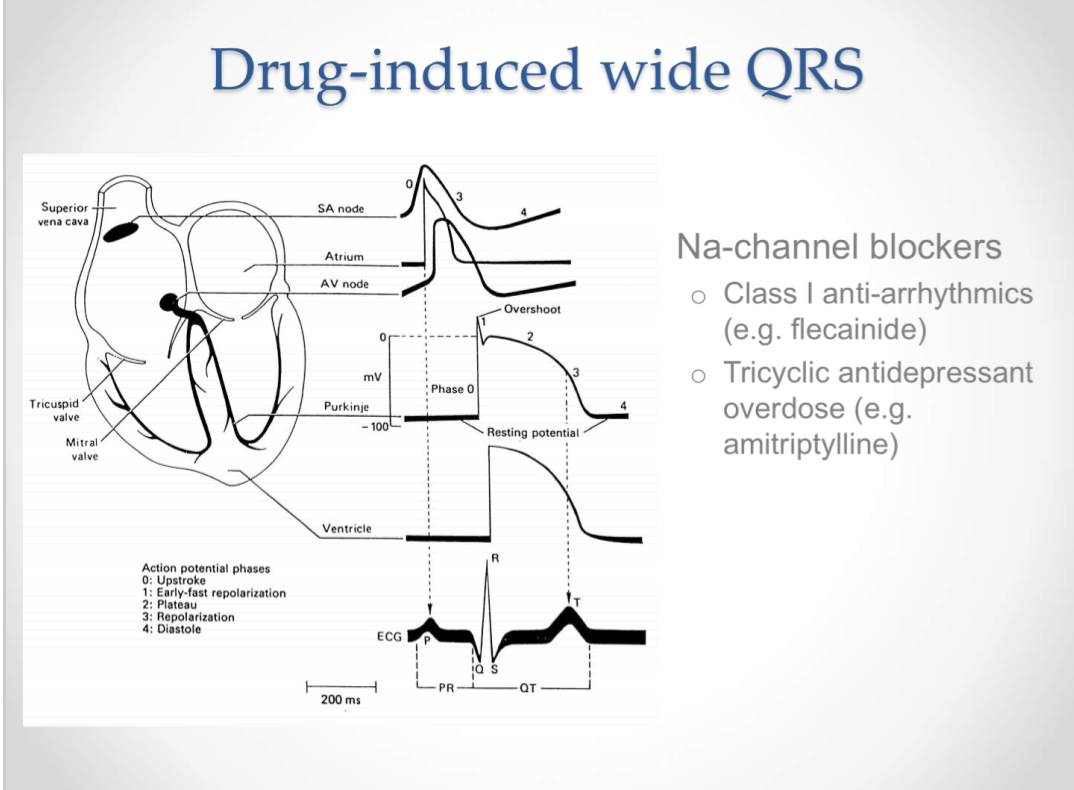
This slows the phase 0 of cardiac myocytes, because phase 0 relies on these channels for rapid depolarization.
Blocking Na channels thus slows QRS.
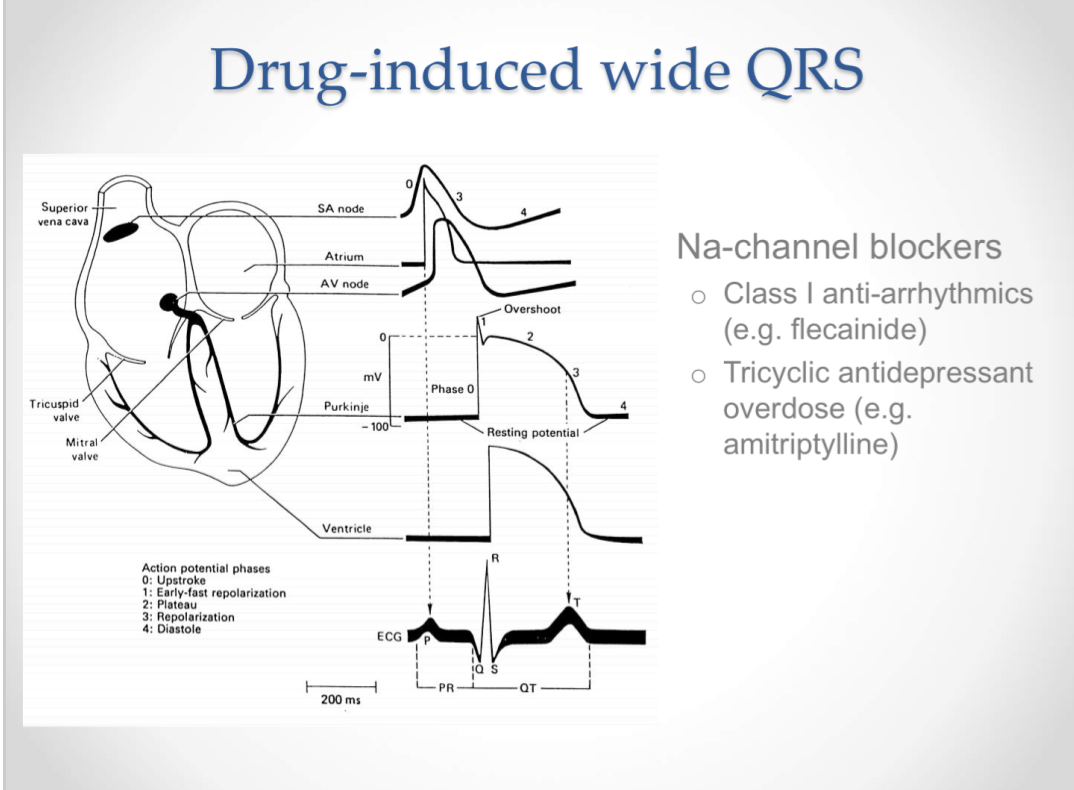
Examples of Na-channel blockers:
Class I anti-arrhythmics (e.g. flecainide)
Tricyclic antidepressant (e.g. amitriptylline)
Potential causes of a small QRS complex:
Dampening effect of fluid, air, fat between heart and electrodes (e.g. pericardial or pleural effusion, obesity, emphysema, or pneumothorax)
Loss of viable myocardium (e.g. end-stage ischemic or non-ischemic heart failure)
Diffuse infiltration or myxoedematous involvement aka protein infiltration (amyloidosis, hypothyroidism)






