Electrocardiography Flashcards

(40 cards)

1
Q

What does electrocardiography do

A

measures electrical activity in the heart

2
Q

What is an ECG used for

A

determine heart rate

conduction disturbances due to:

chamber enlargement

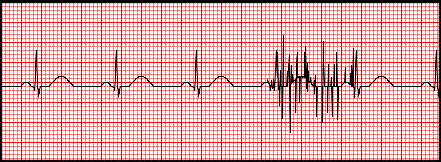
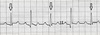
electrolyte disturbances

myocardial ischemia (mainly in humans)

3
Q

What is the flow of normal electrical impulses in the heart

A

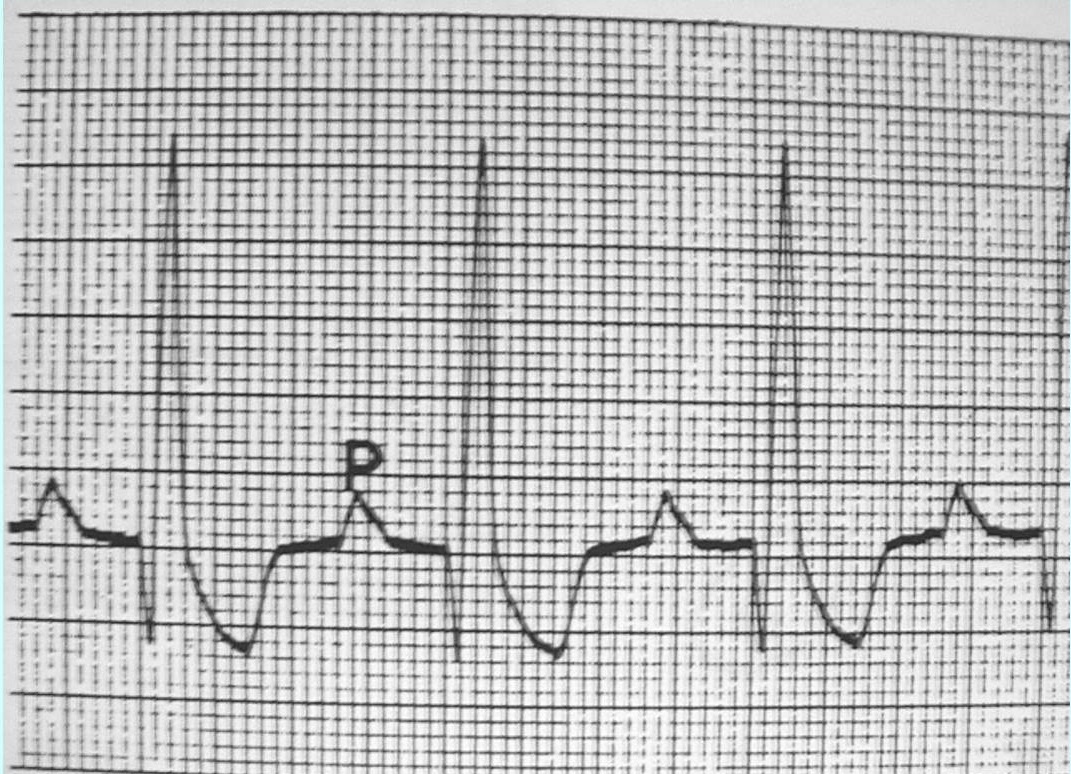
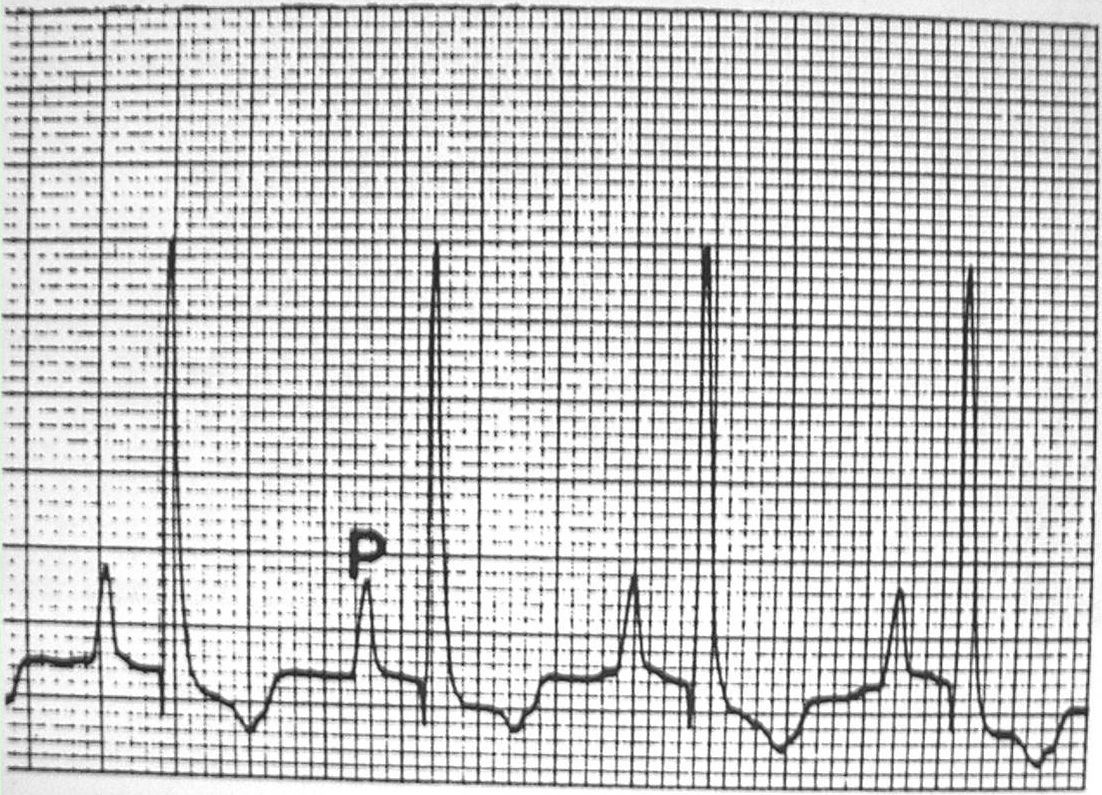
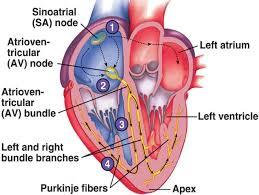
starts at SA node→AV node→Bundle of His→L & R bundle branches and lastly to the Purkinje fibers
4
Q

what are the different parts of an ECG and what do they represent

A

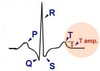
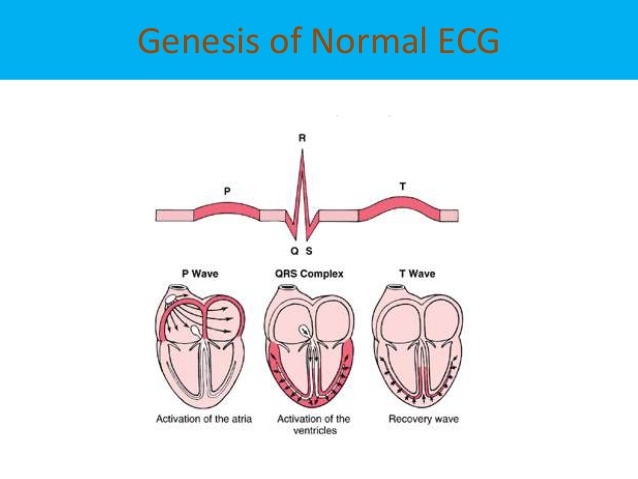
SA node fires sending signal to atria to contract, that gives the P wave

then the signal continues through AV node, bundle of His, bundle branches & Purkinje fiber and the QRS complex starts representing ventricular depolarization (which should in turn lead to ventricular contraction)

then when the ventricles repolarize the T wave appears

and the cycle starts again
5
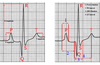
Q

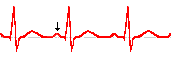
Name this part of ECG

A

P wave

6
Q

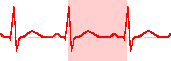
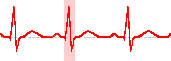
Name this part of ECG segment

A

R-R interval

7
Q

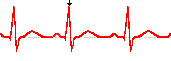
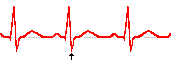
Name this part of ECG segment

A

R wave

8
Q

Name this part of ECG segment

A

ST segment

9
Q

Name this part of ECG segment

A

S wave

10
Q

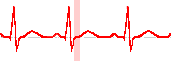
Name this part of ECG segment

A

QRS wave

11
Q

where do you put the leads for an regular ECG on a dog

A

with animal in R lateral position on non metallic surface

white lead on right elbow

black lead on left elbow

red lead on left stifle

green lead on right stifle

12
Q

where do you put ECG leads on horse

A

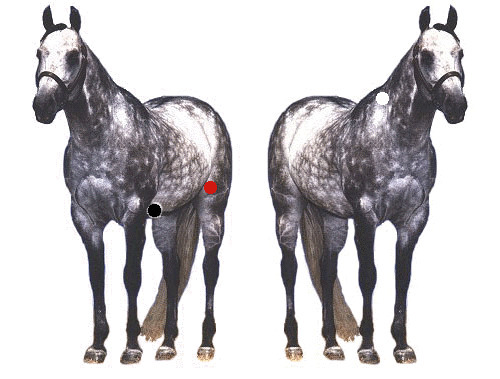
White at base of neck cranial to shoulder on R side

Red on left stifle

Black on PMI of apical beat on L chest

Use Lead I to record
13
Q

what is normal speed of ECG

what is voltage of 1 small box on ECG strip

what is voltage of 2 big boxes on ECG strip

A

50mm/sec → 1mm = 0.02sec

1 mm = 0.1mV

1 cm = 1 mV

14
Q

what are some artifacts that can interfere with ECG interp

A

60 Hz electrical interference

Motion

Purring

15
Q

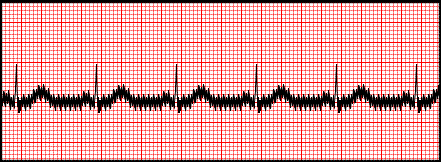
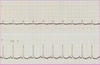
What type of artifact is seen here

A

60 Hz

16
Q

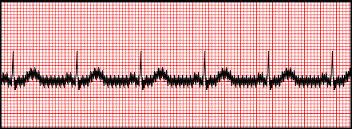
What artifact is seen here

A

purring

17
Q

What artifact is seen here

A

muscle tremors/motion

18
Q

what are the steps in interpreting and ECG

A
  1. determine if artifacts present
  2. figure heart rate
  3. assess atrial size
  4. assess ventricular size
  5. assess ST segment
  6. asses QT segment
  7. assess T wave
19
Q

Measuring complexes & intervals, why

A

differences from normal range can indicate where the abnormality lies

20
Q

what are we looking for when we look at P wave

why

A

whether it is too tall or wide or both

gives an idea of atrial size

21
Q

what are the mnemonics for P wave

A

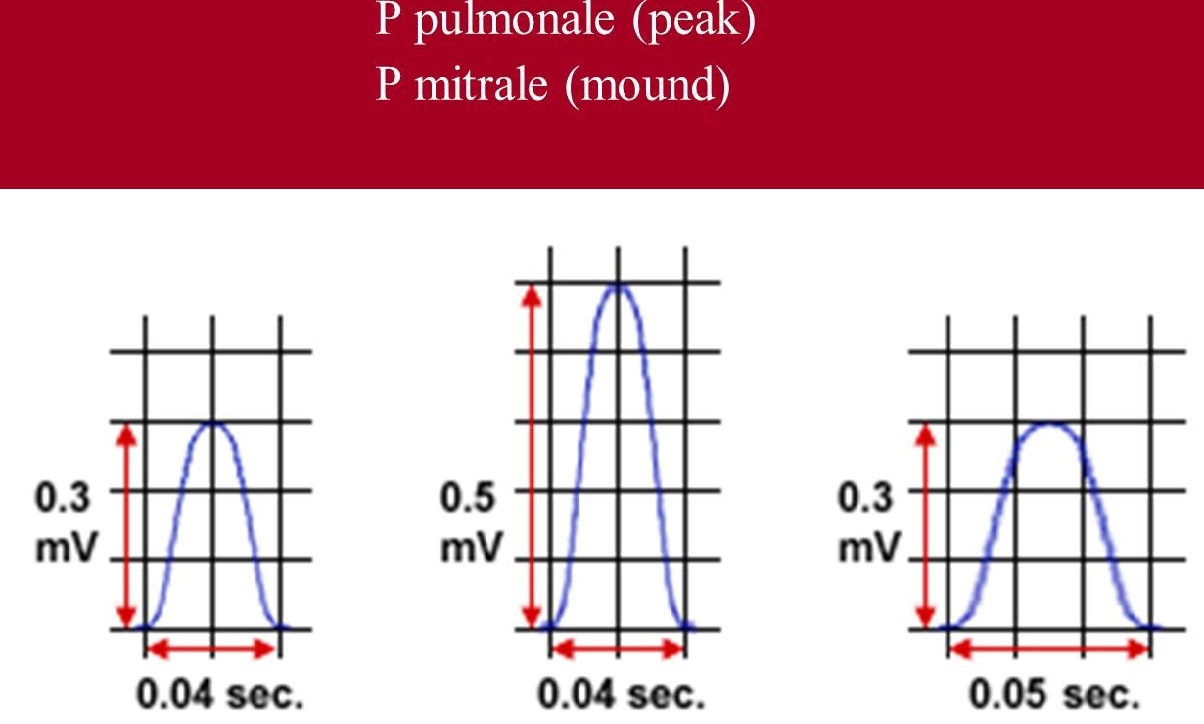
P pulmonlale = peak (think pulmonary valve → R atria)

P mitrale = mound (think mitral valve → L atria)
22
Q

what is considered normal for P wave

A

no taller than 0.3 mV (3 boxes)

no wider than 0.04 sec (2 boxes)

23
Q

what does this ECG indicate

A

L atrial enlargement

24
Q

what does this ECG indicate

A

Right atrial enlargement

25
How can you see ventricular enlargement on ECG
R wave that is greater than 3.0 mV (3.5 in giant breed dogs) measured from baseline
26
Is it possible to see RV enlargement on ECG
Not really since the greater muscle mass of LV shows the most electrical activity (is most prominent), it hides the electrical impulses of the RV
27
LV enlargement detected?
YES! counting from baseline R wave is 3.5 mV tall
28
LV enlargement detected in a cat? What could it be caused by?
YES! When measured the R wave is greater than 0.9 mV! Hypertrophic Cardiomyopathy (HCM)
29
What may indicate RV hypertrophy in a dog? Most common cause?
Deep S wave in lead II (\>3.5mm) Heartworms
30
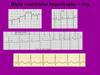
What is R bundle branch block (RBBB)?
There is a lesion along the right bundle branch which prevents normal conduction down to the right ventricle. As a result, the left ventricle depolarizes normally and then its wave of depolarization spreads to the right ventricle. Therefore, the depolarization of the ventricles during bundle branch block takes longer to occur, resulting in wider QRS complexes.
31
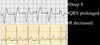
What does ECG look like for RBBB?
Supraventricular origin Wide/bizzare QRS complexes: wider than normal QRS reduced R wave deep S wave
32
What is L bundle branch block (LBBB)?
During Left Bundle Branch Block there is a lesion along the left bundle branch which prevents normal conduction down to the left ventricle. As a result, the right ventricle depolarizes normally and then its wave of depolarization spreads to the left ventricle. Therefore, the depolarization of the ventricles during bundle branch block takes longer to occur, resulting in wider QRS complexes.
33
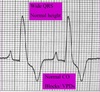
What does ECG look like for LBBB? Is the CO affected? Can you hear other names for this?
Wide QRS Normal R wave height No, normal CO Yes, Block or VPDs
34
What is a VPD and what is it exactly
Ventricular Premature Depolarization new term for VPC (Ventricular Premature Contraction) it is when the ventricles depolarize/contract before getting a signal from the normal channels usually the heart rate with VPDs is slower due to speed of conduction of self generated signal vs normal route (SA→AV etc)
35
What is a low voltage complex?
When the QRS complex is shorter than normal, meaning there is not a lot of muscle contraction going on R wave = 1.0-1.5 mV
36
What conditions can cause low voltage complexes?
obesity pleural effusion pericardial effusion pneumothorax hypothyroidism diffuse myocardial dz
37
where does the normal ST segment lie in relation to the baseline of ECG? What does ST segment depression indicate?
Should be the same position as PR interval but, can vary up to 2 mm below baseline or 1.5 mm above and still be normal range Myocardial hypoxia
38
What is normal QT segment? Where is it measured? What happens if it's to long? (Why?)
7.5-12.5 boxes From beginning of QRS to end of T wave Can indicate electrolyte disturbances, be sure to check potassium, calcium (since the QRS is depolarization of ventricles & T is repolarization it make sense because muscle contraction is regulated by potassium & calcium for nerve impulse speed!)
39
What drug is known to prolong QT interval? Is this good (expected/normal)?
Digoxin Yes, for certain heart conditions it is the tx of choice!
40
What is the only rule we have regarding T wave morphology
That it shouldn't be too big! Normal is considered \< ¼ R wave height or 0.3 mV it can be a negative deflection also, as long as it's consistent throughout ECG. (if negative it cant change its mind and become positive!)