Gubernaculum
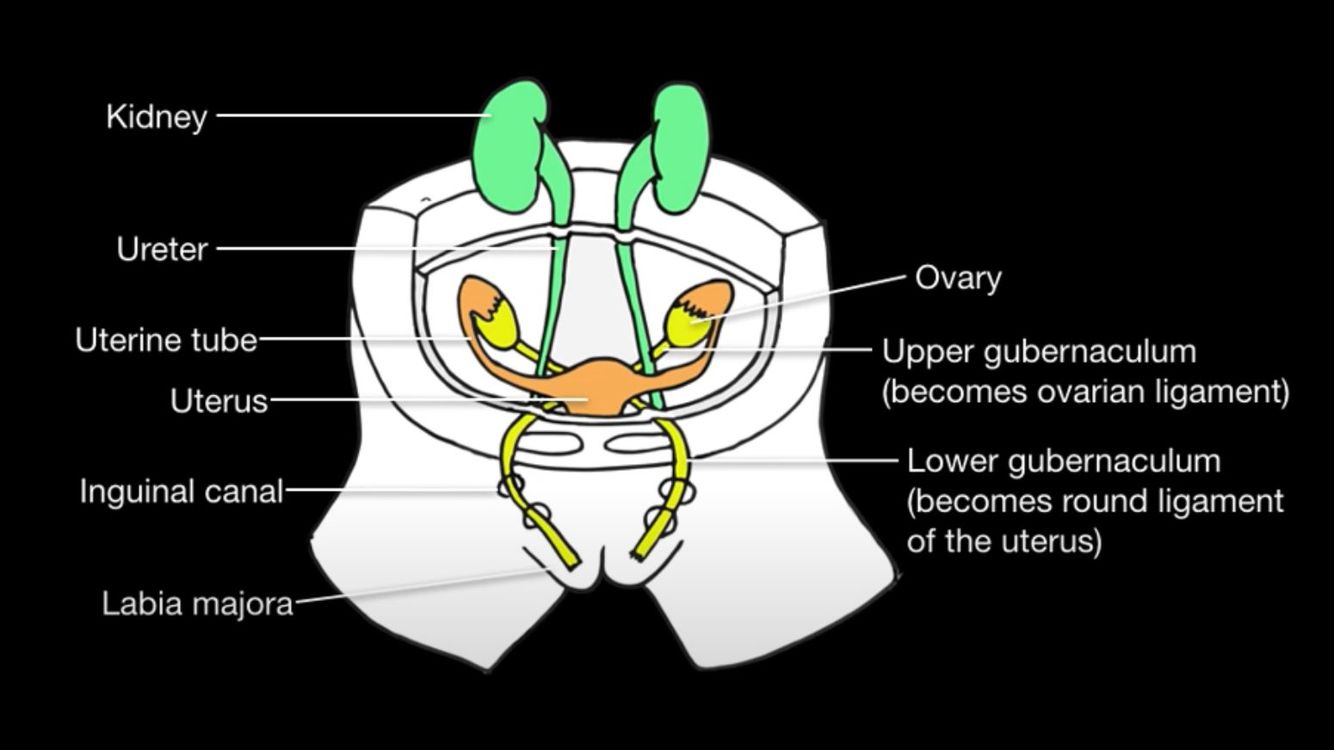
Connective tissue that aids in the descent of the gonads by steering them into place in both males and females.
It has developed by ~8 weeks and is only present during the development of the genitourinary systems, after which it atrophies. However, females retain two vestigial reminants: the ovarian ligament and the round ligament of the uterus

Anatomy of the upper and lower gubernaculum at 15 weeks in a female fetus
Timecourse of embryonic vili development
- They’re always one week behind
- The primary form by week 2
- The secondary by week 3
- The tertiary by week 4
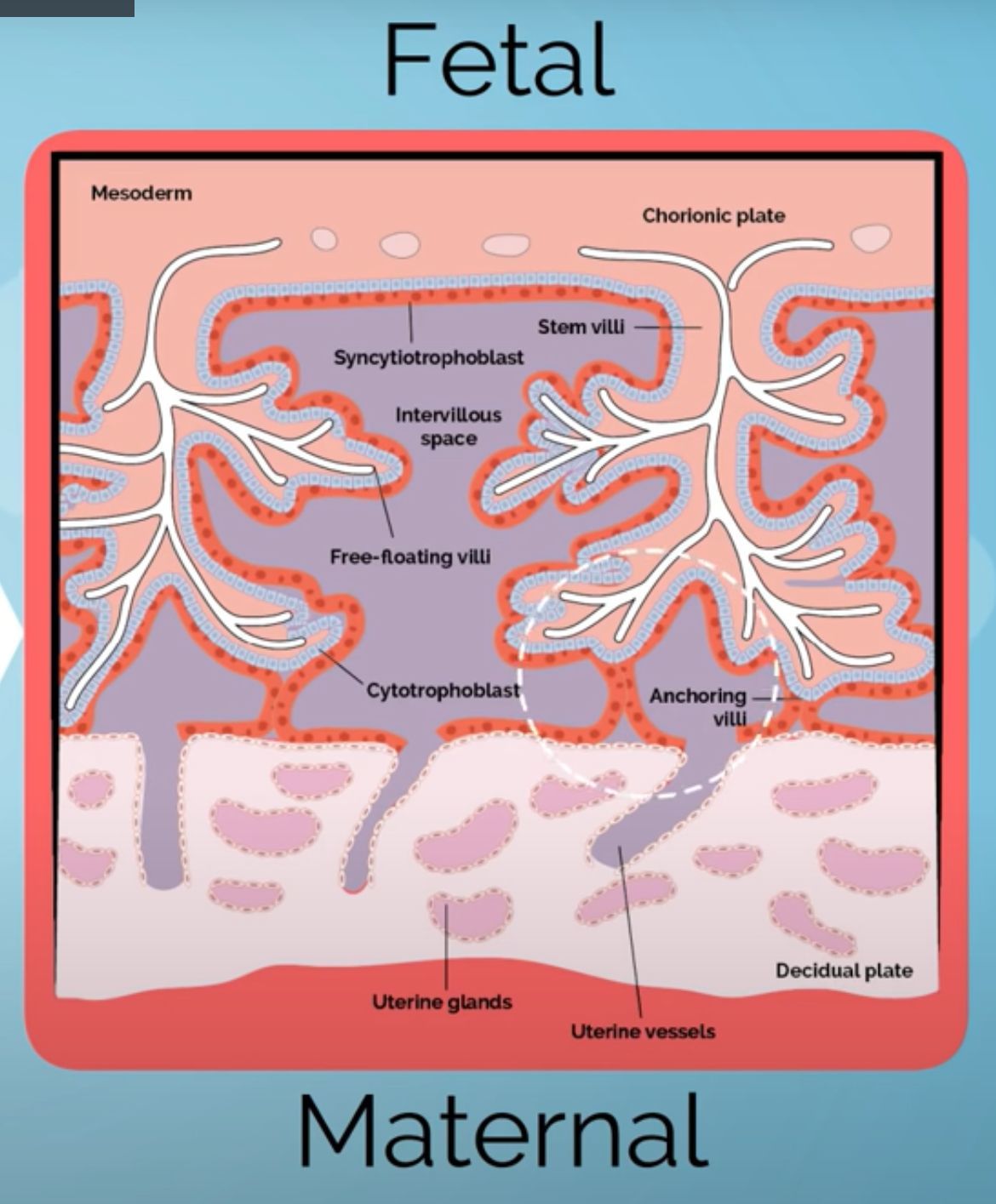
Chorionic villus structure
Note that the terminal villi are the region of gas and nutrient exchange.
In this diagram, the intervillous space is filled with maternal blood.
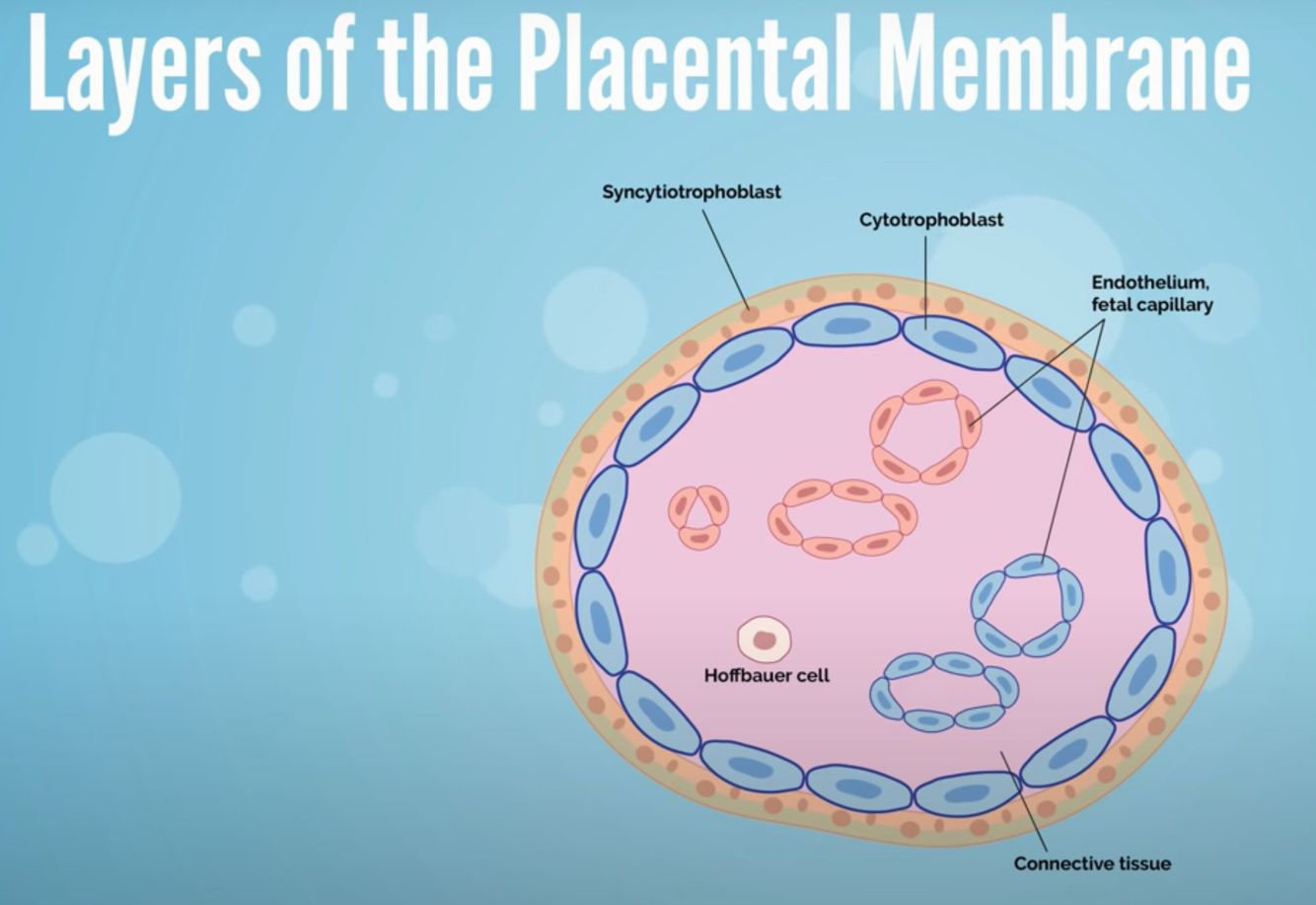
Four layers of the placental membrane
Placental sources of VEGF
- The initial source of VEGF is the cytotropoblast
- Later, the Hofbauer cells and stromal cells take over
- Hofbauer cells are placental macrophages
Fibrin-type fibrinoid, matrix-type fibrinoid, and Nitabuch’s layer
- Fibrin-type fibrinoid is a product of maternal clotting which replaces degenerating syncytiotrophoblasts
- Matrix-type fibrinoid is secreted by invasive extravillous extratrophoblastic cells
- Together, they form Nitabuch’s layer, a band of fibrinoid tissue thought to serve the role of preventing excessively-deep implantation. Loss of this layer can lead to abnormal placentation invasion
Fate of the two layers of the trophoblast
- Outer layer: The syncytiotrophoblast. After implantation, it is replaced by fibrinoid tissue to form Nitabuch’s layer.
- Inner layer: Cytotrophoblast. Stimulates vasculogenesis in the chorion.
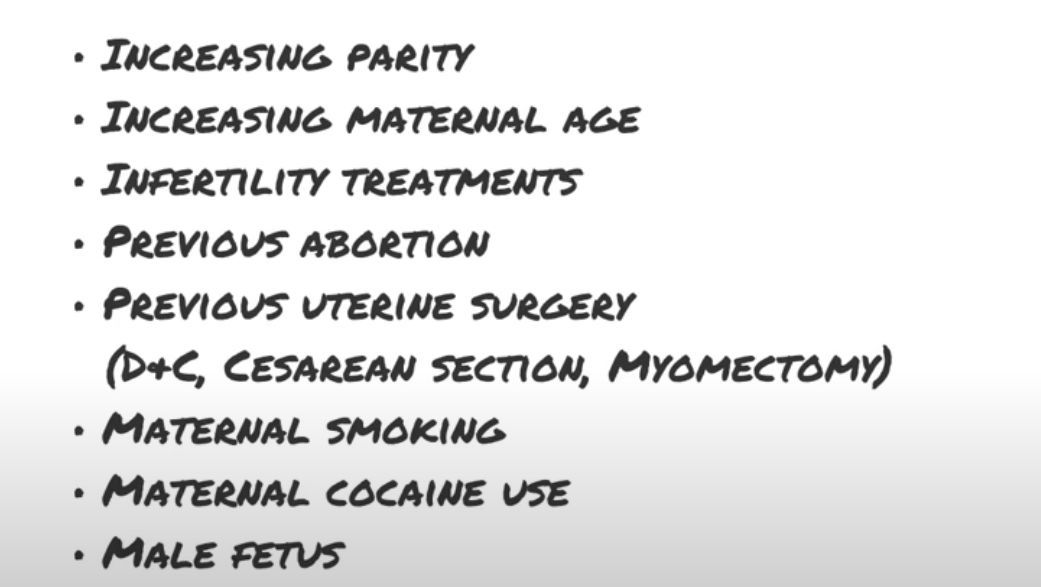
Risk factors for abnormal placentation
Placenta previa
- Form of abnormal placentation
- Pathogenesis not currently understood
- Risks include previous surgery and previous pregnancy
- Generally speaking, the placenta is in front of the cervical os
- Involves areas of sub-optimal vascularized descidua, promoting movement of trophoblasts to the lower uterine cavity
Vasa previa
Sub-group of placenta previa
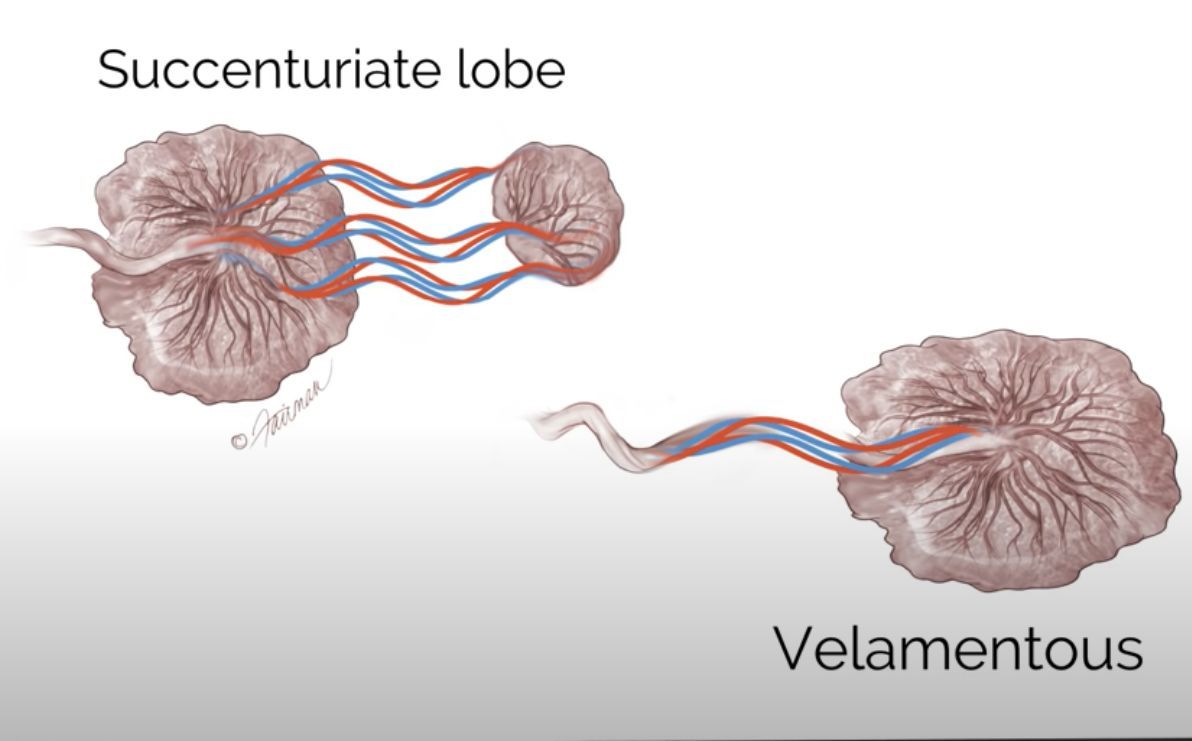
In vasa previa, fetal blood vessels from the placenta or umbilical cord cover the cervical os
Major risks include velamentous or succenturiate-morphology placenta
If placenta previa of any form is detected, ___ is contraindicated due to risk of placental hemorrhage.
If placenta previa of any form is detected, any form of vaginal manipulation (vaginal exam, sexual intercourse, etc) is contraindicated due to risk of placental hemorrhage.
In placenta previa, ___ is at risk of bleeding.
In vasa previa, ___ is at risk of bleeding.
In placenta previa, the mother is at risk of bleeding.
In vasa previa, the infant is at risk of bleeding.
Placenta accreta
- Anchoring placental villi attach to the myometrium instead of the decidua, resulting in a placenta which adheres to the uterine lining
- Prior cessarian section is the main risk factor
- Down the road, the decidua basalis is absent
- Nitabuch’s layer is often disrupted
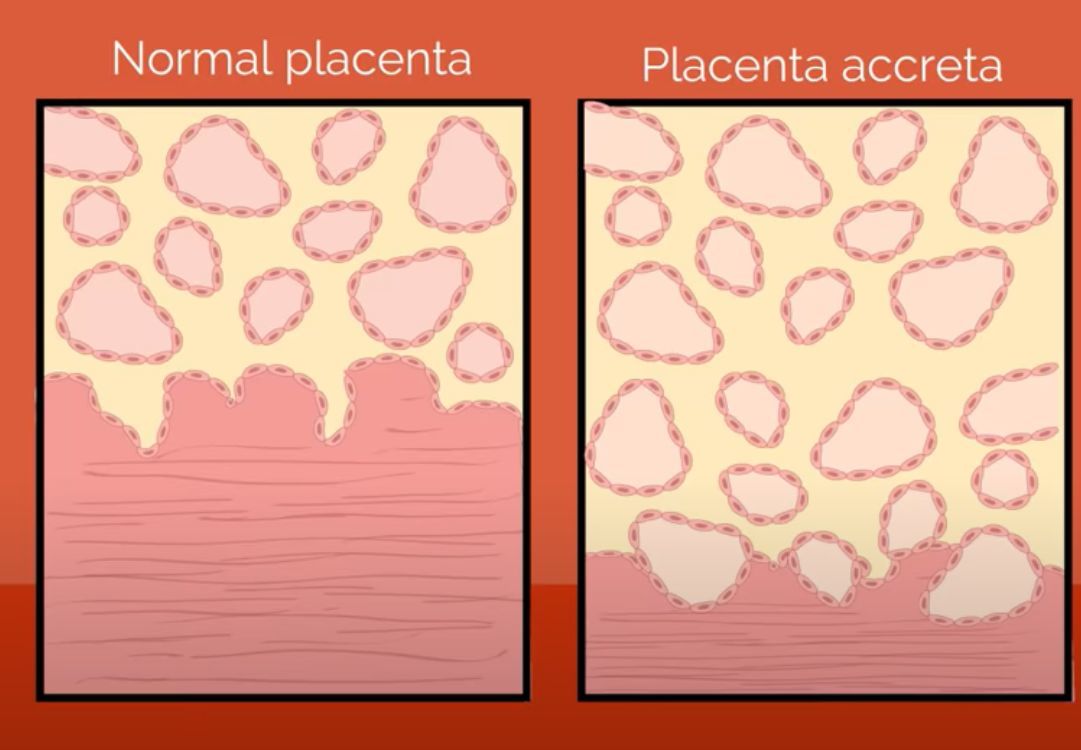
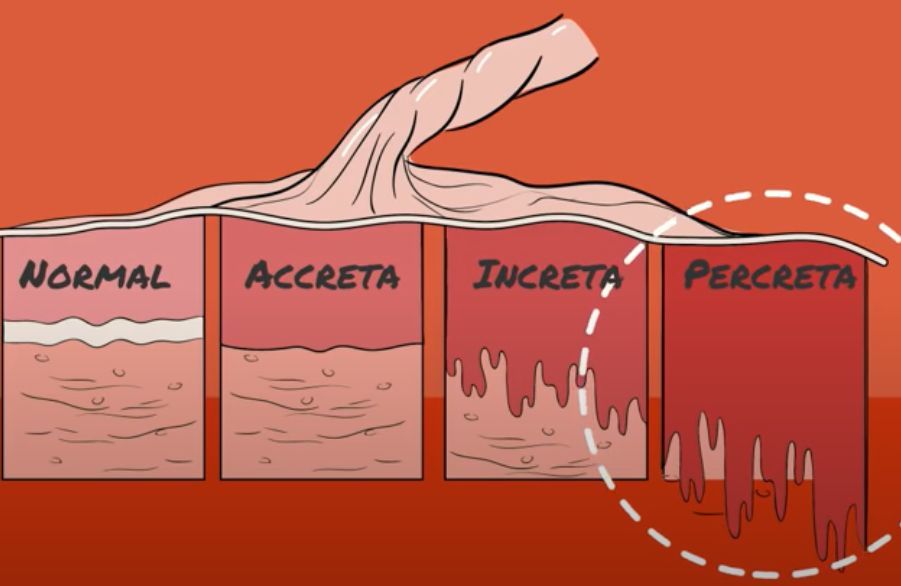
Placenta accreta, increta, and percreta
- Accreta: Decidua basalis is missing, but the placenta is not infriltrative
- Increta: Placenta infiltrates the myometrium, but does not penetrate the serosa
- Percreta: Placenta penetrates through the myometrium into the serosa
Risk factors for placenta accreta
Previous cesarean section
Previous myotomy
Previous dilation and curetage
Basic embryology of the GU system
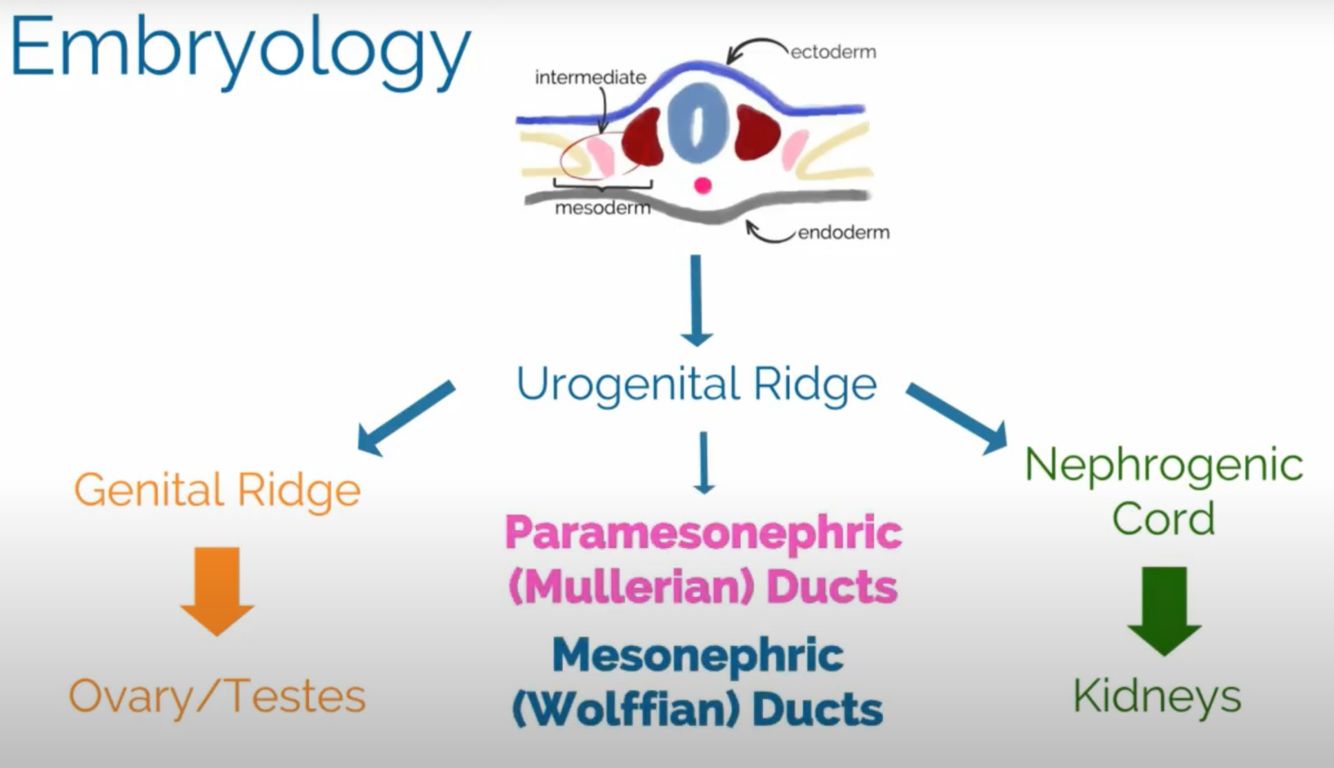
The Mullerian ducts give rise to. . .
. . . the fallopian tubes, uterus, and and upper 2/3 of vagina
The Wolfian ducts give rise to. . .
. . . the ureters, seminal vesicles, vas deferens, and epididymis
How a fetus becomes “male”
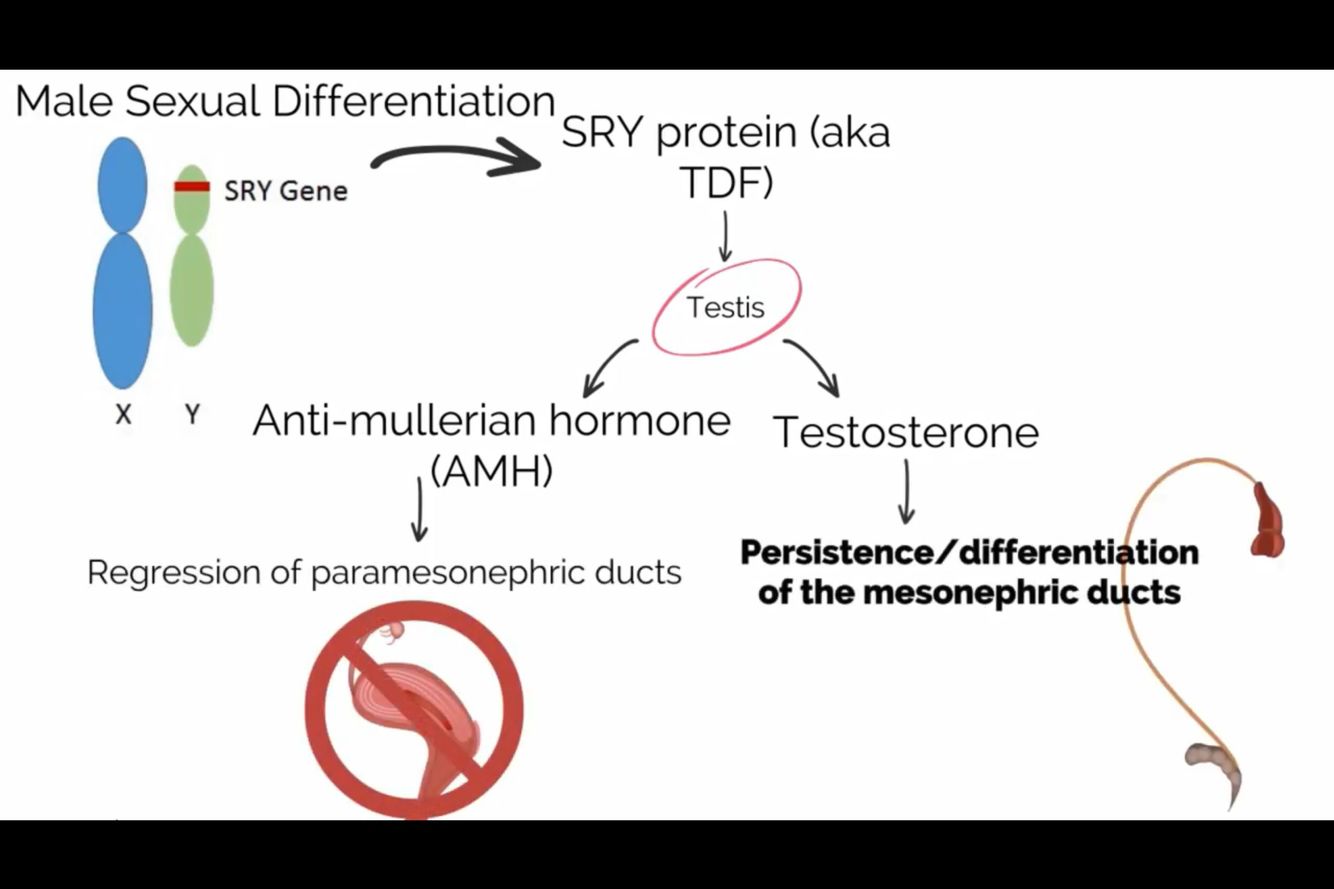
How a fetus becomes “female”

How the Mullerian ducts / Paramesonephric ducts form the uterus
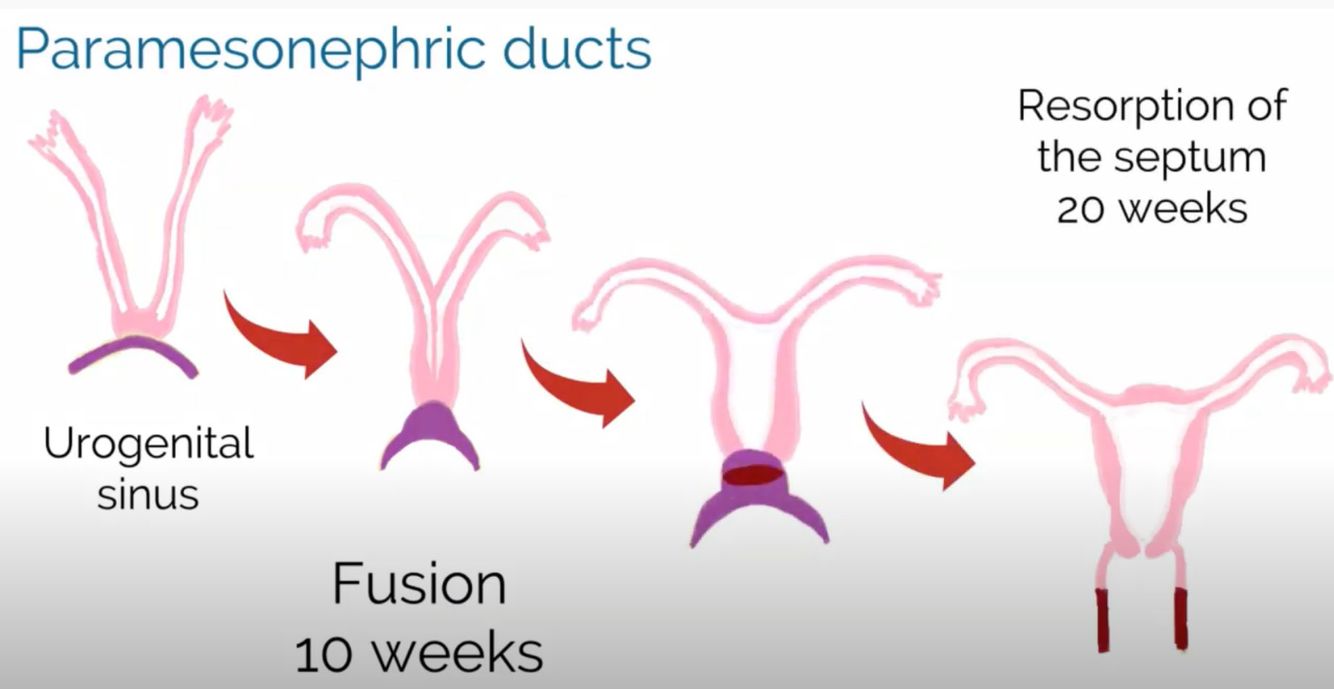
Three main types of error in Mullerian anomalies
- Error in fusion: The ducts do not properly fuse, resulting in a “horned” uterus (bicornuate), a uterus with a dominant side (unicornuate), or two completely separate small uteri (uterine didelphys)
- Errors in septal resorption: The septum between fused ducts persists, resulting in a septate uterus or an arcuate uterus (indentation where the septum was)
- Errors in organogenesis: All or part of the Mullerian tract fails to form. Namely causes Mullerian agenesis, where the vagina is absent and uterine development is variable.
Transverse vaginal septum
- Results from failed Mullerian fusion or failed vaginal canalization



-
Gynecology104
-
Diseases of the Fetus and Newborn79
-
Gynecologic anatomy and surgery89
-
Maternal and Newborn Infectious Disease and Vulvovaginitis70
-
General Practice Info29
-
Maternal Physiology87
-
Reproduction I: Gonadal Function60
-
Labor and Delivery124
-
Embryology65
-
Benign and Malignant Tumors of the Female Reproductive System81
-
Benign and Malignant Tumors of the Female Reproductive System II76
-
Women's Preventative Health18
-
Breast Disorders46
-
Maternal-Fetal Physiology18
-
Gyn/GU Infections in Women36
-
Laporoscopic Hysterectomy16
-
Abdominal Hysterectomy3
-
Urinary Incontinence and Pelvic Floor Disorders52
-
Preconception Care57
-
Prenatal Care79
-
Polycystic Ovarian Syndrome20
-
Adenomyosis and Endometriosis29
-
Puberty, Androgenism, and Hirsuitism60
-
Menstrual Abnormalities60
-
Fetal Monitoring47
-
Infertility41
-
Menopause18
-
Postpartum Care69
-
OBGYN Pharmacology5
-
Divine Intervention79



