Enamel Composition
96% hydroxyapatite (crystaline calcium phosphate) 4% organic and water
Enamel Rods
Tightly packed hydroxyapatite Perpendicular to DEJ
Enamel Rod Characteristics
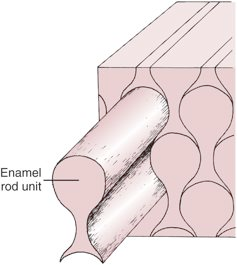
Look like keyholes Crystals in head align with long axis of rod Tail crystals are oriented cross axis
Lines of Retzius ( Enamel Striae)
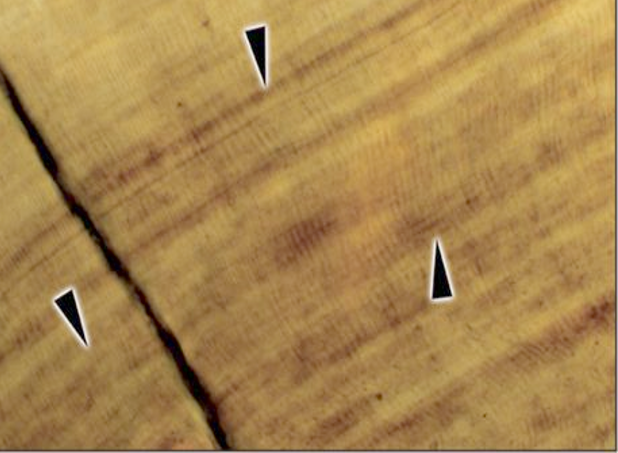
Point Incisally from the DEJ
In transverse sections are concentric rings (like tree rings)
Neonatal Line
Found in all primary teeth
some permanent cusps of 1st molars
Represents physiological change on ameloblasts
Perikymata
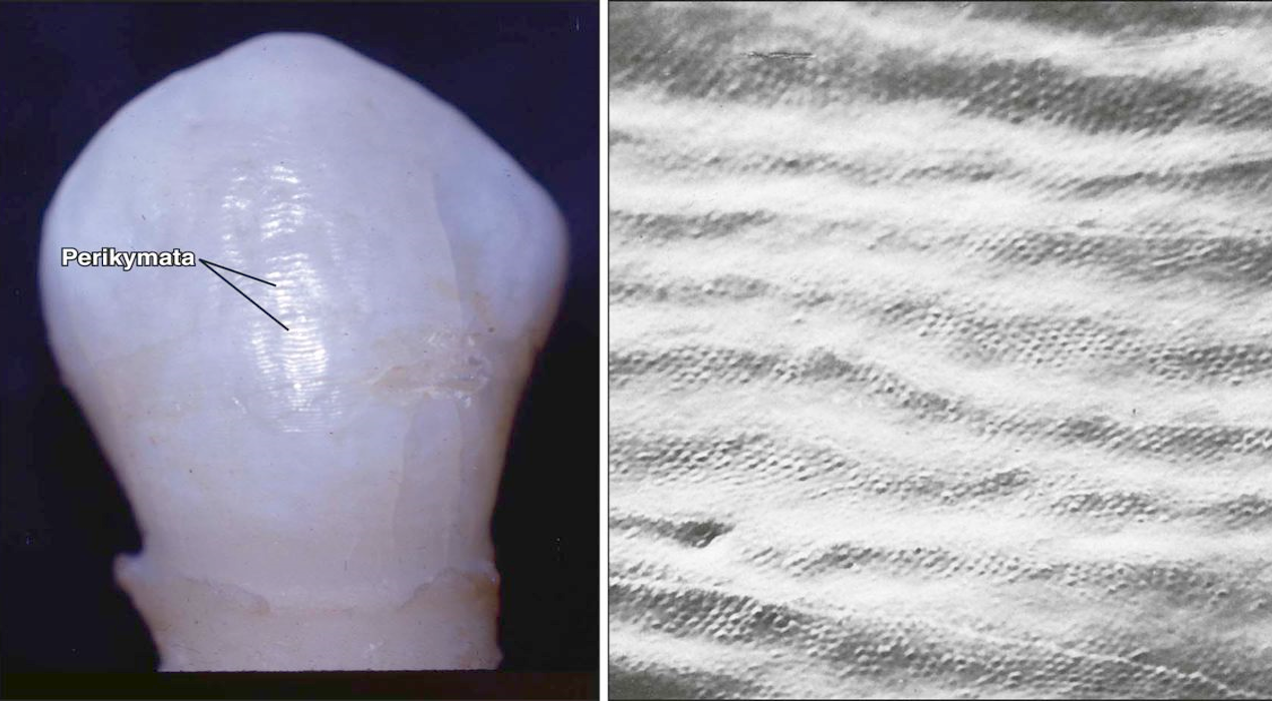
Shallow grooves where lines of Retzius terminate
Usually wear
Hunter-Schreger Bands
Alternating dark and light lines due to enamel rod direction change
Mostly found in inner 2/3 of tooth
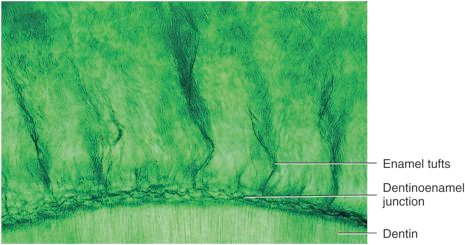
Enamel Tufts
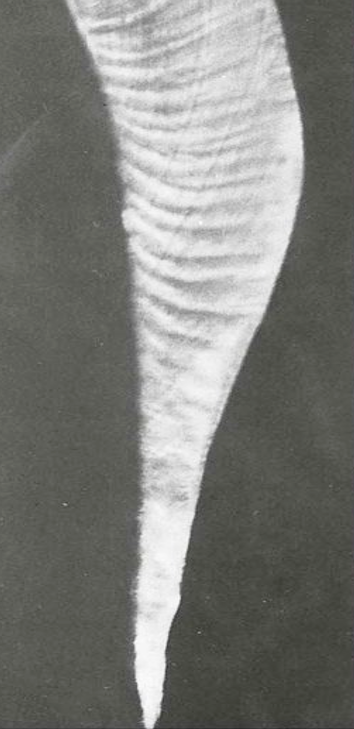
Groups of hypomineralized enamel rods
Short, dark projections near DEJ
No know clinical significance
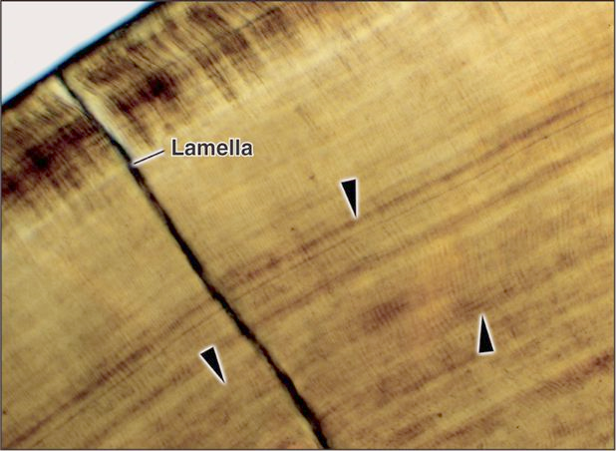
Enamel Lamellae
Cracks on enamel that exted from DEJ to surface
Hypocalcified enamel
May be filled with organic material
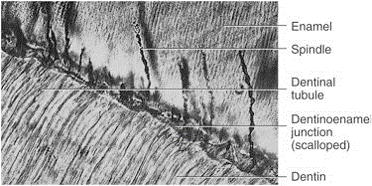
Enamel Spindle
Odontoblastic process remnants that are trapped during differentiation of ameloblasts
Extensions of dentin tubules
More pronounced beneath cusps or incisal edges (occlusal stress)
Aprismatic Enamel
Thin outer layer on newly erupted teeth
Prismless (no emale rods)
Enamel crystals are aligned perpendicular to surface
More mineralized
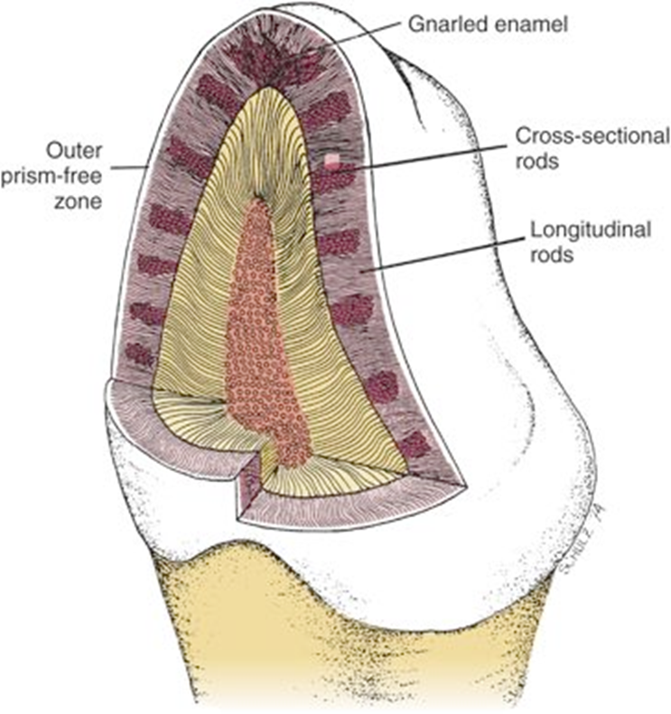
Gnarled Enamel
Over cusps of teeth
Rods are twisted and intertwined
Amelogenesis Beginning
Begins at early bell stage
Ameloblasts lay down enamel starting at the crown and working down the CEJ
Ameloblats change shape according to role
Secretory Ameloblasts–> Tall columnar
Pre-secretory Ameloblasts–> Short
Goals
Life cycle of Ameloblast
Morphogenetic stage (Baby!)
- Just differentiated from an Inner Enamel epithelial cell to a ameloblast
Histodifferentiation
- Organelles increase in #number and size
Ameloblast purpose in life is to secrete vesicle containing enamel matrix
The playes in Ameloblasts
Mitochondria, nucleus, Golgi, Vesicles, desmosomes
Secretory Phase of Ameloblast
Ameloblast has a Tomes process to secrete enamel vessicles
- Proximal portion —> Interod enamel- formed 1st
- Distal portion—> Rod Enamel
Tomes process is like a frosting tip
Composition of initial secretion from ameloblast
Initial deposit
- Makes up 25% of total enamel mineral
Remaining 70% of mineral
- Result of crystals growing
Last 4-5%
- Organic and water
Enamel Matrix mineralizes soon after deposition
Deposition and mineralization occur at cusp tip first
Ameloblast Maturative Stage
Enamel Mineralization increases
- 30%–>96%
- Crystals grow wide and long
- Protein and H2O content lowers
Ameloblast Modulates between
- Smooth ended ameloblast
- Ruffled ended ameloblast
- They work together to INC mineral content
- Joined by tight junction
Ruffle Ended Ameloblast
Transport into enamel matrix
- Calcium
- Phosphate
- Bicarbonate ions
Smooth Ended Ameloblast
Remove things from enamel matrix
- Enamel matrix proteins
- Water
Enamel Proteins
Amelogenin
- 90% of enam prot, main protein
- Organizes rods
- Expression stops once full thickness achieved
Enamelin
- New crystal formation
- Elongates crystals
Ameloblastin
- Adheres ameloblasts to new enamel
- Found in new enamel
Ameloblast Protective Stage
After they finish mineralizing they secrete an organic layer called:
Primary cuticle or developmental cuticle
Ameloblasts attach themselves to is by desmosomes
They become short like old grandmas
Reduced Enamel Epithelium
Covers the tooth when it erupts
Made up of
- Ameloblasts
- Papillary layer
- Fusion of: stratum intermedium, stellate reticulum, outer enamel epi





