Define encephalitis.
Inflammation of the brain parenchyma associated with neurological dysfunction.
Can be caused by infectious or non-infectious causes.
What % of encephalitis cases have an identifiable aetiology?
An aetiological agent is only identified in around 50% of cases.
What are the most common viral causes of encephalitis?
- HSV1 and 2 - HSV-1 causes 95% of cases in adults
- Arboviruses
- CMV
- EBV
- VZV
- HIV
- Measles
- Mumps
- Rabies
- Japanese B encephalitis
- West Nile virus
- Tick-borne encephalitis
What are the most common non-viral causes of encephalitis?
- Bacterial meningitis
- TB
- Malaria
- Listeria
- Lyme disease
- Legionella
- Leptospirosis
- Aspergillosis
- Cryptococcus
- Schistosomiasis
- Typhus
What is the pathophysiology of encephalitis? Which part of the brain is most commonly affected?
Virus usually gains entry and replicates in regional tissues before disseminating to the CNS by haematogenous or retrograge axonal transport.
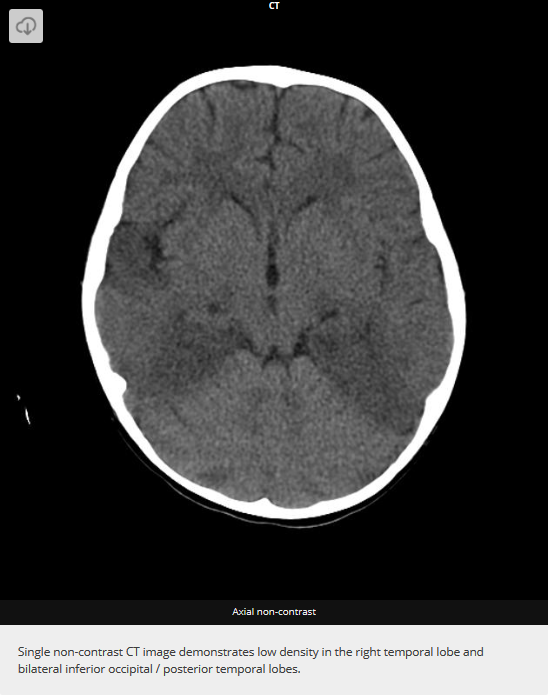
HSV1 classically affects temporal and inferior frontal lobes
What are the risk factors for encephalitis?
- Age <1 or >65years
- Immunodeficiency
- Blood/body fluid exposure
- Organ transplantation
- Animal or insect bites - mosquitoes, ticks, animals with rabies/brucellosis
- Travel
- Swimming/diving in warm freshwater or nasal/sinus irrigation
What is the sequence of events in encephalitis?
- Infectious prodrome (raised temp, lymphadenopathy, cold sores, conjunctivitis, meningeal signs)*
- Then odd behaviour, reduced GCS, focal neurology or seizure
*if no infectious prodrome suspect encephalopathy
List some non-infectious causes of encephalopathy ?
- hypoglycaemia
- hepatic encephalopathy
- diabetic ketoacidosis
- drugs
- hypoxic brain injury
- uraemia
- SLE
- Wernicke’s (give vit B1 if in doubt)
What are the signs of encephalitis?
- Bizarre behaviour or confusion
- Reduced GCS or coma
- Focal neurological signs
- History of travel or animal bite
What are the symptoms of encephalitis?
- Fever, rash, cough, (GI infection)
- Headache
- Seizures
- Some patients have meningism
What investigations would you do for encephalitis?
Bloods:
- Cultures
- PCR for HSV
- Throat swab and MSU
Imaging:
- Contract enhanced CT - do before LP; normal in 1 in 3.
- EEG - lateralised periodic discharges at 2 Hz
Invasive:
- LP- elevated proteins and lymphocytosis. Send for viral PCR including HSV
How do you manage encephalitis?
Mortality if untreated = 70%
- IV aciclovir within 30min of admission (10mg/kg TDS given over 1hr) for 14-21 days (specific therapies exist for CMV and toxoplasmosis)
- Supportive therapy, HDU or ICU if necessary
- Symptomatic treatment e.g. phenytoin for seizures
What is the difference in management of viral encephalitis vs meningitis? How do you distinguish between the two ?
Viral meningitis - does not require treatment in the immunocompetent
Viral encephalitis - always requires antiviral treatment - differentiated from meningitis on clinical grounds: confusion, behavioural change, neurological deficits.
What is the relation of cold sores to HSV encephalitis?
Peripheral lesions (e.g. cold sores) have no relation to the presence of HSV encephalitis

-
CNS tumours30
-
Bell's palsy21
-
Cluster Headache20
-
Encephalitis14
-
Epilepsy30
-
Guillain-Barre syndrome25
-
Huntington's disease14
-
Horner's Syndrome16
-
Hydrocephalus22
-
Idiopathic intracranial hypertension7
-
Migraine26
-
Motor neurone disease21
-
Lumbar puncture7
-
Meningitis34
-
Myasthenia Gravis21
-
Multiple Sclerosis35
-
Ménière's disease8
-
Neurofibromatosis14
-
Parkinson's Disease45
-
Raised intracranial pressure12
-
Spinal cord compression (incl. cauda equina)33
-
Stroke41
-
Transient ischaemic attacks (TIA)18
-
Trigeminal Neuralgia14
-
Tension headache16
-
Wernicke's encephalopathy14
-
Acute Neurological Presentations42
-
MedEd Cranial Nerves and Ophthalmology41
-
MedEd Neuro Lecture44



