Usually the endocardium is
non-sticky and resistant to bacterial seeding
most cases of endocarditis are associated with
structural defect of the bicuspid aortic valve
when does endocarditis generally occur
Endocarditis generally occurs when bacteria or fungi another part of your body, such as your mouth, spread through your bloodstream and attach to damaged areas in your heart. If it’s not treated quickly, endocarditis can damage or destroy your heart valves and can lead to life-threatening complications.
patient risk factors
- Everyday oral activities- such as brushing teeth (activities which may cause gums to bleed), allow bacteria to enter bloodstream
- Catheters
- Needles for tattoos and body piercing
- IV drug use
- Certain dental procedures
activities which put you at risk of endocarditis
Bicuspid aortic valve is the most common congenital cardiac defect
bicuspid aortic valve
- Result of abnormal aortic cusp formation during valvulogenesis.
- Adjacent cusps fuse to form a single aberrant cusp, larger than its counterpart yet smaller than 2 normal cusps combined
- Range of tissue, molecular and genetic abnormalities
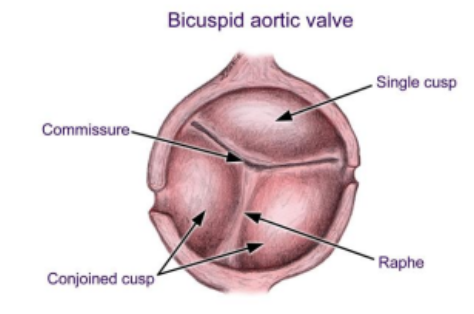
why does it increase risk of endocarditis
- Abnormal flow of blood over the valve and associated abnormal valve tissue
- Greater risk of microbes in the blood sticking to the valve cusp and setting up a local infection (with a biofilm)
other causes of endocarditis
- Artificial heart valve – more likely to attach to artificial heart valve
- History of endocarditis
- Damaged heart valve
bacterial pathogens
Staphylococcus aureus
Viridans Streptococcus
Coagulase negative staphylococci
Enterococci
fungal pathogens
Candida albicans
Aspergillus
Patient symptoms
- Fever
- Heart murmur
- Other cardiac complications
- Embolic features- small bits of vegetation (or biofilm) that become loose and travel to small capillaries where they can block the capillary or cause local infection
Embolic features
- janeway lesions
- splinter haemorrhages
- roth spots in the eye
- oslers nodes
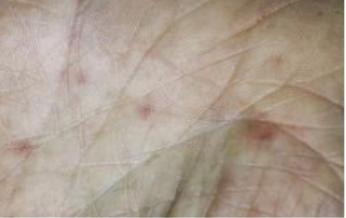
Janeway lesions
- haemorrhagic nodular lesion with irregular border present on palms and soles. Micro-abscess formation and localised necrosis
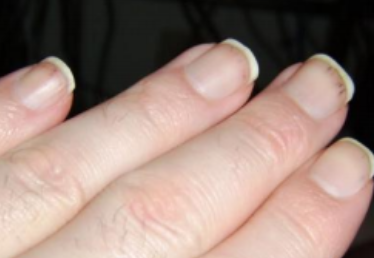
Splinter haemorrhages
- These are linear minute capillary engorgements usually in distal third of the nail bed.
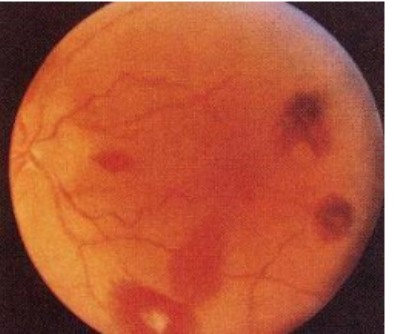
Roth spots in the eye
- These are described as linear haemorrhagic spots seen in the retina of the eye
Oslers nodes
- These are painful, erythematous nodules on pads of fingers and toes. They may have a dual aetiology as they are related to both: septic micro-emboli and immune complex related vasculitis
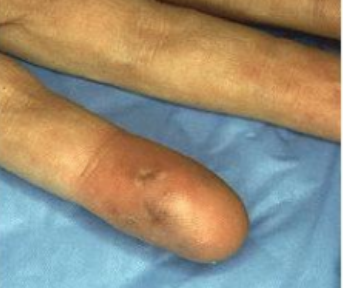
Hallmark of endocarditis is the formation of
vegetation (biofilm) that binds to valves or mural endocardium
Three hallmarks of endocarditis:
- Constitutional symptoms which are cytokine mediated
- Local spread of infection causing myocardium destruction
- Distal blood borne septic embolization
4.
mechanism of action
- Aberrant flow predisposes to a collection of fibrin, platelets and scant inflammatory cells –> formation of vegetation
- Microorganisms that enter blood stream from:
- Skin
- Mucosa etc
- These bind to vegetation and cause local infection leading to a pro-coagulant state
- Further fibrin deposition, platelet aggregation and bacterial invasion lead to an infection cascade causing infective carditis
- Bacterial colonies deep within vegetation are dormant and hard to eradicate using antibiotics
- Superficial colonies tend to embolise (lodge and obstruct) distally causing septic phenomenon as well as reinfection of vegetation
- Vegetation is a BIOFILM
virulence factor of s.aureus
S.aureus has fibronectin binding proteins and is capable of binding to intact endothelium and therefore can infect previously uninfected endocardium
Diagnosis
Follow: Duke Criteria for diagnosing endocarditis.
This includes:
- Standard features of infection such as fever
- Cardiac features such as a murmur
- Microbiological features- such as a positive blood culture
- Embolic features relating to the vegetation/ biofilm and release of bit vegetation (biofilm) into the blood stream
For the purpose of determining the duration of therapy
the first day in which negative blood cultures are obtained is considered the first day of therapy

-
Bacteria25
-
Innate immunity74
-
Adaptive immunity- extracellular37
-
Adaptive immunity- effector stage46
-
Antibiotics (1/2)29
-
Antibiotics (2/2)62
-
Antifungals14
-
Antivirals12
-
Antibiotic resistance29
-
Sepsis67
-
Meningitis25
-
Urinary tract infections15
-
Hospital acquired infections31
-
Community acquired infections28
-
Introduction to infection31
-
Introduction to microbes44
-
The Infection Model28
-
Candida infection11
-
Cellulitis19
-
Pneumonia27
-
Upper respiratory tract infections- Adenovirus11
-
The immunocompromised host50
-
Biofilms18
-
Endocarditis30
-
Management of sharps injury6
-
Malaria35
-
Dengue fever16
-
Typhoid and paratyphoid (enteric fever)14
-
HIV33
-
Hepatitis19
-
Hepatitis B13
-
Hepatitis C12
-
Infections on the surface31
-
E. coli37
-
Streptococcus35
-
Influenza48



