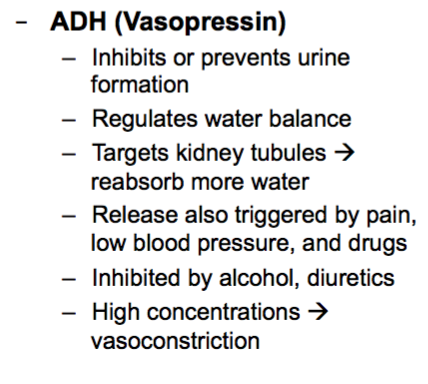
function of ADH
Protein based hormones (water soluble), – Act as first messengers i.e. they bind to receptors causing intracellular signalling which activates a secondary messenger within the cell.
- hypothalamic neurons synthesize ADH
- ADH is transported down the axons of the hypothalamc hypophyseal tract to the posterior pituitary
- ADH stored in axon terminals in the posterior pituitary
- when hypothalamic neurons fire, AP arriving at the axon terminals cause ADH to be released in to the blood
function of insulin
protein based hormone, water soluble
β cells of the endocrine glands of pancreas secrete insulin (decrease BGL)
Cyclic AMP second-messenger mechanism of water-soluble hormones.
- hormone (1st messenger) binds receptor
- receptor activates G protein (Gs)
- G protein activates adenylate cyclase
- Adenylate cyclase converts ATP to cAMP (2nd messenger)
- cAMP activates protein kinase
- trigger responses of target cell (activates enzymes, stimulates cellular secretion, opens ion channels, etc)
function of follicle stimulating hormone
- hypothalamic neurons synthesize GnRH
- hypothalamic hormones trave through portal veins to the anterior pituitary where they stimulate or inhibit release of hormoes made in the anterior pituitary
- in response to releasing hormones, the anterior pituitary secretes hormones into the secondary capillary plexes. This in turn empties into the general circulation.
- role in reproduction, it is a tropic hormone
- – tropic hormones regulate the secretory action of other endocrine glands
- At puberty, FSH stimulates the growth of granulosa cells around the primary oocyte
- Growth of follicles in female;
- Sperm production in male
- FSH initiates spermatogenesis
oestrogen function
- responsible for the development and regulation of the female reproductive system and secondary sex characteristics.
- regulate menstrual cycle
Days 1-10:
–Oestrogen (and inhibin) initially inhibit anterior pituitary secretion of FSH and LH by negative feedback
–After day 10 very high oestrogen has a positive feedback on anterior pituitary and hypothalamus, causing a surge of LH stimulating ovulation
Days 14-25:
–High levels of oestrogen and progesterone inhibit LH and FSH
–secretion from anterior pituitary by negative feedback
LH function
- a hormone produced by gonadotropic cells in the anterior pituitary gland.
- In females, an acute rise of LH (“LH surge”) triggers ovulation[2] and development of the corpus luteum.
- In males, where LH had also been called interstitial cell–stimulating hormone (ICSH), it stimulates Leydig cell production of testosterone. It acts synergistically with FSH.
Contents
Days 1-10:
–Oestrogen (and inhibin) initially inhibit anterior pituitary secretion of FSH and LH by negative feedback
–After day 10 very high oestrogen has a positive feedback on anterior pituitary and hypothalamus, causing a surge of LH stimulating ovulation
Days 14-25:
–High levels of oestrogen and progesterone inhibit LH and FSH
–secretion from anterior pituitary by negative feedback
progesterone function
- Progesterone is one of the progestogen steroid hormones.
- It is secreted by the corpus luteum, a temporary endocrine gland that the female body produces after ovulation during the second half of the menstrual cycle.
- Progesterone prepares the endometrium for the potential of pregnancy after ovulation. It triggers the lining to thicken to accept a fertilized egg. It also prohibits the muscle contractions in the uterus that would cause the body to reject an egg. While the body is producing high levels of progesterone, the body will not ovulate.
- If the woman does not become pregnant, the corpus luteum breaks down, lowering the progesterone levels in the body. This change sparks menstruation.
gonadotropin releasing hormone
- GnRH stimulates the synthesis and secretion of the gonadotropins, FSH, and LH
- These processes are controlled by the size and frequency of GnRH pulses, as well as by feedback from androgens and estrogens.
- Low-frequency GnRH pulses are required for FSH release, whereas high-frequency GnRH pulses stimulate LH pulses in a one-to-one manner
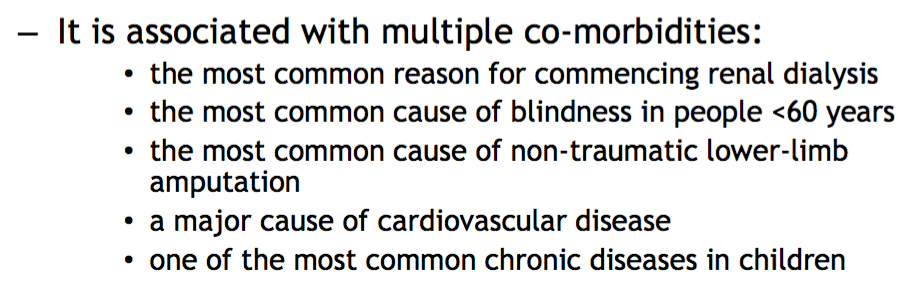
problems with uncontrolled chronic T2D would face, e.g. comorbidities, metabolic acidosis
chronic complications KNIVES
- Kidneys
- Nerves
- Infection
- Vasculature
- Eyes
- Skin
chronic complications include microvascular or macrovascular.
- For microvascular, include eye dieseases and neuropathy and nephropathy. eye diseases are retinopathy and macular oedema. neuropathy are autonomic (sensory and motor), pain and Paraesthesiae
- for macrovascular, Coronary artery disease, Peripheral arterial disease and Cerebrovascular disease
signs and symptoms of poorly controlled diabetes
- heart and BV symptoms: not notice warning signs until you have a heart attack or stroke. Problems with large blood vessels in your legs can cause leg cramps, changes in skin color, and less sensation
- eyes symptoms: Vision problems or sudden vision loss.
- kidney disease symptoms: don’t notice any symptoms with early diabetes-related kidney disease. In later stages it can make your legs and feet swell.
- nerves
- Peripheral diabetic neuropathy can cause pain and burning or a loss of feeling in your feet. It usually starts with your toes. It can also affect your hands and other body parts.
- Autonomic neuropathy stems from damage to the nerves that control your internal organs. Symptoms include sexual problems, digestive issues (a condition called gastroparesis), trouble sensing when your bladder is full, dizziness and fainting, or not knowing when your blood sugar is low. - teeth: Having diabetes puts you at higher risk for gum disease.
non-pharmacotherapy plan for diabetic pt.
– Diet
– Exercise
– Healthy eating is a critical component in the management of type 1 and type 2 diabetes.
– In over 50% of people presenting with type 2 diabetes restriction of energy intake, increased activity and weight reduction will initially normalise blood glucose levels (medication is likely to be needed later)
– Loss of body weight will also improve blood pressure and lipid profiles in people with diabetes
- The diet appropriate for a person with diabetes is qualitatively no different from the Australian Dietary Guidelines recommended for all people, whether they have diabetes, hypertension, dyslipidaemia or not
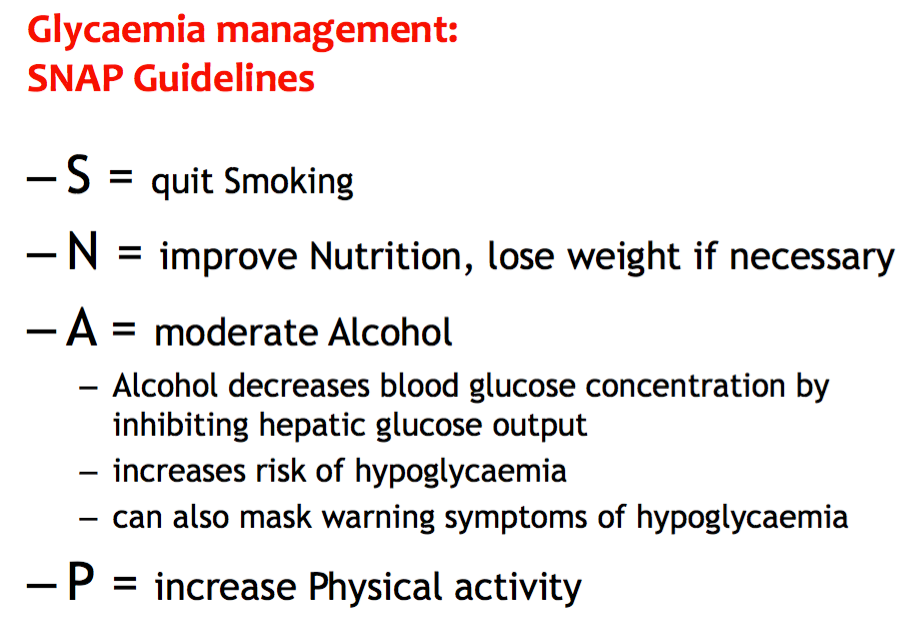
- SNAP guide
pharmacological therapy for diabetics
treatment for diabetics no just glucose, need to target glucose, lipid and blood pressure.
- insulin: T1D and T2D when
- inadequately controlled with diet, exercise and oral anti-diabetic drugs,
- there may be cautions or contraindications (CI) to use of oral anti-diabetic drugs
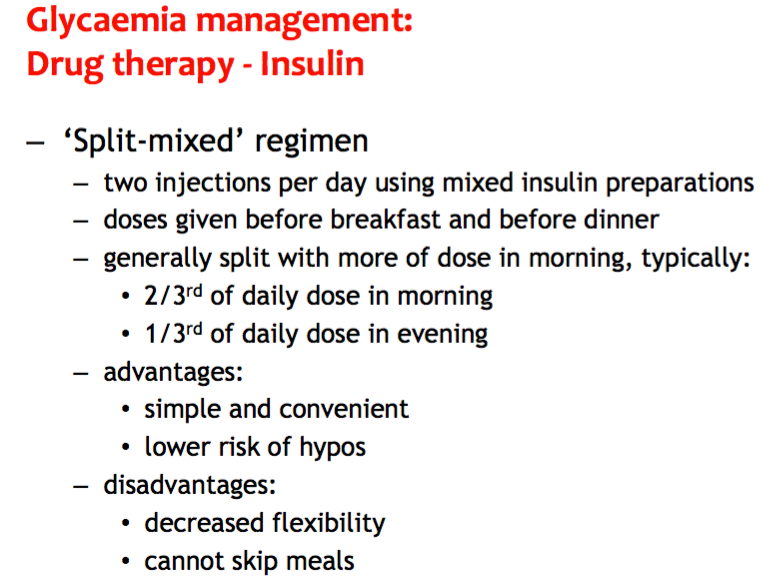
- split-mixed regimen
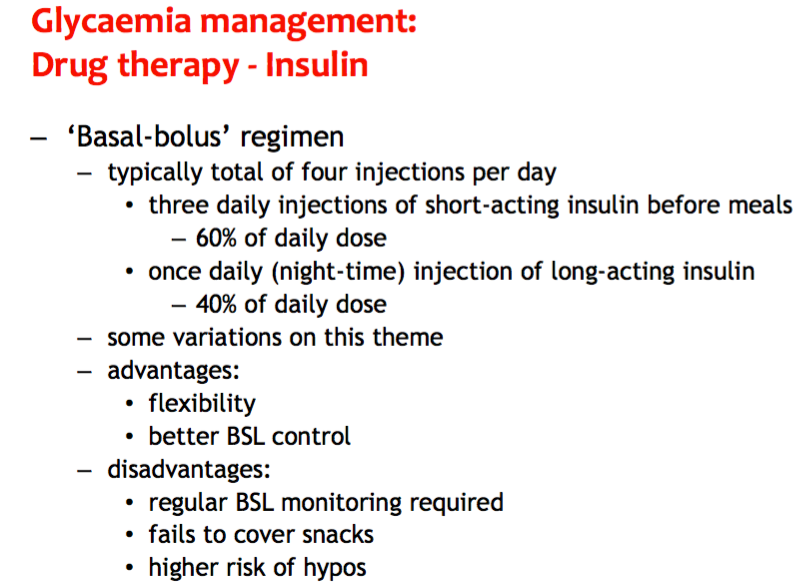
- basal bolus regimen
split mixed regimen
basal bolus regimen
oral medication for T2D
When people with Type 2 DM commence insulin, they are often maintained on one (or more) of their oral therapies
– More about these generally later, but with regard to their combination with insulin:
– Metformin
Reduces insulin requirements in obese patients
Assists in controlling weight gain associated with insulin use
– Insulin secretagogues
• Require functioning beta cells to be effective
– Acarbose
• Reduces variations in glucose levels, especially post-prandially
– Thiazolidinediones
Assist in sensitising tissues to insulin, hence may be useful in the presence of insulin resistance
Combination of insulin with with rosiglitazone is now CI
– Incretin therapies
• New agents with limited evidence when combined with insulin; appear to improve BSL control
– Sodium-glucose co-transporter 2 inhibitors (SGLT2)
• New agents with limited evidence when combined with insulin; can increase risk of hypos
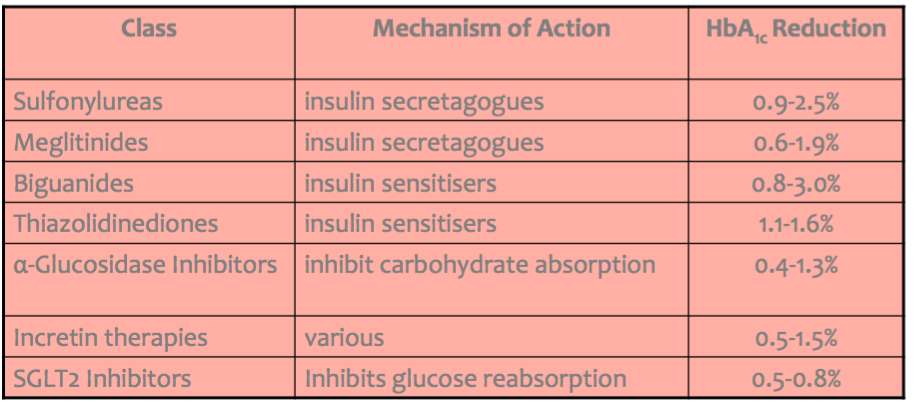
oral med for T2D mechanism of action
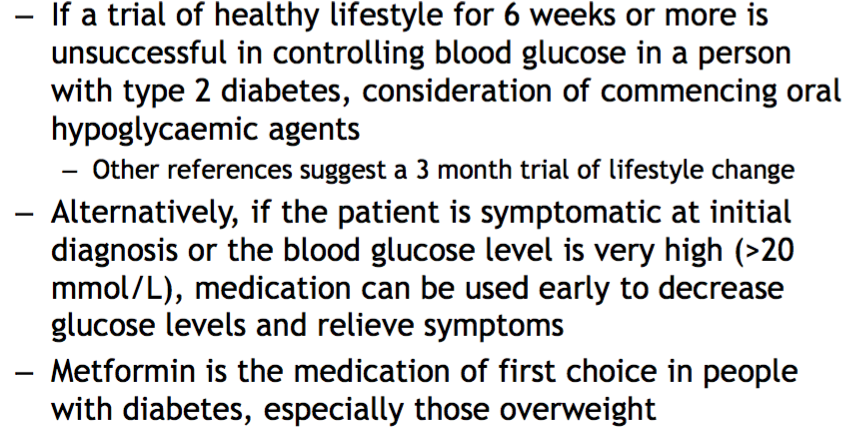
therapeutic plan for T2D
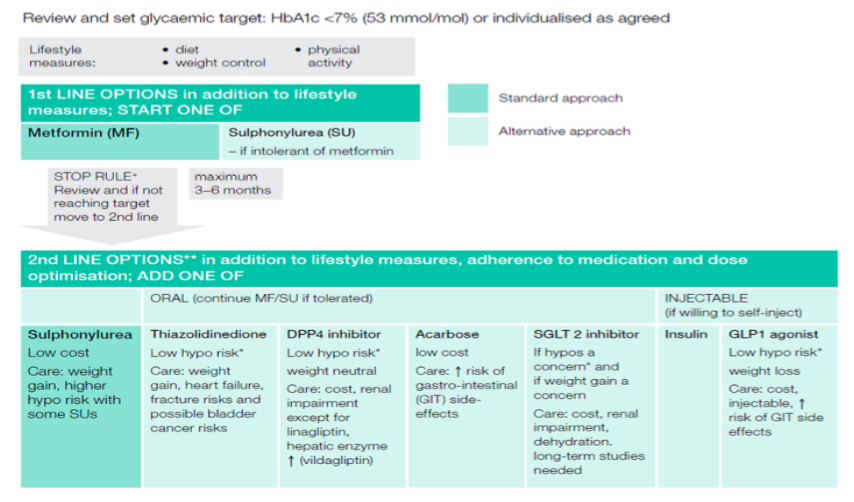
1, 2 line for T2D treatment
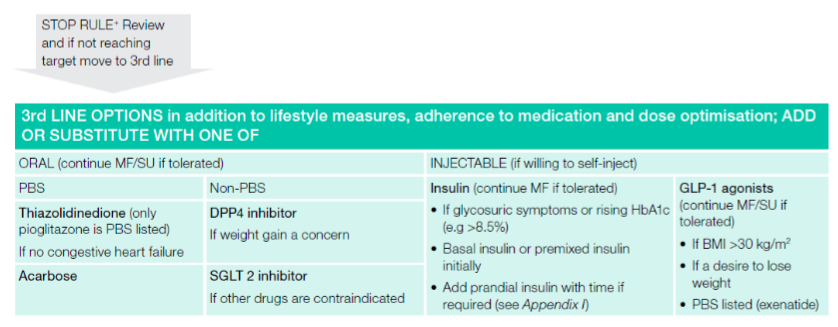
3rd line for treating T2D
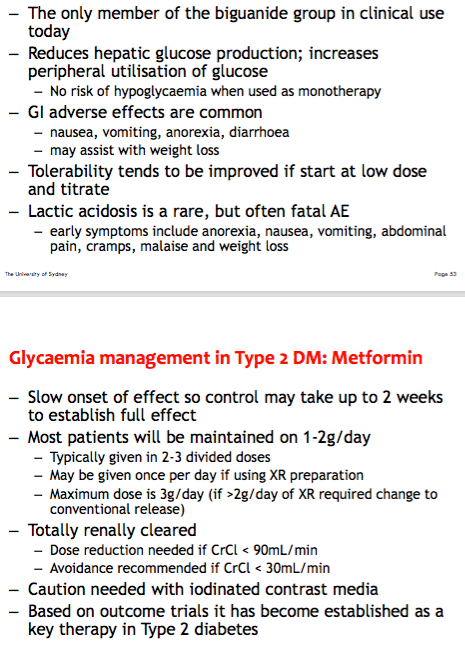
metformin
- insulin sensitiser
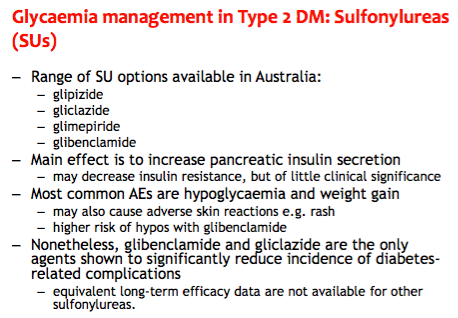
sulfonylureas
- insulin secregogues
incretin therapy
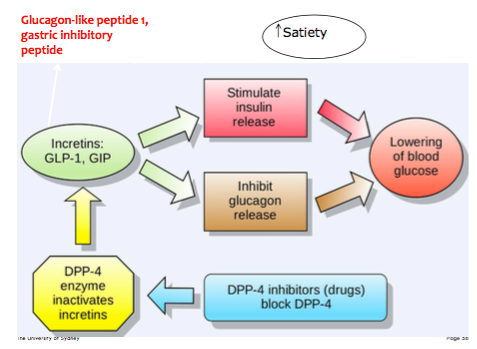
how does incretin work
– By inhibiting DPP-4 these agents increase concentration of GLP-1 and GIP (the ‘incretin’ hormones)
– results in increased glucose-dependent insulin secretion, reduced glucagon production and delayed gastric emptying
– Appear to be less effective in reducing HbA1c than metformin, sulfonylureas or thiazolidinediones
– So far data is lacking on long-term safety, morbidity and mortality outcomes
– But a potential advantage over some treatments is a lack of weight gain and low risk of hypoglycaemia
GLP-1 agonist, agents acting on incretin
e.g. exenatide
– These are all injectable agents that mimic the effects of endogenous GLP-1
– SignificantGIAEs
– nausea and/or vomiting in up to 50% of patients – but usually improves with continued treatment
– Safety alert regarding exenatide and pancreatic damage
– Data lacking on long-term safety, morbidity and mortality
outcomes
– But as with DPP-4 inhibitors are good for weight - typically lead to weight loss




