7 endodontic material categories
- Instruments
- Irrigants
- Intra-canal medicaments
- Obturation materials
- Sealers
- Pulp Capping materials
- Root-end filling materials
5 endodontic instruments uses
- Mechanical phase of chemomechanical disinfection
- Metal files used to remove soft and hard tissues
- Removes micro-organisms
- Creates spaces for disinfectants/medicaments
- Creates appropriate shape for obturation
8 key physical properties
- Stress
- Stress concentration point
- Strain
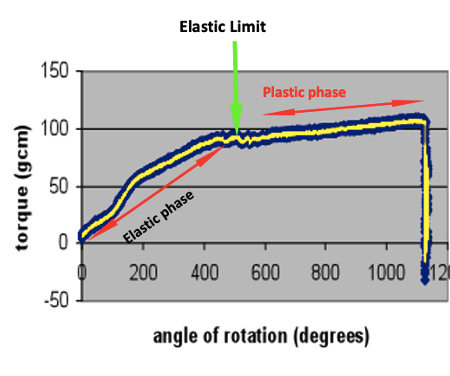
- Elastic limit
- Elastic deformation
- Shape memory
- Plastic deformation
- Plastic limit
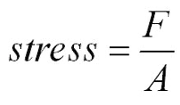
stress
deforming force measured across a given area
tensil/compressive/shear/torsional
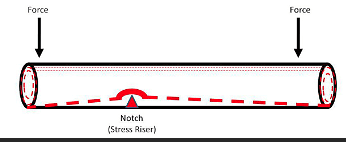
stress concentration point
abrupt changes in geometric shape of a file that leads to higher stress at that point
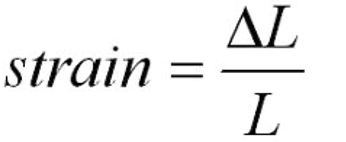
strain
response of a material to stress
anount of deformation a file undergoes
elastic limit
a set value representing the maximal strain that when applied to a file, allows to return to original dimensions
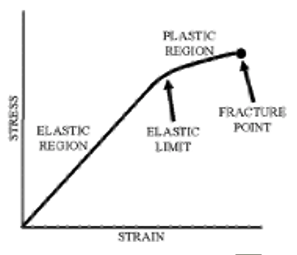
elastic deformation
reversible deformation that does not excess elastic limit
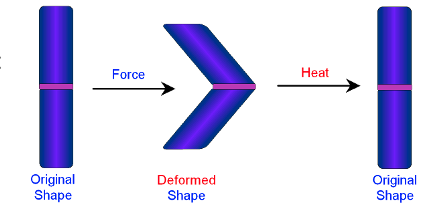
shape memory
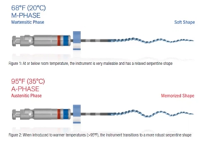
shape memory alloys are materials that can be deformed at one temperature but when heated or cooled, return to their original shape
e.g. robut file that fills up root canal when heated
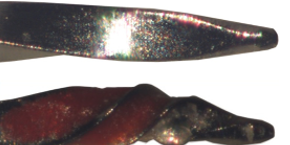
plastic deformation
permanent bond displacement occurring when elastic limit exceeded
plastic limit
the point at which a plastic deformed file breaks
leads to instrument separation
- clinical failure
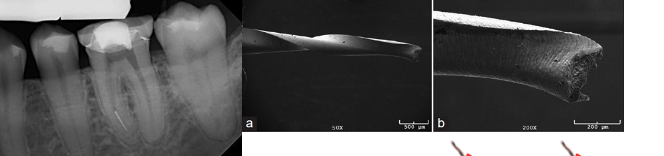
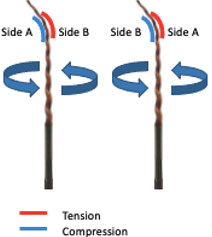
cylic fatigue
freely rotating in a curvature
generation of tension/compression cycles
cyclic fatiugue = failure
torsional fatigue
bind to dentinal wall
rotate but not bond portion
- plastic deformation between 2 parts = failure
7 prevention methods for endodontic instrument failure
- Training and proficiency in the NiTi system of choice
- Create a manual glide path
- Employ a crown-down instrumentation technique to ensure straight-line access
- Use an electric speed and torque controlled motor
- NiTi files should be used in constant motion using gentle pressure
- Avoid triggering or disable the autoreverse mode
- Use of rotary files in abruptly curved or dilacerated canals should be avoided
6 classifications of endodontic instruments
- Manually operated (ISO No. 3630-1)
- Low-speed instruments
- Engine-driven nickel-titanium rotary instruments
- Engine-driven instruments that adapt to canal shape
- Engine-driven reciprocating instruments
- Ultrasonic instruments
stainless steel
alloy of iron, carbon and chromium
nickel may also be present
- improved carbon steel - rusting
- 13-36% chromium prevents rusting
- passivation layer of chromium oxide
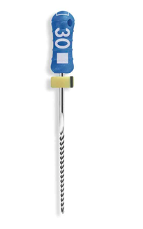
2 manufacturing techniques of stainless steel endo instruments
- Machined stainless steel wire
- Cut into Square/Triangular or Twisted
- Work-hardening occurs – improves
or
- Machine stainless steel wire into desired shapes
- Work hardening
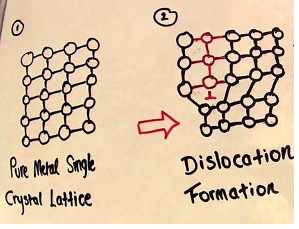
work hardening
- Strengthening of a metal by plastic deformation
- Crystal structure dislocation
- Dislocations interact and create obstructions in crystal lattice
- Resistance to dislocation formation develops
- Observed work hardening
nitinol
Equiatomic alloy of nickel and titanium
Exotic metal
- does not conform to typical rules of mettalurgy
Super-elasticity
- application of stress does not result in usual proportional strain
- Behaves slightly different
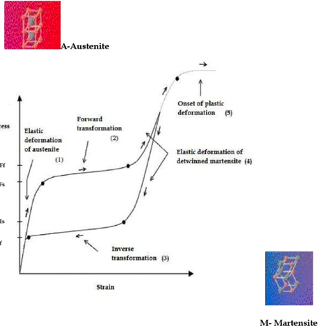
NiTi Crystal Structure
- Temperature-dependent structures martensite and austenite
- Crystal lattice structure altered by temperature or stress
- Character and proportions determine mechanical properties of the metal
- Martensite form, it is soft and ductile and easily deformed
- Austenitic form is quite strong and hard
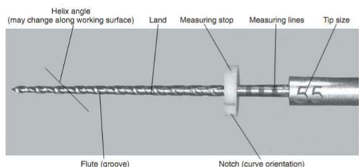
6 components of endodontic rotary instruments
- taper
- flute
- leading/cutting edge
- land
- relief
- helix angle
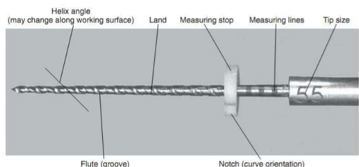
taper
diameter change along working surface
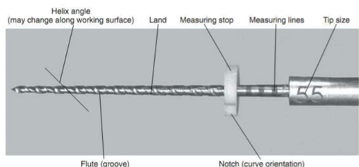
flute
groove to collect dentine and soft tissue
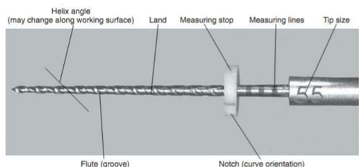
leading/cutting edge
forms and deflects dentine chips