Which drugs are associated with tinnitus?
- NSAIDs incl. Aspirin
- Aminoglycosides
- Loop diuretics
- EtOH
- Quinine
What are causes of tinnitus?
- Meniere’s disease (associated with vertigo)
- Otosclerosis
- Acoustic neuroma (absent corneal reflex, vertigo)
- Hearing loss (excessive loud noise, presbycusis)
- Durgs
What is otosclerosis?
Otosclerosis describes the replacement of normal bone by vascular spngy bone.
It causes a progressive hearing loss due to fixation of the stapes at the oval window.
- Autosomal dominant
- Onset in 20-40s with
- Conductinve hearing loss
- Tinnitus
- Normal timpanic membrane or flamingo tinge
- Positive FHx
What is labyrinthtis?
How does it present?
Labyrinthitis is inflammation of the membranous labyrinth affecting both vestibular and cochlear end organs. (Cf. vestibular neuritis
It can be viral, bacterial or 2° to systmic disease.
It presents with sudden onset of:
- Symptoms:
- Vertigo - not triggered, but exacerbated by movement
- Nausea and vomiting
- Hearing loss (unilateral or bilateral
- Tinnitus
- Preceding URTI symptoms
- Signs:
- Unidirectional horizontal nystagmus
- Sensorineural hearing loss
- Gait disturbance
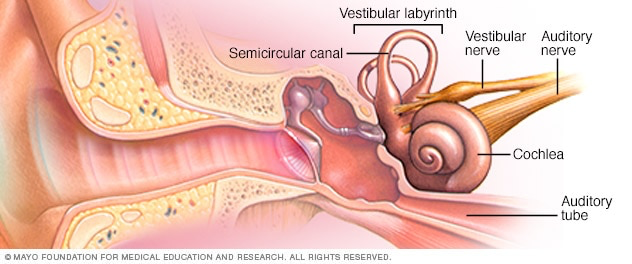
What are causes of vertigo?
Peripheral/Vestibular:
- Meniere’s Disease
- Benign paroxysmal positional vertigo
- Labyrinthitis (both hearing and vertigo) or vestibulr neuronitis (hearing not affected)
Central:
- Acoustic neuroma
- MS
- Vertobasilar stroke
May also be caused by drugs (gentamycin, loop diuretics)
What is benign paroxysmal positional vertigo?
BPPV is a condition where there are calcium carbonate crystals within the semilunar canals of the labyrinth, as a result of age, viral infection, head traum or idiopathic.
This impairs the normal detection of head movement by the steatocilia.
Symptoms:
- Positional - symptoms only on movement
- Attacks last around 1 minute before they settle
- Typically periods of several weeks, then self-resolve, but can reoccur
What test can be used to diagnose BPPV?
How can it be treated?
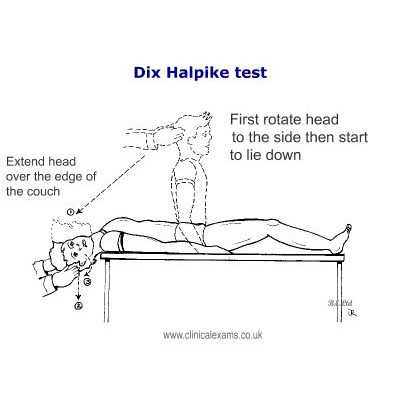
The Hallpike test. (see image)
There, the patient’s head is twisted and then rapidly brought down onto a pillow - watch the patients eyes for nystagmus (upbeat, torsional) and ask for symptoms of vertigo.
It can be treated with the Epley maneuvre.
What are causes of conductive hearing loss?
- External canal obstruction (wax, pus, foreign body)
- Tympanic membrane perforation (trauma, infection)
- Ossicle defects (otosclerosis, infection, trauma)
What are causes of sensorineural hearing loss?
This occurs due to damage to the cochlea, the cochlear nerve or the brain.
- Drugs (aminoglycosides, vancomycin)
- Post-infective (meningitis, measles, mumps, herpes)
- Miscellaneous:
- Meniere’s
- Trauma
- Multiple Sclerosis
- Cerebropontine angle lesion
What is an acoustic neuroma?
How does it present?
This is a slow gorwing tumour of the vestibular nerve. It acts as a SOL and causes cerebellopontine angle syndrome. (80% of CPA tumours are acoustic neuromas).
Presentation:
- Slow onset
- Sensorineural hearing loss on the site of lesion
- Headache (2° to raised ICP)
- CN palsy ov 5 (V1, V2), 7 and 8
- Cerebellar signs may be seen
What is Alport syndrome?
Alport syndrome is a genetic condition (most commonly X-linked recessive but can also be autosomal recessive) affecting collagen IV, leading to:
- Sensorineural hearing loss
- Haematuria
What is Meniere’s Disease?
This is an excessive endolymph in the labyrinths, leading to attacks of hearing loss, vertigo, fullness. These often occur in middle aged adults.
They are NOT associated with movement.
Spontaneous nystagmus occurs during the attacks.
Over time, hearing will deteriorate.
What is versibular neuronitis?
This is inflammation of the vestibular part of the 8th cranial nerve, usually 2° to a viral infection. It leads to sudden onset vertigo WITHOUT hearing loss.
This lasts for several weeks before improving.
What is Ramsay Hunt syndrome.
This is Herpes Zoster reactivation of facial nerve near ear.
It can also affect hearing and vestibular function, leading to tinnitus, hearing problems and vertigo.
There often is a vesicular rash in the auditory canal and pinna.
Treat with valaciclovir and prednisolone
What are the symptoms of a posterior circulation stroke?
- Ataxia
- Vertigo
- Diplopia
- Limb weakness
- Cranial nerve abnormalities
These will be sudden onset.
What are vestibular migraines?
These are sudden onset vertigo episodes lasting minutes - hours; often associated with visual auras and headaches.
How can epistaxis be classified?
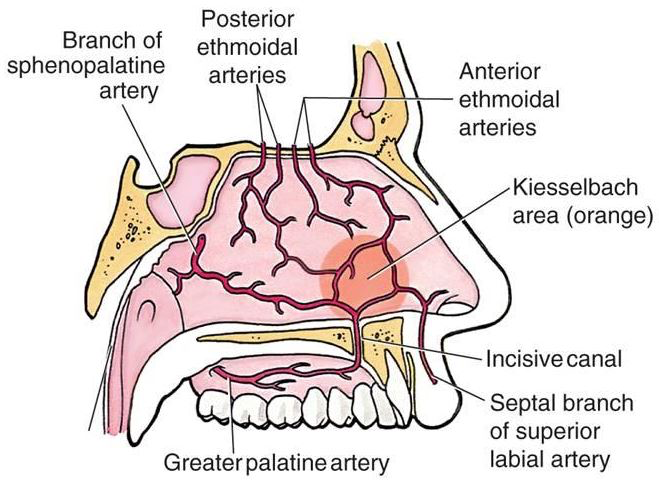
Anterior:
- Bleeding due to insult to capillaries of Kiesselbach’s plexus (aka. Little’s area)
Posterior:
- More common in older patients
- Higher risk of aspiration
What are causes of epistaxis?
- Majority unknown
- Trauma (including nosepicking)
- Local infection
- Juvenile angiofibroma (in young people)
- Pyogenic granuloma in Little’s area
- GPA
- Cocaine use (vasoconstriction can obliterate septum)
- Hereditary haemorrhagic telangectasia (Osler-Weber-Rendu)
- Coagulopathy
- Neoplasm
Summarise the management for a patient with epistaxis who is haemodynamically stable.
- Sit patient up, mouth open torso forwards - reduces blood flow to the nose and risk of aspiration
- Pinch cartilagenous area of nose for 15 monites, breathing through mouth
If the bleeding doesn’t stop after 15 minutes:
- Cautery with silver nitrate sticks if lesion is visible and can be tolerated; uses local anaesthetic spray
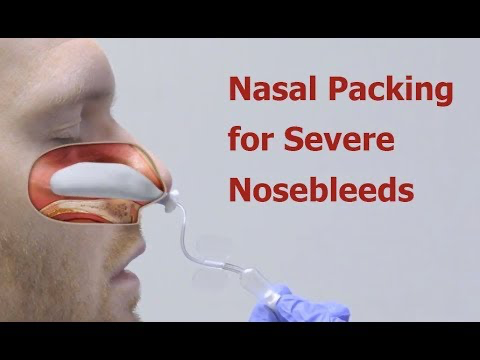
- Packing - put lots of gauze into the nasal cavity that is soaked in vasoconstrictor + LA. Admit for review.
Summarise the management for a patient with epistaxis who is haemodynamically unstable.
These patients need to be admitted to the ED - control bleeding with first-aid measures in the interim and admit to hosptial if unsuccessful for ENT management.
What are self-care advices you can give patients with nose bleeds?
- Avoid immedately after bleed (or treatment)=:
- Blowing nose
- nose picking
- heavy liftin
- exercise
- Drinkng EtOH
- Lying flat
What is hereditary haemorrhagic telangectasia?
This is an autosomal dominant disease with:
- telangectasia in mucosae leading to:
- recurrent spontaneous epistaxis
- GI bleeds (usually painless)
- internal telangectasia and AVMs (can be massive):
- Lungs
- Liver
- Brain
What are the clinical features of acute tonisllitis?
Signs:
- Sore throat
- Fever
Signs:
- Lymphadenopathy
- Inflammed tonsils and oropharynx
- Exudates - white of yellow pustules may be present
What is the most common infectious agent implicated in tonsillitis?
Streptococcus pyogenes (GAS). - this may form a quinsy.
The condition is frequently mimicked by Infectious mononucleosis.






