What percent of epistaxis cases are due to an anterior bleed vs a posterior bleed?
Anterior bleed (from Kiesselbach’s plexus)- 95%
Posterior bleed- 5%
***DONT WANT TO MISS POSTERIOR BLEED- CAN BE FATAL****
Etiology of epistaxis
- Nasal trauma (ex: picking nose)
- Mucosal dryness/irritation
- Mucosal hyperemia
- Foreign body / neoplasm
- Intranasal drug use
- Alcohol
- Anticoagulation therapy
- Blood disorders
- Atherosclerotic disease
- Hereditary hemorrhagic telangiectasia
- ?hypertension
*Nasal glucocorticoids can also caus epistaxis
What history questions should be asked for epistaxis?
–Explore possible causes
–Timing, frequency, severity
What is important to note on examination for epistaxis?
–Vitals, mental status, airway
–Nose: may need to pretreat with anesthetic or vasoconstrictor; try to identify source
What labs might need to be drawn on a patient presenting with epistaxis?
–PT/INR – only anticoagulated patients
–Hematocrit, type and crossmatch
What are possible treatments for epistaxis?
- Conservative measures
- Cautery
- Nasal packing
Epistaxis treatment- conservative measures
- Occlusion, continuous x 10-15 minutes
- Lean forward to prevent swallowing blood
- Cold compress to bridge of nose
Epistaxis treatment options- cautery
Can use silver nitrate or electrical
What are different methods of nasal packing for treatment of epistaxis?
- Nasal tampon (concern for TSS)
- Gauze packing
- Nasal balloon catheter
Overview of epistaxis management
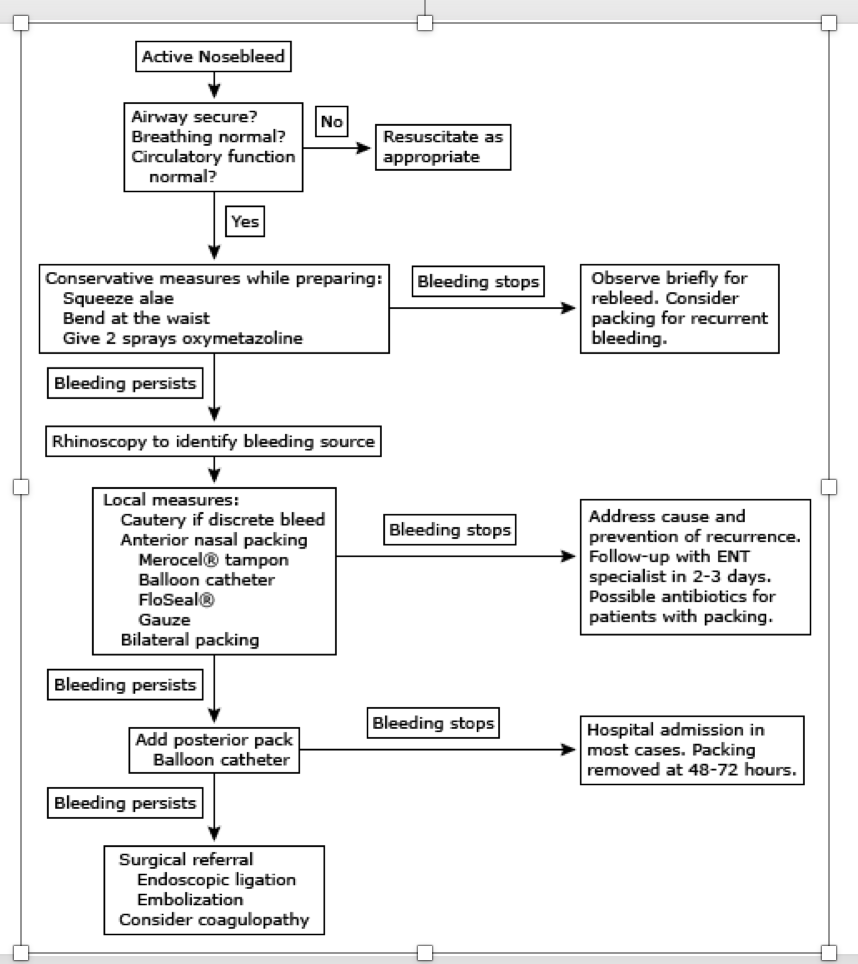
What to do with a patient who has epistaxis and has persistent bleeding
- Contralateral packing
- ENT consultation
- Posterior bleed- emergency, likely admission
Epistaxis- after bleeding is controlled
–Avoid straining or vigorous exercise
–Apply nasal saline to packing
–Avoid hot or spicy food, tobacco (vasodilation)
–Avoid nasal trauma
–Lubrication (petroleum jelly or bacitracin ointment)
–Increase home humidity
–+/- antibiotics for TSS prophylaxis (if doing nasal tampon)

-
ENT- URI, common cold17
-
ENT- Acute and Chronic Rhinosinusitis20
-
ENT- Allergic Rhinitis, Chronic Nonallergic Rhinitis/Vasomotor Rhinitis25
-
ENT- Epistaxis12
-
ENT- Nasal polyps and malignant neoplasms13
-
Ear- Popcorn34
-
Nose and sinus popcorn14
-
Eye 1&2- popcorn25
-
Eye 2&3- popcorn31
-
Mouth and throat- popcorn34
-
ENT Medications40



