What is the most common cause of lower motor neuron facial nerve paralysis?
What are the classic symptoms?
Treatments?
Prognosis?
Bells Palsy - usually sudden unilateral onset, usually after an URI. thought to be a reactivation of latent HSV1 infection
Hyperacusis - everything sounds loud because the stapedius muscle in the ear is paralyzed.
Most cases resolve spontaneously in about 1 month, although some have permanent sequelae.
PO prednisone and antivirals (valacyclovir, acyclovir) may improve outcomes and lessen duration of symptoms.
What are other causes of LMN facial nerve paralysis? 7
- Herpes infection (Ramsay Hunt syndrome), which commonly involves CN 8. Look for vesicles on the pinna and inside the ear; encephalitis or meningitis may be present.
- Lyme disease
- Stroke
- Middle ear or mastoid infection
- Meningitis
- Temporal bone fracture (Battle sign and/or bleeding from ear)
- Tumor, classically an acoustic schwannoma (i.e., neuroma) of the cerebellopontine angle
What are the common causes of hearing loss? (lots)
- Aging (presbyacusis) - most common
- Prolonged/intense exposure to loud noises
- Congenital ToRCH (toxoplasmosis, others, rubella, cytomegalovirus, herpes virus).
- Ménière disease (+severe vertigo, tinnitus, N/V)
- treat acute episodes w/ benzodiazepines, anticholinergics [scopolamine], and antihistamines [meclizine or dimenhydrinate]
- diuretics are often used for ongoing treatment
- surgery may be necessary for refractory cases
- Drugs (aminoglycosides, aspirin, quinine, loop diuretics, cisplatin).
- Tumor (classically acoustic neuroma)
- Labyrinthitis (may be viral or extend from meningitis or otitis media).
- Diabetes
- Hypothyroidism
- Multiple sclerosis
- Sarcoidosis
- Pseudotumor cerebri (increased intracranial pressure)
What is the usual cause of sudden deafness?
How are these patients treated?
Prognosis?
Sudden sensorineural hearing loss (SSNHL)
- idiopathic in most cases
- usually unilateral
- tinnitus is present in 90% of cases
- occurs over hours ( < 72 hours)
Treatment: steroids
Prognosis: 2/3 recover over 2 weeks, although the resolution is often not complete
What is the most common cause of acquired hearing loss in children?
Bacterial meningitis.
All children should receive formal hearing testing after a bout of meningitis.
What are the common causes of vertigo?
can arise from a CN8 lesion that cause hearing loss
- Meniere disease (due to ∆volume/composition of inner ear fluid)
- tumor
- infection
- MS
BPPV (induced via certain head positions, nystagmus, ø hearing loss)
How is a deviated nasal septum treated in patients with recurrent sinusitis?
surgical correction
What are the three common causes of rhinitis?
Viral
allergic
bacterial
How do you recognize and treat viral rhinitis (common cold)?
What can cause viral rhinitis?
treatment is symptomatic
Vasoconstrictors (phenylephrine) can be used for short-term symptomatic relief, but they may cause rebound congestion when discontinued
causes: rhinovirus (most common), influenza, parainfluenza, coxsackie virus, adenovirus, RSV, coronavirus, or echovirus.
How do you recognize and treat allergic rhinitis?
symptoms: seasonal flare-ups, boggy/bluish turbinates, onset before 20yo, nasal polyps, sneezing, pruritus, conjunctivitis, wheezing or asthma, eczema, (+) family hx, eosinophils in nasal mucous, and elevated IgE
diagnose: skin test
treatment: avoid known antigens, antihistamine, nasal steroids, and/or cromolyn in more severe cases; desensitization
What causes bacterial rhinitis? How does it present?
How is it diagnosed and treated?
culprits: Group A streptococci, pneumococci, or staphylococci
symptoms: coexisting sore throat, fever, and tonsillar exudate
diagnosis: strep throat cultures
treatment: antibiotics
What causes nosebleeds?
- trauma (nose-picking)
- nasopharyngeal angiofibroma (tumor in adolescent boys w/o history of trauma or blood dyscrasia)
- leukemia (typically in children with associated fever and anemia)
True or false: A neck mass is more likely to be benign in a child than in an adult.
TRUE
What are the common causes of a neck mass?
CHILDREN
- thyroglossal duct cysts - midline, elevates with tongue protrusion
- branchial cleft cysts - lateral; often become infected
- cystic hygroma - aka lymphangioma; benign, associated with Turners and treated with surgical resection
- cervical lymphadenitis - due to streptococcal pharyngitis, EBV, cat-scratch disease, or mycobacterial infection (scrofula)
- malignancy - leukemia or lymphoma may present with cervical lymphadenopathy
ADULTS
- malignancy - either lymphadenopathy from a 1˚ (lymphoma, thyroid), metastatic (usually squamous cell carcinoma) neoplasm
Describe the workup for an unknown cancer in the neck.
Triple endoscopy with triple biopsy:
biopsy of nasopharynx, palatine tonsils, and base of the tongue as well as laryngoscopy, bronchoscopy, and esophagoscopy
What is the scientific name for “swimmer’s ear?” What causes it?
What are the symptoms of this?
How do you treat it?
Otitis externa - commonly caused by Pseudomonas aeruginosa
Signs:
- pain with manipulation of the auricle
- erythematous, swollen skin in the auditory canal
- foul-smelling discharge
- conductive hearing loss also may be present
Treatment:
- topical antibiotics (e.g., ofloxacin, neomycin, polymyxin B)
- steroids (to reduce swelling)
What causes otitis media?
How do you recognize and treat it?
extremely common pediatric infection, most often due to Streptococcus pneumoniae, Haemophilus influenzae, or Moraxella catarrhalis
symptoms: ø pain with manipulation of the auricle; earache, fever, erythematous and bulging tympanic membranes (the light reflex and landmarks are difficult to see with otoscopy), and nausea and vomiting.
What are the complications of otitis media? How are they avoided?
- tympanic membrane perforation (bloody or purulent discharge)
- mastoiditis (fluctuance and inflammation over the mastoid process roughly two weeks after the onset of OM)
- labyrinthitis
- cranial nerves VII and VIII palsies
- meningitis
- cerebral abscess
- dural sinus thrombosis
- chronic OM (because of permanent perforation of the tympanic membrane); may develop cholesteatomas (expanding/destructive growth of keratinizing squamous epithelium in the middle ear and/or mastoid process) with marginal perforations that require surgical excision.
treated with antibiotics to avoid these complications (e.g., amoxicillin, second generation cephalosporin such as cefuroxime, macrolide).
What is the problem with recurrent otitis media? How is it treated?
can cause hearing loss with resultant developmental problems (speech, cognitive functions)
treat with prophylactic antibiotics or tympanostomy tubes
What is infectious myringitis and what causes it??
How do you recognize and treat it?
Infectious myringitis (aka bullous myringitis) - inflammation of the tympanic membranes; can be diagnosed when otoscopy reveals vesicles on the tympanic membrane.
causes: Mycoplasma species, Streptococcus pneumoniae, or viruses
treatment: erythromycin or clarithromycin to cover Mycoplasma species and S. pneumoniae.
What are the common bacterial causes of sinusitis?
How is this condition recognized clinically?
causes: S. pneumoniae, H. influenzae, or other streptococcal or staphylococcal species
symptoms: tenderness over the affected sinuses, headache, and purulent nasal discharge (yellow or green), headache and/or toothache (maxillary sinusitis)
diagnosis: Xray or CT shows opacification of the sinus, classically with an air-fluid level in acute sinusitis; CT preferred to evaluate chronic sinusitis or suspected extension of infection outside the sinus (watch for high fever and chills)
treatment: amoxicillin, amoxicillin-clavulanate, TMP-SMX, a second or third generation cephalosporin, a macrolide for 10 to 14 days or for up to 6 weeks in chronic cases)
- surgical intervention (drainage procedure, sinus obliteration) may be required for resistant cases.
By what age are the frontal sinuses well developed in children?
10 yo
Define otosclerosis. How is it treated?
otic bones become fixed together and impede hearing
treatment: hearing aid or surgery
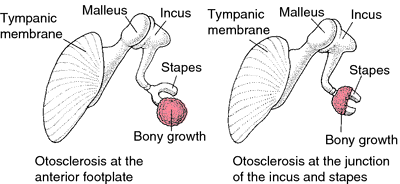
most common cause of conductive + sensorineural hearing loss in adults
conductive: otosclerosis
sensorineural: presbyacusis

-
Top 100 Facts192
-
Acid-Base & Electrolytes46
-
Alcohol20
-
Biostatistics40
-
Cardiology81
-
Cholesterol9
-
Dermatology46
-
Diabetes mellitus21
-
ENT surgery28
-
Emergency Medicine13
-
Endocrinology42
-
Ethics19
-
Gastroenterology92
-
General Surgery44
-
Genetics60
-
Geriatrics18
-
Gynecology82
-
Hematology79
-
Hypertension13
-
Immunology62
-
Infectious Disease131
-
Laboratory Medicine15
-
Neurology/Neurosurgery107
-
Nephrology27
-
Obstetrics154
-
Oncology0
-
Ophthalmology0
-
Orthopedic Surgery0
-
Pediatrics0
-
Pharmacology0
-
Preventative medicine0
-
Psychiatry0
-
Pulmonology0
-
Radiology0
-
Rheumatology0
-
Shock0
-
Smoking8
-
Urology0
-
Vascular Surgery0
-
Vitamins & Minerals31



