The ____ Soluble an Inhalant Anesthetic is, the More Potent it is
More
*Ex. If the MAC of Sevoflurane is 2%, and a MAC of Isoflurane is 1%. Which is more Potent?
If you need 2mg/kg of Sevoflurane to get the patient to Sleep, and 1mg/kg of Isoflurane to get the Patient to Sleep, you need much more Sevoflurane than Isoflurane to get the Patient to Sleep. If you need Less of the Drug to get the animal to Sleep, it is More Potent. Therefore, Isoflurane is More Potent!!
Isoflurane has a Lower MAC and therefore is more Potent
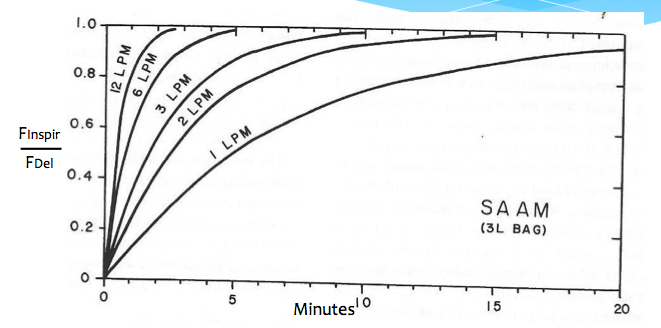
The Higher the Flow Meter Setting, the ____ the Patient will Reach Equilibrium
Faster
*Flowmeter Rate is much Higher for Induction. The Patient will Reach Equilibrium as fast as Possible. After Equilibrium is Reached, the Flowmeter Rate is turned down for Maintenance.
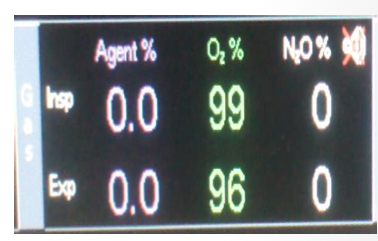
The Patient was Premedicated with Fentanyl IV and Midazolam IV. The Patient was Induced with Propofol and Ketamine. Isoflurane, Oxygen, CRI-Fentanyl and LRS Fluids were used for Maintenance. Its been 20 Minutes since the Discontinuation of Inhalant Anesthetic and the Patient is Still Unresponsive with No Palpebral Reflex and Eyes are Ventral Medial. What is Causing the Prolonged Emergence from Anesthesia?
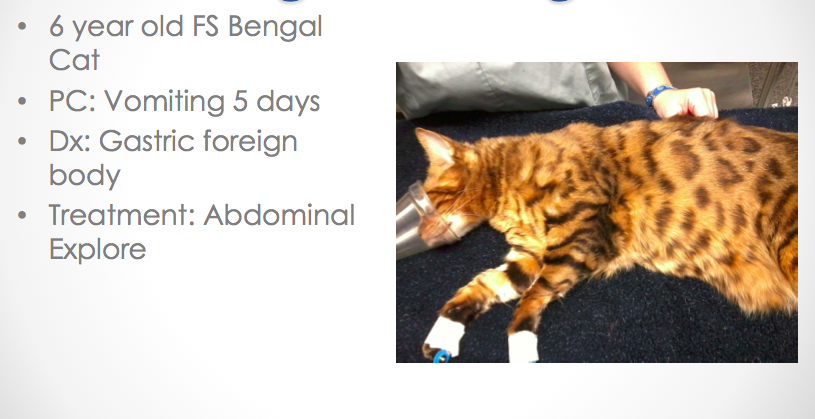
Fentanyl can Accumulate when used as CRI- Drugs can still be Lingering Around the Body
Non Invasive tool that Measures ETCO2 mmHg and InCO2 mmHg that is used clinically to:
- Monitor breath by breath Ventilation/Apnea/Respiratory Rate
- Indicate abnormal Ventilatory Patterns
- Measure Rebreathing of CO2
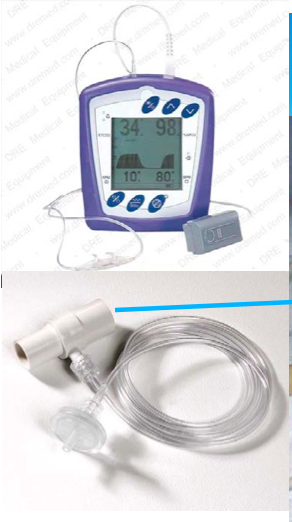
Capnography
*ETCO2 = End Tidal Carbon Dioxide (Normally 35-45 mmHg)
*InCO2 = Inspired Carbon Dioxide
Which Inhalant Anesthetic has the Highest Blood Gas Solubility?
Halothane
*Longest Onset and Longest Recovery
Most commonly used Alpha 2 Agonist Premedication in Small Animals that has a Quick Onset of 1-3 Minutes and has Lasting Effects for 90-120 Minutes
Dexmedetomidine
Rebreathing Systems are Used on Patients that Weigh Greater than ____kg
3kg
* 1kg = 2.2 lbs
*If Patient Less than 3kg is put on a Rebreathing System their Inspiratory CO2 will Rise
Stage of Anesthesia from Initial Administration of Induction agents to Loss of Consiousness where Breath Holding or Rapid Respiration may occur as well as Salivation, Urination, Defecation and Pupil Dilation
Stage I
What ASA PS would you Give this Patient?
A. ASA 1
B. ASA 2
C. ASA 3
D. ASA 4
E. ASA 5
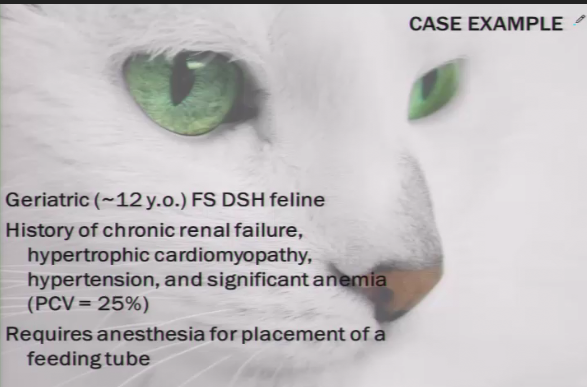
ASA 3
*Placement of a feeding tube is not an Emergency
The more _____ an Anesthetic Agent is in Blood, the Slower the Induction
Soluble
*The Less Soluble an Anesthetic Agent is in Blood, the Faster the Induction- The less uptake by Blood, the more gas available to be passed on to the Brain
*The Less Soluble an Agent is, the Lesser its uptake into tissues and the Faster it reaches Equilibrium
Know this Graph!!!
*Be able to Pick out Baseline and ETCO2 (End Tidal) on Exam!!
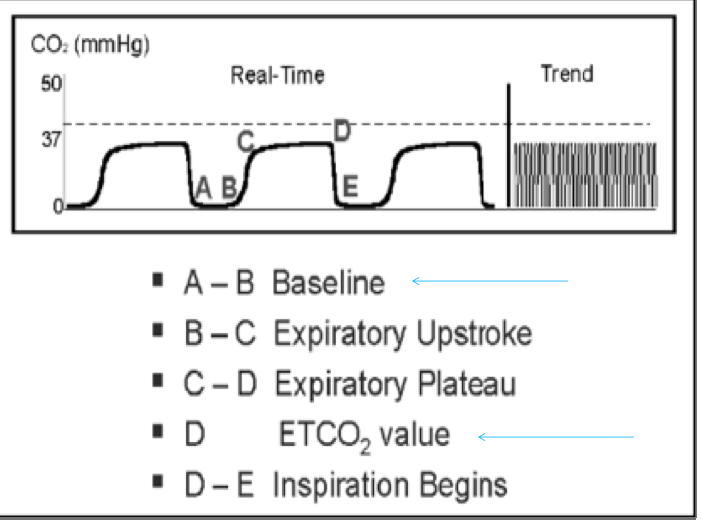
*Very Important- KNOW THIS
*CO2 mmHg should always go back to Baseline (0 mmHg) during Inspiration, UNLESS we are Rebreathing. If we are Rebreathing CO2 then it will be Elevated off the Baseline- KNOW THIS
*If it is every Elevated off the baseline during Inspiration then Check equipment and see what is happening
What is Occuring in this Patient based on this Capnograph Waveform?
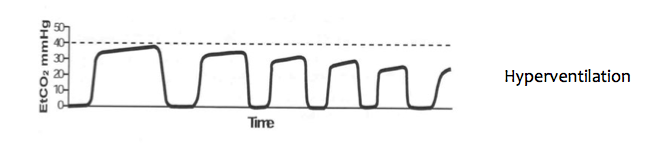
Hyperventilation
*Breathing out Too Much CO2
Most Commonly used Phenothiazine that works as a Dopamine (D1 and D2) Receptor Antagonist in the CNS leading to Tranquilizing and Antiemetic Effects
Acepromazine
*Dopamine Receptor Antagonist in the CNS
Most Common Artery for Cannulation of Invasive Blood Pressure in Dogs
Dorsal Pedal
Summary of What we Want to Achieve in Stage III (Surgical) Anesthesia
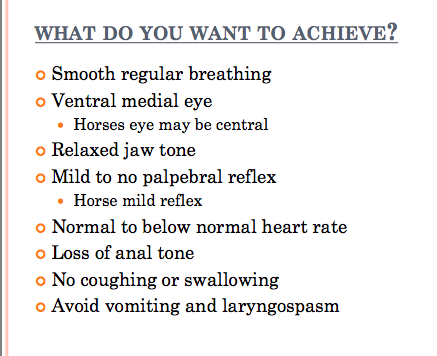
*Should see no Palpebral effect in Dogs and Cats
Barbiturate Induction agents, Thiopental, are very _____ with a pH Greater than 10, which if given IM can cause Thrombophebitis and Tissue Necrosis
Alkaline
*Tissue Sloughing
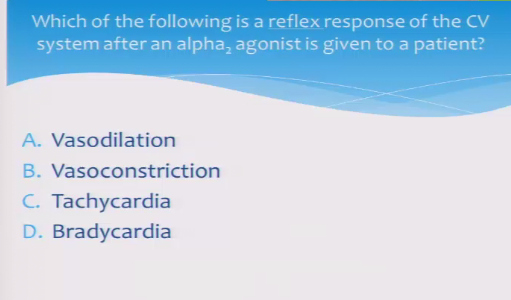
D. Bradycardia
Induction agent that acts by Enhancing Inhibitory effects of GABA at GABAa Receptors that works as an Anticonvulsant, Antiemetic and provides Excellent Muscle Relaxation
Propofol
*No Analgesia
Mixed Opioid Agonist-Antagonist Premedication that can be used to Reverse Sedative or Respiratory Effects of Pure mu Agonists
Butorphanol
Which One of the Factors can Prolong Emergence from Anesthesia:
A. Reduced Cardiac Output
B. Decreased Protein Binding
C. Impaired Hepatic Metabolism
D. Hypoxia
E. All of the Above
All of the Above
*Decrease Protein Binding- You need to have Adequate Amounts of Protein to take the drug to the Liver. Decreased Protein Binding means more of the Drug will be in the ACTIVE form causing a prolonged effect
Equation for Speed of Induction if Patient is in an Induction Chamber
Time Constant (min) = Volume (L) / Flow (L/min)
*Volume = Volume of Chamber
“Wash In” Period = 3. Have to Take Time Constant and Multiply by 3 to Determine Speed of Induction
*Ex. If your Induction Chamber is 2 Liters and the Flowmeter is set to 2 Liters/Minute
Time Constant = 2 Liters/ 2 Liters/Min
Time Constant = 1 Minute x 3 = 3 Minutes for Induction
Induction and Maintenance of General Anesthesia with Intravenous Drugs
Total Intravenous Anesthesia (TIVA)
Flow meters where Nitrous Oxide and Oxygen are used together (N2O:O2) should not exceed a ratio of ____, because it can cause Hypoxemia
2:1
Alpha 2 Agonist Premedication that is used Only on Large Animal and is believed to Produce less Ataxia than Xylazine and therefore is Popular for use in Dentals and other Standing Procedures
Romifidine






