When Zinc Phosphide Powder is Exposed to ____, It Liberates Phosphine Gas which is Toxic, Flammable and an Irritant
Acid
Which Synthetic Herbicide can cause these Clinical Signs in Ruminants?
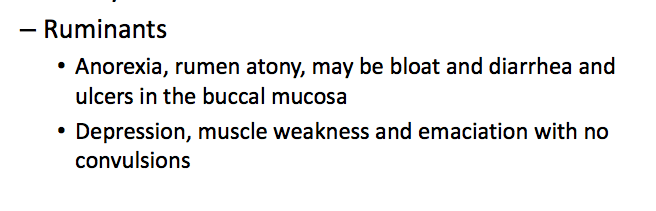
Phenoxy Derivatives of Fatty Acids (2,4-D)
*Ulcers within the Oral Mucosa in Ruminants
*Depression and Muscle Weakness- Ruminants do not get Convulsions
Factors that _____ Pentachlorophenol Toxicity Include:
High Ambient Temperatures
Oily or Organic Solvent Vehicles
Hyperthyroidism
Increase
*Highly Lipid Soluble- Soluble in Oils and Organic Solutes

Factors Affecting Toxicity of _____
Ruminants are More Susceptible (Mainly Cattle)
Most Toxic of all NPN (NonProtein Nitrogen) Compounds
Adult Cattle are MORE sensative than Calfs
Fasting/Dehydration Increases Toxicity
Urea
*Adult Cattle are More Sensitive to Urea Toxicosis because the Calf is not a Ruminant yet- Very young Animals are Tolerant (
Commonly used Molluscicide that is used to Kill Slugs and Snails
Metaldehyde
*Metaldehyde Exposure is Generally by Ingestion of Baits

Treatment for Zinc Phosphide Toxicity
Decontamination- Emetics?? (Risk Versus Benefit Assessment), Antacids, Gastric Lavage
Supportive Therapy- Fluids, Oxygen, Antacids
*No Specific Antidote
In which Toxicosis can you Microscopically see Peripheral Nerve and Optive Nerve Degeneration, Demyelination and Gliosis
Organic Arsenical Toxicosis
True/False: Lead has the Potential to Cross the Blood Brain Barrier and the Placenta
True

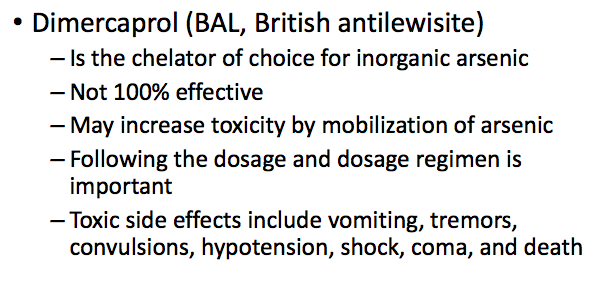
Antidotal Treatment for Inorganic Arsenic Toxicosis
Dimercaprol (BAL)
*Only used if you confirm Inorganic Arsenic Toxicosis
*Alternative Antidote- Dimercaptosuccinic Acid- Safer Antidote but also Less Effective
Rodenticide that is a Grey-Black Powder with a “Dead Fish” Odor that is Stable in the Enviornment for 2 Weeks
Zinc Phosphide
The Oral or Dermal LD50 of Pentachlorophenol in Domestic Animals is ____mg/kg
100-200 mg/kg
*Highly Toxic
Treatment for Ionophore (Monensin) Toxicosis
Decontamination- Activated Charcoal/ Mineral Oil
Symptomatic Treatment- Fluids to Correct Hypovolemia
*No Specific Antidote
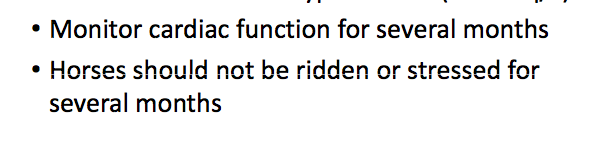
*The Damage in the Cardiac Muscle is going to Heal by Fibrous or Scar Tissue- Horses that survive may suffer Myocardial Scaring and Necrosis. If the Horse survives the Toxicosis, they can still die suddenly weeks or months later due to Heart Damage. Need to avoid STRESS in these Horses
Most Toxic Form of Selenium
Organic Selenium in Plants
*Toxicity: Organic Selenium in Plants > Selenate = Selenite > Selenide > Synthetic Organoselenium Compounds

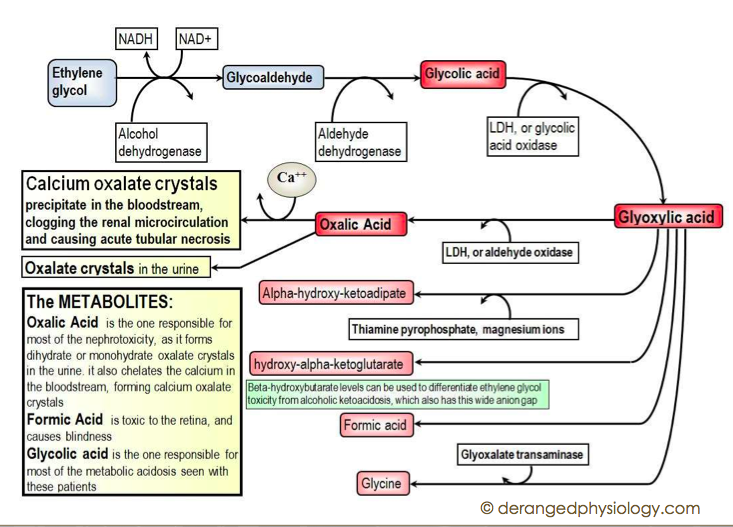
Toxicant that Undergoes Lethal Synthesis and is Metabolized to Toxic Metabolites Mainly in the Liver
Ethylene Glycol
*Metabolites of Ethylene Glycol are Toxic
*Chart- The Red Metabolites are the Most Toxic
True/False: Emesis is the “go to” Treatment for Zinc Phosphide Toxicity
False
*Do Not Induce Emesis in Patients with Zinc Phosphide Toxicity- Emesis is Contraindicated because it is a Corrosive Substance
Side Note- Emesis may be used since there is No Specific Antidote for Zinc Phosphide Toxicity- Even though it is Technically Contraindicated
Best Specimen for Laboratory Diagnosis of Inorganic Arsenic Toxicosis in a Live animal (Antemortem)
Urine
*Inorganic Arsenic gets concentrated in Urine

True/False: Older Animals are more Sensitive than Younger Animals to Lead Toxicity
False
*Young Animals are More Sensitive than Adults- Greater Absorption and Immature BBB in Younger Animals. Lead is more likely to cross the Blood Brain Barrier in Younger Animals

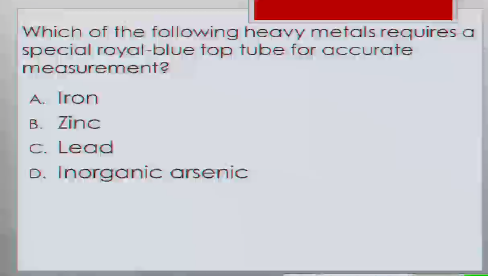
Zinc
Microscopic Lesions of which Toxicosis:
Yellow Birefringent Rosette-Shaped Calcium Oxalate Crystals in the Kindey or Urine
Ethylene Glycol Toxicosis
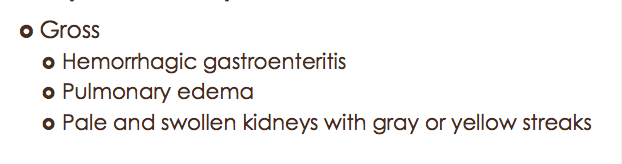
Clinical Signs of which Toxicosis:
Narcotic Effects
CNS Depression
Ataxia
Possible Heinz Body Anemia (Cats)
Propylene Glycol
Molybdenum Toxicity is most common in what Species
Cattle
*Most Common in Cattle, but can be seen in Sheep
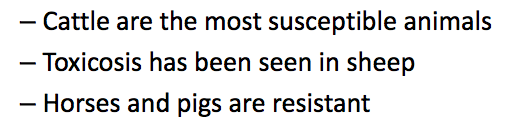
Clinical Signs of which Toxicosis:
Early Constipation and Thirst
Vomiting and Polyuria
Intermittent Convulsive Seizures (Not Elicited by External Stimuli)
Circling, Pivoting, Head Pressing
Blindness and Deafness
Inability to Eat or Drink
Water Deprivation-Sodium Ion Toxicosis
*Clinical Signs that we notice are mainly signs of Brain Damage
True/False: Emetics and Strong Cathartics are Contraindicated in Inorganic Arsenic Toxicosis
True
*Inorganic Arsenic causes GI Ulceration and Hermorrage- Emetics and Strong Cathartics are CONTRAINDICATED in these Cases
Best Specimens for Laboratory Diagnosis of Selenium Toxicosis
Acute Phase- Blood
Chronic Phase- Hair and Hoof
*Hoof specimen should be washed before Analysis






