LIst the steps in the Internet Model.
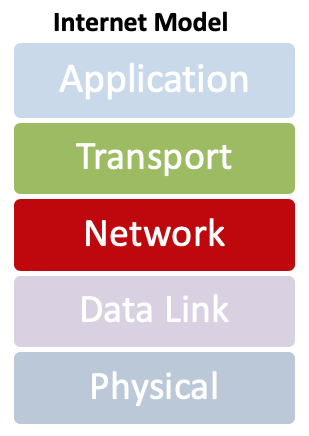
What layer is the Transport layer found in?
What does the Transport layer link?
What is the responsibility of the Transport Layer?
What does the Transport Layer manage?
- layer 4
- links application and network layers
- responsible:
- for the segmentation and reassembly
- for end-to-end delivery of messages
- sesssion management
What layer is the Network Layer found in the Internet Model?
What is the Network Layer responsible for?
- layer 3
- responsible for:
- addressing messages
- routing messages
Who developed TCP/IP?
What is TCP/IP?
What is the big difference between the beginning of TCP/IP and now?
- Originally developed as a single internetworking protocol by Vint Cerf and Bob Kahn in 1974
- Most common protocols of the Internet and in LANs, WANs, and backbone networks
- Later divided into the TCP and IP protocols
What is the abbreviation TCP?
What is special about TCP?
What is it used for?
What is PDU called in TCP?
How many bits are used in TCP?
- Transmission Control Protocol
- Most common transport layer protocol
- Used for reliable transmission of data
- called a segment
- 160-192 bits
What is UDP stand for?
Where does it exist?
What is a PDU called?
When do you use UDP?
How many bits are used?
- User Datagram Protocol
- Operates at the transport layer
- segment
- Used :
- in time-sensitive situations,
- for control messages,
- when reliability is handled by the application layer
- 32-64 bits
What does IP stand for?
What are the two versions of IP?
- Internet Protocol
- two kinds:
- IPv4
- IPv6
What does IPv4 stand for?
Why is it special?
What keeps it around?
How many possible addresses can it create?
- Internet Protocol Version 4
- Most common version of IP used
- Exhaustion of address space
- 32-bit addresses (232 or ~4.29 billion possible)
What does IPv6 stand for?
What keeps it from becoming the most common?
How many possible addresses can it create?
- Internet Protocol version 6
- Slowly being adopted due to IPv4 exhaustion
- 128-bit addresses (2128 or ~3.4 × 1038 possible)
How many bits used in a IPv4 Packet?
How often is the options field used?
- 160-192 bits (20-24 bytes) of overhead
- rarely
How many bits used in a IPv6 Packet?
How often is the options field used?
What kind of header is used?
- 320 bits (40 bytes) of overhead
- Lots
- Fixed Header
List some Optional Headers.
- Optional Headers
- Hop-by hop options
- Destination options (with routing options)
- Routing
- Fragment
- Authentication
- Encapsulation Security Payload
- Destination options
- Mobility
What are the functions of Transport Layer?
- Linking to the application layer
- Segmenting
- Session management
What is going on with TCP and UDP as Transport Layer conducts its linking function?
- TCP/UDP may serve multiple application layer protocols
How are Ports used in the Transport Layer as it conducts its linking to the application layer function?
What controls ports?
- Ports used to identify application (2-byte numbers)
- Many source/destination ports follow standards
Name common port standards.
- HTTP: TCP port 80
- HTTPS: TCP port 443
- FTP: TCP ports 20 and 21
- SMTP: TCP port 25
- IMAP: TCP port 143
- POP3: TCP port 110 (more commonly TCP port 995 secure version)
- DNS: TCP or UDP port 53 (most commonly UDP)
What is this showing?
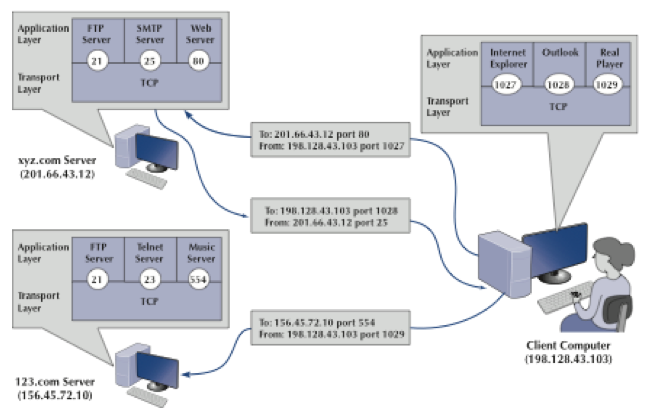
- Linking to application layer services
One function of Transport Layer is segmenting. What is it?
How are segments passed?
- Breaking up large files into smaller segments (and putting them back together)
- Segments may be passed individually to application layer or after reassembly
How large are segments?
What determines the size of segments?
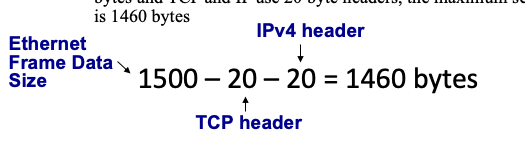
- Size depends on the network and data link layer protocols
- Maximum Segment Size (MSS) is negotiated during TCP handshake
What formula shows you the maxium segment size?
When data moves from sender to receiver what happens to the data as it moves to the receiver?
step 1
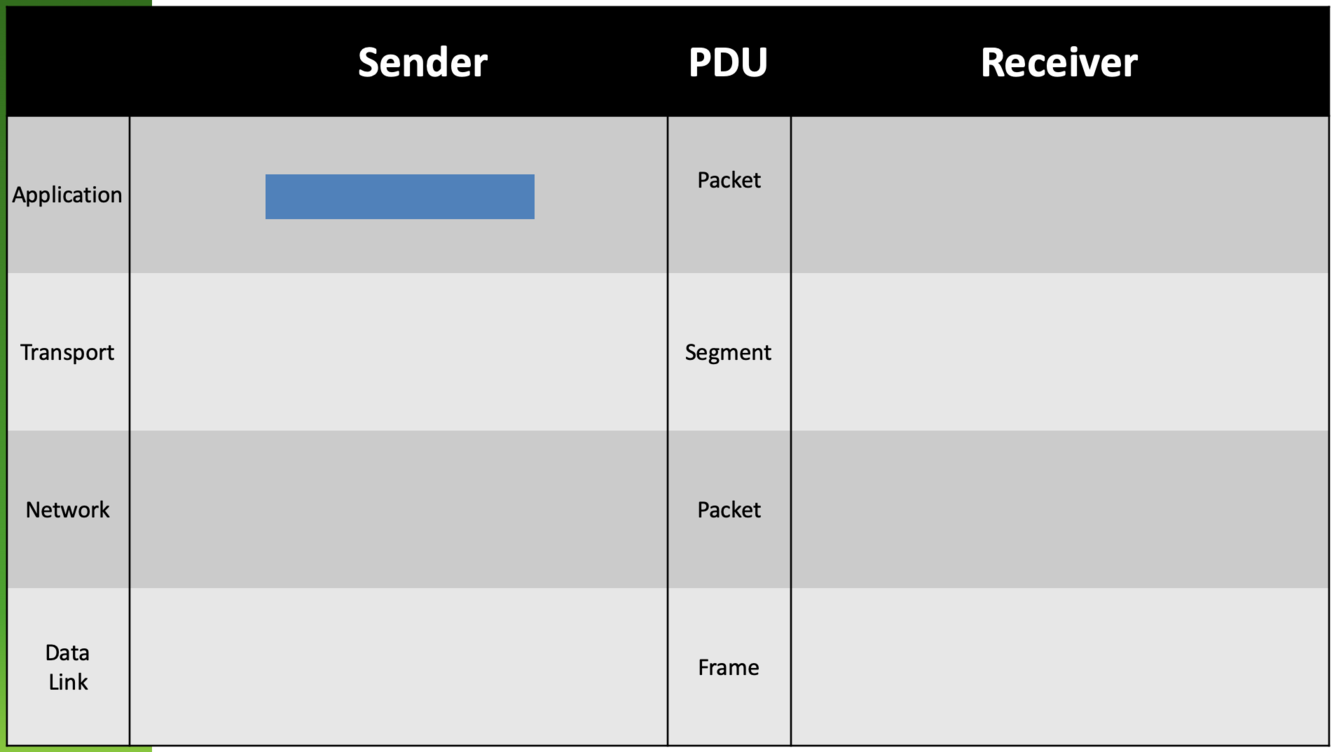
When data moves from sender to receiver what happens to the data as it moves to the receiver?
step 2
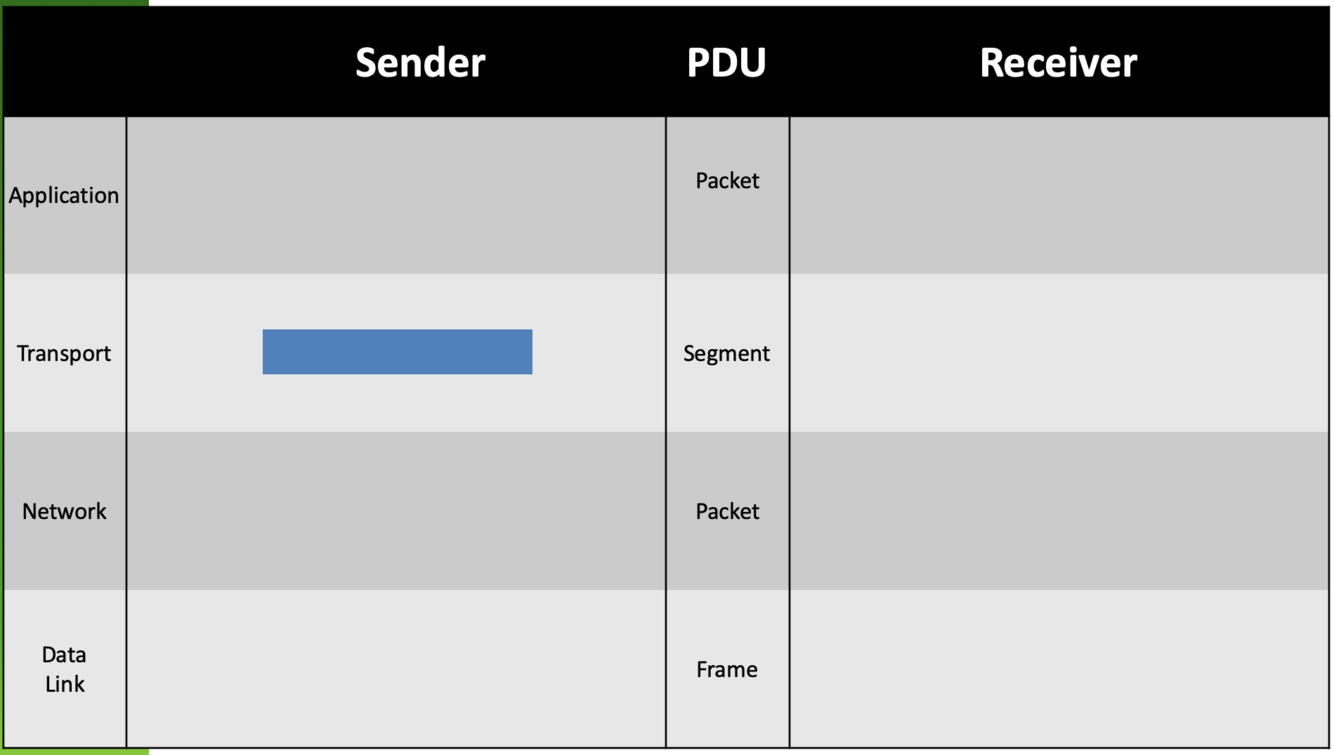
When data moves from sender to receiver what happens to the data as it moves to the receiver?
step 3
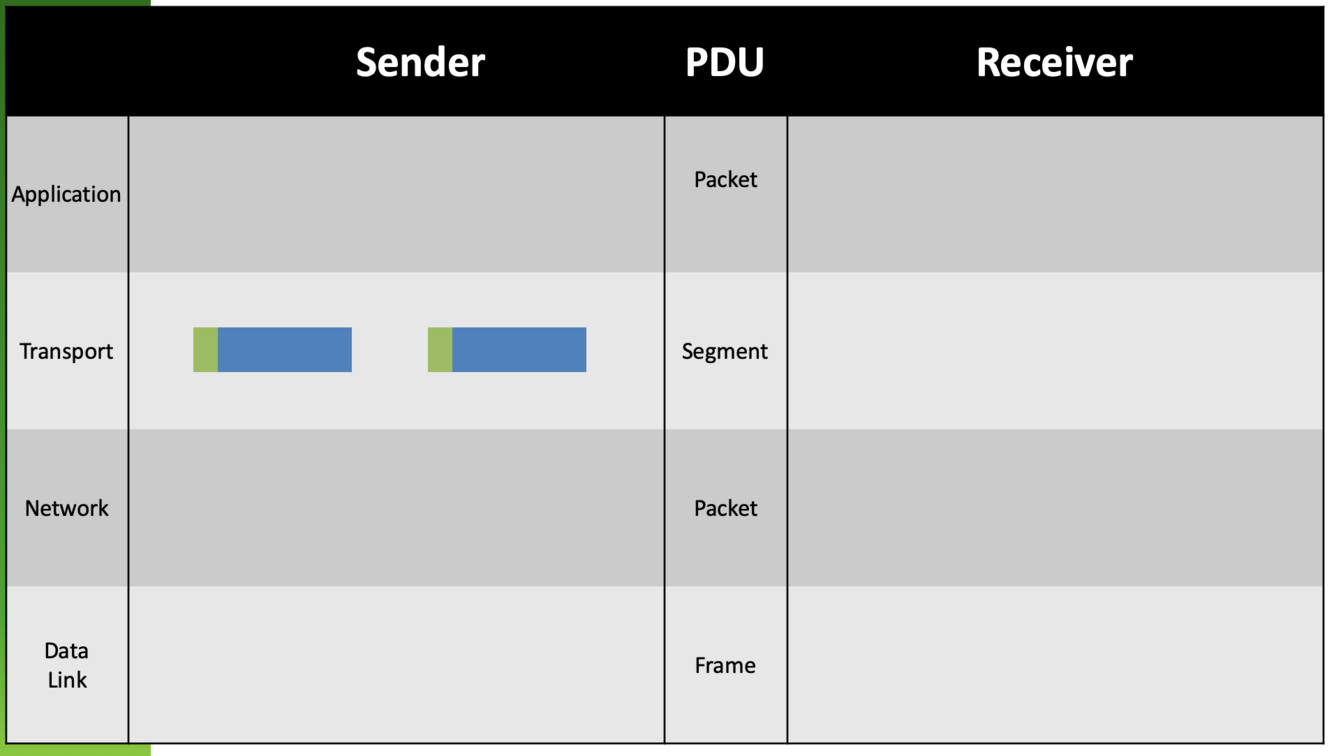
When data moves from sender to receiver what happens to the data as it moves to the receiver?
step 4
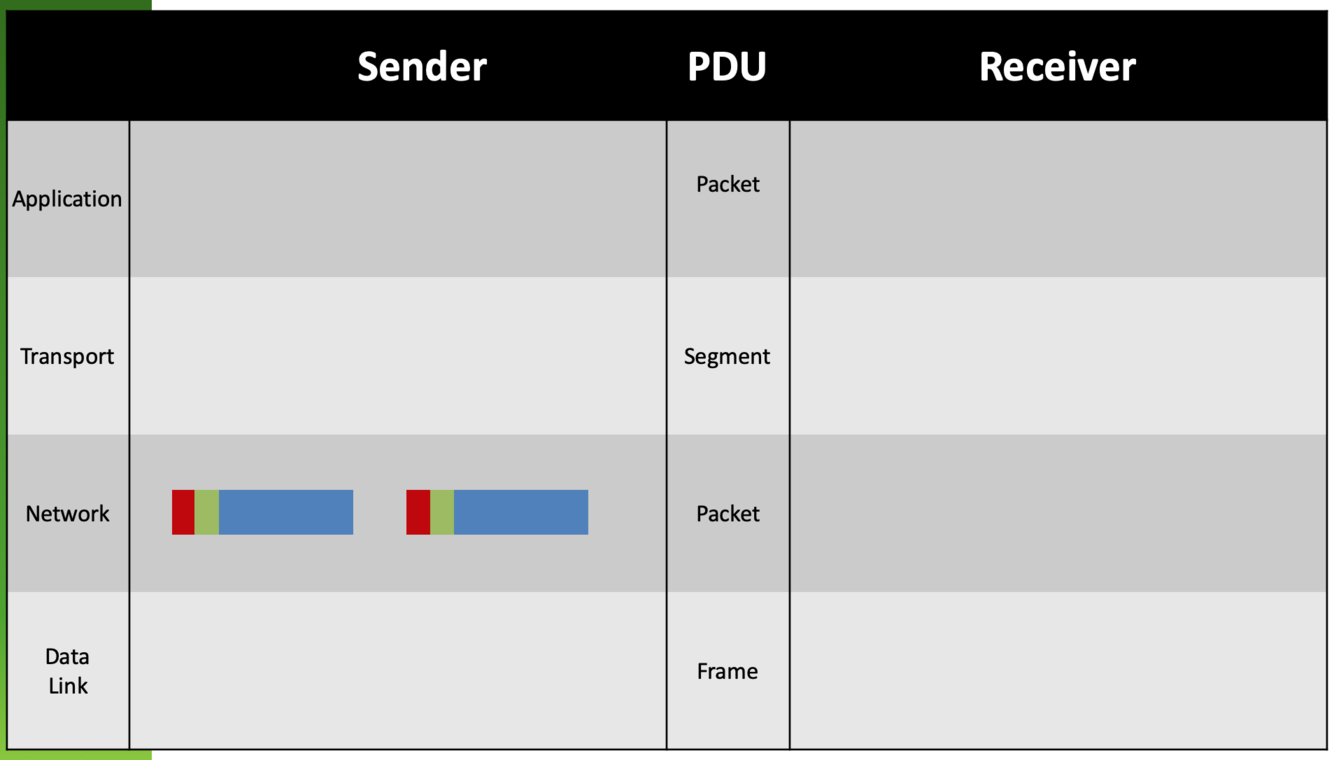



-
Exam 1354
-
Exam 2234
-
Quiz 5A10
-
Quiz 7A10
-
Quiz 8A10
-
Quiz 9A10
-
Quiz 5B9
-
Quiz 7B10
-
Quiz 8B10
-
Quiz 9B10
-
Quiz 6a10
-
Quiz 6B10
-
Quiz 10A10
-
Quiz 10B10
-
Quiz 11A10
-
Quiz 11B10
-
Quiz 12A10
-
Quiz 12B10
-
Chp. 6 Chapter Questions21
-
Chp. 10 Chapter Questions24
-
Chp. 11 Chapter Questions60
-
Chp. 12 Chapter Questions35



