Eye Flashcards

(92 cards)

1
Q

acute angle closure glaucoma presentation

A

red eye mid dilated nonreactive pupil, decreased peripheral vision, light halos around objects, HA, severe eye pain (periorbital eye pain and ipsilateral HA), N/V

can feel increased firmness over globe with gentle palpation.

medications that precipitate attack: anticholinergics, antihistamines, diuretics, antidepressants and SSRI’s.

treat with topical pilocarpine.
2
Q

Diabetic retinopathy is caused by? and characteristic findings are:

A

diabetic for years and has blurred vision with partial or total loss of vision or floaters

3
Q

chronic digoxin toxicity

A

changes in color vision, scotomas or blindness

4
Q

Sudden loss of vision differential

painful or non painful

A

consider GPA if >50;

optic neuritis if <50

central retinal artery occlusion

acute angle closure glaucoma (but will see eye pain too)

non artertic anterior ischemic optic neuropathy

retinal detachment - see peripheral vision then central with showers of floaters.

5
Q

age related macular degeneration definition and caused by:

A

chronic oxidative damage to the retinal pigment epithelium and chriocapillaris

6
Q

risk factors for age related macular degeneration

A

advanced age, smoking, family history

7
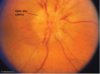
Q

most common leading cause of blindness in developed countries

A

age related macular degeneration

8
Q

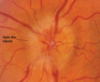
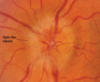
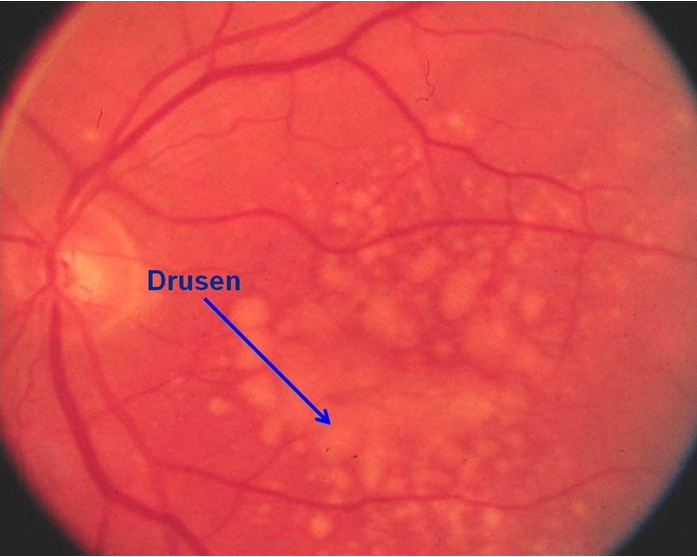
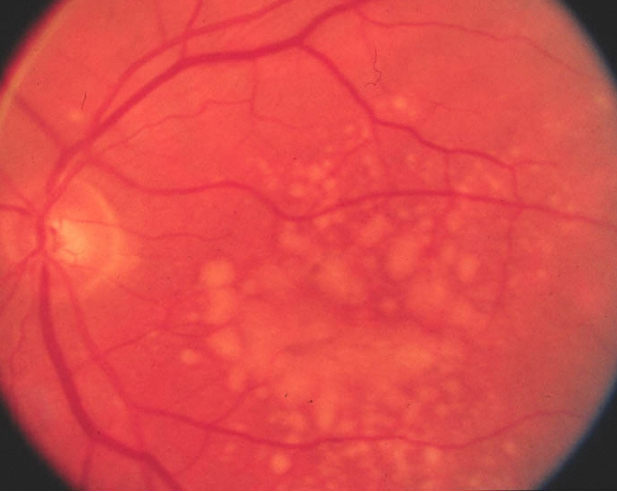
fundoscopy shows what in pts who have dry acute macular degeneration
A

drusen deposits - they represent areas of retinal depigmentation.
9
Q

Dry AMD can progress to

A

wet acute macular degeneration which presents with acute vision loss (Days to weeks) and metamorphosia (distortion of straight lines) due to subretinal hemorrhage and fluid accumulation

10
Q

how to treat moderate to severe AMD (Dry or wet)

A

smoking cessation (prevents disease progression) and should get daily antioxidant vitamins and zinc as this can reduce the progression to severe AMD and lower the likelihood of developing vision loss in the good eye.

11
Q

Wet acute macular degeneration can be treated w/

A

specific treatment with vascular endothelial growth factor (VEGF) inhibitors (ranibizumab or bevacizumab) to reverse or stabilize vision loss.

12
Q

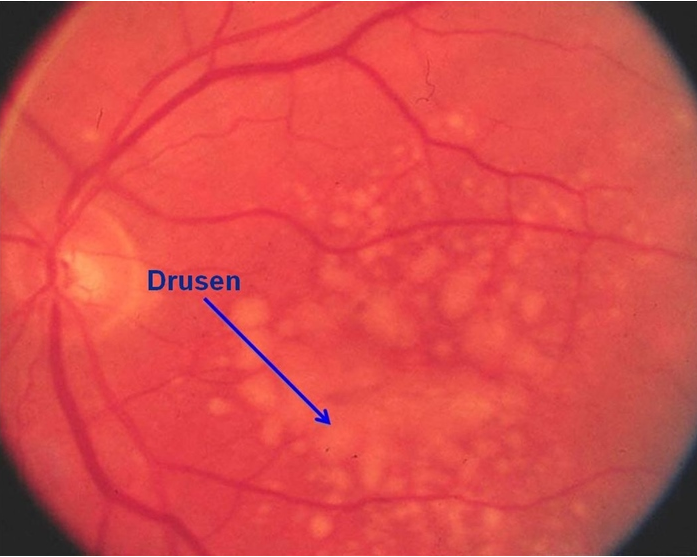
drusen deposits are:

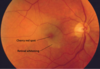
A

Seen in Dry form of AMD, and this accumulates between the retina and the choroid and sometimes can lead to retinal detachment.

It’s also a pigment abnormalities on fundscopy that can be seen with age related macular degeneration. Peripheral vision is spared.
13
Q

what is the first thing that people who have AMD and are smokers should do?

A

smoking cessation counseling Helps prevent disease progression

14
Q

pts with moderate to severe AMD (dry our weight) should also get

A

antioxidant vitamins and zinc- may reduce risk for progression to severe AMD and lowers likelihood of developing vision loss in good eye

15
Q

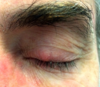
Treatment of WET AMD

A

needs specific treatment with vascular endothelial growth factor (VEGF) inhibitors (like bevacizumab or ranibizumab) for treatment to stabilize or reverse vision loss.

16
Q

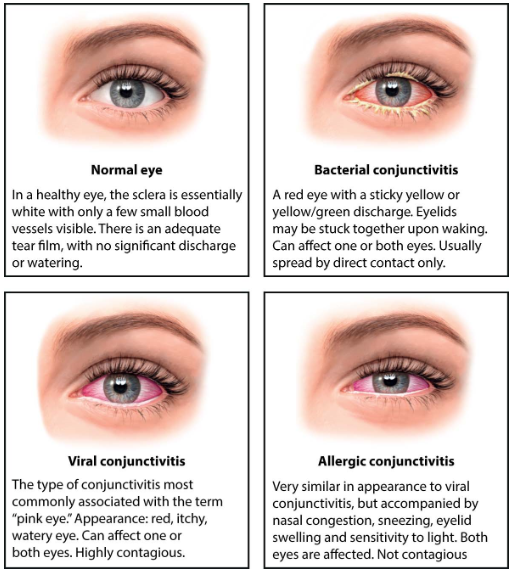
viral conjunctivitis presentation

A

self limiting condition from adenovirus

presents with acute unilateral conjunctival erythema and watery discharge in the setting of URI
17
Q

diagnosis of viral conjunctivitis?

A

clinical diagnosis with supportive (cold compresses over eyelides and topical decongestants). need good hand hygiene to prevent viral spread. no need for abx

18
Q

What is olopatadine?

A

H1 antagonist used in treatment of allergic conjunctivitis and see chronic bilateral conjunctivits worse in the AM in pollen heavy seasons.

19
Q

keratoconjunctivitis

A

cornea and conjunctiva are inflammed from viruses and bacteria.

severe condition with decreased visual acuity and limited ability to open eyes due to intense foreign body sensation.

Needs urgent ophthalmological evaluation to prevent vision loss.

may also feel like “sandpaper” feeling in eyes (can be seen with SLE or Sjogren’s syndrome too)

20
Q

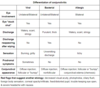
Different eye complaints (chart)

A
21
Q

risk factors for retinal detachment

A

myopia

eye trauma or recent surgery (more commonly cataract surgery rather than LASIK),

advanced age,

smoking,

hypertension,

diabetic retinopathy

family history of retinal detachment

22
Q

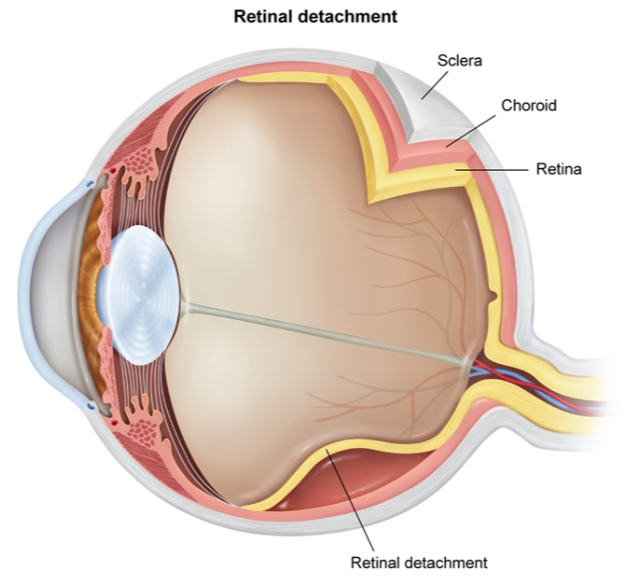
show pigmented vitreous cells behind the lens, vitreous debris and a fibrous ring due to cells normally under the retina and being liberated into the vitreous.

A

retinal detachment.

Need fundoscopic exam of other eye to make sure there’s no additional retinal detachment in that other eye.

Posterior vitreous detachment only = supportive care is needed

for retinal hole or horsehoe retinal tear without teachement- laser retinoplexy or cryoretinopexy is performed
23
Q

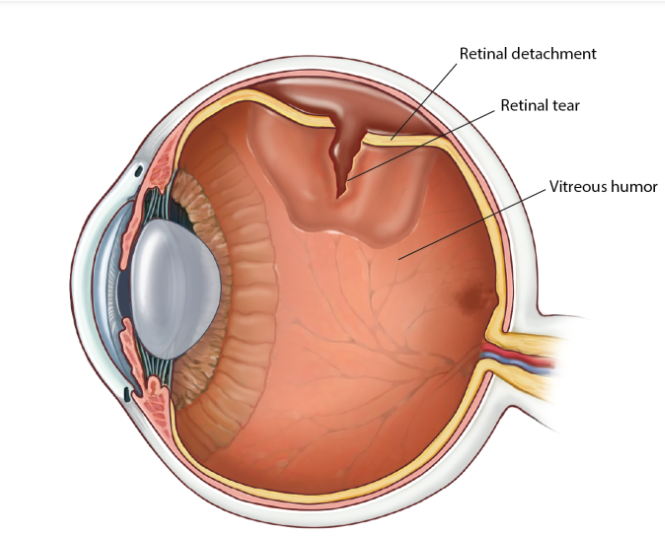
how to treat true retinal detachment

A

retinal detachment without retinal breaks or tears can be treated conservatively but still needs an ophthalmologist to make this.

emergent intervention is needed to avoid complete vision loss. Potential options include laser cryoretinopexy or penumatic retinopexy or scleral buckle or victrectomy.

Note: direct funduscopy has low sensitivity for retinal detachment nad may be normal

Detection is based on identification of visual field deficits.
24
Q

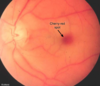
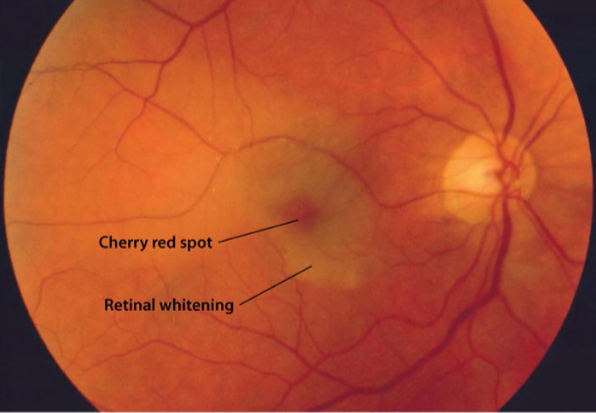
someone develops acute painless vision loss and fundoscopic exam shows a cherry red spot and pale optic disc. smoker

A

central retinal artery occlusion.

see the cherry red spot on macula
25
sudden loss of vision to one eye upon awaking. See a small cup to disc ratio with a pale disc that later becomes edematous
ischemic optic neuropathy
26
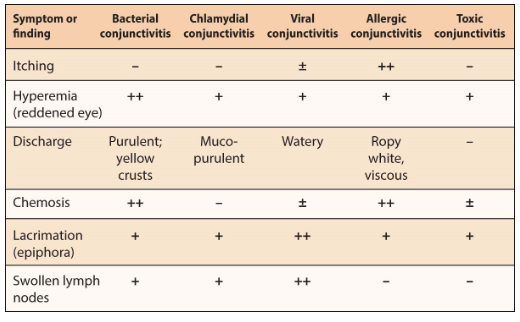
chart for conjunctivitis
27
pink eye is also known as
viral conjunctivitis See adenovirus as a cause and associated with URI. See redness irritation (gritty sensation), scant watery discharge. See it begin unilaterally but bilateral eye involvement can happen within 48 hrs of onset of symptoms.
28
how long does viral conjunctivitis last for?
1-2 weks and are self limited and management is directed at reducing patient discomfort. Topical antihistamines and ocular decongestants can reduce symptoms and moist compresses also help provide comfort. No tx shortens duration of symptoms.
29
when to use topical eye antibiotics?
bacterial conjunctivitis (erythromycin or trimethoprim/polymixin). Bacterial conjunctivitis is assocaited with significant ocular pain and purulent discharge that rapidly reappears after being wiped away. Has stuck shut in AM.
30
indications for opthalmological evaluation in an acute red eye syndrome
loss of visual acuity or impaired vision, hyphemia or hypopyon (red or white cells respectively layered in the anterior chamber), suspected bacterial keratitis (contact lens user with pain, photophobia, and foreign body sensation), angle closure glaucoma (headache, vomiting hazy cornea, fixed pupil) iritis (photophobia erythematous flush around iris).
31
amaurosis fugax
temporary vision loss without changes in color vision or photophobia this is with TIA
32
temporary bluish vision changes
phosphodiesterase 5 inhibitor side effect`(sildenafil)
33
central retinal artery occlusion causes
carotid artery atherosclerosis (most common) cardiogenic emboli small artery disease due to diabetes or HTN carotid artery dissection sickle cell or hypercoaguability vasculitis (giant cell arteritis)
34
painless acute vision loss in one eye complete or relative afferent pupillary defect retinal whitening or red cherry spot in macula on funduscopy
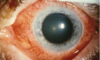
presentation of central retinal artery occlusion
35
Treatment of central retinal artery occlusion
urgent opthalmology consult (permanent damage can happen in 90-100 minutes) lower intraocular pressure (ocular massage) or anterior chamber paracentesis or IV acetazolamide or mannitol) possible intraarterial thrombolytics long term atherosclerosis risk factor modification
36
who gets central retinal artery occlusion (CRAO)
\<0.1% of the population gets this and affects ppl \>60 yrs, with HTN, DM2 and smoking.
37
What do you need to rule out for central retinal artery occlusion?
rule out GCA. Get ESR, CRP, carotid artery imaging, cardiac evaluation with suspected embolic source Call opthalmology as there can be irreversible retinal damage in 90-100 minutes of CRAO
38
pt with acute painless and severe vision loss in one eye. Has complete or relative afferent pupillary defect.
central retinal artery occlusion and see retinal whitening and cherry red spot. Need to rule out GCA Opthalmological emergency
39
pt is slumped over from severe eye pain, and has vision loss. Complains of headache, nausea, and vomiting and see light halos. See conjunctival redness (ciliary flush) and poorly reactive dilated pupil or mid dilation fixed pupil. No discharge.
acute angle closure glucoma call opthalmology- optic atrophy and permanent vision loss can occur in a few hours without tx. If unable to see eye doctor within hour try to treat with topical pilocarpine and other intraocular pressure lowering agents (Timolol or apraclonidine) Precipitated by exposure to sympathomimetic and anticholinergic drugs. Seen more in Asian people.
40
painless vision loss in one eye usually on awakening. seen in pts \>50 yrs. visual exam shows afferent pupillary defect and fundoscopy shows papilledema. NO cherry spots
non arteritic anterior ischemic optic neuropathy- see loss of blood flow to the optic nerve - due to hypoperfusion or nocturnal hypotension or vasospasm. Syndrome causes vision loss without eye pain. See some diffuse optic nerve edema or sector optic nerve edema.
41
pt presents with acute or subacute painful vision loss of one eye, color desaturation and headache and pain with eye movement and afferent pupillary defect. Patient is \<50 yrs old
optic neuritis - inflammatory demyelination of optic nerve that can be a presenting symptom for MS. Fundoscopic exam can be of papilledema.
42
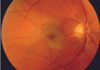
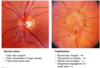
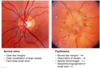
what is this?
Papilledema (optic disc swelling) - sign of increased intracranial pressure ( brain ascess, infection, tumor, trauma), can be seen with optic neuritis, non artertiic anterior ischemic optic neuropathy,
43
progressive, painless monocular vision loss with central scotomas
this is age related macular degeneration AMD. See central scotomoas (loss of center of the visual field) AMD is major cause of blindnes and visual impiarment in adults \>50 yrs. There's wet and dry versions.
44
presentation of hypertensive retinopathy of eye
gradual painless, binocular vision loss, headaches, although pts may have no visual symptoms initially.
45
what do we see on fundoscopy of hypertensive retinopathy (besides those listed) ?
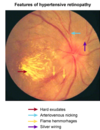
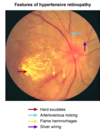
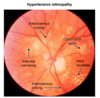
see copper and silver wiring, hard exudates, flame hemorrhages and AV nicking and arteriolar narrowing and ischemic changes ("cotton wool spots")
46
flutuating diplopia (crossed eyed) but no changes in pupillary eye reflex. no pain also seen.
myasthenia gravis presentation.
47
acute vision loss asociated with flashes of light (photopsia) and numberous floaters (drifting spots or strings in visual field and eye heaviness) can see a veil or curtain drawn over their field of vision and both peripheral and central vision is affected
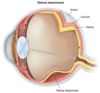
Retinal detachment. Example of vision loss
48
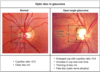
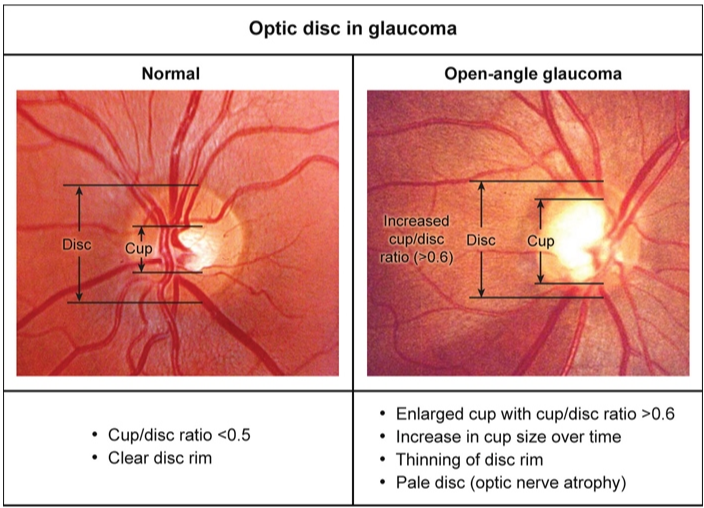
Chart of changes seen in acute glaucoma with optic disc to cup ratio
49
what causes uveitis?
most cases are **idiopathic** but secondary causes are: **infections:** toxoplasmosis, CMV, syphilis **Autoimmune:** Behcet's dx, anklyosing spondylitis, IBS, sarcoidosis, reactive arthritis, microscopic colitis. **Medications**: rifabutin and cidofovir
50
Conditions of "red" eye
51
what in pt history should make you concerned for urgent opthalmological evaluation in an acute red eye syndrome
impaired vision, inability to open eye due to foreign body sensation, photophobia, significant eye pain, diminished pupil reactivity presence of corneal opacity
52
acute anterior uveitis syndrome presentation
See red eye, pain, decreased vision, white and yellowish discharge at base of anterior chamber and normal pupil response. younger person and needs urgent opthalmological referral
53
what causes a complicated corneal abrasion? presentation of this condition?
contact lens use or trauma See painful red eye and slightly diminished vision and normal pupillary response.
54
anterior uveitis presentation what to look for on the physical exam?
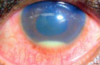
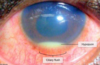
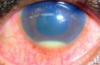
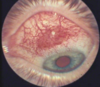
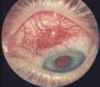
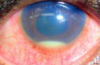
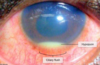
see **unilateral eye pain, (red)** conjunctivitis, miotic pupil and seen with **vision loss and photophobia**. Inflammation can affect the anterior (ris and ciliary body) and posterior (choroid) uveal tract with adjacenet structures like the retina and vitreous humor. Gross exam: look for **ciliary flush** or marked red ring around iris. Can see **hypopyon** (seen on other side) or leukocyte exudate in anterior chamber. Leukocytes in anterior chamber is diagnostic of anterior uveitis and differentiates it from other causes of red eye. **Anterior chamber flare** - common manifestation and is created by extravasated protein that causes dispersal of light on the slit lab. Need ophthalmological exam.
55
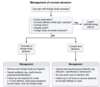
Management of corneal abrasion
56
Symptoms of corneal abrasion
eye pain and foreign body sensation and cannot keep affected eye open
57
what causes a corneal abrasion?
spontaneous but also due to trauma, foreign body, contact lenses, HSV1 infection
58
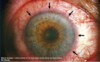
normal visual acuity (unless abrasion is in visual field) normal pupil and anterior chamber corneal abrasion seen through florescein staining under cobalt blue filter corneal edema developing after 12 hrs
corneal abrasion presentation
59
if pt has a corneal abrasion when to send to an urgent ophthalmological referral?
penetrating trauma, corneal infiltrate/opacity (White spot), foreign bodies that cannot be easily removed, significant decrease in vision (\>1-2 lines on Snellen chart) or symptoms that worsen or do not improve.
60
for corneal abrasion that do not have potential ocular emergencies, what to do next
antibiotic ointment not drops until symptom resolution This helps prevent infection from complicating the healing process. Most abrasions heal in 24 to 72 hrs without complications follow up is needed for large abrasions \>3 mm or any abrasion associated with contract lenses or decreased vision.
61
follow up for corneal abrasions?
follow up is needed for large abrasions \>3 mm or any abrasion associated with contract lenses or decreased vision.
62
Does eye patch provide any relief for corneal abrasions
No role in small corneal abrasions and have low patient compliance. They should not be applied for \>24 hrs to avoid complications. They should not be used in contact lens abrasion or with infectious infiltrates due ot risk for causing or worsening an infection.
63
What is seen on diagnostic testing for HSV keratitis? treatment of herpes simplex virus keratitis is with
a branching or dendritic pattern under fluorescein examination topical ganciclovir or trifulorthymidine
64
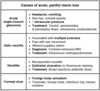
Name the acute causes of painful vision loss
65
most common infectious complication related to contact lense use
Bacterial keratitis (BK) - from people who wear overnight lens or extend their wear of their lens.
66
Symptoms of Bacterial keratitis
pain, eyelid swelling, photophobia, conjunctival injection. If the corneal lesion (seen on floursecein staining) is central vision loss may be affected. Can treat empirically with abx. Can see inflammatory infiltrate or hypopyon in anterior chamber
67
diagnosis of bacterial keratitis is
clinical by history and PE
68
Treatment of bacterial keratitis
**empiric broad spectrum topical antibiotics** (with pseudomonal coverage) with TOPICAL fluoroquinolone gatifloxacin should be started. Erythromycin is not enough. apply antibiotics every hour for first 24 to 48 hours and concomitant steroids should be avoided in acute phase. culture from corneal scrapings can be helpful for people who don't respond to initial antibiotic coverage.
69
what are some changes we see on fundoscopic exam in papilledema?
70
what to see on fundoscopic exam when pt who presents with chronic pulsatile headache exacerbated by lying flat and improved by sitting up. Also can hear a whoosing wind like tinnitus. What do they have?
They have **idiopathic intracranial hypertension** or pseudotumor cerebri. See papilledema they can also complain of blurry vision, vision loss, or horizontal binocular diplopia.
71
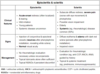
Difference between episcleritis and scleritis chart
**episcleritis** - inflammation of the superficial scleral vessels. see inflammation of the white of the eye without involvement of the uveal tract (iris, ciliary body or choroid). Causes mild irritation and foreign body sensation. **scleritis** - inflammation of the deep scleral vessels; _can be vision threatening and lead to thinning of sclera and perforation_. see dark red sclera **Keratitis** (corneal inflammation can occur and this is ulcerative and occurs at the periphery of cornea) most common eye complaint of RA is dry eyes
72
What is episcleritis and what is it's presentation? What causes it?
Episcleritis is acute inflammation of the white of the eye without involvement of the uveal tract (iris, ciliary body, choroid). Presents as redness, tearing of the eye and feel a foreign body sensation and mild irritation. **idiopathic**
73
who gets episcleritis?
seen in young and middle aged women self limited with most attacks resolving in about 3 weeks and this is idiopathic in nature. If it reoccurs, then need to think about systemic dx like rheumatoid arthritis and management is with topical lubricants. **Topical or oral NSAIDS** can be used for persistent symptoms.
74
bacterial conjunctivitis presents with
ocular pain, mucoid purulent discharge and crusting and see conjunctival redness. Tx with topical antibiotics like erythromycin
75
What is scleritis? How does this present? how is this different from episcleritis?
**Scleritis** is an eye condition seen with active systemic rheumatological dx. **Episcleritis** is less severe and seen without dark red sclera, self limited Presents: significant pain, visual impairment, dark red sclera (in contrast to bright red of episcleritis) and scleral edema are classic. Manifestations generally progress (worsening pain) over days to weeks. This a dangerous eye condition seen systemic rheumatological dx
76
how do we treat scleritis?
systemic steroids and immunosuppressants
77
Nuclear cataract
see rapidly reduced distance vision - often termed **myopic shift** and this is early common early effect of _nuclear cataract formation_ due to increased thickness at the center of the lens and a change in dioptric power Myopic shift happens before visible opacification of the lense and other findings (glare, halos around lights and loss of red reflex) and this is why someone can have a normal dilated eye examination 6 months
78
Age related cataracts is caused by presentation is:
seen by oxidative damage to lense from aging causes cataract formation age related cataracts are slowly progressive, bilateral, asymmetric.
79
Cataract surgery is indicated when
vision declines to the point where patient is unable to perform activities od daily living despite correction with glasses
80
risk factors for cataract development
age, smoking chronic sunlight exposure DM2 steroids
81
what is allergic conjunctivitis?
see bilateral eye involvement, clear discharge, morning crusting and mattering of lids and seen with conjunctivits of any cause but significant itching. seen with other allergic symptoms and occur due to pollen and sporadic (due to animal dander pattern. Patients with other atopic dxes are high risk
82
conjunctivitis that is unilateral (initially) and purulent discharge
bacterial conjunctivitis
83
see conjunctivitis with bilateral eye involvement, clear discharge, morning crusting and matting of lids
allergic conjunctivitis
84
what is this?
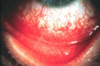
**hordelum -** acute obstruction of the meibomian gland, eyelash follicle, or lid margin tear gland and associated with inflammation and possible staph infection. Not an infection of the globe itself.
85
non infectious causes of anterior uveitis are treated with
topical steroids. Needs to get a opthalmological exam.
86
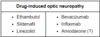
what is a drug induced optic neuropathy?
can have peripheral and optic neuropathy may be irreversible possible due to mitochondrial toxicity. guidelines recommend _no more than 28 days of linezolid therapy_ with a _weekly CBC_ to monitor for possible bone marrow suppression _need periodic eye and neurological examinations_ are recommended in pts requiring \>4 weeks of linezolid. need to discontinue linezolid if this happens.
87
giant papiollary conjunctivitis
**inflammatory condition** _present in contact lense wearers or patients with other foreign bodies_ in the eye (such as sutures or eye prosthesis). This is _caused by both mechanical and immunological reactions- repeated movement against foreign object causes inflammation_ and repeated antigen exposure.
88
giant papillary conjunctivitis presentation
see **mild irritation and itching and progression to include foreign body sensation, contact lense intolerance and blurry vision.** May see i_ncreased mucus in eye in the morning_ or proteinaceous deposit in the contact lens. PE shows **\>1mm papillae on the under surface of the eyelid.** both type 1 and type 4 immunological reactions have been implicated in papillae formation.
89
Treatment of giant papillary conjunctivitis
treatment: c**ontact lens holiday for 2-4 weeks** on resuming contact lens wear, pt should _use preservative free cleaning solutions, including \>3% hydrogen peroxide_ for daily disinfection. artificial tears can be used after contact lense holiday.
90
treatment of keratoconjunctivitis sicca
cyclosporine eye drops
91
pt has a 2 day history of deep boring pain in eye. Eye is red and complains of photophobia, no recent trauma and 10 yr hx of RA with etanercept. Has diffuse eye reddness and pain with extraocular movement and with gentle pressure there is pain. NO scleromalacia in either eye. see diminished acuity of eye
this is **scleritis** from longstanding rheumatoid arthritis. see symptoms of _eye pain, pain with gentle palpation of the globe and photophobia_. Deep scleral vessels are inflammed and can cause **scleromalacia** which is **thinning of the sclera** and seen as **a dark red area in the white sclera**. **Scleromalacia** can lead to **perforation of the sclera** called **scleromalacia perforans**. This is _vision threatening_ and needs to see _ophthalmologist_.
92
bacterial endophthalmitis is
**inflammation of the aqueous and vitreous humors** seen with ocular surgery especially cataract surgery. see subacute history of decreasing vision and eye pain and mild intensity. Visual acuity is decreased and hypopyon layering of white blood cells in anterior chamber is present **tx is intravitreal antibiotics.**