Final Flashcards

(80 cards)

1
Q
A

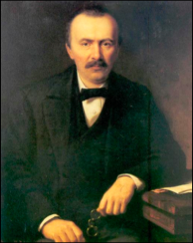
Name: Heinrich Schliemann

Dates: 1822- 1890

Excavated: Troy, Mycenae, Tiryns, etc.
2
Q
A

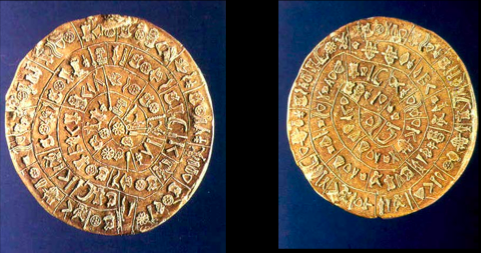
Title: Phaistos Disk

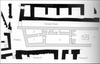
Period: MM IIIB (1700-1600 BC, MMIII)

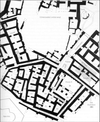
Undeciphered. Impressed with pictographic signs arranged in a spiral and divided into groups by traverse lines.
3
Q
A

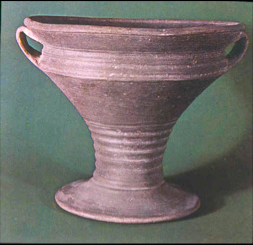
Dates: 2100-1600 BC

Period: Middle Helladic (2000-1550 BC)

Ware: “Minyan”

Shape: Goblet

Technique: Wheelmade

“Minyan” pottery is the first wheelmade pottery on the mainland.
4
Q
A

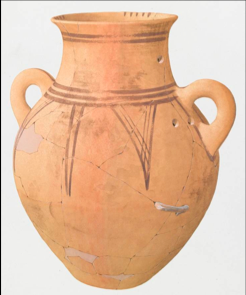
Dates: 2100-1600 BC

Period: Middle Helladic (2000-1550 BC)

Shape: Jar

Technique: Handmade; matt-painted
5
Q
A

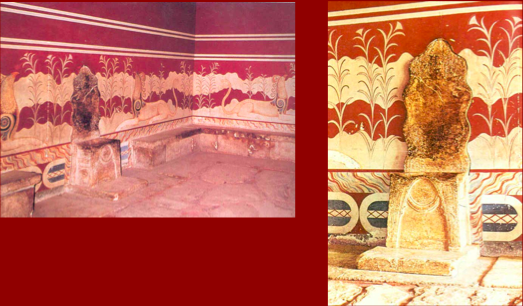
Title: “Throne Room”

Site: Palace at Knossos

Period: Second Palace (1725-1380 BC)
6
Q
A

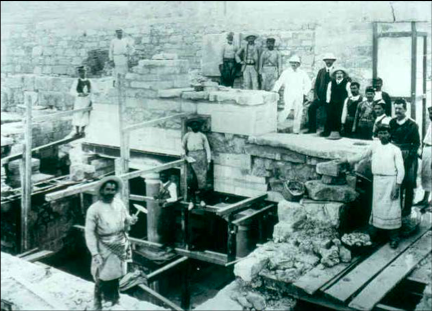
Date: 1905

Photo: Restoring the Grand Staircase

Structure: Palace of Minos

Site: Knossos

Arthur Evans in white suit and pith helmet; next to him, to the right, Duncan Mackenzie (the head excavator) and Christian Doll (one of the architects)
7
Q
A

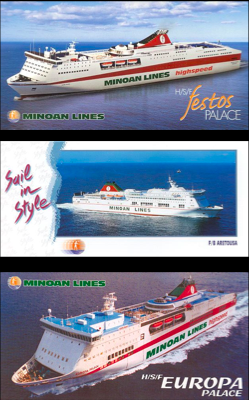
Postcards of three ships of the Minoan Lines, the Cretan Company that uses as its logo the reconstructed “Priest-King” Fresco
8
Q
A

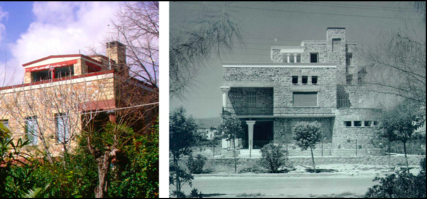
Date: 20th century AD

Location: Athens, northern suburbs

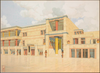
Two views of a Minoan-style house
9
Q
A

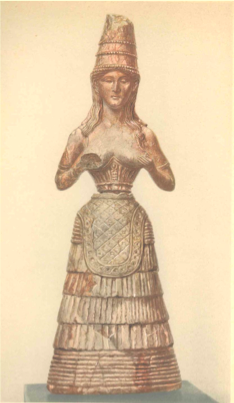
Forgery

Title: “Fitzwilliam Goddess”

Date: 20th century AD

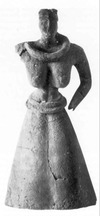
Minoan-style stone figurine.
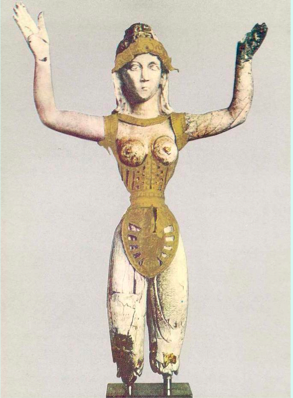
10
Q
A

Forgery

Title: Our Lady of the Sports (dubbed by Evans)

Date: 20th century AD

Style: Minoan

Material: Ivory & gold

Museum: Toronto (ROM 931.21.1)
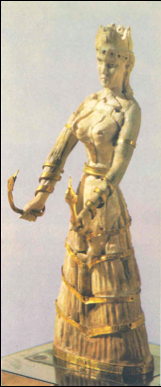
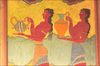
11
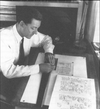
Q
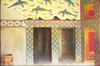
A

Forgery

Title: Boston Goddess

Date: Early 20th century AD

Material: chryselephantine (gold & ivory)

Often published as Minoan, but clearly a forgery.
12
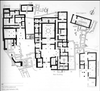
Q
A

Settlement: Kavousi

Location: East Crete

Period: Early Iron Age (Sub-Minoan)

Dates (of period): 1070-970 BC (SM); 970-700 BC (EIA)
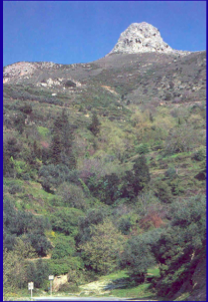
13
Q
A

Dates: 1200-900 BC

Site: Karphi (town)

Location: East Crete

Period: established LM IIIC into Early Iron Age

Extensively excavated town from the very end of the Minoan Era
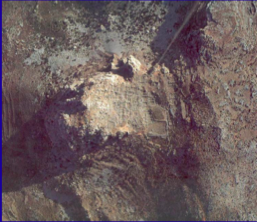
14
Q
A

Dates: 1200-900 BC

Site: Karphi (town)

Location: East Crete

Period: established LM IIIC into Early Iron Age

Extensively excavated town from the very end of the Minoan Era
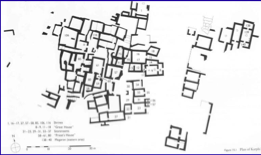
15
Q
A

Dates: 1200-900 BC

Site: Karphi (town)

Location: East Crete

Period: established LM IIIC into Early Iron Age

Extensively excavated town from the very end of the Minoan Era
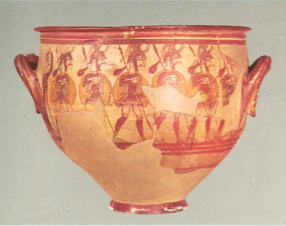
16
Q
A

Dates: 1200-1190 BC

Title: Warrior Vase

Site: Citadel of Mycenae

Style: Mycenaean Pictorial

Discoverer: Heinrich Schliemann

Period: LH III (1400-1100 BC)
17
Q
A

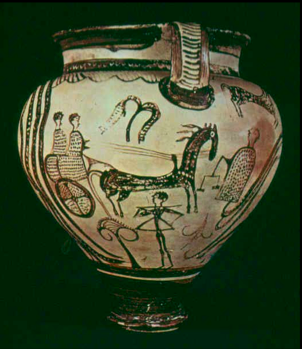
Date: 14th century BC

Period: LH III (1400-1100 BC)

Site: Enkomi, Cyprus

Style: Pictorial

Shape: Krater
18
Q
A

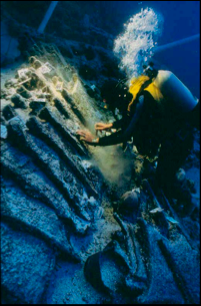
Date: 14th century BC

Photo: View of excavation

Site: Ulu Burun (Kaş) shipwreck (off SW Turkey)
19
Q
A

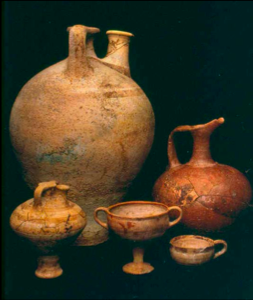
Date: 14th century BC

Title: Mycenaean pottery

Site: Ulu Burun (Kaş) shipwreck (off SW Turkey)
20
Q
A

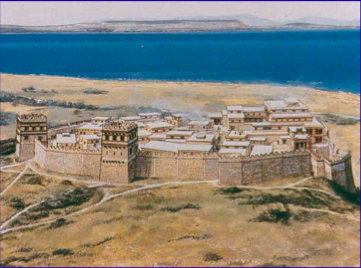
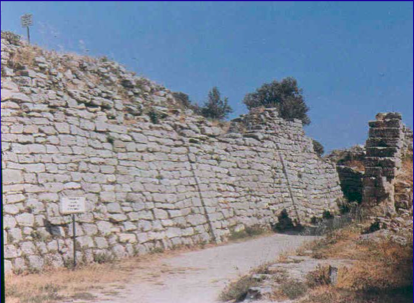
Site: Troy (Ilion)

Period: Late Bronze Age

Artist’s reconstruction.
21
Q
A

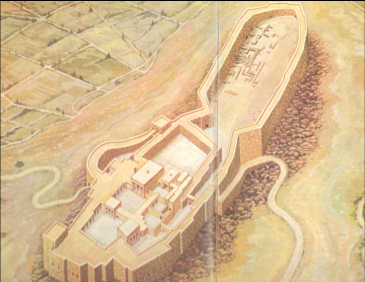
Structure: Fortifications

Site: Troy VI

Period: Late Bronze Age

Troy VI is thought to represent the citadel of Homer’s Troy.
22
Q
A

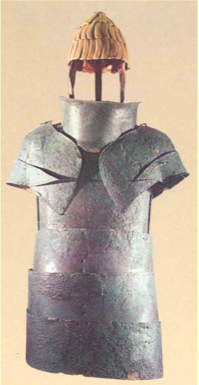
Date: mosty 13th century BC

Structures: Upper, Middle and Lower Citadels; great Megaron

Site: Tiryns acropolis

Period: LH III (1400-1100 BC)
23
Q
A

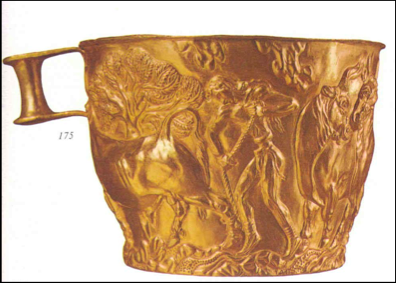
Title: Complete corselet and helmet

Site: Chamber tomb at Dendra (Argolid)

Period: Late Bronze Age

Materials: Bronze (corselet), boars tusk (helmet)
24
Q
A

Date: 1450 BC or slightly earlier

Title: Vapheio Cup (1 of 2)

Site: Vapheio (near Sparta)

Discoverer: Tsountas

Period: LH II (1500-1400 BC)
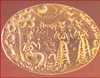
25
**Title**: Gold signet ring **Site**: Acropolis of Mycenae **Style**: Is it Minoan or Mycenaean? **Material**: Gold *Period*: LH (1650/1600-1200/1100 BC)
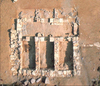
26
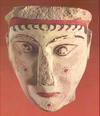
**Date**: 13th century **Title**: Female head (possibly of sphinx or goddess) **Site**: Mycenae **Material**: Plaster *Period*: LH III (1400-1100 BC)
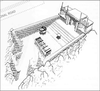
27
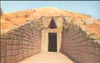
**Date**: after 1250 **Title**: Treasury of Atreus (Tholos Tomb) **Structure**: Dromos & facade **Site**: Mycenae Largest of the Tholos Tombs at Mycenae. *Period*: LH III (1400-1100 BC)
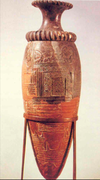
28
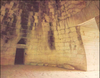
**Date**: after 1250 **Title**: Treasury of Atreus (Tholos Tomb) **Site**: Mycenae Largest of the Tholos Tombs at Mycenae (interior) *Period*: LH III (1400-1100 BC)
29
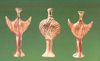
**Date**: 13th century BC **Title**: Typical Mycenaean figurines **Types**: 2 psi, 1 phi (center) **Material**: terracotta *Period*: LH III (1400-1100 BC)
30
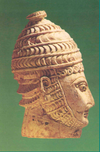
**Date**: 13th century BC **Site**: Chamber tomb at Mycenae **Material**: Ivory Head of warrior wearing helmet covered with boars' tusks. *Period*: LH III (1400-1100 BC)
31
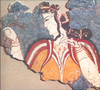
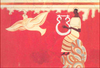
**Date**: 1200 BC **Title**: "Mycenaean Lady" or "Goddess" fresco **Structure**: "House of the High Priest" **Site**: Mycenae *Period*: LH III (1400-1100 BC)
32
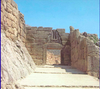
**Date**: 1350-1200 BC (variously dated) **Title**: Lion's Gate **Site**: Mycenae *Period*: LH III (1400-1100 BC)
33
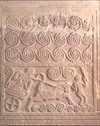
**Date**: 16th century BC **Title**: Stele (tomb stone) decorated with running spirals & a chariot scene **Structure**: Grave V of Grave Circle A **Material**: Limestone * Period*: end of MH thru LH II * Date of Grave Circles*: 1625/1600 - 1500/1480 BC
34
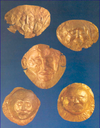
**Date**: 16th century BC **Title**: Gold masks **Structure**: Graves IV & V of Grave Circle A **Site**: Mycenae * Period*: end of MH thru LH II * Date of Grave Circles*: 1625/1600 - 1500/1480 BC
35
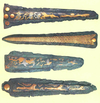
**Date**: 1550 BC **Title**: Daggers **Structure**: Shaft Graves IV & V, Grave Circle A **Materials**: Bronze w/ inlaid decoration of gold, silver and niello * Period*: end of MH thru LH II * Date of Grave Circles*: 1625/1600 - 1500/1480 BC
36
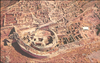
**Site**: Citadel of Mycenae **Structure**: Grave Circle A (foreground) **Excavator**: Heinrich Schliemann (Grave Circle A) *Period*: LH (1650/1600 - 1200/1100 BC)
37
**Date**: 13th century **Title**: "Lyre-Player" Fresco **Structure**: Central Hall of Throne Room **Site**: Pylos **Reconstruction**: Piet de Jong *Period*: LH III (1400-1100 BC)
38
**Dates**: 1300-1200 BC **Site**: Mycenaean Palace at Pylos **Period**: LH IIIA
39
**Structure**: Temple **Site**: Ayia Irini, Kea (island) **Period**: Second Palace Period thru Early Iron Age (1725-700 BC)
40
**Title**: Large terracotta female figurine **Structure**: Temple, Room 1 **Site**: Ayia Irini, Kea (island) **Period**: Second Palace Period thru Early Iron Age (1725-700 BC) **Material**: Terracotta
41
**Structure**: Houses A & F **Site**: Ayia Irini, Kea (island) **Period**: Second Palace (1725-1380 BC) The town is composed of buildings that in some cases resemble Minoan houses (such as House A).
42
**Date**: 17th century BC **Title**: Fresco fragment of bull leaper **Site**: Tell el'Dab'a (Nile Delta, Egypt) This Minoan-style fresco attests to the interconnections between the Aegean and Egypt.
43
**Title**: Bare-breasted female figure fresco **Structure**: House of the Ladies, Room 1 **Site**: Akrotiri **Period**: Late Cycladic (1550-1100 BC)
44
**Title**: "Blue Monkey" Fresco **Structure**: House Beta, Room 6 **Site**: Akrotiri **Period**: Late Cycladic (1550-1100 BC)
45
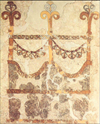
**Structure**: Room 3 **Building**: Xeste 3 upper floor **Site**: Akrotiri **Period**: Late Cycladic (1550-1100 BC)
46
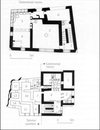
**Structures**: West House (top) & Xeste 3 (bottom) **Site**: Akrotiri **Period**: Late Cycladic (1550-1100 BC)
47
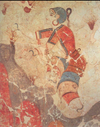
**Title**: Young girl gathering crocus flowers **Structure**: Xeste 3 **Site**: Akrotiri **Period**: Late Cycladic (1550-1100 BC) Based on the shaved head and locks of hair, the girl is believed to be an adolescent.
48
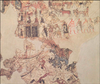
**Title**: "Sea-Battle" Fresco **Location**: North wall of Room 5 **Structure**: West House **Site**: Akrotiri, Thera **Period**: Late Cycladic (1550-1100 BC) Depicts: Tripartite shrine; ritual dancing around a tree in a koulouras (like at Knossos); Mycenaean-like warriors; a sea battle & drowning soldiers; a rocky coastline
49
**Title**: "Flotilla" or "Regatta" Mini Fresco **Location**: South Wall, Room 5 **Structure**: West House **Site**: Akrotiri, Thera **Period**: Late Cycladic (1550-1100 BC) **Depicts**: Two cities and a "flotilla" or "regatta" between them.
50
**Title**: 1 of 8 "Ikria" devices **Location**: Walls, Room 4 **Structure**: West House **Site**: Akrotiri, Thera **Period**: Late Cycladic (1550-1100 BC) Referred to as "Ikria." Marinatos originally thought them to be "banners," but later deciced they were "cabins." Others see them as "litters" or "palanquins."
51
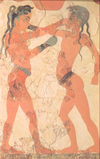
**Title**: Boxing Boys Fresco **Location**: South Wall, Room 1 **Section**: Beta **Site**: Akrotiri, Thera **Period**: Late Cycladic (1550-1100 BC)
52
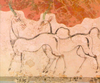
**Title**: Antelopes Fresco **Location**: West Wall, Room 1 **Structure**: Section Beta **Site**: Akrotiri, Thera **Period**: Late Cycladic (1550-1100 BC)
53
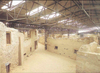
**Photo**: View of excavation **Structures**: Triangular Square, West House (left), Building Complex Delta (right) **Site**: Akrotiri, Thera **Period**: Late Cycladic (1550-1100 BC) * Eruption date* (traditional): 1450 BC * Eruption date* (grain, dendrochronology, Greenland ice-cores, Chinese *Bamboo Annals*): 17th century BC
54
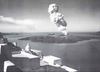
**Photo**: Eruption of Nea Kameni, seen from town of Phira The Thera volcano is still sporadically active, particularly the eruptions of Nea Kameni.
55
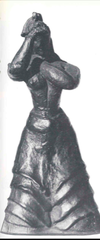
**Date**: 1500 BC **Title**: Figurine in typical "worshipping" pose **Location**: Crete **Material**: Bronze **Technique**: Cast by the *cire perdue* (lost wax) technique Wearing normal costume for female. *Period*: LM I (1600-1425 BC)
56
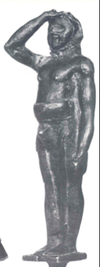
**Date**: 1500 BC **Title**: Figurine in typical "worshipping" pose **Location**: Crete **Material**: Bronze **Technique**: Cast by the *cire perdue* (lost wax) technique Wearing normal costume for male. *Period*: LM I (1600-1425 BC)
57
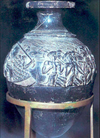
**Title**: "Harvester" Vase **Structure**: Villa A **Site**: Ayia Triada **Period**: Second Palace (1725-1380 BC) **Material**: Black steatite (stone) **Technique**: Low relief **Depicts**: Shows 27 males led by a figure, perhaps a priest. The scene has been interpreted as a processional dance, a triumphal march of soldiers, and a harvest festival.
58
**Structure**: Tripartite Shrine **Site**: Archanes - Anemospilia (south of Heraklion) **Period**: Middle Minoan (2160/1979 - 1600 BC) All objects were found in position, as were the skeletons of people who had been performing the rituals.
59
**3-D Reconstruction**: "Peak Sanctuary" from vessel **Vessel**: Rhyton **Site (vessel found at)**: Kato Zakro **Period**: Second Palace (1725-1380 BC)
60
**Title**: "Peak Sanctuary" Rhyton **Site**: Palace @ Kato Zakro **Period**: Second Palace (1725-1380 BC) **Material**: Chlorite (stone), probably gilt **Depicts**: Tripartite peak sanctuary surmounting a broad stair, with double horns along the roof lines, and what appear to be altars in the foreshortened front court, set in a mountain landscape with wild goats and birds.
61
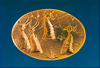
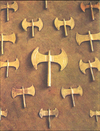
**Title**: Miniature votive double axes **Site**: Arkalochori Cave, Crete **Period**: Second Palace (1725-1380 BC) **Material**: Gold
62
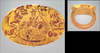
**Dates**: 1450-1400 **Title**: "Ring of Minos," large signet ring **Site**: Near Knossos (?) **Period**: Second Palace **Depicts**: Epiphany cycle Some scholars consider it a forgery.
63
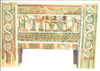
**Date**: 14th century BC **Title**: Ayia Triada Sarcophagus **Location**: Near the "Villa" **Site**: Ayia Triada (south-central Crete) **Material**: Limestone w/ fresco **Depicts**: Various religious scenes.
64
**Date**: 1500 BC **Title**: Signet ring **Site**: Isopata, near Knossos **Structure**: Minoan tomb **Depicts**: Religious scene that may represent an ecstatic ritual dance & the epiphany of a goddess. Some of the floating symbols in the sky may represent stellar constellations.
65
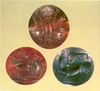
**Title**: Seal stones **Site**: Palace @ Knossos **Period**: Second Palace (1725-1380 BC) **Depicts**: [top] goddess standing between two griffins (Potnia Theron); [left] pair of bulls; [right] lionness attacking a bull
66
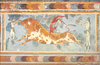
**Date**: 15th century BC **Title**: Bull-Leaping or Toreador Fresco **Structure**: Palace, East Wing **Site**: Knossos
67
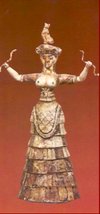
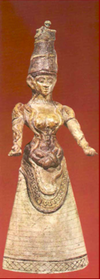
**Date**: 1600 BC **Title**: Snake Goddess statuette **Structure**: Temple Repositories **Site**: Knossos **Material**: Faience Statuettes of snake goddesses, or the snake goddess and her attendant.
68
**Date**: 1600 BC **Title**: Snake Goddess statuette **Structure**: Temple Repositories **Site**: Knossos **Material**: Faience Statuettes of snake goddesses, or the snake goddess and her attendant.
69
**Reconstruction**: Piet de Jong **Structure**: West side of central courtyard; "Throne Room" on Lower Right **Site**: Palace @ Knossos **Period**: Second Palace (1725-1380 BC)
70
**Title**: "Cup-bearer" Fresco **Restored location**: South Propylon **Site**: Palace @ Knossos **Period**: Second Palace (1725-1380 BC) Modern reconstruction set up in South Propylon by Sir Arthur Evans.
71
**Name**: Michael Ventris **Dates**: 1922-1956 Deciphered Linear B in 1952 and showed it to be an early form of Greek.
72
**Title**: Dolphin Fresco **Structure**: "Queen's Megaron," East Wing **Site**: Palace @ Knossos **Period**: Second Palace (1725-1380 BC) This fresco probably originally belong to the floor of the first floor directly above.
73
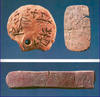
**Title**: Burnt clay tablets depicting 3 scripts of Minoan Crete **[Upper left]** Minoan hieroglyphic **[Upper right]** Linear A **[Bottom]** Linear B. Deciphered by Michael Ventris.
74
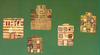
**Date**: 15th century **Title**: Plaques of Minoan houses **Site**: Palace @ Knossos **Material**: Faience **Depict**: What Minoan houses may have looked like
75
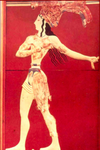
**Title**: "Priest-king" Fresco **Site**: Knossos **Period**: Second Palace (1725-1380 BC) As originally reconstructed at Knossos.
76
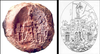
**Dates**: 1550-1450 **Title**: "Master Impression" sealing **Site**: Chania **Period**: LM I-II **Depicts**: Multi-storey buildings set in a rocky landscape with a male holding a staff standing at the highest point.
77
**Date**: After 1600 **Title**: Grandstand Fresco (miniature) **Site**: Palace @ Knossos **Period**: Second Palace **Depicts**: Tripartite shrine with "horns of consecration" on the roof, surrounded by females and males
78
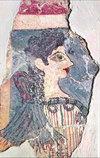
**Date**: 1400 BC **Title**: "La Parisienne" Fresco **Location**: Part of Camp-Stool Fresco **Site**: Palace @ Knossos **Depicts**: The prominent "sacral knot" worn at the back of the neck is often taken to indicate that she was a priestess or even a goddess, though this is conjecture.
79
**Site**: Palace @ Knossos **Period**: Second Palace (1725-1380 BC) Largest of Minoan palaces. The site on which it stands was continually inhabited from the Neolithic period into Roman times.
80
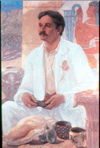
**Name**: Sir Arthur Evans **Dates**: 1851-1941 **Excavated**: Knossos