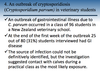
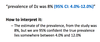
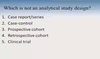
Final Flashcards

(341 cards)

1
Q

True/False: Analytical Studies must have a Control group

A

True

*Must have a Non-Exposed or Non-Diseased Group to Compare

1
Q

Presents the Current State of Knowledge that should give the Impression that the Authors Know their Subject with a Clear Statment of the Question the Study Intends to Answer

A

Introduction

*Statements should always be backed up with References

*Most Important- A clear Statment of the Question the Study Intends to Answer

2
Q

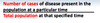
The Proportion of Disease Free (Susceptible) Individuals in a Population who Became Diseased during a Specified Period of Time

A

Cumulative Incidence

*Only New Cases of Disease that Develop over the Time Period of the Study

2
Q

Single Most Important Measure to Reduce the Risk of Disease Transmission

A

Using Soap and Water to Wash Hands

*Hand Hygiene- Soap and Water is Better than Alcohol Based Products

2
Q

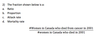
What was the Type of Measure?

A

Proportion

3
Q

True/False: Used Alone, Moist Wipes are not as Effective as Alcohol Based Hand Rubs or Washing Hands with Soap and Water

A

True

3
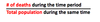
Q
A

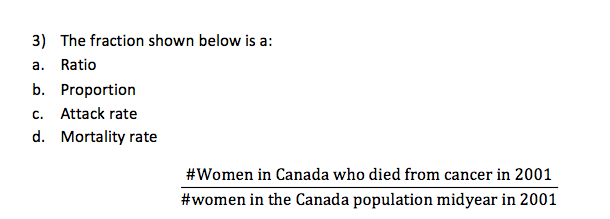
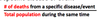
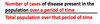
Mortality Rate

*Denominator is the Total Population of Women During the Same Time

3
Q

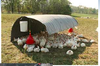
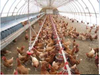
What Kind of Egg Producing Farm is This?
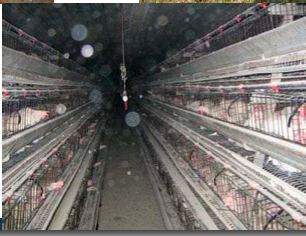
A

Battery Cage System

*Factory Farming System

3
Q

The Cutical and Eggshell are Physical Barriers that Prevent ____ Entry into the Egg

A

Bacterial

4
Q

Bias that Affects one group more than Another. Ex. Disease Subjects are Biased but Non Diseased Subjects are Not Biased

A

Differential Bias

6
Q

Absolute Number of Animals that have a Particular Disease

A

Count

6
Q

95% Confidence Intervals, T-Test and Correlation Tests are used to Describe ____ Data

A

Continuous

*95% C.I., T-Test and Correlation

7
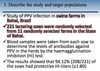
Q

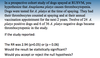
Describe the Study and Target Population
A

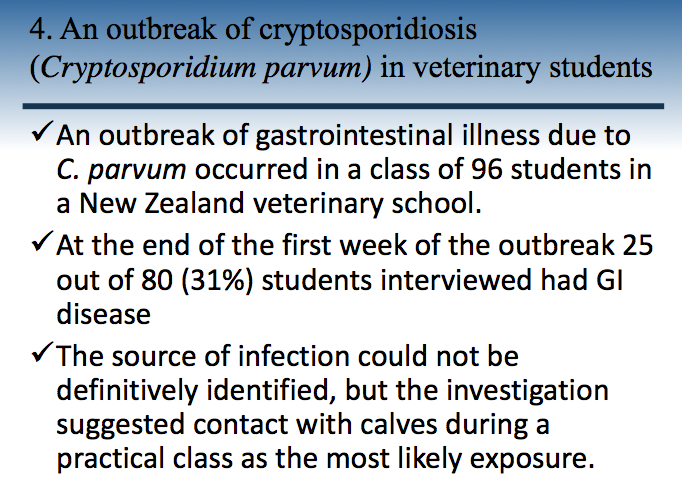
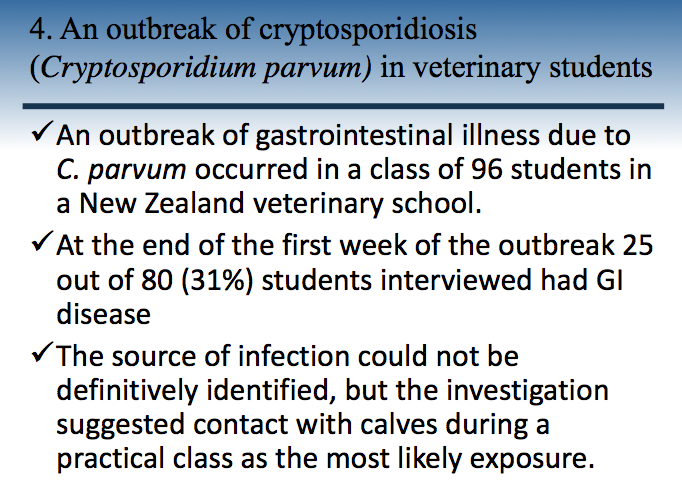
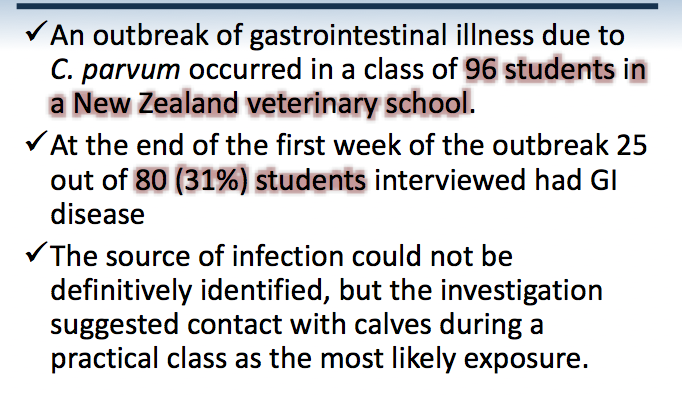
Target Population- Number of Students in the Class = 96 Students

Study Population = 80 Students
7
Q

We Assume that Exposure ___ Associated with Disease if:

  1. Same amount of Disease is Found in Group of Exposed and Non Exposed Subjects
  2. Same Amount of Exposure is Found in a Group of Diseased and Non Diseased Subjects
A

Is Not

8
Q

Act passed in 1970 for Mandatory Inspection of Eggs and Egg Products for Safety and Adulteration and Mandatory Pasteurization of Egg Products

A

Egg Production Inspection Act (EPIA)

*Makes it Manditory for Egg Products to be Pasteurized. It is Not Manditory for Eggs themselves to be Pasteurized

8
Q

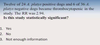
How would you Interpret this?

A

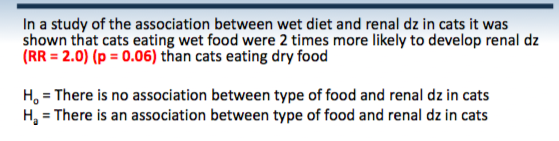
Not Statistically Significant- No Association

9
Q

What Type of Study is this?

A

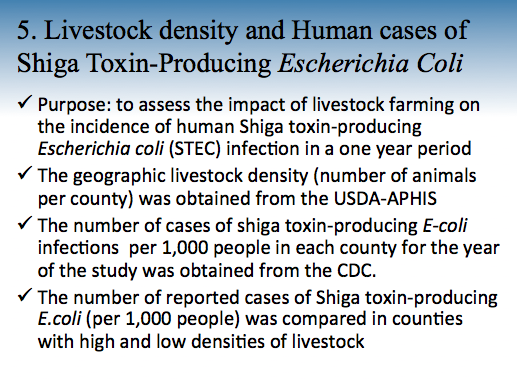
Ecological Study

*Groups were Compared. Population Level Study- Animals Per County

10
Q

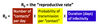
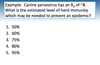
We Use the Value of R0 (Reproductive Number) to ____ what Percentage of the Population needs to be Immune to Eliminate Disease Transmission

A

Approximate

*R0 is an Estimation

11
Q

Worst and Best Studies in Terms of Validity
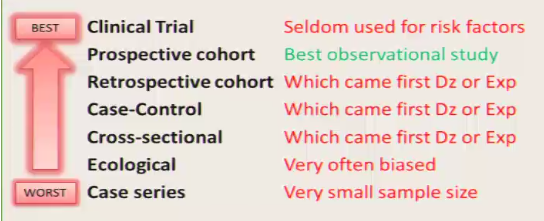
A
11
Q

If P-Value is ____ than 0.05, the association is not statistically significant and could have been caused by chance

A

Greater

12
Q

In Analytical _____ Studies, the Investigator Observes Real-Life Situations and Draws References from Them where Subjects are Selected to Participate but are Not Given Treatment or an Exposure

A

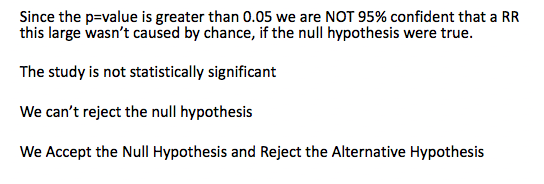
Observational

*Not Given Treatment or an Exposure- Just Observe

13
Q

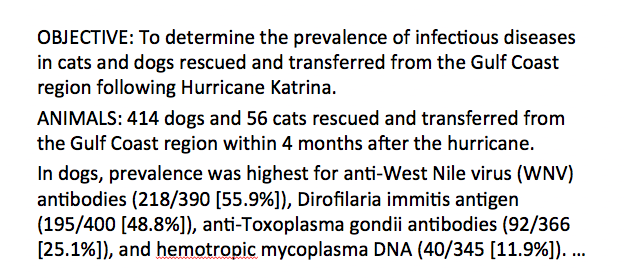
What Kind of Epidemiological Study is this an Example of?
A

Cross-Sectional Descriptive Study

*Not comparing Groups

13
Q

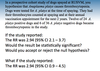
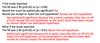
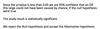
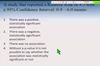
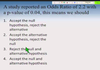
Is th Study Statistically Significant? Would you Accept or Reject the Null Hypothesis
A
14
Q

What Kind of Descriptive Study is This?

A

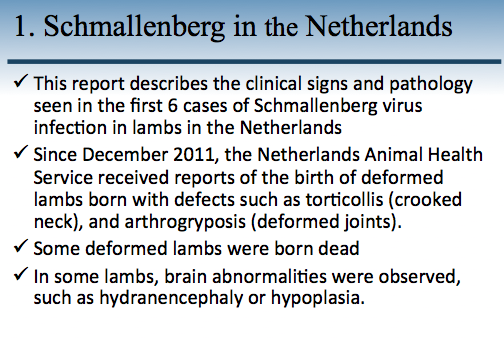
Case Series

*A Few Individuals were Studied and No Groups were Compared

14
What should Veterinarians do Before and After each Patient, After Contact with Feces, Blood, Body Fluids, and Exudates, Cleaning Cages and Prior to Eating or Drinking
Wash Hands
14
How would you Interpret this?
Statistically Significant- There is an Association
15
Eggs that Contain Unsafe Pesticide, Food Additive or Dye. Term for Eggs that have been Modified, Substituted or Replaced with Anything to "Make it appear Better or of Greater Vaule than it is"
Adulterated Eggs \*Also Eggs Prepared in Unsanitary Conditions, Incubated Eggs, Damaged and Concealed Eggs are Considered Adulterated
16
When Designing Disease Management Programs, We should Establish the _____ Level of Herd Immunity that will Prevent Sustained Disease Transmission
Minimum \*Main Goal - Prevent Sustained Disease Transmission
16
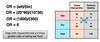
What is the Odds of Exposure
3/7
17
Why would the Percentage of Immune Individuals in a Herd be Different from the Percentage of Vaccinated Individuals in the Herd
Vaccine Failure Natural Infection-Immunity \*Some Individuals may Have Natural Immunity to the Disease
18
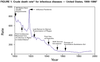
Cause-Specific Mortality Rate \*Mortality Rate due to a Specific Disease or Event
18
True/False: When Faced with Common Endemic Zoonotic Agents in Animals, Veterinarians haven't Always Taken Simple Steps that would Protect Themselves and Employees from Infection
True
18
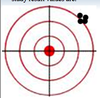
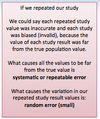
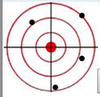
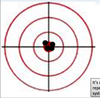
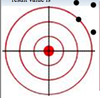
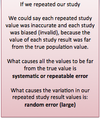
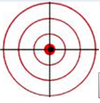
The Bullet Holes are where our Study Result Value is. What Kind of Error is Present?
Systematic or Repeatable Error \*Everytime we repeated the study we got the same error. Clustered together well so only a small amount of Random error
18
What is the Study Population?
19
\_\_\_\_ to a Risk Factor means an Individual has come into Contact with a Risk Factor or has the Risk Factor before Becoming Diseased
Exposure
20
What Kind of Analytical Study are these Examples of? 1. Average Daily Gain in Feedlock Pens 2. Average Birth Rates in the United States
Ecological Studies \*Measured at a Population Level
20
True/False: The EPIA Only Mandates that Eggs must be Safe and Not Unhealthy, while Quality Assurance Programs (Size/Grading) are Optional
True \*EPIA is just for Safety, not for Quality
20
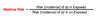
Measure of Association used to Compare the Risk (Incidence) of Disease that Occurs in the Exposed and Unexposed Groups
Relative Risk
21
If Equine Influenza has an Estimated RO (Reproductive Number) around 10-18, If introduced into a Naive Population, Each Influenza Case should result in ____ New Cases in the Population
10-18
21
True/False: Control Groups are Essential for Measuring the Effect of Exposures in Analytical Studies
True
22
The Extent to which a Measure of Association from a study differs from the True measure of Association in the Source Population
Bias \*Difference due to Systematic Error
24
Prevalence that Includes Old Cases of Disease that were present at the Beginning of the Time Period as well as New Cases of Disease that Occur over the Time Period
Peroid Prevalence \*Old Cases + New Cases
25
What was the Disease/Outcome that was Measured?
25
Two methods used to Estimate how much Random Variation there is in our study and whether our result was likely to have been caused by chance
Confidence Intervals P-Values
26
Bias where Studies are Based upon Volunteers- which may not be Representative of the Population as a Whole
Self-Selection Bias \*May have more Free Time/ More or less Educated Ect.
27
The Probability of a Disease Free Individual Becoming Diseased
Incidence \*Only Counts New Cases of Disease
28
What Kind of Epidemiological Study is this an Example of?
Case Series
28
Analytical Observational Studies in which Populations or Groups (Ex. Pens, Shelters) are Selected for the Study, where Individual Animals are not Tested or Measured in Any Way
Ecological Studies \*Individuals are Not Selected!!!- All Measurements are Done on a Population Level
29
True/False: High Concentrations of Zoonotic Agents can be Found in Birthing Fluids
True \*Wear Proper PPE
31
The Instantaneous Rate of Occurence of New Cases of Disease Among Non-Diseased Animals in the Population
Incidence Density
32
What Kind of Descriptive Study is this an Example of?
Case Report
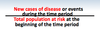
33
Ratio \*Two Statistics that are Unrelated
33
True/False: Excessive Washing leading to Cuticle Damage, Damp Moldy Surface of Eggs, Eggs Left at Room Temperature, and Eggs that are Non Completely Cook are Common Causes of Egg-Borne Disease
True
33
Measures of Association are used in What Kind of Study?
Analytical Studies
34
What is This an Example of?
Incidence Density
34
In Analytical _____ Studies, The Investigator Manipulates Subjects by Selecting Subjects that are Allocated to Recieve a Treatment or an Exposure
Experimental \*Recieve Treatment or an Exposure
34
Federal Agency In charge of Safety of Egg Products and Imported Shell Eggs
USDA
35
Critical Assessment of Research by Experts who are not on the Editorial Board that Review all aspects of the Research to Provide Some assurance of Quality
Peer Review \*Ensures Quality
35
4 Questions that Should be Asked for All Studies
1. Is the Paper Clearly Written? 2. Is the Study Sample Representative and Appropriate for the Research Quesion? 3. Is the Study Internally Valid? 4. is the Study Externally Valid \*Externally Valid- How Relevant is the Study towards Other Populations. Internally Valid- Validity with Respect to the Study Population
37
Measurement used for Permanent States or Chronic Conditions that Reflects the Overall Magnitude of a Disease and is used to asses the Overall Burden of the Disorder, Including the Cost and Resources
Prevalence
38
Meaure of Association that Compares Exposure in Diseased versus Non-Diseased Groups that Includes Cross-Sectional and Case-Control Analytical Studies
Odds Ratio
39
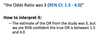
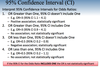
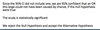
Based on this Statment, we are 95% Positive that there is an Association because the Confidence Interval is \_\_\_\_
Greater than 1 \*Since the Confidence Internval is greater than 1, we are 95% Confident that there is an asssocation between the Disease and Outcome \*if the 95% Confidence Interval does not Include 1, then the Odds Ratio is Statistically Significant and Unlikely to have occured by Chance
40
Were They New Cases?
Yes
41
True/False: Pasteurization and Cooking of Eggs are Important to Prevent Bacterial Infection and Egg-Borne Disease
True
41
Study Card
\*There is a 5% chance that the True Value may lay outside of the Interval
42
An ____ is any Relationship between Two Measured Quantities that Renders them Dependant, so that When One Changes so does the Other
Association
42
If the Relative Risk \> 1, there is ___ Association
Positive \*The Risk of Disease in the Exposed Group is Greater than the Risk in the Unexposed Group
43
Farms that Sell Table Eggs (Shell Eggs for Consumer Sale) must have a Control Program in place for \_\_\_\_\_
Salmonella Enteritidis \*Enforced by the FDA- Perform Enviornmental Testing for SE on Regular Basis. If Environment Tests Positive must then Test Eggs
43
Method for Combining Results from Many Studies where all Available studies are Evaulated for Inclusion, Exclusion, Weighting using Defined Repeatable Methods
Meta Analysis \*A type of Systematic Review
43
44
5 Step Control Program for Salmonella Enteritidis Enforced by FDA
44
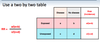
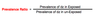
Table used to Calculate \_\_\_\_\_
Prevalence Ratios
44
The "Research Question" i.e. that there is an association between Exposure and Disease
Alternative Hypothesis
45
Egg-Borne Disease Outbreaks are Normally Caused by What Bacteria?
Salmonella Enterica Enteritidis \*Disease in Humans is Caused by Eating Raw or Undercooked Eggs. Very Common for Salmonella Enterica to Cause Outbreaks in Many Countries
46
True/False: Pasteurization of Egg Products is Required by Law
True \*Performed at 140 Degrees for 3.5 Minutes
46
Frank and Honest Discussion of the Results Compared to the Status Quo and Gives a Critical Analysis of the Study Limitations
Discussion \*Is it Clinically Relevant? \*Any Type of Bias should be Included in the Discussion
46
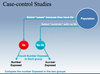
Case Control \*When you get a question like this, Immediately rule out Descriptive studies because they have no measure of Association \*Memorize this Picture
47
Step of Egg Processing that if Done Incorrectly will Introduce Bacteria into Eggs mainly through Removal of Cuticle
Egg Washing \*Use Water Warmer than Eggs, Use Mild Cleaner, Do Not Scrub Excessively, Rinse with Approved Disinfectant and Dry the Egg Surface
47
If the 95% Confidence Interval for the Odds Ratio _____ One the Odds ratio is not Statistically Significant
Includes \*This Concept applies for Odds Ratios, Prevalence Ratios, and Relative Risk \*In this case, even though there is an Odds Ratio Greater than One, we would conclude that there is No Association because the 95% CI Included One!
48
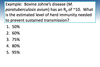
Equation used to Approximate what Percentage of the Population needs to be Immune to Eliminate Disease Transmission
(R0 x Percentage of Estimated Naive Population) \*Ex. with a R0 = 5, would need Herd Immunity \>80%
48
Table used to Calculate the \_\_\_\_\_
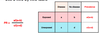
Odds Ratio \*Multiply Diagonally
49
Most common Salmonellosis in the USA that causes the Majority of Egg-Borne Outbreaks
Salmonella Enteritidis
50
True/False: Hand Rubs and Sanitizers are Effective against Protozoan Parasites and Non-Enveloped Viruses
False \*Only Hand Washing with Soap and Water is Effective against Protozoan Parasites and Non-Enveloped Viruses
51
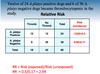
\*Relative Risk is Always used in Prospective Cohort Studies \*Interpretation: Dogs that Tested Positive for A. Platys at the Beginning of the Study were 2.94 times more Likely to become Thrombocytopenic over the Course of the Study than Dogs that were A. Platys Negative
52
\_\_\_\_\_ Studies can only be in an Individual or Single Population, where No Hypothesis is Tested and No Groups are Compared
Descriptive \*No Hypothesis- These studies do not look for Assocaitions
53
Analytical Study in Which Individuals are Selected to Represent a Population Regardless of their Exposure or Outcome Status. For Each Individual in the Sample we Measure Both the Exposure and Outcome at a Single Point in Time
Cross-Sectional Analytical Study \*Determining Outcome (Disease) and Exposure Status at the Same Time
53
What was the Time Period of the Study?
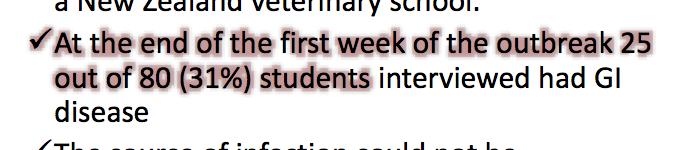
1 Week
53
Validity where the Study result is Valid with Respect to the Population Under study
Internal Validity
53
Bias that occurs when there is an Error in Measurement, where we measure things with Error or Incorrectly
Information Bias \*AKA Misclassification Bias- Misclassify Animals- Ex. Animals with no disease are classified as diseased
54
Statistical Test that Shows the Difference in Proportions that is used for Categorical Data
Chi-Squared Test \*Categorical Data
55
Cumulative Incidence
56
Bias based on Confusion or Mixing of Effects due to a Third Variable that is Associated with Both Exposure and Outcome
Confounding Bias \*Associated both with Exposure and Outcome and is not in the Causal Pathway between Exposure and Outcome
57
D. \*Outbreak- Incidence. Attack Rate is a Cumulative Incidence
57
Are the Dogs selected for the Study based on Exposure or Outcome
\*Cohort Study- Selected based on Exposure
58
Was the Study Population Non-Diseased at the Beginning of the Study?
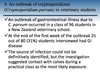
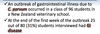
Yes- Non Diseased \*The Individuals that Developed C. Parvum are New Cases that did Not have C. Parvum before they were Exposed to the Calves. This Population was Non-Diseased
59
Analytical Study where Subjects are Selected based on Outcome, where One Group of Diseased Individuals is Compared to a Group of Non-Diseased Individuals
Case-Control Study
59
The Less Study Participants in a Study, the less ____ Validity
Internal \*Study Internally Valid- Were the Samples Large Enough? Is it True with Respects to the Study Population?
61
Instantaneous Potential for Change in Disease Status per Unit of Disease Free animal where No Interpretation is done at the Individual Animal Level
Incidence Density
62
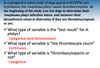
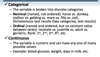
What Type of Variable is the Test Result for A. Platys?
Categorical \*Two Types of Variables: Continuous and Categorical \*For A. Platys- Either Positive or Negative (Test Result)
63
True/False: In Herd Immunity, not every Animal needs to be Immune
True \*We don't need to Vaccinate Every Animal
64
Advantages and Disadvantages of What Kind of Cohort Study?
Prospective Cohort Study
65
Measure of Association that we Use when Comparing Exposure in Diseased Groups (Diseased Versus Non Diseased)
Odds Ratio
65
Statistical Test that measures the Strength of a Linear Relationship used for Continuous Data
Correlation Test
67
The Number of New Occurences of Disease Divided by the Number of Animals in the Study within a Specified Time Frame
Rate
68
What Type of Variable is "Thrombocytopenic or Not"
Categorical \*Test Result- Positive or Negative (Dichotamous)
69
Method that Estimates how much Random Variation there is in our Measurement. Shows the Range of Values where the True Value of our Measurement could be Found, assuming no Bias in the Study
Confidence Interval \*Generally, the Larger the Sample Size, the Narrower the Confidence Interval
69
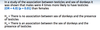
State the Null and Alternative Hypothesis
70
Standards for Quality of Eggs are all Set by the \_\_\_\_
USDA \*Grading of Eggs is Performed by the USDA. USDA Inspected Eggs carry the "Shield"
70
1. There is no Association between the Exposure and Disease
71
Highly Infectious Diseases Require \_\_\_% Herd Immunity
95%
71
True/False: Needles should Never be removed from the Syringe by Hand and Needle Caps should Never be Removed by Mouth
True \*Use Forceps to Remove Needle from Syringe
71
Summary Slide
\*These Same Rules apply to Relative Risk and Prevalence Ratios as Well!!
72
Attack Rate
72
A. \*Outbreak Kind of Scenario. In an Outbreak Scenario What Kind of Measure do you Use? Incidence- Start off with Population that is Non-Diseased
74
Ex. Measles has an Estimated R0 of 9, with 50% Immunity in the Herd and 50% Susceptibility. Is 50% Herd Immunity High enough to Stop Transmission of Measles?
No \*Math: 9 x 0.5 (Suscpetible) = 4.5 4.5 is \> 1, therefore 50% Herd Immunity will not Stop Disease Transmission
75
Simplistic Model of Herd Immunity that is Useful when Dealing with Large, Closed Populations that can be used to Predict an Entire Epidemic Curve for Different Levels of Immunity
Reed-Frost Model \*Takes Immunity into Account
76
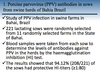
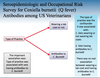
What Part of This, Describes the Study and Target Population?
78
Which is the Most Likely Outcome?
2 \*Still going to Have an Outbreak but will not be like "Wild Fire"
79
Analytical Study where Individual Subjects are Selected Because of their Exposure Status, where One Group that has Exposure is Compared to One Group that Does Not have Exposure
Cohort Studies
80
True/False: The Level of Herd Immunity needed to Control Disease Varies Greatly
True \*Depends on how Infectious the Disease is as well as Managment Practices
81
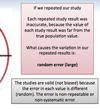
A ____ Measure of association in a Study will have the Same value as the True measure in the Source Population, except for error due to Random Variation
Valid \*There is No statistical Error/Bias
82
True/False: Gloves should be Changed between Examination of Inidividual Animals or Animal Groups, Between Dirty and Clean Procedures on the Same Patient, and Whenever Torn
True \*Hands should be Washed after Removing Gloves- Gloves are Not a Substitute for Hand Washing
82
Systematic Error where there is an unknown Factor that Distorts the Relationship between the Exposure and Outcome
Confounding
83
To be Statistically Significant, the P-Value must be less than \_\_\_
0.05 \*Set at 95% Confidence
85
A measure of the Amount of Disease in a Population that Includes all Old and New Cases relative to the Entire Population that is Used Clinically to Estimate the Probability that an Animal is Diseased
Prevalence
86
Cohort Study where Subjects are Selected based on their Exposure Status and then Followed Over Time to Determine if they Develop the Outcome (Disease)
Prospective Cohort Study (Forward in Time)
86
True/False: Alochol Based Products are Preferred Method of Hand Hygiene in Veterinary Settings because Hands are Routinely Contaminated with Organic Material
False \*Hand Washing with Soap and Water is the Preferred Method
86
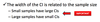
The Smaller the Sample Size, the ____ the Confidence Interval
Larger \*Larger Sample sizes give us more Confidence and more likely to give us something that is Statistically Significant, but don't equate that with Clinically Relevant- KNOW THIS
87
True/False: Random Error can make a study result wrong, but we don't call it Biased
True \*Only Baised if there is Systematic Error- Systematic Error can make a study result biased
88
True/False: Herd Immunity provides a Theoretical Basis for the Investigation, Prevention, Control, and Elimination of Infectious Diseases
True
88
True/False: Mask and Goggles should be worn during Procedures that are Likely to Generate Splashes or Sprays of Blood, Body Fluids or Exudates
True \*Ex. Dentistry, Necropsy
89
Were They New Cases?
No Evidence of New Cases
90
What is the Most Commonly Peer Reviewed Item?
Journals
91
Step of Egg Processing where Inedible Eggs are Identified and Removed by People or Machines
Sorting and Grading
92
31% of Small, 22% of Equine, and 12% of Large Animal Clinics have a Written ___ Control Policy
Infection \*Written Policies associated with Good Infection Control Practices- Try to have Writen Policies. Most Animal Clinics do not have Written Policies about Infection Control
93
Is this Study Descriptive or Analytical?
Descriptive \*Groups were Not Compared
93
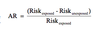
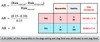
Equation used to Calculate Attributable Risk
94
Case Report/Series- Descriptive
95
Any Potential Determinant of Disease or Health status
Exposure \*Potential Determinant- Exposure may Increase or Decrease the Amout of Disease or Have no Effect at all
97
Small Animal Veterinarians who ____ Recapped Needles were More Likely to Have Sustained a Needle Stick in the Past 12 Months
Always
99
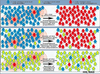
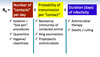
If any of these Factors Increases, we will Have a _____ Reproductive Rate of the Disease
Higher \*R0 Increases if Any of these Three Elements Increases
100
Biased Study where Studies are done on Working People, Performance Animals ect. that Include Individuals who are Healthier than Population as a Whole
"Healthy Worker Effect" \*People who Work are generally Healthier than people who Don't Work
101
True/False: Hen Health if Very important for Egg Quality
True \*The Healthier the Hen, the Better Quality the Eggs
103
\_\_\_\_\_\_ Has led to control of Diptheria, Tetanus, Measles, Mumps, Smallpox and Rinderpest among many Other Diseases that use to Kill Large amounts of People
Immunization/ Vaccination
103
Which one of These is Not an Association: 1. When there is an Increase in an Exposure there is a Corresponding Increase the amount of Disease 2. When there is an Increase in Exposure there is a Corresponding Decrease in the Amount of Disease 3. When there is an Increase or Decrease in an Exposure the amount of Disease does not Change
When there is an Increase or Decrease in an Exposure the amount of Disease Does Not Change \*The Opposites are Also Associations- Even if they Go in Opposite Directions, they are Still Associated with Eachother so that when One Changes so does the Other
104
Two Influences of Evidence Based Medicine
Internal- Own Clinical Experience External- Evidence from other Research
106
Probability of Becoming Diseased
Disease Risk
107
How can You Manage R0 (Reproduction Number) Clinically?
By Implementing these Factors:
108
Value that Estimates whether a Measure Association was Likely to have been caused by chance but doesn't give you any Information about the range that you can expect to find the True Value
P-Values
110
The Proportion of the Study Population that is Diseased at a Single Point in Time
Point Prevalence
110
Measure of Association that is used to Compare the Amount of Disease that Occurs in Exposed and Unexposed Groups in Prospective Studies
Incidence (Risk) \*The amount of Disease that OCCURS. Risk is Used because the Exposed and Unexposed are Non-Diseased at the Beginning of the Study
111
Subject Variation, due to Genetics, and Observer Variation where different Observers interpret Information Differently are examples of What type of Bias?
Information Bias \*Reduce Bias by Blinding Observers to Bias
112
Factors that Increase the Probability of Becoming Diseased
Risk Factors
114
Most of the Routine Cases we see in Veterinary Medicine are ____ Disease
Enzootic
115
What Kind of Egg Producing Farm is this?
Free-Range Farm \*Chickens can Roam Around and Eat whatever they Want and Eggs are Laid Wherever they Want
117
Point Prevalence
117
The Absence of Systematic Error in a Study Result
Validity \*Abscence of Bias
118
Not Statistically Significant \*Accept the Null Hypothesis
119
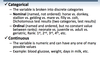
Type of Data that is in Discrete Categories
Categorical \*Gender: Male or Female and Test Results (Positive or Negative) are examples of Categorical data- Dichotomous: Has to be one or the Other, cannot be Both
120
True/False: There are Very Few Critically Appraised Topics (CATs), Systematic Reviews and Meta-Analysis in Veterinary Medicine
True
121
Example of Confounding Factors
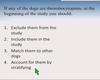
123
Ex. Measles has an Estimated R0 of 9, with 80% Immunity in the Herd and 20% Susceptibility. Is 80% Herd Immunity High enough to Stop Transmission of Measles?
No \*Math: 9 x 0.2 = 1.8 1.8 is \> 1, therefore 80% Herd Immunity will not Stop Measles Transmission
124
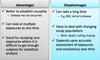
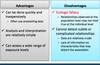
These are Advantages and Disadvantages of ____ Studies
Ecological Studies \*Looking at Populations
125
True/False: Statistically Significant, does not mean Clinically Relevant or Biologically Important
True \* Even very small measures of association that are not large enough to matter can be statistcally significant
126
1. Exclude them from the Study \*Prospective Cohort- Only Interested in the Risk of Developing Thrombocytopenia over the course of the Study \*Need to Exlude all animals that have the Outcome at the Beginning of the Study
127
A Result or Response usually a Disease or Some other Change in Health Status
Outcome
128
Management of ______ was Done via Clean Water, Safer Foods, Immunization, and Sanitation among other things
Infectious Diseases
129
Random Errors in Studies are caused by \_\_\_\_, due to Fluctuations around a True Value because of Sampling or Measuring Variability
Chance \*Random Error does not Bias a Study \*Statistical Interfernce deals with Random Error
130
Type of Epidemiology that describes the Characteristics, amount and Distribution of Disease in a Specified Population (Who, What, When, Where)
Descriptive Epidemiology
130
Analytical Study were Individual Subjects are Selected because of their Outcome Status where Two Groups: 1) With Disease, and 2) Without Disease (Controls) are Compared
Case-Control Study
132
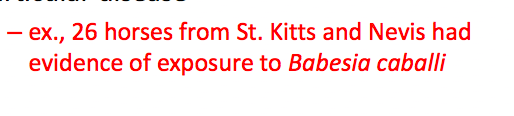
The Count of Diseased Animals Expressed as a Fraction of the Animals that Could be Diseased
Proportion \*Proportion could Also be expressed in Percentages- Ex. 31.3% of 83 Horses had Exposure to Babesia Caballi
133
In Analytical ____ Studies Groups are Compared and the Subjects are not Given Treatment or Exposure
Observational
134
The Interval in which we are 95% Confident that the True value of our Measurement can be Found
95% Confidence Interval \*The larger the Sample Size, the Smaller the Confidence Interval. Less Confident in our Results from a Small Sample Size
135
If the Odds Ratio = 1, there is ____ Association
No \*The Odds of Exposure Among Cases (Diseased) was Equal to that of Controls (Non Diseased)
136
138
What Type of Study is This?
Prospective Cohort Study \*Groups were Compared. Calves Chosen Based on Exposure. Foward in Time
140
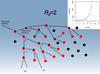
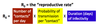
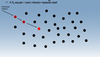
What is the (RO) or Basic Reproductive Number in this Model?
R0 = 2 \*Each Infection Results in 2 Other Infections
142
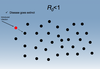
If R0 is ____ then the Level of Immunity may be Predicted to be Sufficient to Stop an Epidemic
\< 1 \*R0 \< 1 = Sufficient to Stop an Epidemic
144
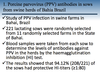
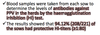
What was the Disease/Outcome that was Measured?
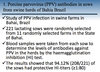
Outcome that was Measured- Antibodies
146
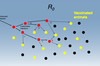
In This Model, where Half of the Population is Vaccinated Animals, the R0 (Reproductive Number) is \_\_\_\_
Less than One \*If you Average out the Numbers R0 \< 1. This is an Epidemic that would Likely Stop because there are Vaccinated Animals in the Population
146
Information Bias where those Affected by a Disease have Greater Sensitivity for Recalling Exposure than Those not Affected by Disease
Recall Bias \*Ex. Owners with Sick animals are more Likely to Recall Exposure than Owners with Healthy Animals
148
What is this an Example of?
Cause-Specific Mortality Rate \*Cause of Mortality- Racing
149
Two Ways that Studies can Produce Error
Caused by Chance- Random Error Not caused by Chance- Bias
150
True/False: Peer Review is a Guarantee of Research Quality
False \*Not a Guarantee- You ahve to Evaluate each Paper
152
Population that the Subjects were Drawn From to Measure Disease
Source Population
153
Analytical Study in Which Samples of Populations are Selected, where One Group of Populations has the Outcome and One Group Does Not
Ecological Outcome Study \*Comparing Diseased Groups Versus Non-Diseased Groups
154
True/False: Veterinarians have a Casual Attitude Towards Blood, Feces, Urine and Other Body Fluids
True \*We should be wearing Gloves when Handling any of these Fluids
156
Which is a Measure of the Amount of Disease in a Population? A. Attack Rate B. Cumulative Incidence C. Prevalence D. Cause Specific Mortality E. Incident Density
Prevalence \*Amount of Disease in a Population at a Particular Time or Over a Particular Time Period
157
Something that happens unpredictably without discernible human intention or with no observable cause
Chance \*Caused by Chance or random Variation
158
The Bullet Holes are where our Study Result Value is. What Kind of Error is Present?
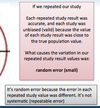
Random Error \*With Bias you would expect all Results to cluster in a Particular Area
160
Only In Analytical ____ Studies are Subjects Allocated or Assigned to Recieve a Treatment or an Exposure in order to Study the effect of the Treatment/Exposure
Experimental \*Subjects are Allocated/Assigned- Only in Experimenal Studies!!
162
Outermembrane of the Egg that is Very Important to Prevent Entry of Microbes
Cuticle \*When Eggs are Washed it is Very Important that the Washing does not Damage the Egg Cuticle
164
When R0 (Reproductive Number) is Less than 1, the Disease Goes \_\_\_\_
Extinct \*Disease cannot Infect another Individual
166
This is an Example of an Analytical Ecological Study Comparing _____ Groups
Exposure \*Comparing Exposed Groups Verses non-Exposed Groups
167
Summaries of Research Papers using Guidlines where Articles are Appraised for their Quality
Critically Appraised Topics (CAT's)
168
Analytical Observational Studies in Which Groups of Populations are Compared
Ecological Studies \*Populations are Compared- Not Individuals
169
Statistical Test that measures the Difference in Means that compares the Average of Two Groups used for Continuous Data
Students T-Test
170
The Bullet Holes are where our Study Result Value is. What Kind of Error is Present?
Random Error \*Each study Result was Accurate and Unbiased with a small amount of random error
172
Cohort Study where Subjects are Selected based on their Exposure Status, then their Outcome status Is Determined from their History by reviewing Records, Questionnaires, Testing Ect.
Retrospective Cohort Study (Back in Time) \*Both Exposures and Outcomes have Already Occurred when the Study Begins
173
Descriptive Study where Lots of Subjects are Chosen to Represent a Population usually at One Point in Time to Estimate the Amount and/or Distribution of Disease
Cross-Sectional \*Sample is meant to Represent a Population
174
Incidence that Measures the Number of New Cases at the End of the Study, Divided by the Animal-Time at Risk
Incidence Density \*Ex. If there were 10 Healthy Animals Exposed for 20 Months each and 3 of Them developed disease what is the Incidence Density? 3/200 Animal-Months
176
What is a Descriptive Study Known as if it is only Describing 1 Animal/Outbreak
Case Report \*A Case Report shows that Something can Happen Once
177
Analytical Study in Which Individuals are Selected to Represent a Population, once Selected, Subjects are Classified into Groups to make Comparisons
Cross-Sectional Analytical Studies
178
True/False: Of the Things that we are Exposed to, Blood is typically the one that doesn't carry a High Risk of Zoonotic Infection
True \*Except Non-Human Primates- we worry about Blood in these Species
179
Name the Measure of Disease Occurence
Prevalence \*No New Cases- They started with a Population that was a Combination of Diseased and Non-Diseased
180
During Transport and Storage Eggs are _____ to Prevent Embryo Development and Slow Spoilage
Refrigerated \*Fresh Eggs that are Refrigerated Last 4-5 Weeks, while Non Refrigerated Eggs last 2-3 weeks
181
Self-Selection Bias Healthy Worker Bias Diagnostic Bias These are Three Examples of What Kind of Bias?
Selection Bias
183
What Type of Study is This?
Case-Control \*Groups were Compared. Individuals were chosen Based on Outcome
184
The Proportion of the Study Population that is Diseased at Any One Time that May be a Point or Time Interval
Prevalence \*The Probability of Being Diseased
184
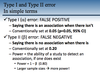
Type 1 Error, when we Reject the Null Hypothesis when it is Not False
False Positive
186
Stopping Movement of All Animals, Sick and Healthy, in and out of the Area
Quarantine \*Ex. Road Block
188
R0 (Reproductive Number) Suggests the Average Number of ___ Cases that Should be Caused by Each Existing Case
New
189
What Type of Study is This?
Clinical Trial \*Subjects were Allocated
190
What is a Descriptive Study knowns as if It is Describing Several Affected Animals/Outbreaks
Case Series \*A Case Serious shows that it can Happen Repeatedly
191
A Fraction in which the Numerator is Not part of the Denominator
Ratio
191
True/False: Hand Hygiene is Practiced More by Large Animal Vets than By Small Animal Vets
False \*Small Animal Vets are Better with Hand Hygiene than Large Animals and Equine Vets
192
The Probability that an Individual in the Study Population Is Diseased at the Time of the Study
Point Prevalence
194
This is an Example of an Analytical Ecological Study Comparing ____ Groups
Outcome \*Typical Ecological Study that is Comparing Populations \*Compares Diseased Versus Non-Diseased Populations
195
What is the Outcome
197
The Probability that an Individial in the Study Population Is Diseased during the Period under Study
Period Prevalence
198
\*Important to know the Connection between which Measures of Association are used with what Study Designs. In this Example we are Selecting dogs based on Exposure and Retrospectively looking at their Outcome- Retrospective Cohort Study \*Mistake on Slide- Should say "Prevalence" in the Chart, Not "Risk"
200
True/False: Veterinarians should Not Give Mouth to Mouth Resuscitation and Should Not Blow into Endotracheal Tubes
True
201
What Type of Study is This?
Analytical Cross-Sectional \*Groups were Compared. Outcome: Obese or Not Obese. Exposure: Premium or Non Premium Cat Food. Cats were Chosen Randomly
203
Cumulative Incidence During an Epidemic where the Population is Usually a Group of Exposed Individuals that is Observed for a Limited Period of Time
Attack Rate
204
If the Prevalence Ratio \> 1, there is ____ Association
Positive \*The Prevalence of Disease in the Exposed Group was Greater than the Prevalence in the Unexposed Group
205
Calculate Attributable Risk
207
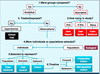
Know this Chart
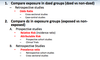
\*Analytical Study- We compare Two or more Groups on the Basis of Disease or Exposure. Was there Manipulation of Exposure or Treatment of Disease? Observational Studies are the Larger Group- Mainly Individual Studies \*Descriptive Study- Not comparing Groups. How many Animals in the Study?
209
Hand Washing with _____ and Running Water Mechanically Removes Soil and Reduces the Number of Transient Organisms on the Skin
Plain Soap \*Antimicrobial Soap inhibits Growth of Bacteria of both Transient and Resident Flora
210
The Persons or Animals included in a Measurment of Disease
Study Population
210
95% \*Math: 8 x 0.05= 0.4 0.4 \< 1, therefore 95% Herd Immunity will Stop Parvovirus Transmission
211
Subject Variation Observer Variation Deficiency of Tools/ Technical Errors Recall Bias Reporting Bias These are All examples of What Type of Bias?
Information Bias
213
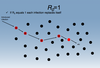
What is the R0 (Reproductive Number) in this Model?
R0 = 1 \*Infection Replicates itself to 1 Other Suscpetible Individual
214
Incidence that Measures the Number of New Cases at the End of the Study divided by the Population at Risk at the Beginning of the Study
Cumulative Incidence
214
If the Prevalence Ratio is \< 1, there is ____ Association
Negative \*The Prevalence of Disease in the Exposed Group was less than the Prevalence in the Unexposed Group
215
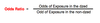
Ratio of the Odds of Exposure in Diseased to Odds of Exposure in the Non Diseased
Odds Ratio
216
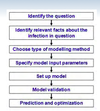
Reference Card: Steps Involved in Developing Epidemiological Models
217
Is th Study Statistically Significant? Would you Accept or Reject the Null Hypothesis
218
Study Card: Relative Risk
220
Period Prevalence
222
What Type of a Study was this?
Descriptive Cross Sectional \*No Groups were Compared and Many Individuals were Sampled

224
95%
226
\_\_\_\_ of Veterinary Standard Precautions of Zoonotic Disease Prevention in Veterinary Personnel, was made to Raise Awareness of the Scope of Zoonotic Disease Risk in Veterinary Medicine, Address Issues specific to the Veterinary Profession, Provide Practical Guidance, Provide a model for Infection Control Plan, and Limit Transmission of Zootonic Pathogens from Animals to Veterinary Personnel
Compendium \*How to Protect Ourselves as Veterinary Personnel
228
Any Relationship between Two Measured Quantities that Renders them Dependant
Association \*When One Quantity Changes, so does the Other Positive Association- Ex. Increase in Exposure causes Increase in Disease Negative Association- Ex. Increase in Exposure causes Decrease in Disease Not Associated- Ex. Increase or Decrease in Exposure, the amount of Disease Does Not change
229
If we measure something over and over again, we will get slighly different measurements each time and a few measurements may be extreme, known as \_\_\_\_
Random Variation \*Associated with Chance
231
Medicine that Uses the Best Available Evidence for Decision Making in the Care of Patients
Evidence Based Medicine
232
Distortion of the Underlying Relationship between an Exposure and an Outcome by a Third Factor
Confounding Factor
233
If the P-Value is ____ than 0.05, we accept the Null Hypothesis and Reject the Alternative Hypothesis
Greater
234
\*All Animals were Healthy at the Beginning of the Study
235
True/False: Veterinarians are Expected to Immediately Recognize Exotic Zoonotic Diseases
False \*Don't know Immediately- Need to Take Precautions
237
Diseases are Controlled when R0 is Reduced \_\_\_\_\_
\< 1 \*We want Existing Cases to Infect Less than 1 Individual, which will Dimish the Outbreak
238
If Odds Ratio is \> 1 there is _____ Association
Positive \*Odds of Exposure among Cases (Diseased) Was Greater than that of Controls (Non Diseased)
239
True/False: Veterinarians should set the Standard for infection Control Practices in their Clinics
True
241
True/False: Veterinarians Report Concerns about Contracting Zoonotic Illness, Yet Often do Not Take Precautions to Protect Themselves
True
242
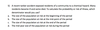
To Evaluate a New Vaccine for Distemper you Vaccinate all Dogs (1200) that Enter your Shelter in a One year Period. None of them Get Distemper. Does this mean the Vaccine is Effective? A. Yes B. No C. None of the Above
None of the Above \*Doesn't Tell you anything- We don't know the Exposure State of Any of these Dogs. Need a Control Group- Unvaccinated Group to Compare too. There may Not have been Distemper Virus in the Shelter that Year
244
Incidence Density
245
Type of Categorical Data that must be Named, such as Male versus Female and Horse versus Donkey
Nominal Categorical Data
246
If Relative Risk = 1, there is ___ Association
No \*The Risk of Disease in the Exposed Group is Equal to the Risk in the Unexposed Group
247
Zoonotic Infections in Veterinary Personnel are Primarily related to _____ and Exposure to Animal Feces, Infected Skin and Droplets
Bite Wounds
248
If Odds Ratio \< 1 there is a ____ Association
Negative \*Odds of Exposure among Cases (Diseased) was Less than that of Controls (Non-Diseased). Exposure is Possibly Protective \*With Odds Ratio- The Further away you get from 1, the Stronger the association
249
Part of a Scientific Paper that Has the Most Important Findings Only and Asnwers the Research Question that must be supported by the Results
Conclusions \*Has Most Important Findings Only
250
What is this an Example of: In Banfields Pet Hospital's State of Pet Health Report for 2010 there were 17.5 Cases of Diabetes Mellitus per 10,000 Dogs up from 13.3 Cases of Diabetes Mellitus per 10,000 Dogs in 2006
Peroid Prevalence
251
Short Summary of the Research Findings that Provides enough information for you to Decide Whether to Read the Full Paper
Abstract \*Don't Rely on the Abstract Alone- May not get all Information
252
The Number of New Cases of Disease that Occur in the Study Population Over Time
Incidence \*The Rate of Occurence of New Cases of Disease in the Study Population- Only Counts New Cases of Disease
253
What Type of Variable is the Thrombocyte Count
Continuous \*Its a Count- Can take on a Number of Different Values
254
3. There was no association \*The Confidence Interval Includes One
254
2. Accept the Alternative Hypothesis and Reject the Null \*Have to Accept one and Reject the Other. Cannot Accept both or Reject both
256
Sick Animals that we Sequester from Potential Contacts
Isolation \*Isolation is when we have Sick Animals! Ex. Parvovirus Ward
258
A study is called \_\_\_\_\_, if it was unlikely to have occured by chance
Statistically Significant \*Chance of Error in the Result is small
259
Mortality Rate \*Prevalence of Death in a Given Time Period
260
Proportion
261
Examples of ____ Eggs: Rotten/Sour Eggs Eggs with Pseudomonas-Green Eggs with Stuck Yolks Moldy Eggs Eggs with Blood Rings/Embryonic Chicks
Inedible \*Egg may also be Inedible if it is Broken, Frozen or Overheated
263
A concept in Nature of a Population-Level Phenomenon which accounts for the Reduction in Transmission of infectious Diseases
Herd-Immunity \*We take a percentage of the Population and Make them Immune to the Disease, which Passes Protection to the Rest of the Herd and Reduces the Spread of Disease to those that are not Immune
264
Name the Measure of Disease Occurence
Cumulative Incidence \*Risk is associated with Incidence and Not Prevalence
266
In Which Descriptive Study Method are Subjects selected to Represent the Population: Sample the Population and Estimate amount and Distribution of Disease in the Population where No groups are Compared
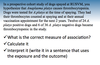
Cross-Sectional Descriptive Study \*Sample the Population
267
Chi-Squared \*Test we used when Comparing two Categorical Variables. Whether the Dog has A. Platys is a Categorical Variable and Whether the Dog is Thrombocytopenic is another Categorical Variable \*Students T-Test- used when groups with Categorical Variables with a Continuous Outcome. Ex. Height between Two Genders \*Correlation- Used when Comparing Continuous with Continous Variable
268
The Proportion of the Study Population that is Diseased during a Specified Period of Time
Period Prevalence \*Measures all the Cases of Disease in the Study Population over a Period of Time
269
If the Prevalence Ratio = 1, there is ____ Association
No \*The Prevalence of Disease in the Exposed Groups was Equal to the Prevalence in the Unexposed Groups
270
In an Analytical Study, _____ Groups have at Least 2 Groups that are Being Compared where One Group of Subjects have the Exposure and the Other Group of Subjects do not (Controls)
Expsosure \*Any Potential Determinant of disease or Health Status
271
Reed-Frost Model accounts for the ____ of Immunity
Effects \*R0- did not account for Effects of Immunity
273
Federal Agency In charge of the Safety of Shell Eggs Produced in the USA
FDA
275
Experimental
276
Validity where the Study Result if valid to a Wider population, beyond the Study Population
External Validity
277
Antimicrobial Proteins in Eggs
Lysozyme IgA, IgM and IgG (Immunoglobulins) \*These Proteins protect against Bacterial Infection
278
The Probability of Becoming Diseased during the Course of an Epidemic
Attack Rate
279
Bacteria that Infects the Ovaries of Healthy-Appearing Hens that Transfers to the Eggs during Egg Formation
Salmonella Enteritidis \*Transmission of Salmonella to Eggs can Also occur after the Egg is Laid via Surface Contamination of Eggshells
280
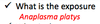
What is the Exposure?
282
Ratio used to Compare the Prevalence of Disease that Occured in the Exposed and Unexposed Groups in Retrospective Studies
Prevalence Ratio
283
If the P-Value is ____ 0.05 the interpretation is that we are 95% Confident that an association as large as the One in our study was not caused by Chance
Below \*Statistically Significant
284
Systematic Error is caused by \_\_\_\_\_, where the Error is Inherent to the Study method being used and Results in a Predictable and Repeatable Error for each Observation
Bias \*Systematic Error- Inherent to the Study
284
What will be Measured in the Future?
286
Is th Study Statistically Significant? Would you Accept or Reject the Null Hypothesis
288
In a Scientific Paper, If there is Not Enough Information or it is Unclear, consider the Research to be \_\_\_\_
Flawed
289
A Clear and Objective Presentation of the Findings with No interpretation that should Address the Aims of the Study and Answer the Research Questions
Results \*No Interpretation
290
True/False: When Injecting Live Vaccines or Aspirating Body Fluids or Tissue, the Used Syringe with the Needle attached should be Placed in a Sharps Container
True \*Do not try to Take the Syringe and Needle Apart \*Otherwise, if You are Separating a Syringe from a Needle use Tissue Drivers or Forceps- Don't do it By Hand and Never Remove the Needle Cap with Your Mouth
291
Type of Data the is Numeric and can have any one of many possible Values, such as Blood Glucose and Weight
Continuous
292
Error in Measurement of the Exposure in the Diseased or the Non-Diseased May producd what type of Bias?
Information Bias (Misclassification Bias) \*Reduce Bias by Evaluating the Accuracy of Measuring Tools
293
The Probability (Risk) of a Susceptible Individual Becoming Diseased during the Study Period
Cumulative Incidence
294
\_\_\_\_ are Only an Effective Disinfectant when Hands are Not Visibly Soiled
Hand Rubs/ Sanitizer \*Less Effective than Hand Washing against Protozoan Parasites and Non-Enveloped Viruses
295
3. Not enough Information \*The Point estimate doesn't tell if the Results could be due to Chance. It is possible that the Measure arose by chance. We need to See a P-Value or Confidence Interval to Decide if it is Statistically Significant
296
Bias based on Errors in Measurement where the Error leads to Misclassfication of Diseased, Non diseased, Exposed and Non Exposed Animals
Information (Misclassification) Bias
297
True/False: Measles has an R0 = 10-15, which is Highly Contagious meaning Herd Immunity of 80% May not be Sufficient to Manage Disease
True
298
Number of Secondary Cases Caused by an Infected Individual in an Entirely Susceptible Population that Determines whether a Disease can Persist and is Valuable for Assessing managment Options
Basic Reproductive Number (R0) \*Number of Secondary Cases that 1 Infected Animal causes in a Susceptible Population
299
Name the Type of Measure
Proportion
300
If you Absolutely Have to Recap a Needle, Either use Forceps or the ____ Technique
Scoop
301
What are the Advantages and Disadvantages of Case Reports and Case Studies?
\*No Groups are Compared
302
Ex. Measles has an Estimated R0 of 9, with 95% Immunity in the Herd and 5% Susceptibility. Is 95% Herd Immunity High enough to Stop Transmission of Measles?
Yes \*Math: 9 x 0.05 = 0.45 0.45 is \< 1, therefore 95% Herd Immunity will Stop Measles Transmission
304
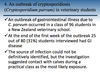
\*Dogs with Myocarditis had 6xs Greater Odds of Eating Wet Food \*OR \> 1 = Positive Association. An OR = 6 is a Strong Association \*Anything Over OR \>2 is Considered a Strong Association
305
Method used to Study the Prevalence of Antibodies in a Population to Measure Herd Immunity
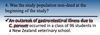
Sero-Epidemiology \*Proportion of Individuals with Specific Antibodies will become % Of Population that is Resistant to Infection
306
Measure of the Rate of Disease Occurence that Includes Only New Cases relative to the Population at Risk that is Used for Disease Management, to Estimate the Number of Cases of Disease that are Expected to Occur in the Next Time Period
Incidence
307
Type of Categorical Data that can be Named and Ordered, such as Age Groups (Neonate vs. Juvenile) or Rankings
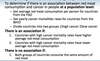
Ordinal Categorical Data \*Logical Ordered Categories
309
Top Two Greatest Achievments of Public Health in the USA in the 20th Century that Led to an Increase in Average Lifespan of about 30 Years since the 1900's

Control of Infectious Diseases Vaccination \*Significant Decrease in Death by Infectious Diseases since the 1900's
310
If the P-Value is \_\_\_ than 0.05, we Reject the Null Hypothesis and Accept the Alternative Hypothesis
Less
311
If the Relative Risk \< 1, there is ____ Association
Negative \*The Risk of Disease in the Exposed group is Less than the Risk in the Unexposed Group. Possibly Protective
312
What Kind of Egg Producing Farm is this?
Free-Run Farm \*Chickens are not Kept in Cages
313
Interior Egg ___ Hinders Growth or Spailage Bacteria
pH \*During Storage pH may reach 9.7- Hinders Bacteria
314
Only the ____ Density is Reported as Animal-Time at risk
Incidence Density \*Ex. 7 Cases/ 1000 Cow-Months at Risk
315
Cat Bites, Dog Bites, and ____ are the most Commonly Reported Accident/Injury in Veterinary Medicine
Needle Sticks \*Inadvertent Injection of a Vaccine Most common Needle Stick injury
316
Contact with Animal ____ has not been Recognized as a Source of Occupational Infection
Blood \*Except Primate Blood
317
Cohort Study where Researchers have to Blind Themselves to the Disease Status of the Subjects they Select Because They May already Have the Disease
Restrospective Cohort Study \*The Disease has Already Occured in the Subjects
317
True/False: Gloves and Goggles should Always be Worn During Dentistry Procedures on Animals
True
318
The Hyothesis of "No Association" i.e there is no association between exposure and disease
Null Hypothesis
319
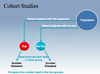
Cohort
320
Fatality Rate \*Proportion of Cases that are Fatal within a Specified Time Following Disease Onset
322
The ____ Model is Based upon the Probability of Transmission from a Population of Infected Cases to a Population of Susceptible Animals
Reed-Frost
324
Two goals of Epidemiological Studies
Describe Disease- Descriptive Study Identify Associations- Analytical Study
326
This is an Example of What Type of Bias?
Selection Bias \*More Likely that animals with Eye Cancer will be sold at Auction
327
Know This
328
Complete and Full Description of the Procedures Followed in the Study where the Reader should be able to Repeat the Study Exactly if you follow the Description
Methods \*If you can't Understand what was Done or It Doesn't Make Sense: Problem
329
The Bullet Holes are where our Study Result Value is. What Kind of Error is Present?
Systematic or Repeatable Error \*Bias and a Large degree of Random Error
330
The Bullet Hole is where our Study Result Value is. This is an Example of a _____ Study that is Free of Bias
Valid \*No Systematic Error and Very Little Random Error
331
Type of Epidemiology that Determines if there is an Association between an exposure and outcome in a Population and How strong the association is (Why)
Analytical Epidemiology
332
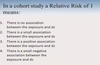
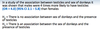
We Assume that Exposure ___ associated with Disease if: 1. More Disease is Found in Subjects that Had Exposure than in Subjects that Didn't have Exposure 2. Less Disease is Found in Subjects that had Exposure than in Subjects that Didn't have Exposure 3. More Exposure is Found in Group of Diseased than Non Diseased Subjects 4. Less Exposure is Found in Group of Diseased than Non Diseased Subjects
Is
333
True/False: If the 95% Confidence Interval Includes One, the Odds Ratio, Prevelance Ratio and Relative Risk are Statistcally Significant
False \*Know this!
334
Relative Risk \*Students T-Test is a Statistical Test, not a Measure of Association. Confidence Intervals and P-Value are not Measures of Association, they just tell if your Study Result arose by Chance. The only Two Measures of Association listed: Odds Ratio and Relative Risk \*Only Relative Risk is used for Prospective Studies
335
Bacterial Egg-Borne Disease that has an Incubation Period of 12-72 Hours with Symptoms lasting 4-7 Days where Signs Include Diarrhea, Vomiting, Abdominal Pain, Chills and Fever
Salmonella Enteritidis
336
Bias that occurs as Error in Selection of Study Subjects, where the Sample is different from the Population
Selection Bias \*Bias Introduced at the Beginning of the Study when individuals are Selected for the Study- Collecting "Convenient" Samples
337
We need to Embrace and Utilize Standard Preventive _____ control Practices to Minimize the Risk of Occupational zoonotic Infections from Recognized and Unrecognized Sources
Infection \*Regardless of the Presumed Diagnosis and Risk of Infection
338
The Amount of Overall Disease Incidence in a Population that can be Attributed to a Specific Exposure
Attributable Risk
339
Four Characteristics of a Good Epidemiological Study
Scientifically Sound Valid Precise Efficient \*Precision- If you repeat the Study you should Get the Same Results. Valid- Measures True data without Bias.
340
\_\_\_\_\_ Studies Determine if there is an Association and its Strength, Determine to Test a Hypothesis, and Always compare Groups
Analytical Studies \*Hypothesis- A Statement about an association between and Exposure and Outcome. Analytical studies compare Exposed Groups to Non-Exposed Groups or Diseased Groups to Non-Diseased Groups
341
The Measure used to Compare the Amount of Disease that Occurred in the Exposed and Unexposed Groups in Retrospective Studies
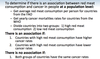
Prevalence \*The Probability of Being Diseased