3 ways to evaluate a Balance Sheet
- Change in equity
- Is Net Income > 0
- Is Cash From Operations (CFO) > 0
Statement of Cash Flows - 3 ways
- Operations
- Investing
- Financing
(Operating income is preferred)
4 Types of Financial Statements
- Balance Sheet
- Income Statement
- Statement of Cash Flows
- Statement of Changes in Stockholder’s Equity
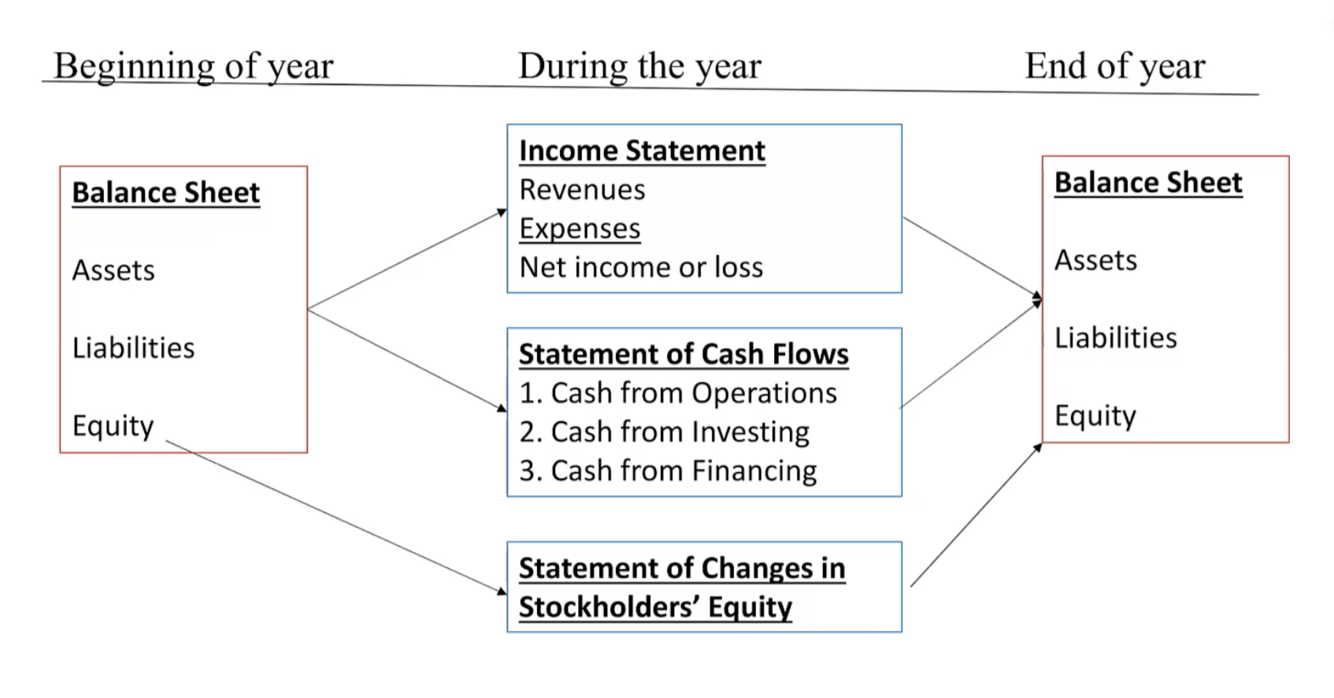
Income Statement tells us…
Did we make any money?
Statement of Cash Flows tells us…
Where did the cash come from and what did we do with it?
Balance Sheet tells us…
What do we own?
To whom do we owe money?
Profit Margin ratio
Profit Margin = Net Income / Revenues
Compute this every time you look at an Income Statement
Why we have financial statements
- Managers need to make decisions
- Creditors need to determine whether to lend us money
- Investors need to determine whether to invest in the cmopany
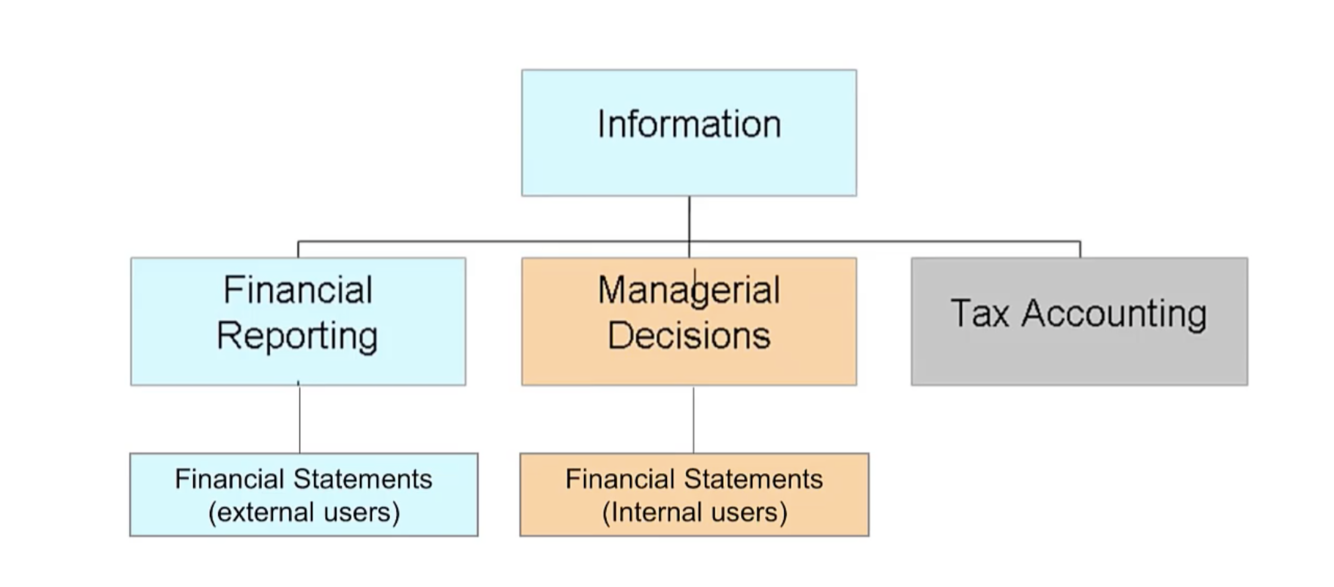
Objectives of Financial Reporting
- Useful in making financial decisions
- Helpful in assessing the ability of a company to generate future cash flows
- Provide information about a company’s economic resources and the claims on those resources
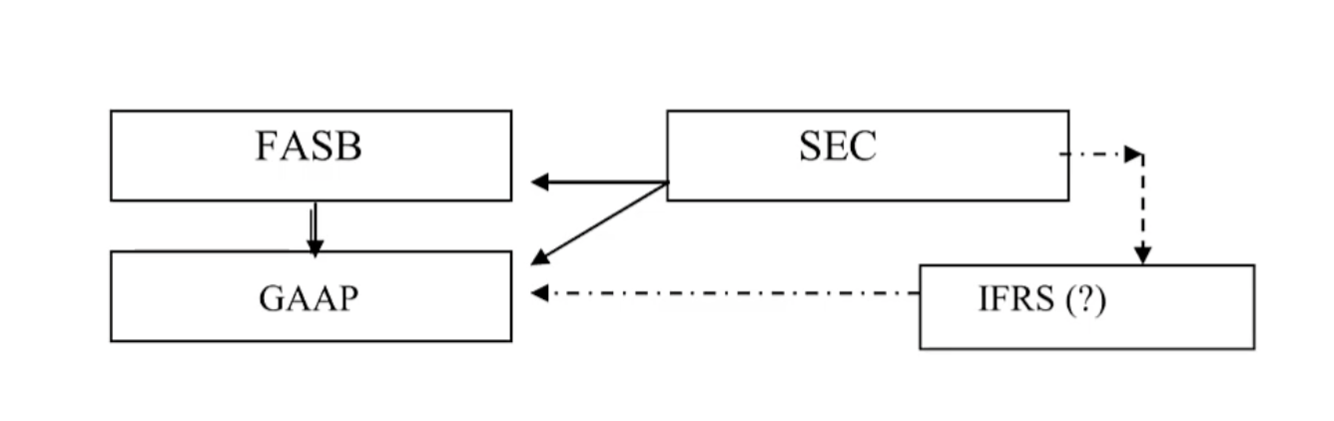
GAAP
Generally Accepted Accounting Principles
Revenues are
receipts of assets from sales of products and services to customers
Revenue Recognition
when the entity satsifies a performance obligation by transferring a promised good or a service (that is, an asset) to a customer.
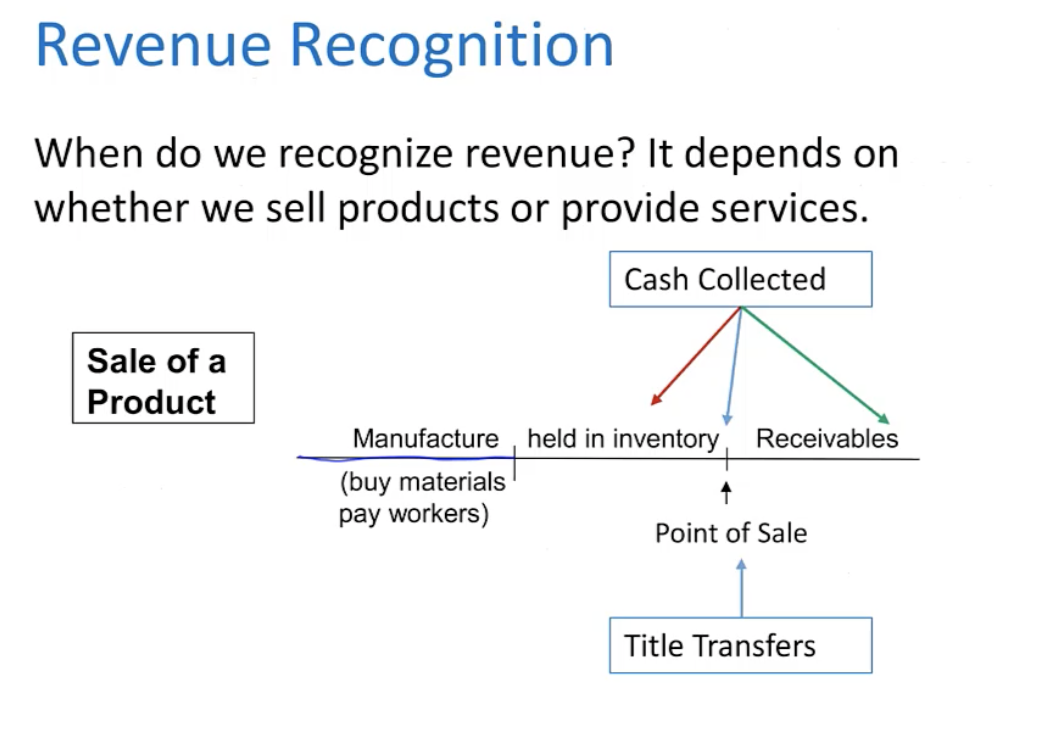
Recognizing Revenue for a Service
when the service is performed (over the contract period)
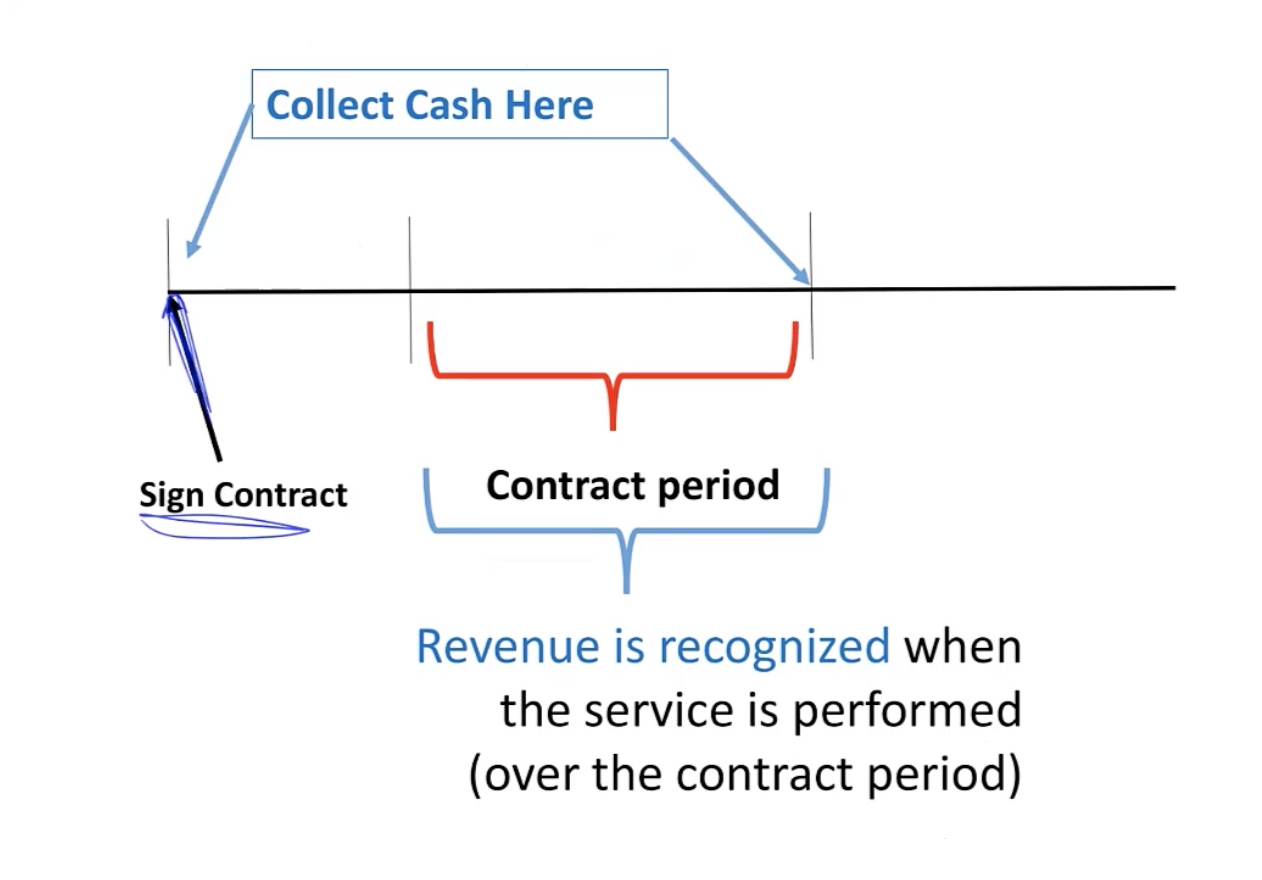
Accrual Basis
Revenue is recognized when earned, not necessarily when the cash is collected
4 Special Issues with Revenue Recognition
- Warrnaties
- Principal versus Agent
- Non-refundable upfront fees
- Rights of return
Accounts Receivable
Sales we’ve not yet collected
Accounts Receivables (BS) / Sales (IS)
Assets versus Expenses
Expenses = “cost of resource” used to generate revenue recognized in the same period as the revenue
Assets = “cost of resource” used to generate future revenues
Matching principle = expenses used to generate revenues are matched (recognized) in the same period as the revenue (and not necessarily in the period that the cash was paid.)
Expenses (IS
A
Examples of Accrual Costs
- Inventory
- Fixed Assets
- Selling, General, & Admin
- Inventory = Cost of Goods Sold
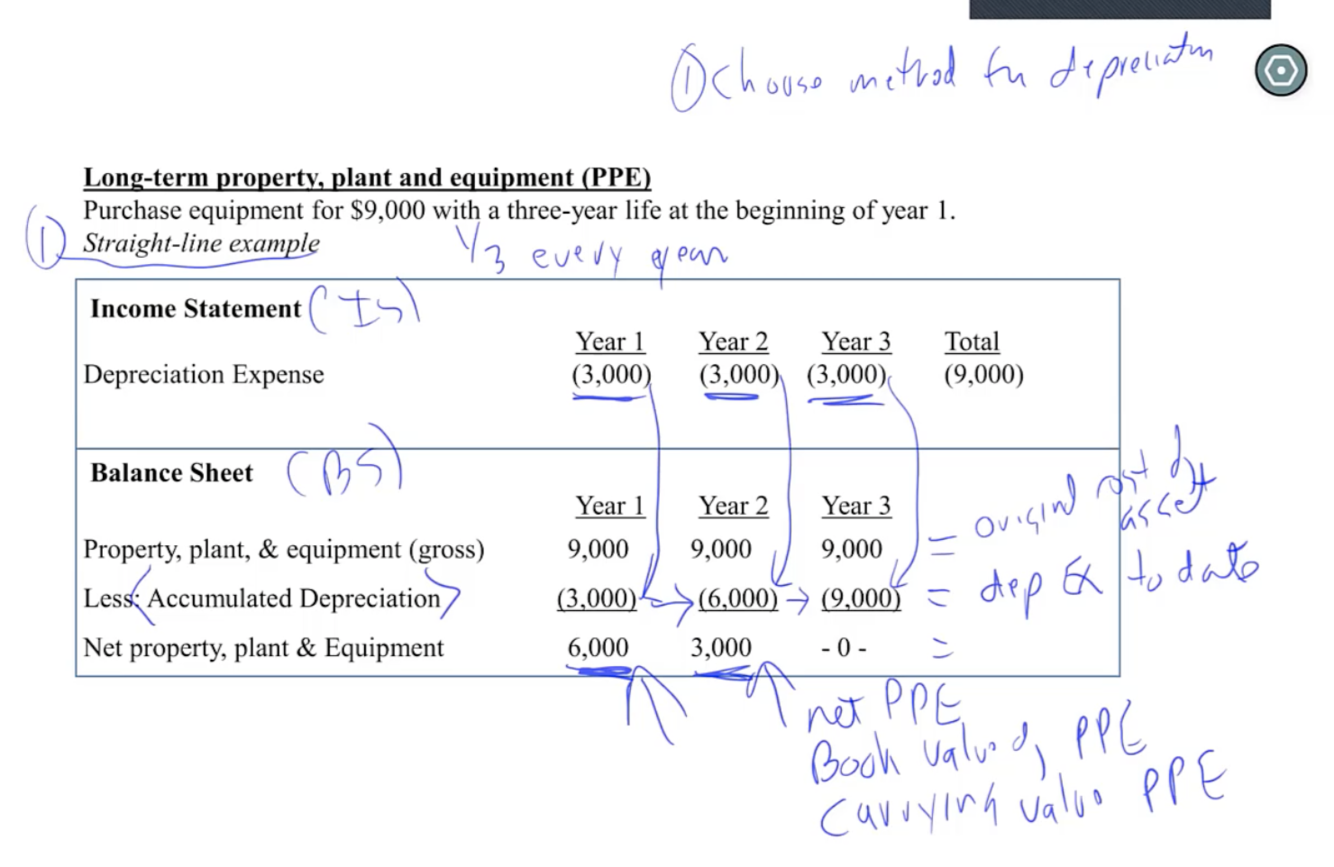
- Fixed Assets =- Depreciation expense
- Selling, General, & Admin = SG&A expense
What does Depreciation measure
It matches the cost of an asset in the period in which it generates revenue
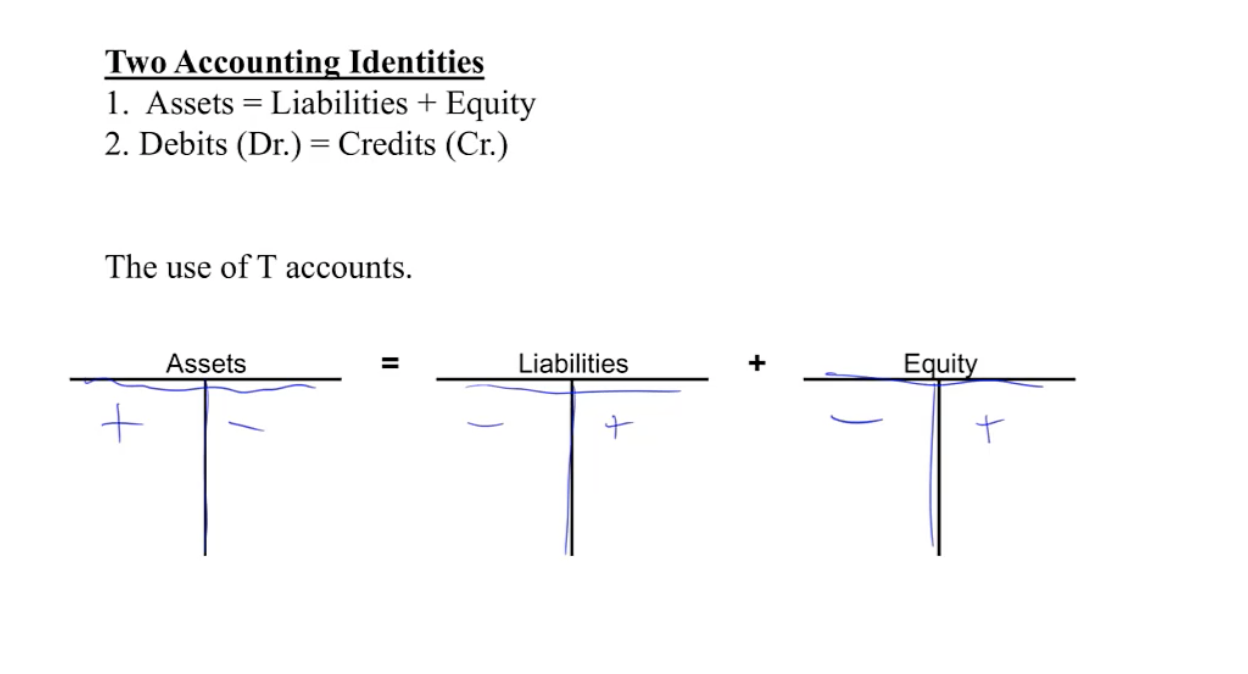
What are the components of T accounts
Two Accounting Identies
- Assets = Liabilities + Equity
- Debits (Dr.) - Credits (Cr.)
Increases go on the right side
Decrease goes on the left side
The ‘+’ sign goes on the same side of the T account as the T account is on WRT the ‘+’ sign. i.e. the Assets T is on the left side of the ‘=,’ therefor the ‘+’ goes on the left. The Liabilities and Equity are on the right side fo the ‘=’ and therefor the ‘+’ goes on the right
However, Debits alwas are on the left, Credits are always on the right
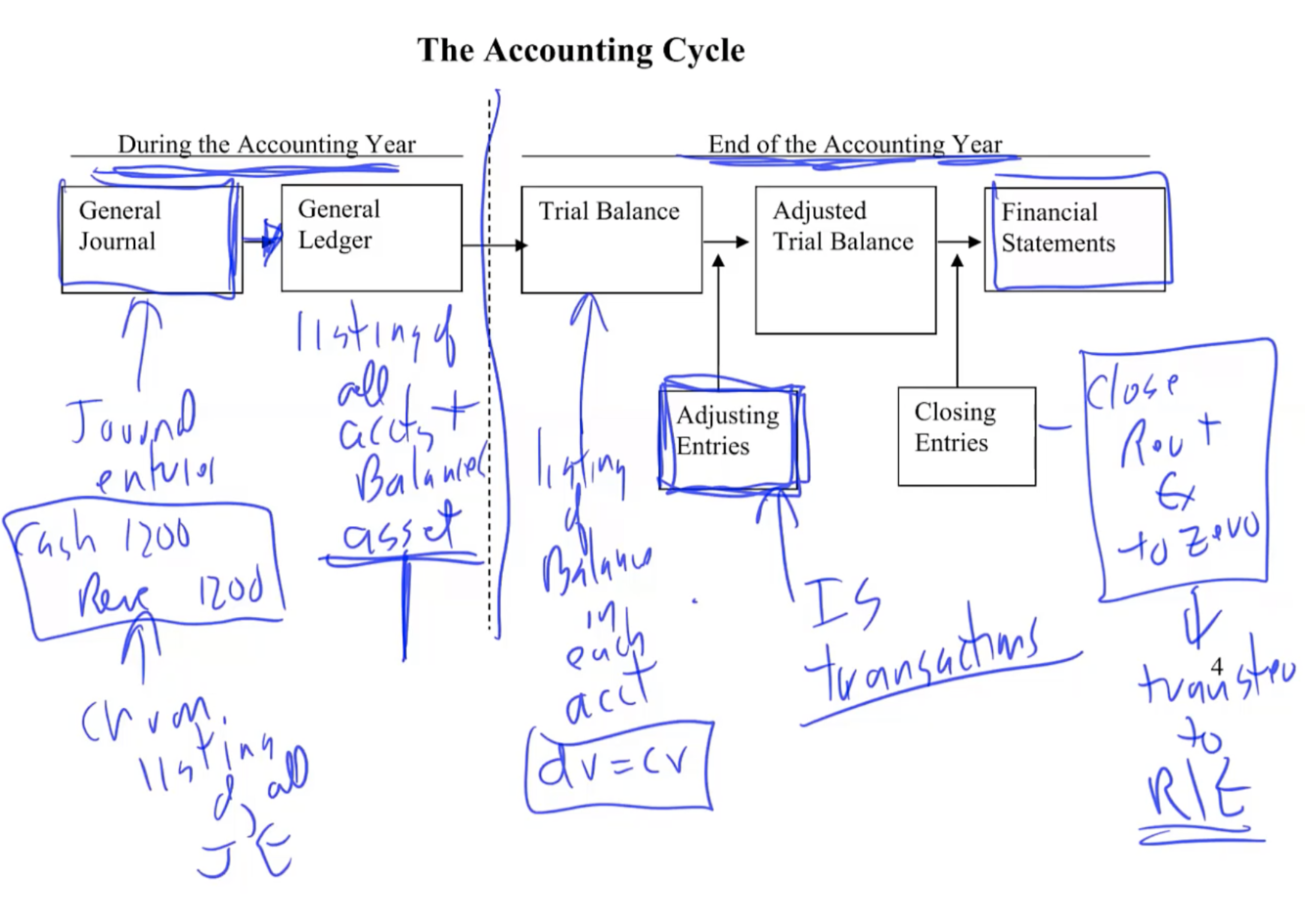
The Accounting Cycle
During the Accounting Year
- General Journal
- General Ledger
End of the Accounting Year
- Trial Balance
- Adjusting Entries
- Adjusted Trial Balance
- Closing Entries
- Financial Statements
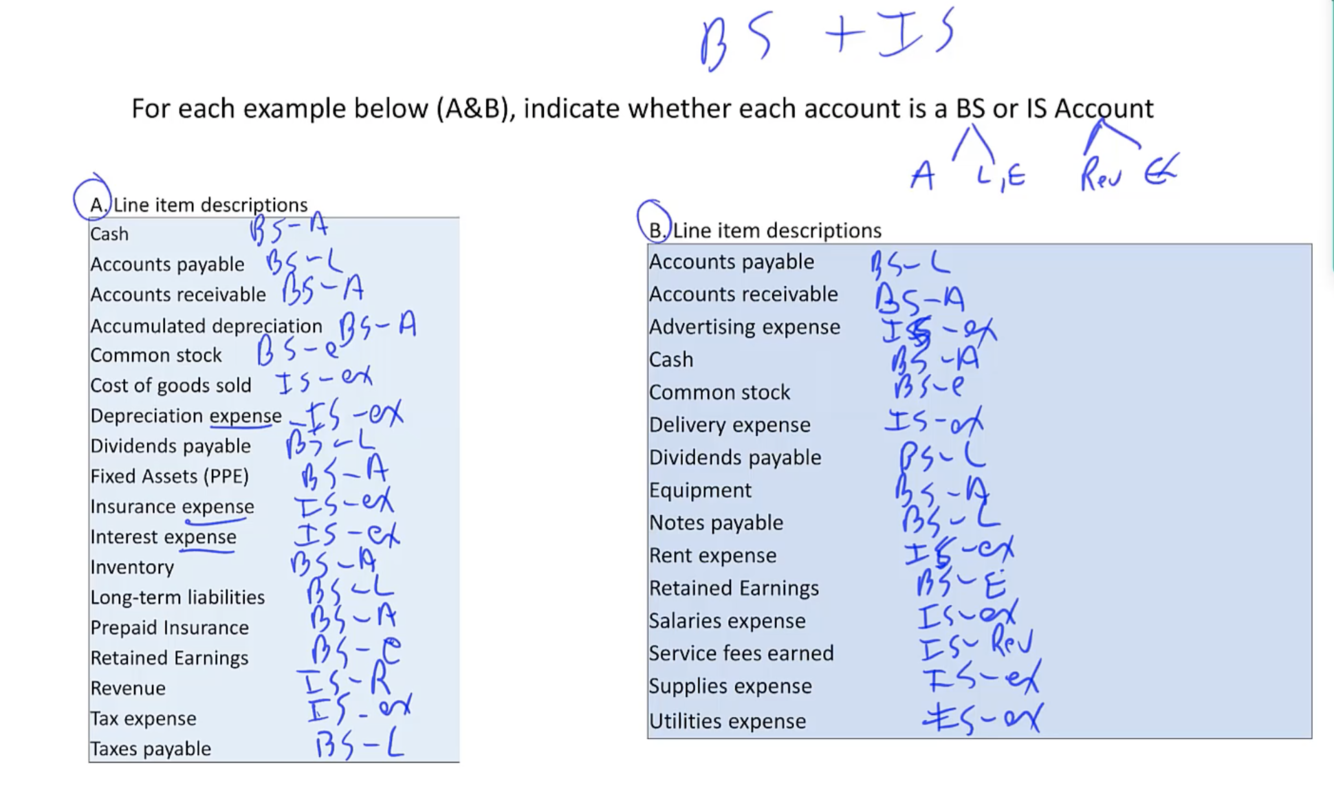
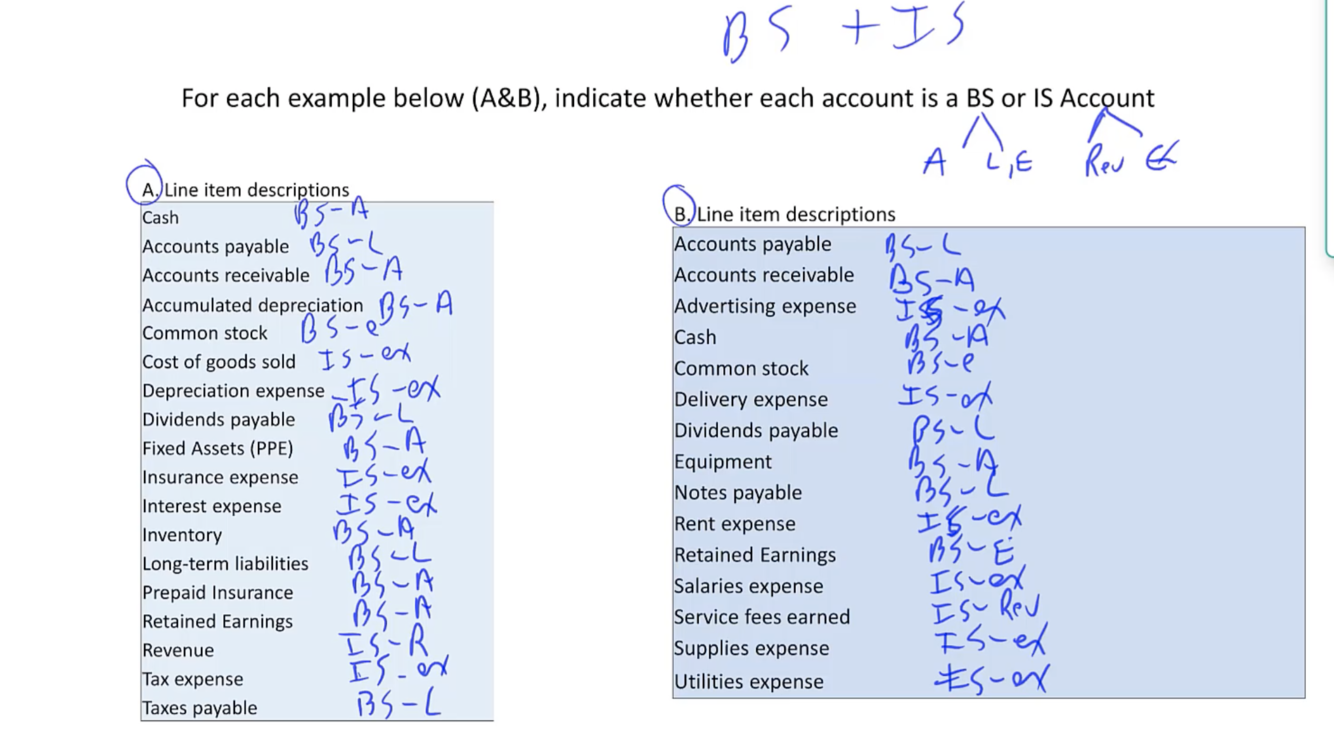
For each example below (A&B), indicate whether each account is a BS or IS Account.
For BS accounts, identify whether it’s an Asset, Liability, or Equity
For IS accounts, idnetify whether it’s Revenue or Expense
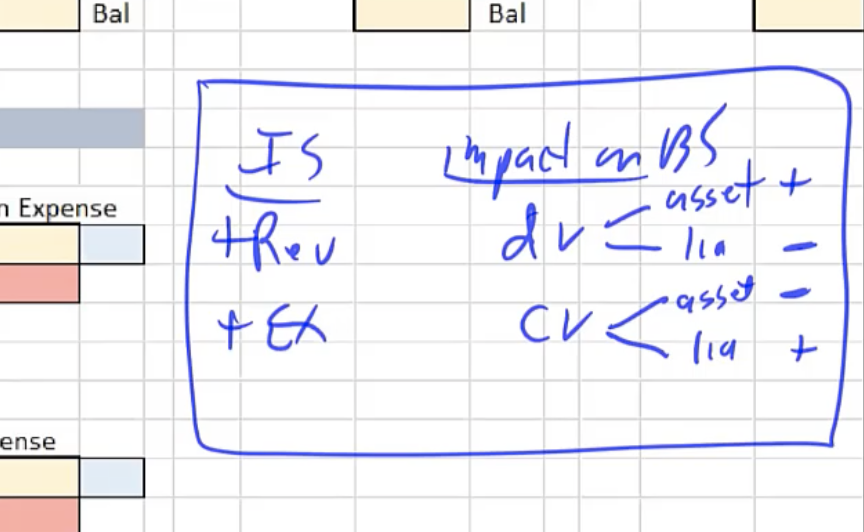
Understanding the Impact of the Income Statement (IS) on the Balance Statement (BS)
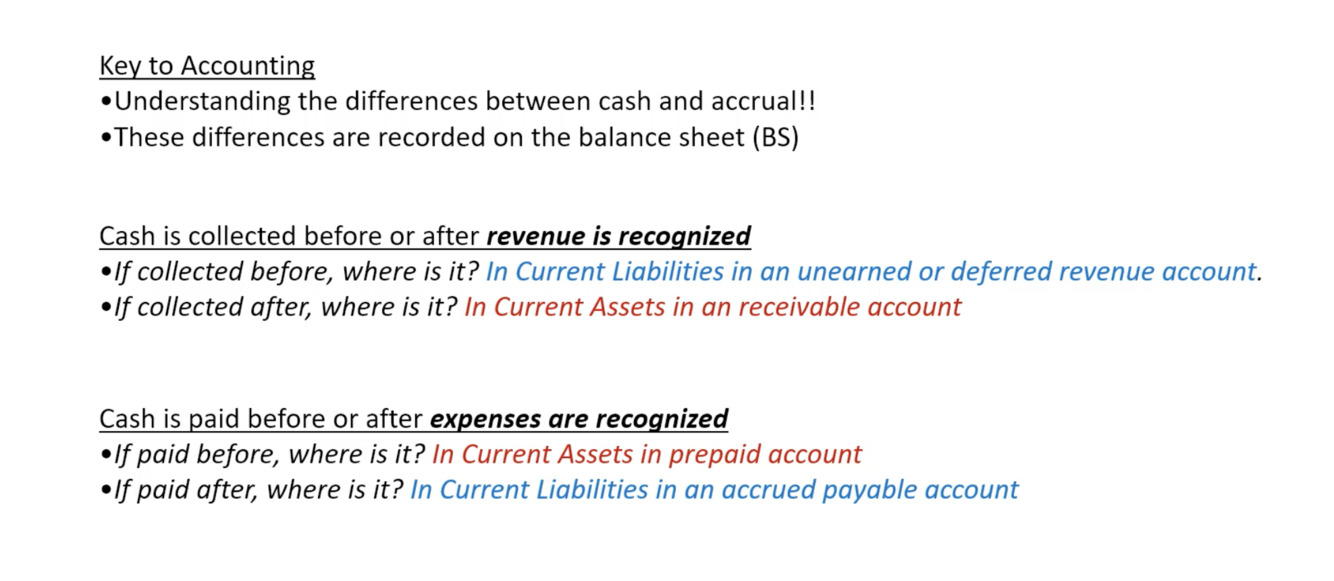
Keys to accounting
- Understanding the differnece between cash and accrual
- These differences are recorded on the Balance Sheet (BS)


-
Final Exam Prep87
-
Chapter 1 - Financial Accounting for MBAs25
-
Chapter 2 - Financial Statements32
-
Chapter 5 - Revenues, Receivables, and Operating Expenses10
-
Chapter 6 - Inventories, Accounts Payable, and Long-Term Assets64
-
FSA - 31
-
Chapter 310
-
Chapter 422
-
Chapter 8 - Stock Transactions, Dividends, and EPS45
-
Chapter 1021



