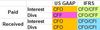
FS Introduction
Liquidity
This refers to the “closeness to cash” of the assets and liabilities of a company, or the ability to pay debts when they are due.
FS Introduction
Solvency
The companys ability to pay its debts as they fall due.
FS Introduction
Supplementary Schedules
Another source of financial info (not the same as the footnotes). These are extra unaudited figures produced by a company outside the FS such as an oil and gas reserves report.
FS Introduction
Management Discussion & Analysis (MD&A)
Definition
Issues included
Another source of information outside of the FS, for public companies only and not audited.
Requires management to discuss specific issues such as:
- Current financial condition
- Liquidity
- Planned Capital Expenditure for next year
FS Introduction
Audit
Disclaimer of Opinion
When the auditor was not able to complete their audit in order to produce an unqualified, qualified or adverse audit opinion.
FS Introduction
Audit
Sarbanes Oxley Requirement for internal controls
Name of the oversight body
Public Company Accounting Oversight Board (PCAOB).
PCAOB Auditing Standard #2 requires audit firms to present an additional disclosure regarding its assessment of the auditees internal controls over the financial reporting process.
FS Introduction
FS Analysis Framework
6 steps
- Articulate purpose and context: Decision to be made (eg evaluate an equity or credit rating), audience, time frame
- Collect input data
- Perform analysis (eg ratios)
- Analyse/interpret processed data
- Form conclusions
- Follow up: Monitor over time to see if conclusion changes
FS Introduction
Standard Setting Bodies
IASB - full name
Number of members - full & part time
Purpose
Principle or rule based focus
US version
International Accounting Standards Board
14 members (12 full time, 2 part time)
Purpose is the harmonisation of international accounting rules, via introducing global standards rather than direct harmonisation.
Principles based focus.
US version is Financial Accounting Standards Board (FASB).
FS Introduction
Standard Setting Bodies
IOSCI - full name
3 aims
US version
International Organisation of Securities Commissions.
- Work towards improved market regulation internationally
- Work to facillitate cross-border listings
- Advocates adoption of a single set of accounting standards
US version is the SEC
FS Introduction
Financial Reporting
IFRS Key qualitative characteristics
2 main ones (and sub-points)
2 secondary ones
- Relevant
- Reliable
- Represents substance and economic reality
- Free from material error
- Complete
Secondary:
- Easy to understand
- Comparability
FS Introduction
Financial Reporting
2 underlying assumptions
- Going Concern
- Accruals basis
FS Introduction
Financial Reporting
IAS 1: Purpose
Prescribes the basis for preparation of the companies financial statements to ensure comparability with prior periods and other companies.
FS Introduction
Financial Reporting
IAS 1 Components of Financial Statements
- Balance Sheet
- Income Statement
- Statement of Cash Flows
- SOCE showing either:
- all changes in equity
- all except transactions with equity holders acting in their capacity as equity holders
- Notes, including a summary of accounting policies
FS Introduction
Financial Reporting
IAS 1: Fundamental Principles
PGACM
- Fair presentation
- Going concern
- Accrual basis
- Consistency
- Materiality and aggregation
FS Introduction
Financial Reporting
IAS 1: Presentation Requirements
- No offsetting
- Classified balance sheet (C/NC)
- Minimum information on face of FS
- Minimum information in the notes
- Comparative information (ie PY numbers)
FS Introduction
Financial Reporting
3 characteristics of effective financial reporting frameworks
- Transparency
- Comprehensiveness (include all transactions)
- Consistency (similar transactions accounted for similarly, different transactions accounted for differently, thus aiding comparison)
FS Introduction
Financial Reporting
3 conflicts between financial reporting frameworks
- Valuation: some valuation approaches (non-historical cost) require significant judgement
- Rules based vs principals based
- Measurement:
- Assets/liabilities basis (income based on changes in net assets)
- Revenue/expense approach, relies on concepts like matching principle to determine profit
FS Introduction
Financial Reporting
Areas of attention for analysts relating to accounting standards
- New products or transactions types: May not be dealt with properly by existing standards/policies
- Evolving financial standards: Need to keep on top of evolution of standards
- Disclosures in notes: Companies may state some standards haven’t been applied, delayed adoption, changes in accounting policies
Income Statement
Revenue Recognition
When can revenue be recognised?
When it is:
- Realised or realisable, including that there is reasonable assurance of payment, and
- Earned, meaning goods or services have all or virtually all been provided
Income Statement
Revenue Recognition
Long-term contract revenue
IFRS vs US GAAP differences
If the outcome of the contract can be reliably measured then:
- Use percentage of completion
Otherwise:
- IFRS: Revenue = Costs incurred
- US GAAP: Revenue = 0, Costs = 0
If a loss is expected:
- Recognise the full loss immediately
Income Statement
Revenue Recognition
Long term contracting revenue
What is the completed contract method?
When is it used?
Conservative method where no revenue is recognised until contract is completed and title is transferred.
Used where:
- There is no contract,
- Estimates of revenues, costs and % of completion can’t be reliably estimated, or
- Ability to collect revenues is uncertain
Income Statement
Revenue Recognition
Installment Sales
Recognises revenue and associated cost of goods sold only when cash is received. Used if the cost to provide goods is known but collectability of revenue or sales proceeds can’t be determined.
Profit is recognised along with revenue since cost of sales is known.
For example real estate sales, it is hard to estimate what price you will sell new properties for.
Income Statement
Revenue Recognition
Cost Recovery method
Similar to but more conservative than sales installment method, for use when cost of sales is also difficult to estimate.
In this case revenue is recognised when cash is received, but no gross profit is recognised until all related costs have been collected.
Income Statement
Revenue Recognition
Barter Sales
Definition and treatment according to FASB
This is when companies exchange services, typical example is web companies exchanging advertising on each others websites. They may wish to recognise a large revenue and equal offsetting expense in the I/S.
FASB says this can only be done if a fair value can be determined based on the companies own historical realised cash for similar services, unrelated to barter transactions.