How would you assess a suspected musculoskeletal fracture?
- Mechanism of injury assessment
- Focussed history
- Patient position
- Assess degree of pain
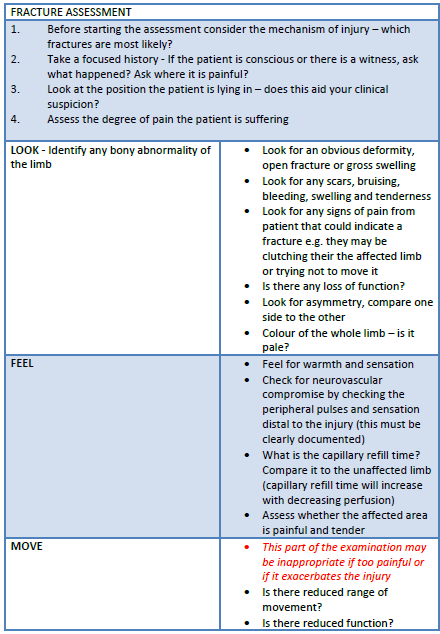
- Look/Feel/Move examination
What are important things to cover when feeling a suspected fracture?
- Warmth
- Sensation
- Neurovascular compromise
- CRT of affected limb
- Pain assessment
What immediate management would you consider for someone with a fracture?
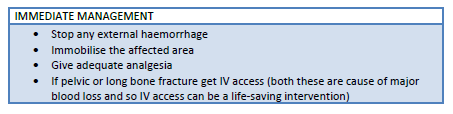
- Stop any external haemorrhage
- Immobilise the affected area
- Give adequate analgesia
- Pelvic or long bone - IV access
What are the beneficial effects of splintage and immobilisation of a fracture?
- Reduces pain by reducing fracture mobility
- Reduces blood loss by anatomical alignment of bleeding bones and preveneting clot disruption
- Restores neurovascular function
- Reduces risk of fat embolism
When should you splint a fracture?
A limb needs immobilising because due to pain or to try to reduce neurovascular injury
What should you always do once you have immobilised a fracture?
Reassess neurovascular status before and after anything is done to the affected limb
What are relative contraindications to splinting a fracture?
- Open fractures
- Compartment syndrome
What are different types of splints that can be used to splint a fracture?
- Box splint
- Vacuum splint
- Traction splint
What are the main aims of a traction splint?
Reduce pain and restores normal alignment of the fractured bone
When does traction on a long bone fracture reduce blood loss?
Traction pulls thigh back to cylindrical shape rather than spherical shape created by muscle spasm. This leaves less space for blood to pool into as volume of a cylinder is less than the volume of a sphere
What is a simple and easy way you can traction and splint a lower limb?
Tie it to the other limb
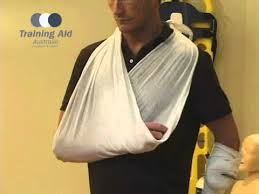
What is a simple way to alleviate pain in upper limb fractures?
Simple triangular sling
How much blood can be lost in a closed femoral fracture?
1000-1500 mls
How much blood can be lost in a closed tibial fracture?
500-1000 mls
What is an open fracture?
Fracture which communicates with the environemnt
How soon after someone has sustained an open fracture should the receive prophylactic antibiotics?
1 hour
How would you manage an open fractures in a pre-hospital setting?
- Irrigate
- Dress
- Splint
- Transport to definitive care
- Photograph injury if possible
When should pelvic fractures be suspected?
High energy impacts
What is the most important diagnostic tool for assessing pelvic fractures?
Mechanism of injury
Why are pelvic fractures such a bleeding risk?
There are numerous bleeding sources - bones, venous/arterial plexuses. This, combined with the fact that disruption of the pelvic ring can prevent natural tamponade, means that people can lose vast amounts of blood
What points should you consider before examining somone for a pelvic fracture?
- What is the MOI?
- Was high energy impact involved?
- Is patient alert?
- Can the patient feel pain in that area (groin, pelvic area, lower back, hips?)
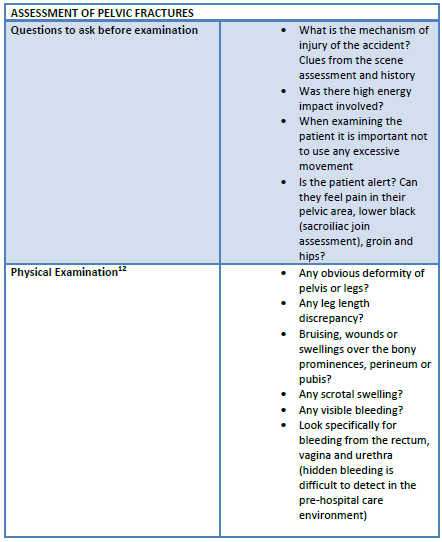
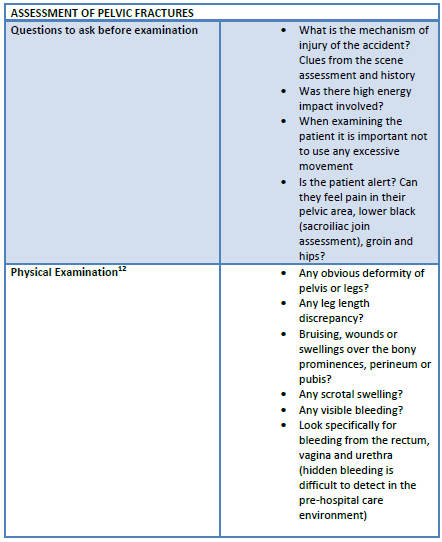
How would you approach examining someone for a pelvic fracture?
- Any obvious deformity of pelvis or legs?
- Leg length discrepancy?
- Bruising/wounds/swelling over bony prominences/perineum/pubis
- Scrotal swelling?
- Visible bleeding?
- Bleeding from rectum/vagina/urethra
How would you manage a ssuspected pelvic fracture?
Early/Rapid reduction and immobilisation - can be lifesaving
What are the benefits of pelvic reduction?
- Arrests bleeding and closes communication with retroperitoneal space
- Minimises movement of pelvic bones, reducing pain and preventing further damage






