What is a function’s domain? (i.e., “what does domain mean?”)
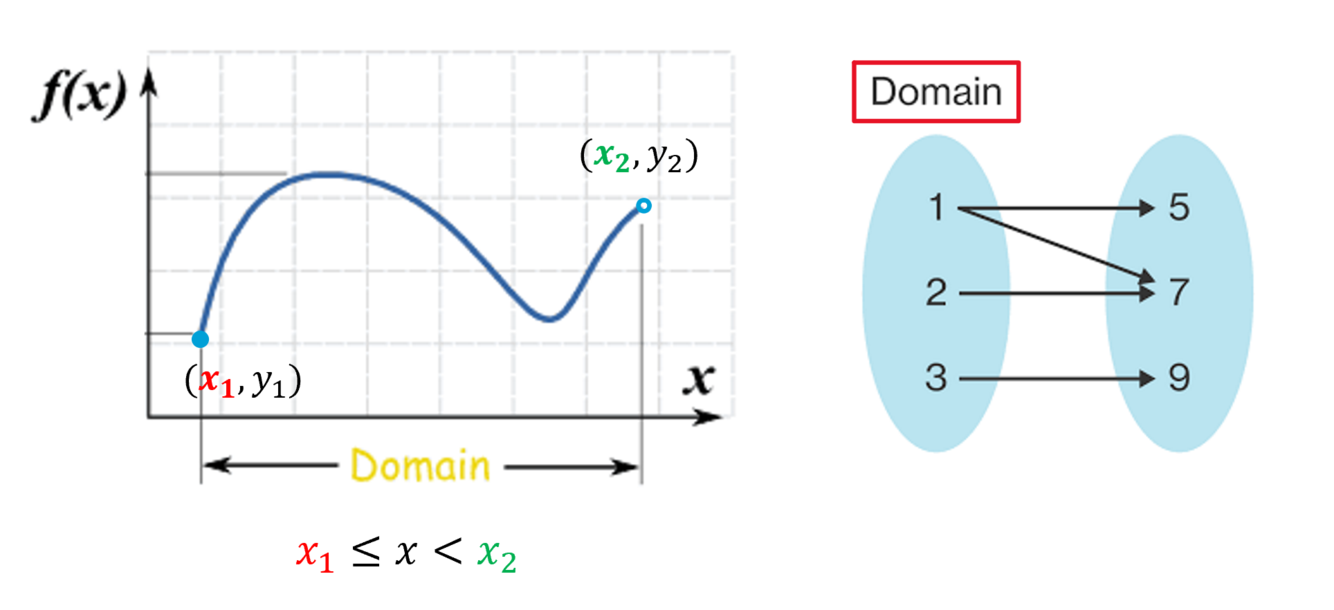
Domain is “all of the possible x-values” that a relation has. You can think of it as all the numbers you could put into the function machine.
- On a graph, you simply look for the furthest left point and the furthers right point and put them in an inequality.
- In a mapping, the domain is the left-hand oval.
What is a function’s range (i.e., what does range mean for functions?)
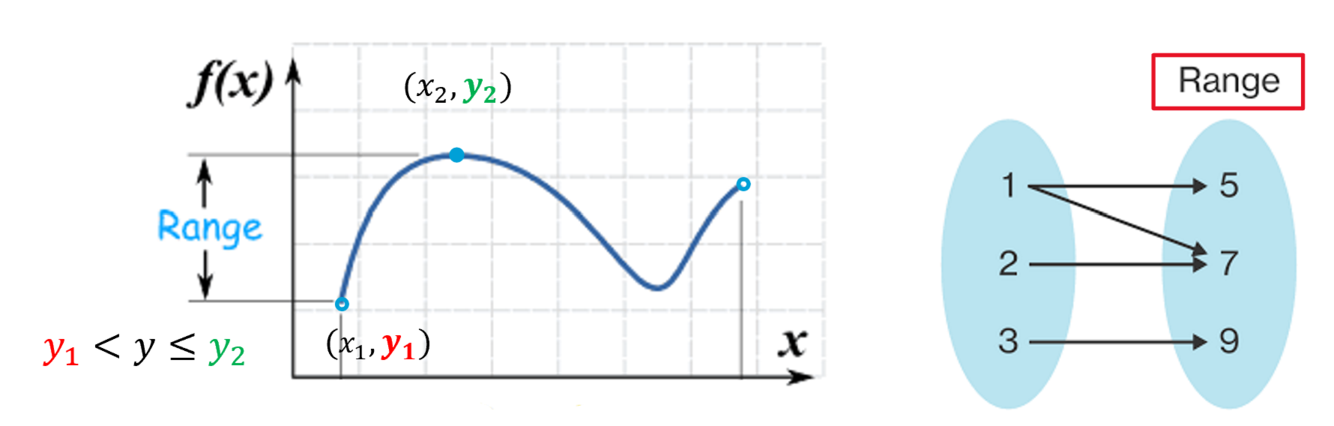
Range is “all of the possible y-values” that come out of a relation.
- On a graph, you simply look for the lowest point and highest point on the graph and put them in an inequality.
- In a mapping, the domain is the right-hand oval.
How can you show that a graph is a function?
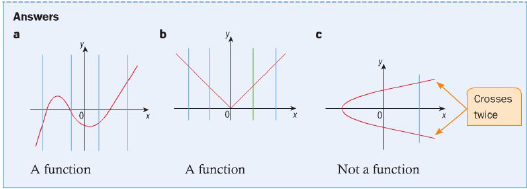
You use the vertical line test. That means, you imagine drawing all possible vertical lines on the graph. If any vertical line would intersect the function more than once, it’s not a function.
What does this mean?

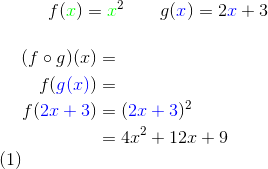
It can also be written as f(g(x)). This means you put the whole g(x) function inside the brackets of “f”. Then you use this as the argument for the “f” function.
What is an inverse function?
- It’s denoted with a -1 exponent after the function letter.
- It basically undoes a function.
So if f(3)=5, this means we put in 3 and we get out 5. Therefore, f-1(5)=3. We put 5 into the inverse and get out 3. - It’s exactly the reverse of the original function–it literally swaps the roles of x and y.
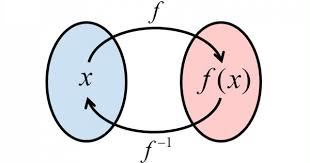
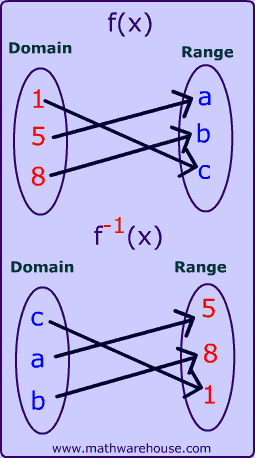
How is the domain and range of a function related to the domain and range of the inverse?
- The domain of the original function is the range of the inverse.
- The range of the original function is the domain of the inverse.
(Because all of the xs and ys swap in the inverse.)
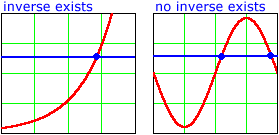
How can you tell if a function has an inverse just by looking at the graph?
You use the horizontal line test. That means, you imagine drawing all possible horizontal lines on the graph. If any horizontal line would intersect the function more than once, there is no inverse.
(That’s ‘cause when you swap the x and y, this morphs into the vertical line test for functions.)
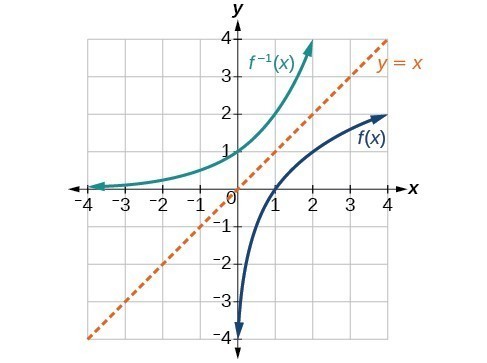
How do you sketch the inverse of a function?
The inverse is a reflection of the original function over the line y=x. The easiest way to sketch it is to:
- Choose a point on the original function. For example: (1,2).
- Swap the values to get the matching point on the inverse function. For example: (2,1).
- Repeat this process for a couple of points and or any asymptotes.
- Connect the dots, trying to match the general shape of the original function. In the end, it should look like a mirror image of the original function over the diagonal line y=x.
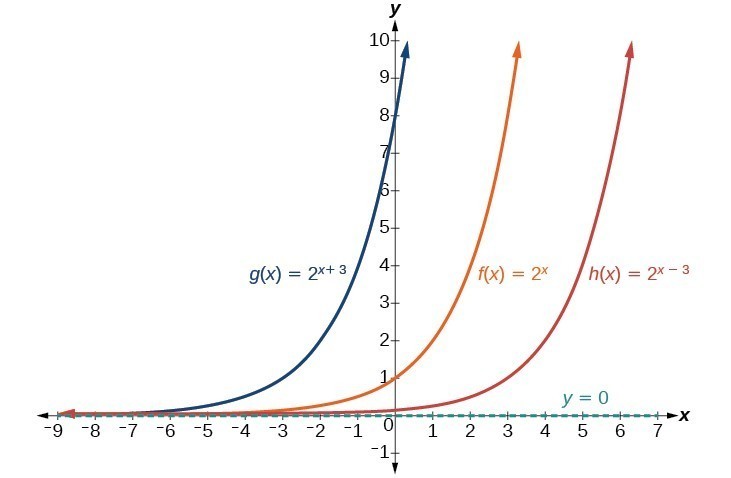
How do you have to change the function “f(x)” if you want to shift it horizontally? (For example, to the right by 3 or by the left by 3.)
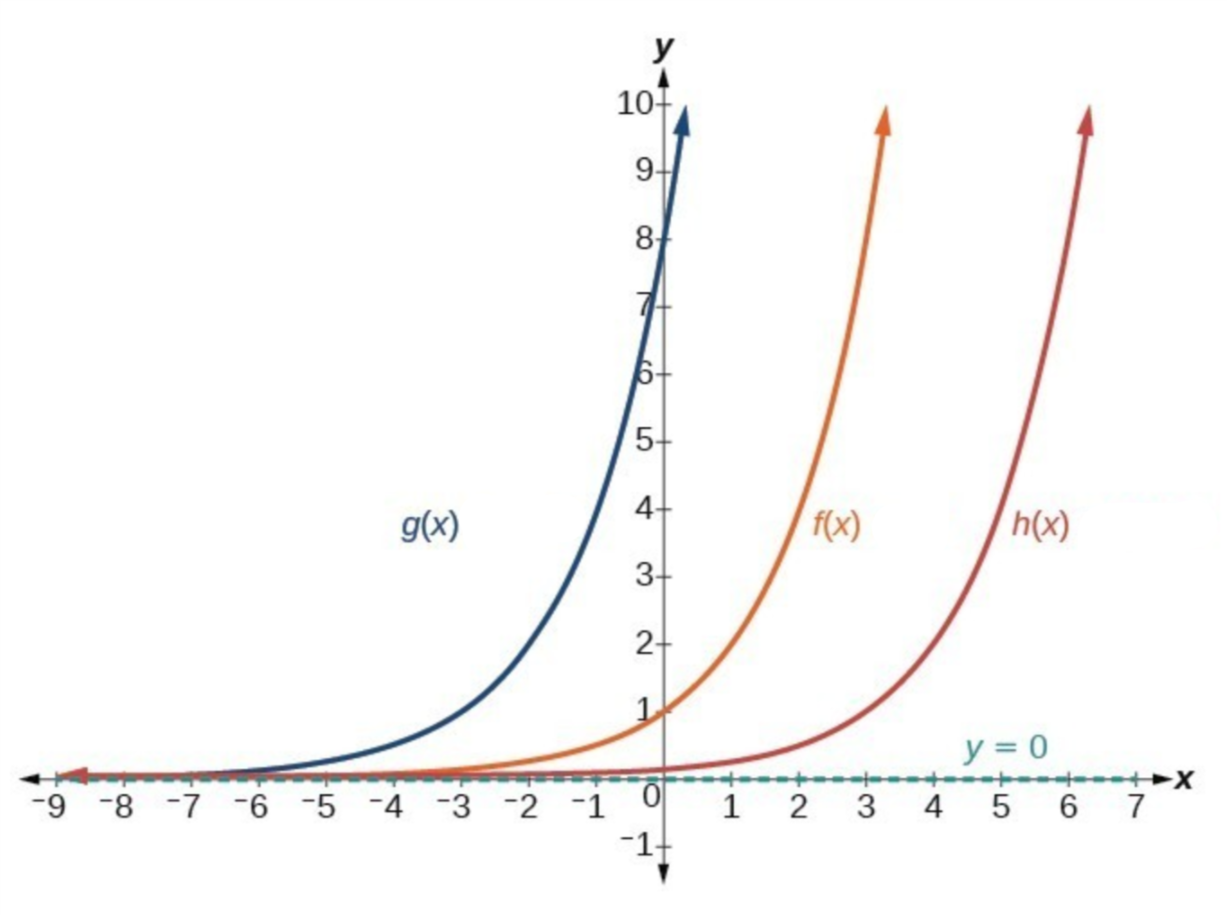
You put a “-h” in with the x term.
f(x)=2x
g(x)=f(x+3)=2x+3
h(x)=f(x-3)=2x-3
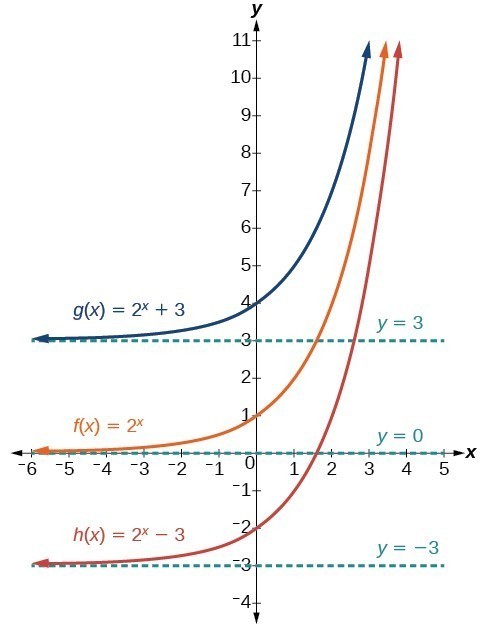
How do you have to change the function “f(x)” if you want to shift it vertically? (For example, up or down by 3.)
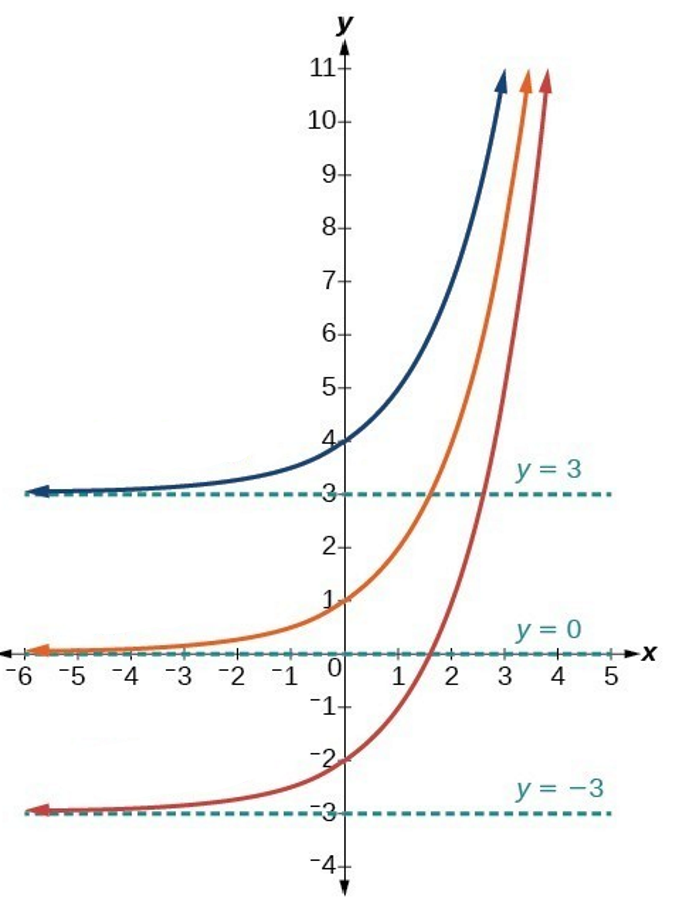
You put a “+k” at the end.
f(x)=2x
g(x)=f(x)+3=2x+3
h(x)=f(x)-3=2x-3
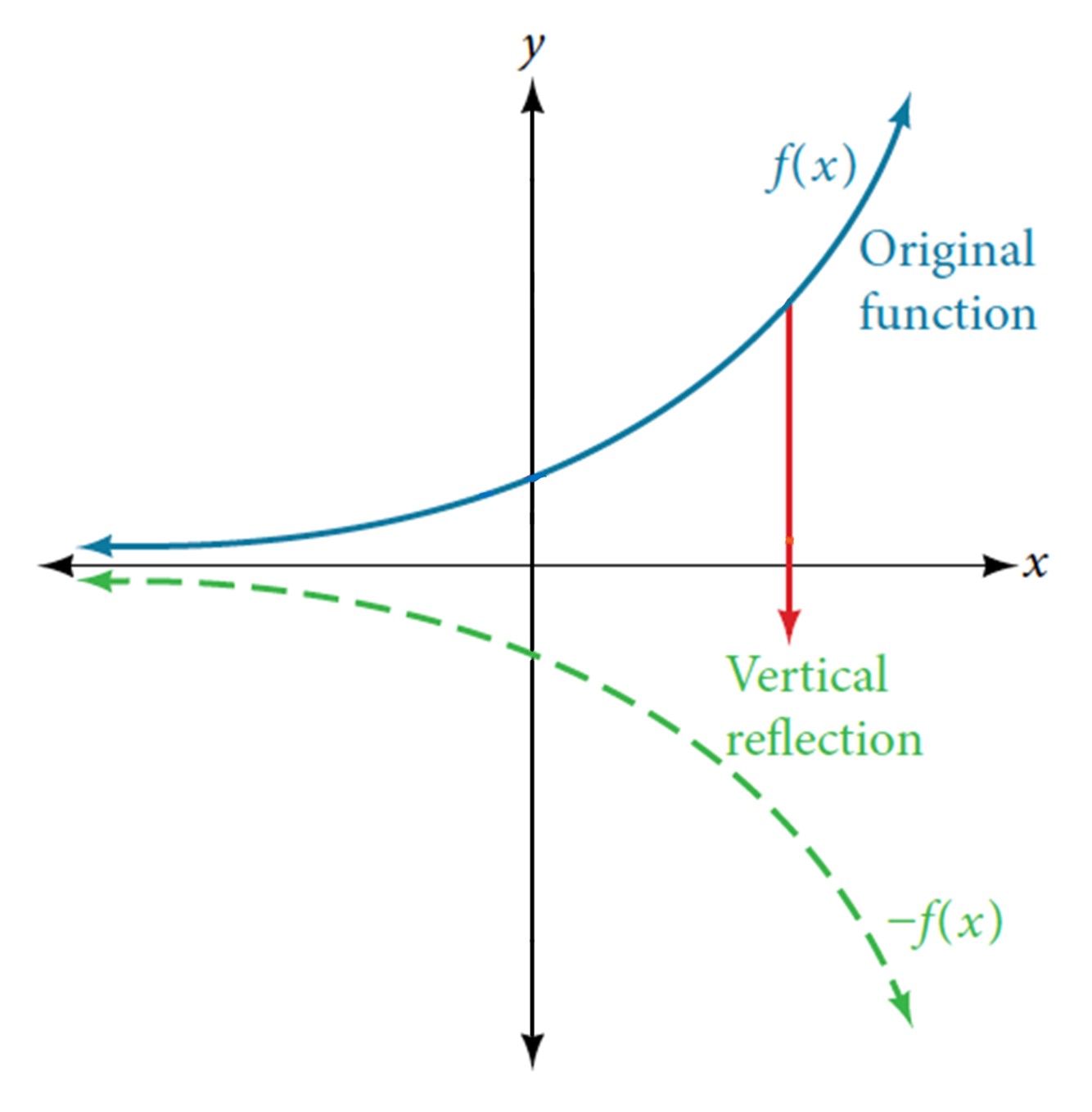
How do you have to change the function “f(x)” if you want to reflect it in the x-axis (aka “vertically”)?
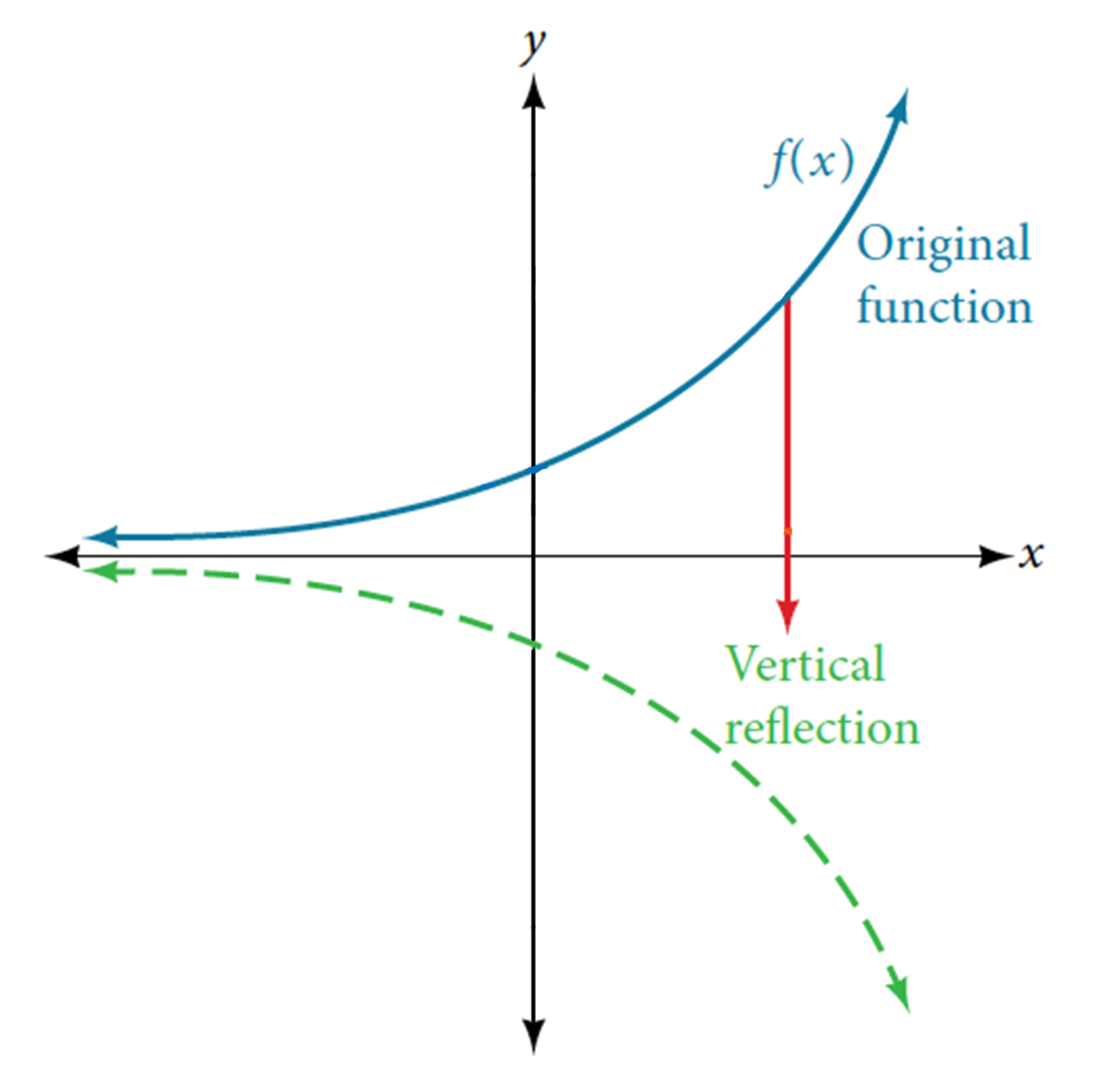
You multiply the whole function by -1.
The new function is -f(x).
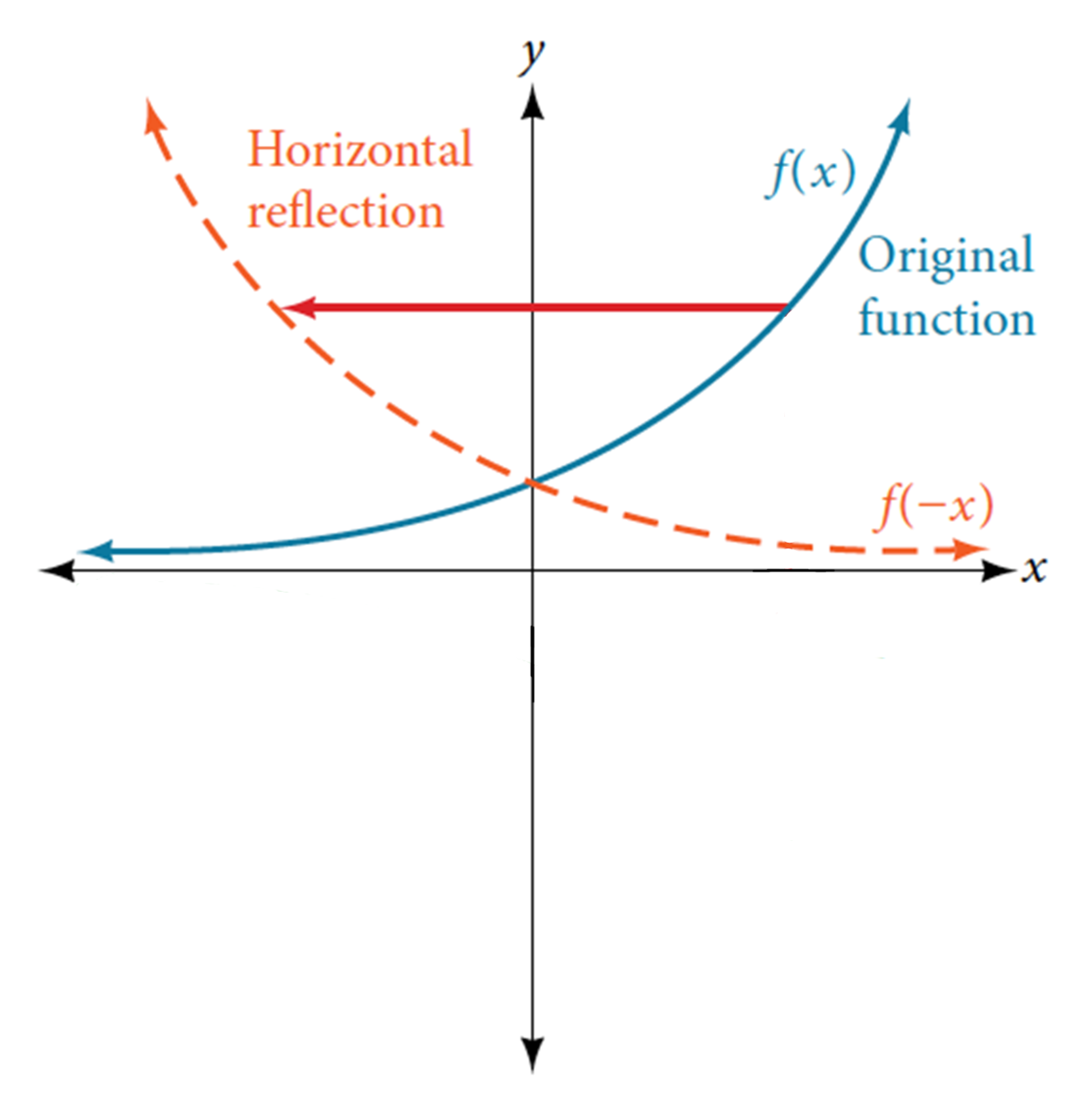
How do you have to change the function “f(x)” if you want to reflect it in the y-axis (aka “horizontally”)?
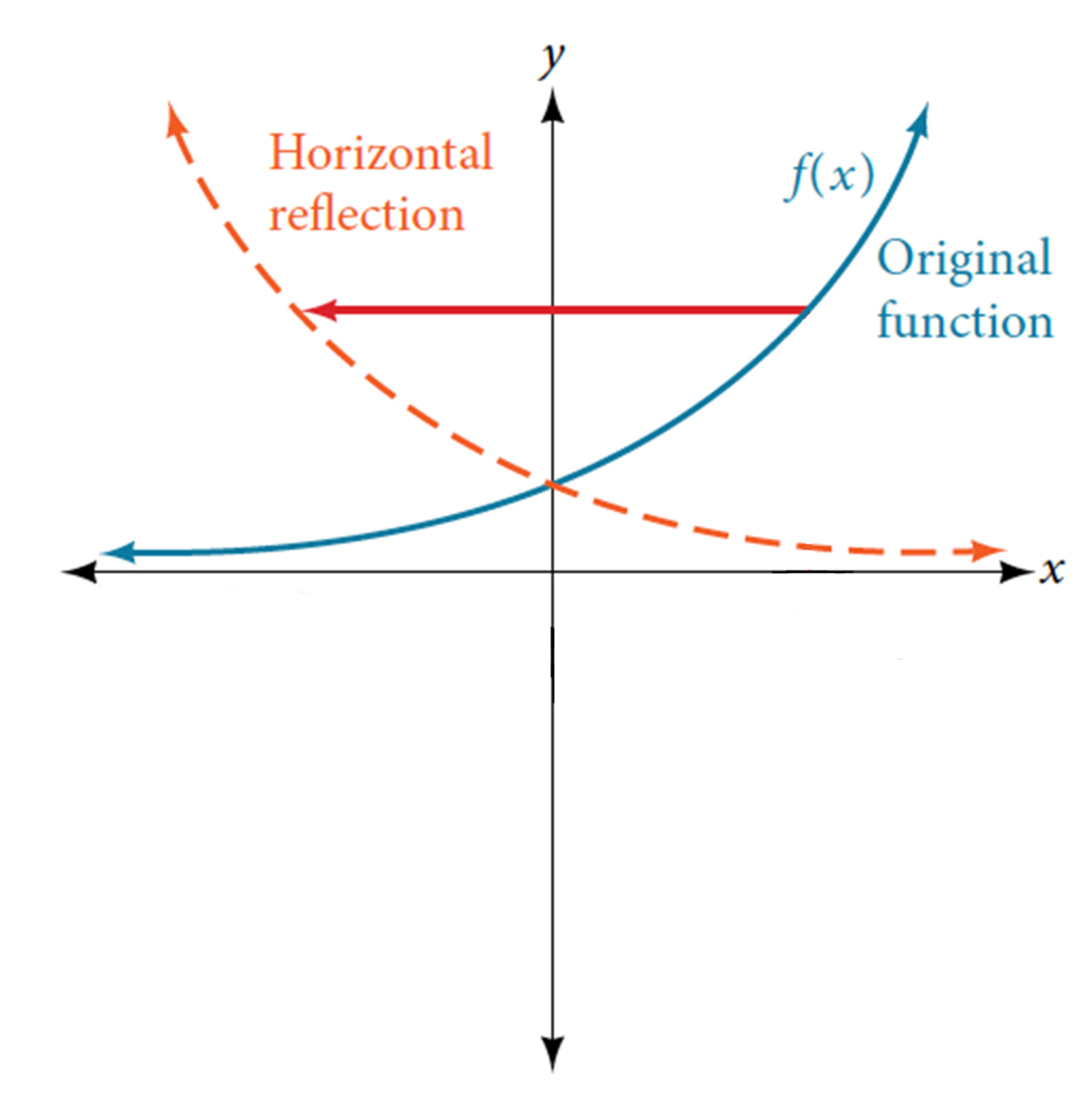
You multiply the x-part by -1.
The new function is f(-x).
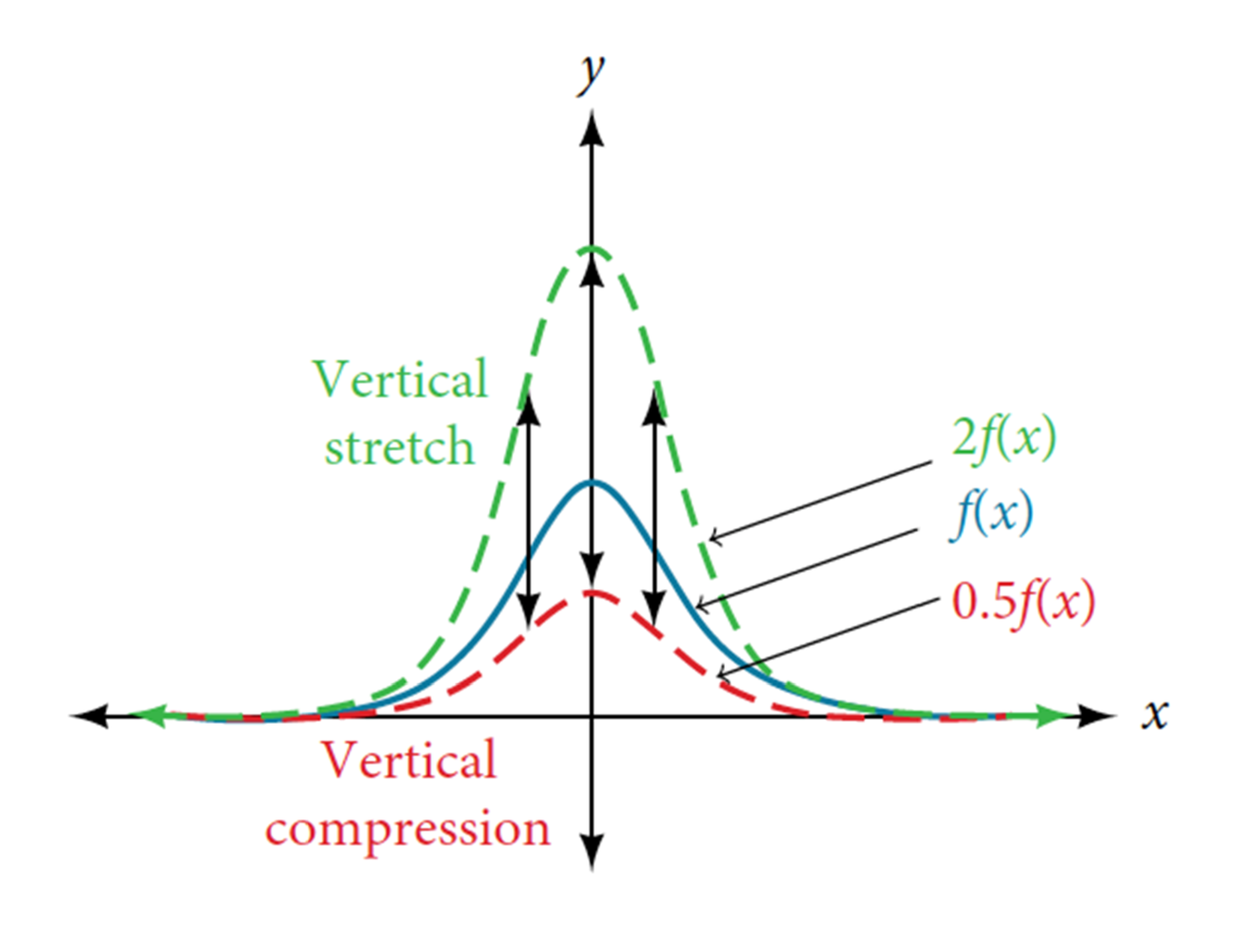
How do you have to change the function “f(x)” if you want to stretch it vertically by a scale factor “a”?
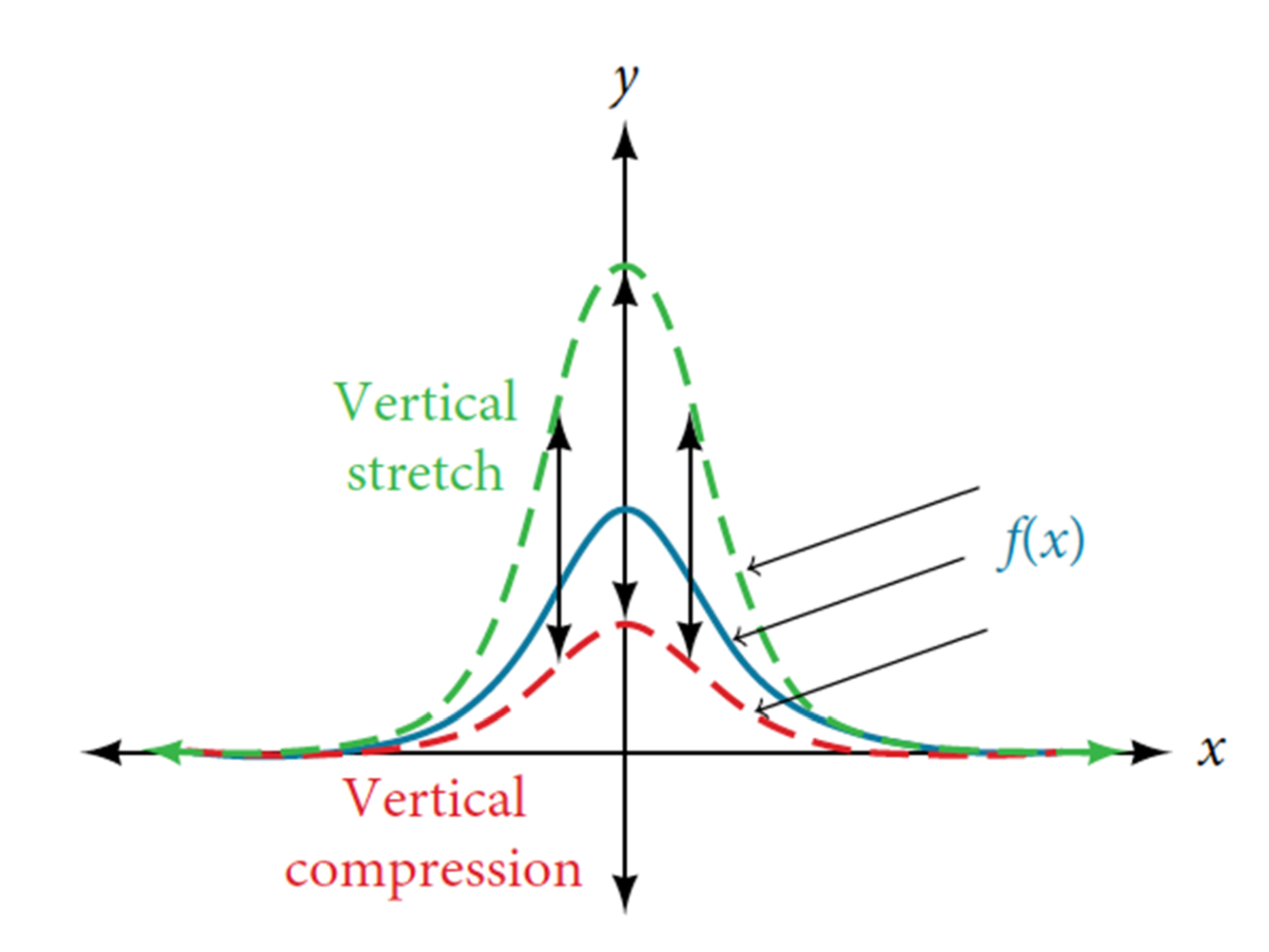
You multiply the whole function by a.
If a is bigger than 1, it’s going to stretch the function so that it’s taller.
If a is smaller than 1, it’s going to compress the function so that it’s shorter.
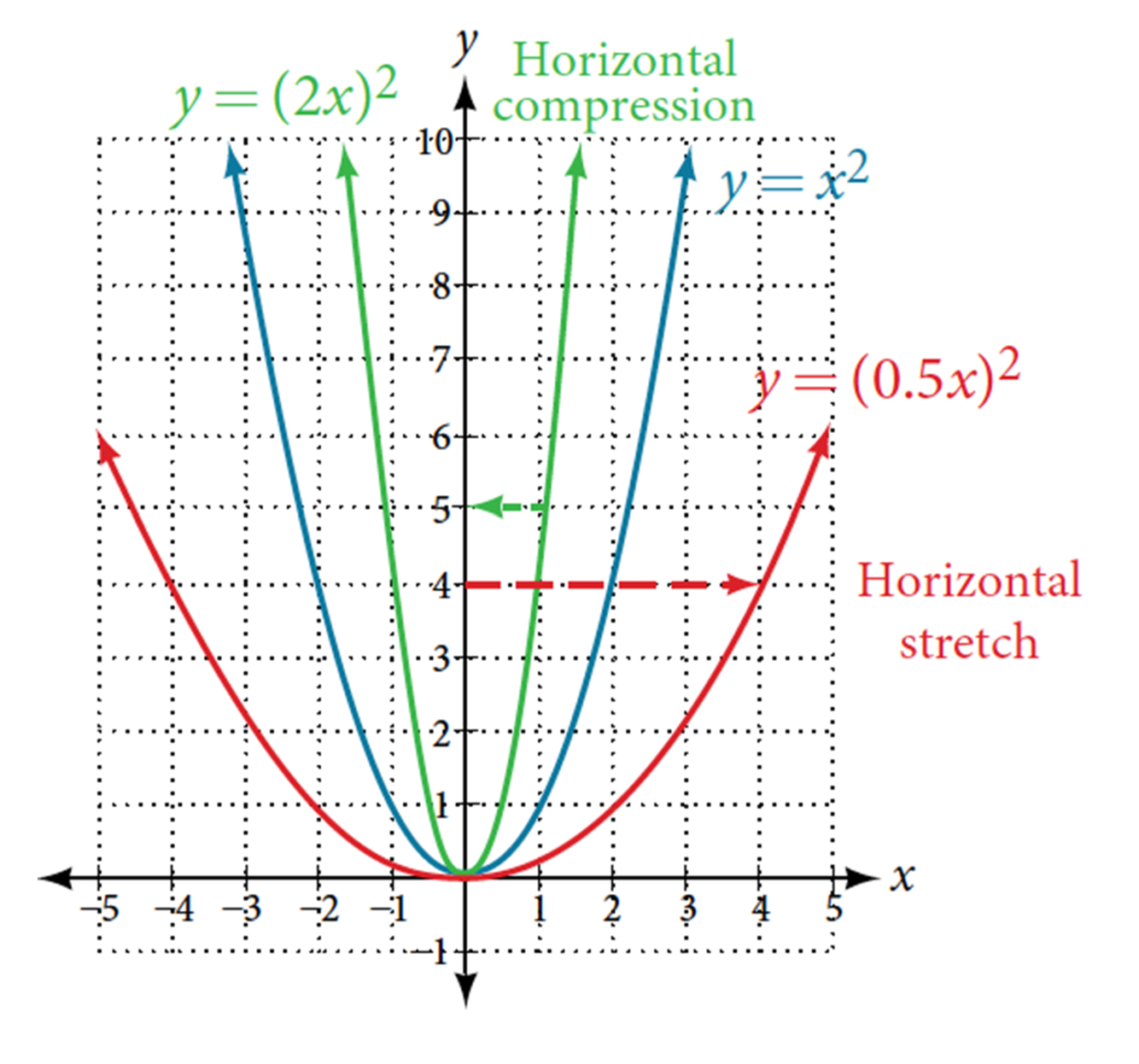
How do you have to change the function “f(x)” if you want to stretch it horizontally by a scale factor of “b”?
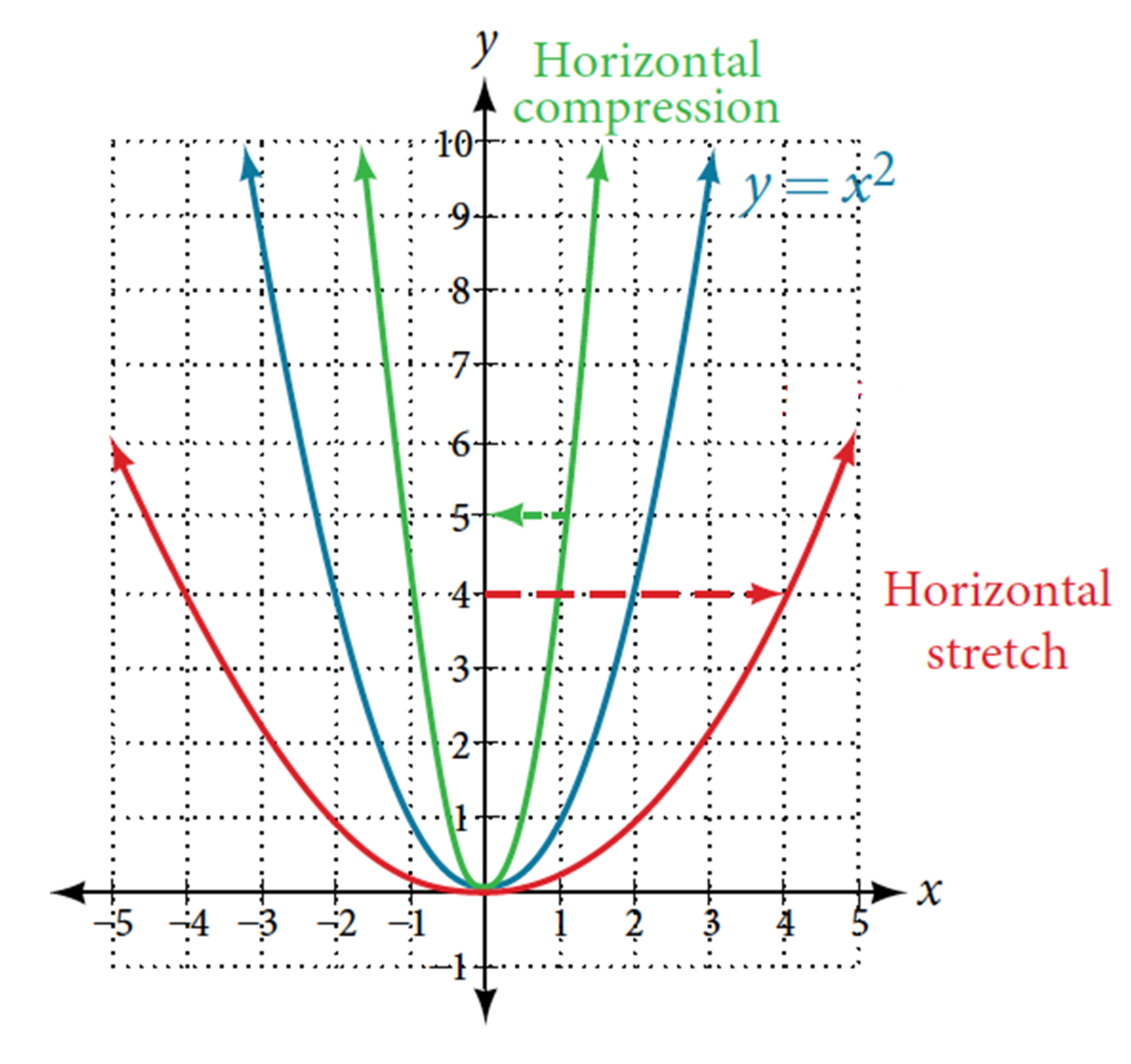
You multiply the whole x-part by 1/b. (Be careful that you first factor b out of a horizontal shift, if necessary.)
Where is the vertex and line of symmetry for
f(x)=a(b(x-h)2)+k?
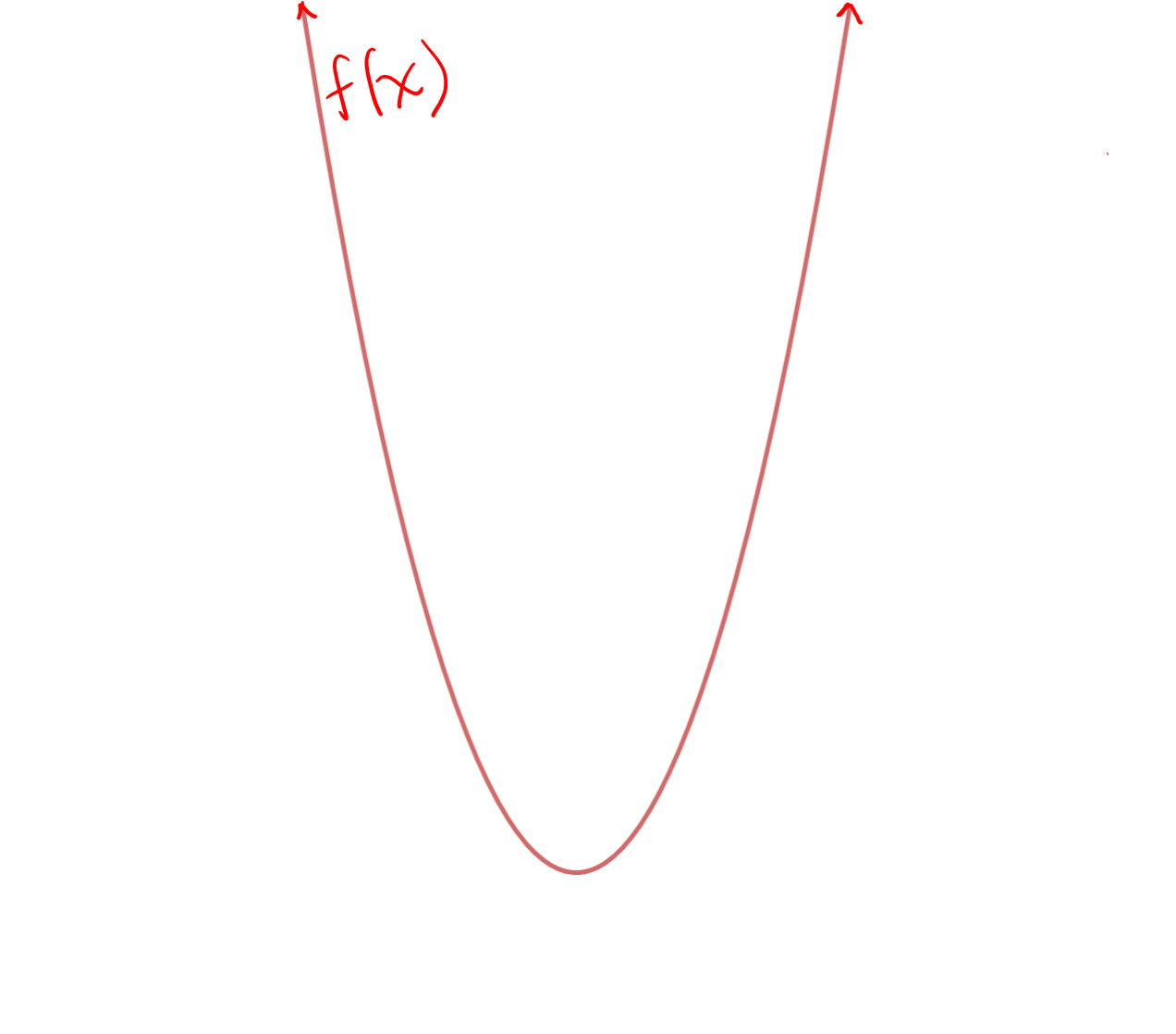
Vertex: (h, k)
Line of symmetry: x=h
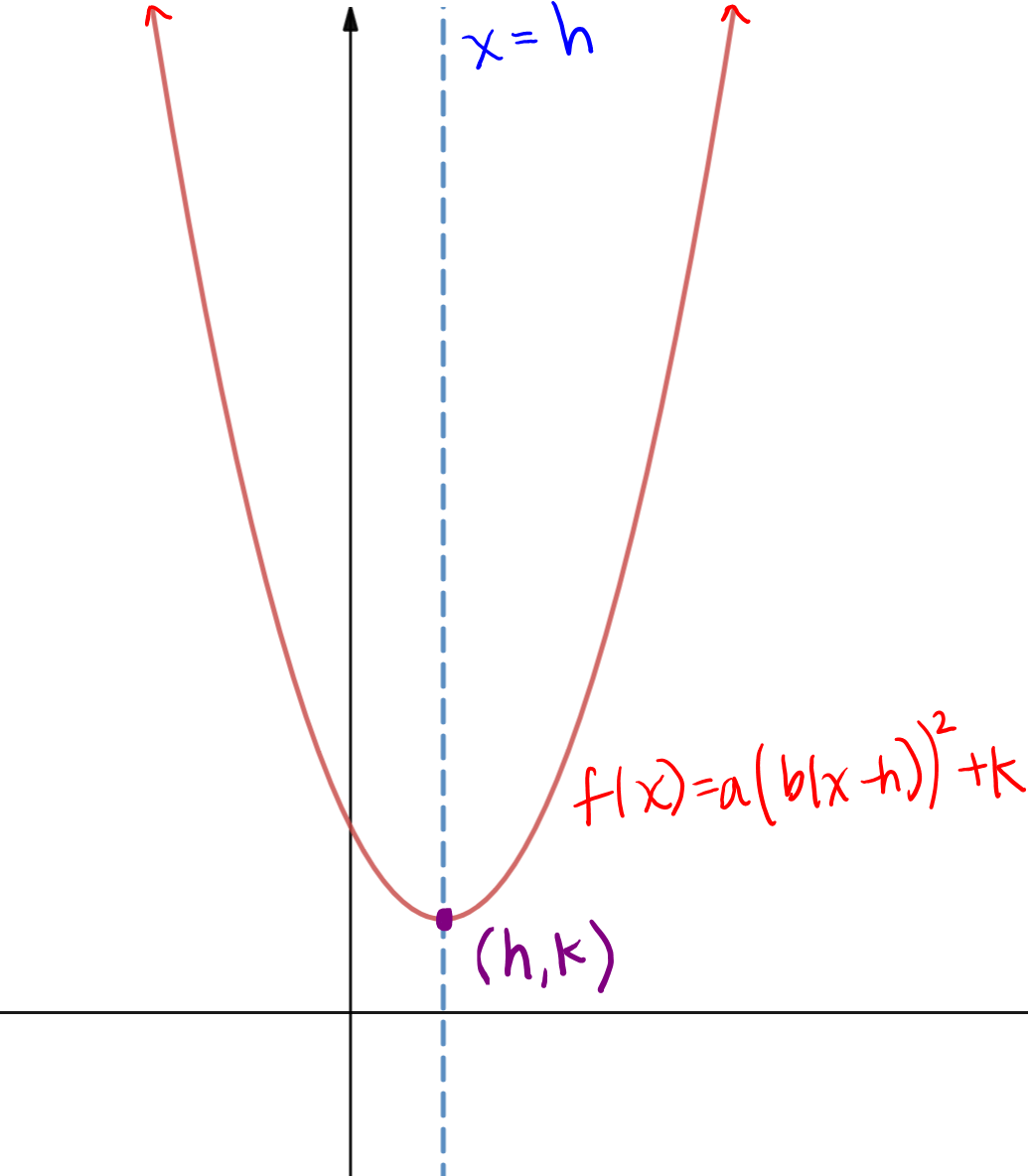
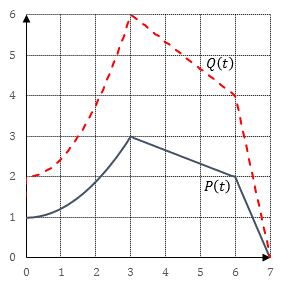
How would you describe the transformation from P(t) to R(t)?
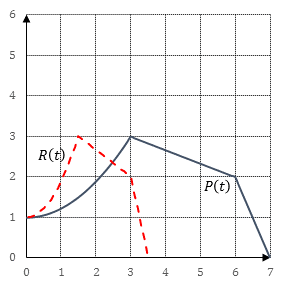
This is a horizontal stretch with a scale factor of 1/2. (Notice that each point of R is half as far from the axis as P.)
So R(t)=P(2t)
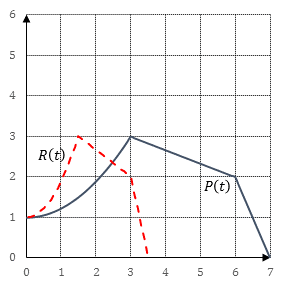
How would you describe the transformation from P(t) to Q(t)?
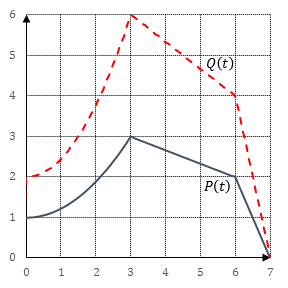
This is a vertical stretch with a scale factor of 2. (Notice that each point of Q is twice as far from the axis as P.)
So Q(t)=2P(t)
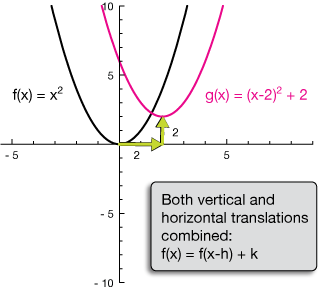
What type of transformation does the following function represent?
f(x)=(x-2)2+2
It translates the x2 function to the right by 2 and up by 2.
What are you supposed to do when you see the instruction “Evaluate”?
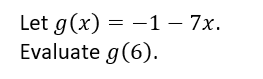
You’re supposed to plug that number into the function. Find out what the output of the function is for that input.
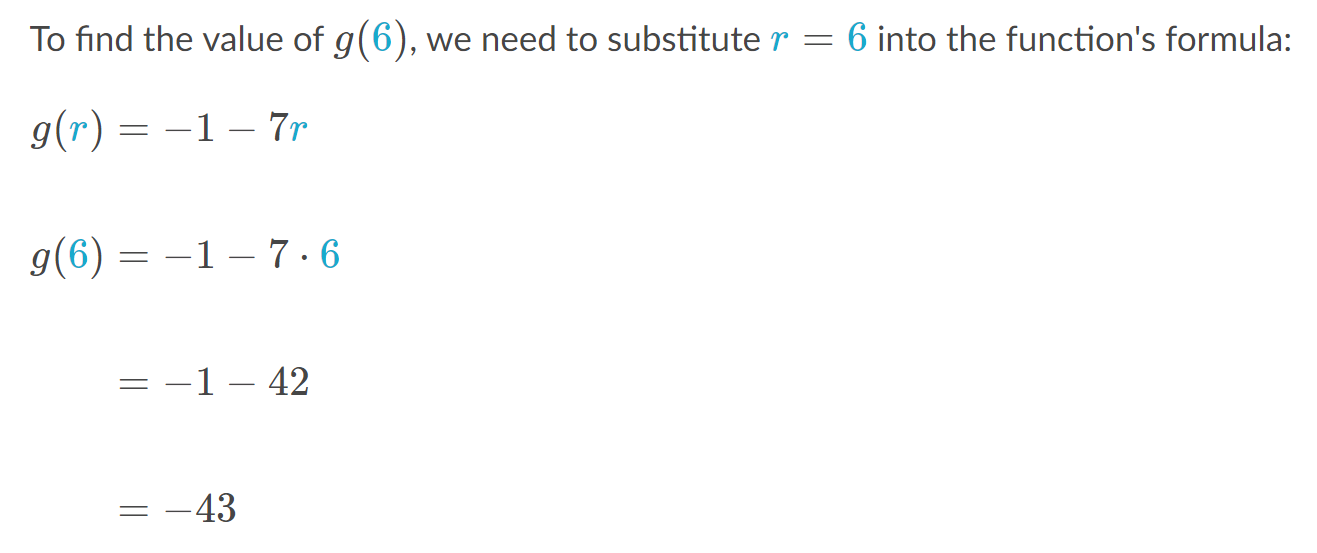
How do you show a relation mapping is a function?
Any relation that is “to 1” is a function.
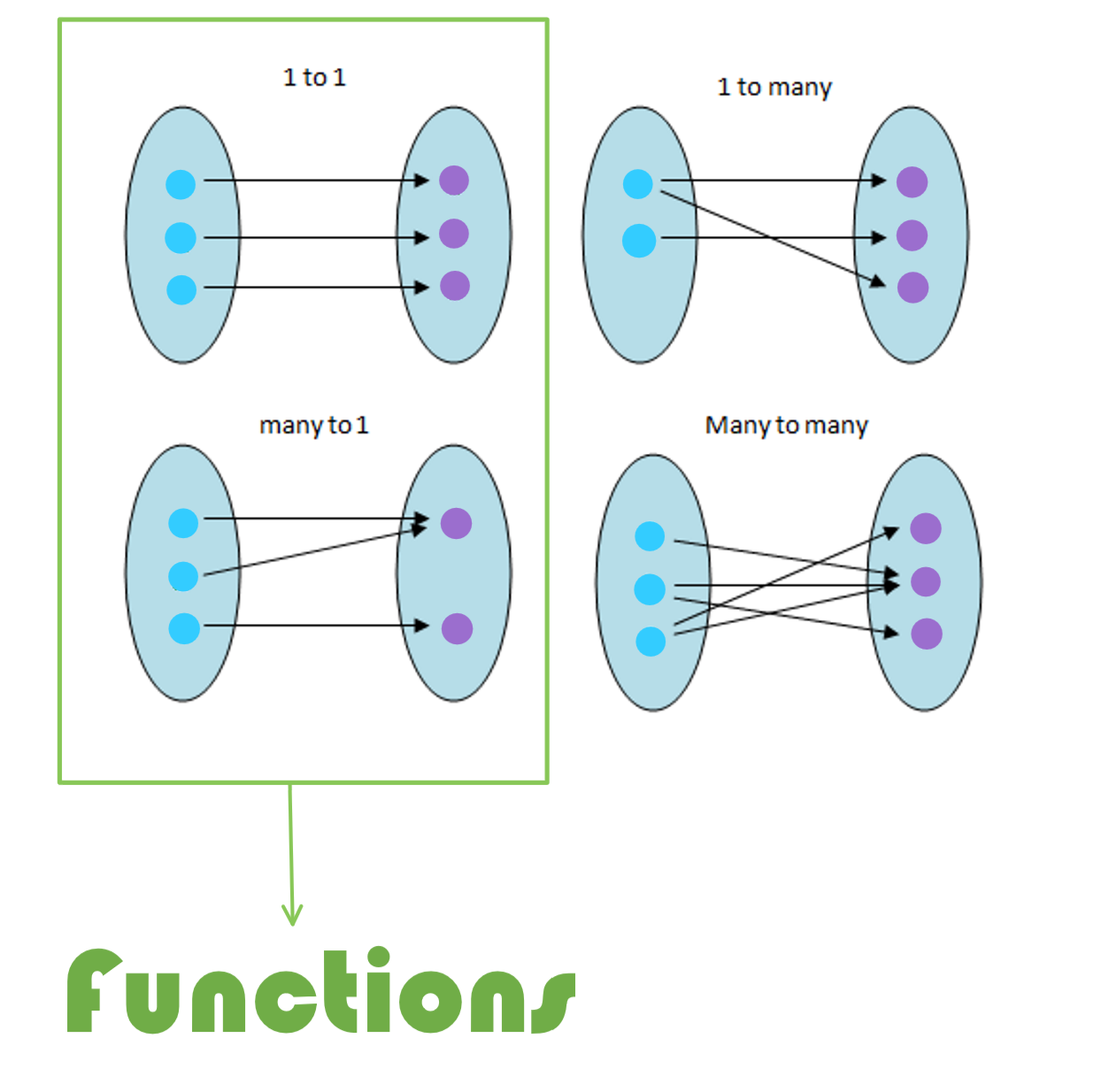
How can you tell if a function has an inverse just by looking at the mapping?
Only 1-to-1 functions have an inverse.
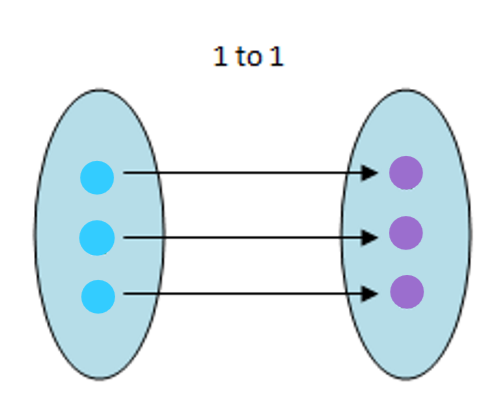
How do you find the inverse, f-1(x), of the function f(x) algebraically?
- Write down f(x), but use the letter “y” rather than “f(x)”.
- Swap the “x” and “y” letters.
- Rearrange the equation so the “y” is alone.
- Low key replace the “y” with “f-1(x)” and pretend you never turned it into a y in the first place.
If I have a point A(x,y) on my function f, where is the image of that point, A’, on the inverse function, f–1?
The inverse literally swaps the x and y values.
So if A is (1, 4), then A’ is (4, 1).
What does “image” mean when talking about functions?
For example, find the image of x =2 for the function y=x+1.
The image of a function is the set of all outputs of the function. So remember that these three words are the same (for your purposes).
- output
- range
- y-value
- image
In the example, it wants you to substitute 2 for x into the function.
y=2+1=3
The image is y=3

-
Number Sets12
-
Coordinate Geometry (MYP)25
-
Right-angle trigonometry22
-
Measures of Spread/Variation4
-
Non right-angle trigonometry19
-
Pythagorean Theorem2
-
Derivatives (Studies)17
-
Place Values, Sig. Figs. and Rounding15
-
Quadratic Functions Theory (Studies)9
-
Functions Theory24
-
Measures of Central Tendency9



