What is meant by a somatic cell?
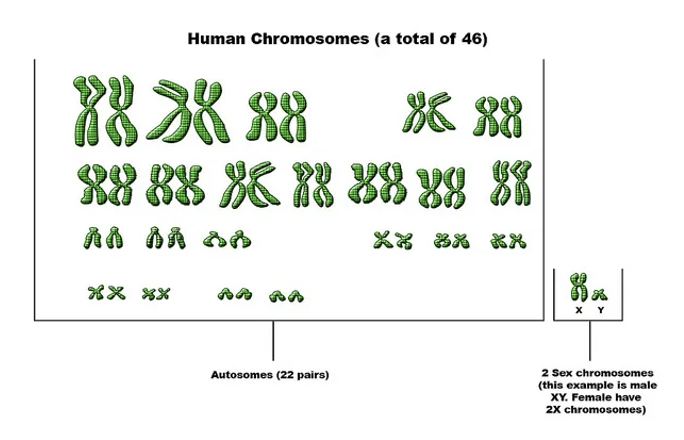
A cell that contains 46 chromosomes arranged as 23 pairs
- there are 22 pairs of matching chromosomes (autosomes) and 1 pair of sex chromosomes
- these are known as diploid cells
What is a haploid cell?
A gamete (sperm or oocyte) is a haploid cell as it contains only 23 chromosomes
This is half the number of chromosomes as a somatic cell
What type of cell are the only cells in the body not to be a somatic cell?
Gametes are the only cells in the body that are not somatic cells
When does development begin?
Development begins following fertilisation
- this occurs when the male gamete (sperm) unites with the female gamete (oocyte) to form the zygote
What actually is gametogenesis?
When does it occur in relation to fertilisation?
it is the conversion of primordial germ cells into male and female gametes
- it occurs in preparation for fertilisation
- it involves meiosis to reduce the number of chromosomes allowing diploid precursor cells to become haploid gametes
What are the “4 M’s” of gametogenesis?
- Migration - of PGCs to the gametes
- Mitosis - an increase in the number of PGCs
- Meiosis (I & II) - to reduce the chromosomal numbers
- Maturation - of gametes
What cells give rise to gametes?
Where are these formed from and where do they migrate to?
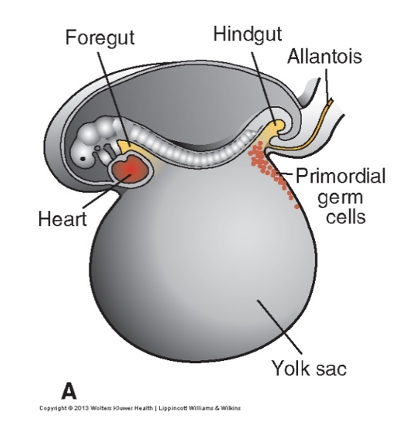
Gametes are derived from primordial germ cells (PGCs)
- they are formed from the epiblast layer of the bilaminar disc during week 2
- they move through the primitive streak during gastrulation to migrate to the wall of the yolk sac
- they remain in the yolk sac for a number of weeks
Where do the PGCs migrate to after residing in the yolk sac?
What process do they undergo whilst migrating?
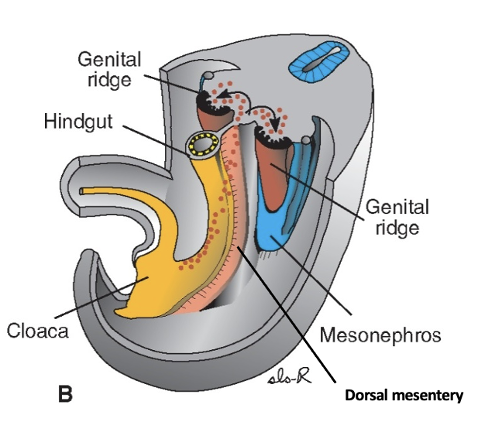
- during week 4 they migrate from the yolk sac towards the developing gonads
- they pass through the gut tube and across the dorsal mesentery to reach the primitive gonads by the end of week 5
- as they migrate towards the primitive gonads from the yolk sac, they undergo mitosis to form genetically identical cells
What is a teratoma?
How can they form during migration of PGCs?
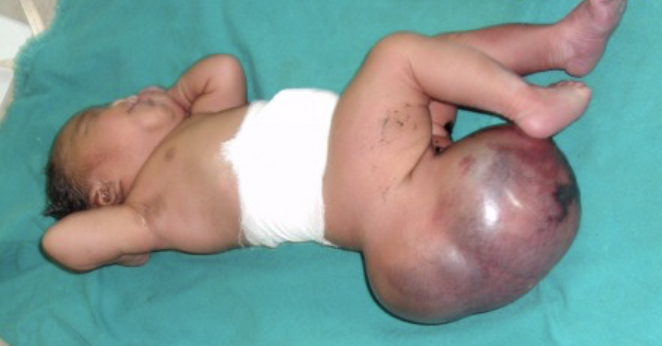
- a teratoma is a benign (usually) tumour that contains tissue from all 3 germ cell layers
- it often contains skin, hair, cartilage, brain tissue and/or teeth
- they are formed when PGCs are misdirected to extragonadal sites
- this describes areas outside of the genital ridge
- PGCs are pluripotent and have the ability to develop into many different cell types
What are the 2 most common types of foetal teratoma?
Will those affected still have genitals?
- sacrococcygeal is the most common, followed by oropharyngeal
- if someone has a teratoma, the gonads will still develop if there is migration of some PGCs to the genital ridge
- if there are no PGCs reaching the genital ridge then the gonads will not develop
What is mitosis?
What type of cells does it produce?
- the process by which one cell divides to produce 2 genetically identical daughter cells
- each cell receives the complete complement of 46 chromosomes
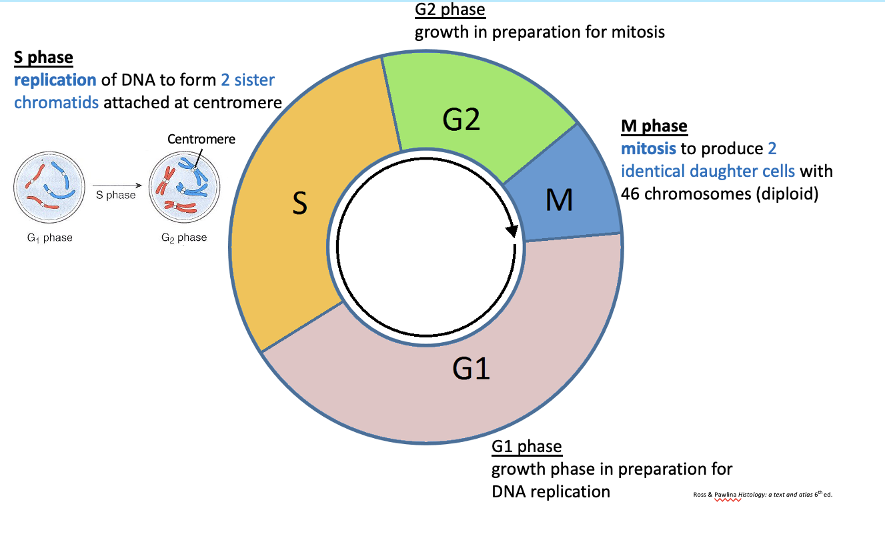
What are the 4 stages of the cell cycle?
What proportion of this cycle is taken up by mitosis?
G1 phase
- growth phase in preparation for DNA replication
S phase
- replication of DNA to form 2 sister chromatids attached at the centromere
G2 phase
- growth phase in preparation for mitosis
M phase
- mitosis occurs to produce 2 genetically identical daughter cells, each containing 46 chromosomes
- this is a relatively short component of the cell cycle as most of it is spent in interphase
What mnemonic can be used to remember the 4 stages of mitosis?
PMAT
- P - prophase
- M - metaphase
- A - anaphase
- T - telophase
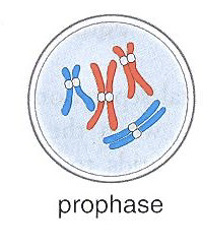
What occurs during prophase?
What does each chromosome consist of at this stage?
- the chromosomes condense and become visible
- the nuclear membrane disintegrates
- each chromosome consists of 2 sister chromatids joined at the centromere
- chromosomes continue to condense, shorten and thicken but chromatids only become distinguishable at prometaphase
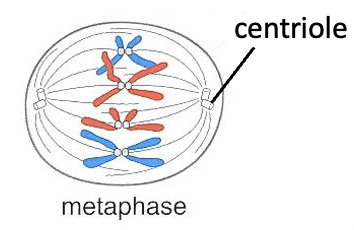
What happens during metaphase?
- the chromosomes line up along the equatorial plane of the cell
- each chromosome is attached by its centromere to the centriole via microtubles, forming the mitotic spindle
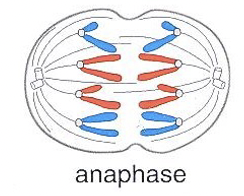
What happens during anaphase?
- the centromere of each chromosome divides
- the sister chromatids are pulled towards opposite ends of the cell by the spindle (microtubles)
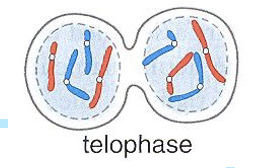
What happens during telophase?
- the chromosomes uncoil and lengthen
- a nuclear membrane forms around the chromosomes at opposite poles of the cell
- the cytoplasm divides (cytokinesis) to form 2 genetically identical daughter cells
What are the main differences in mitotic ability in males and females?
- Mitosis of PGCs continue once they reach the genital ridge
In females:
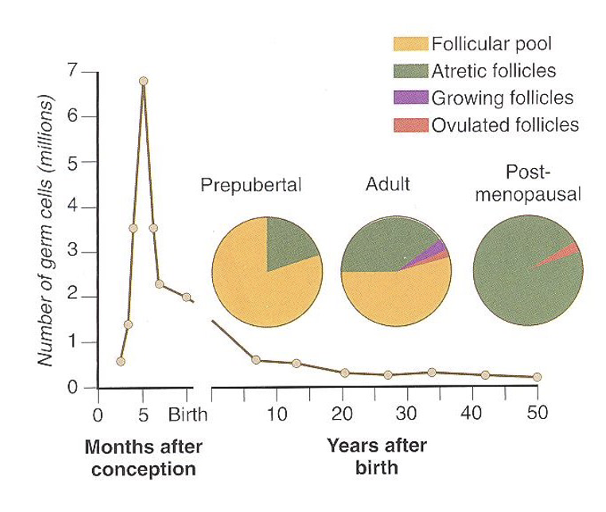
- there is rapid mitosis of oogonia during months 2-5 of foetal development
- this peaks at around 7 million oogonia
- the majority of oogonia then undergo atresia (degenerate and break down)
- atresia of oogonia continues throughout life until the menopause
In males:
- spermatogonia maintain the ability to divide throughout life
- there is no rapid mitosis during development
What are the 3 key differences between meiosis and mitosis?
In what way are they similar?
- meiosis reduces the number of chromosomes to produce haploid cells (23 single chromosomes)
- meiosis involves 2 successive divisions - meiosis I & II
- meiosis produces daughter cells that are genetically unique
- they are similar in the way that they are both preceeded by the S phase to replicate the DNA of each chromosome prior to division
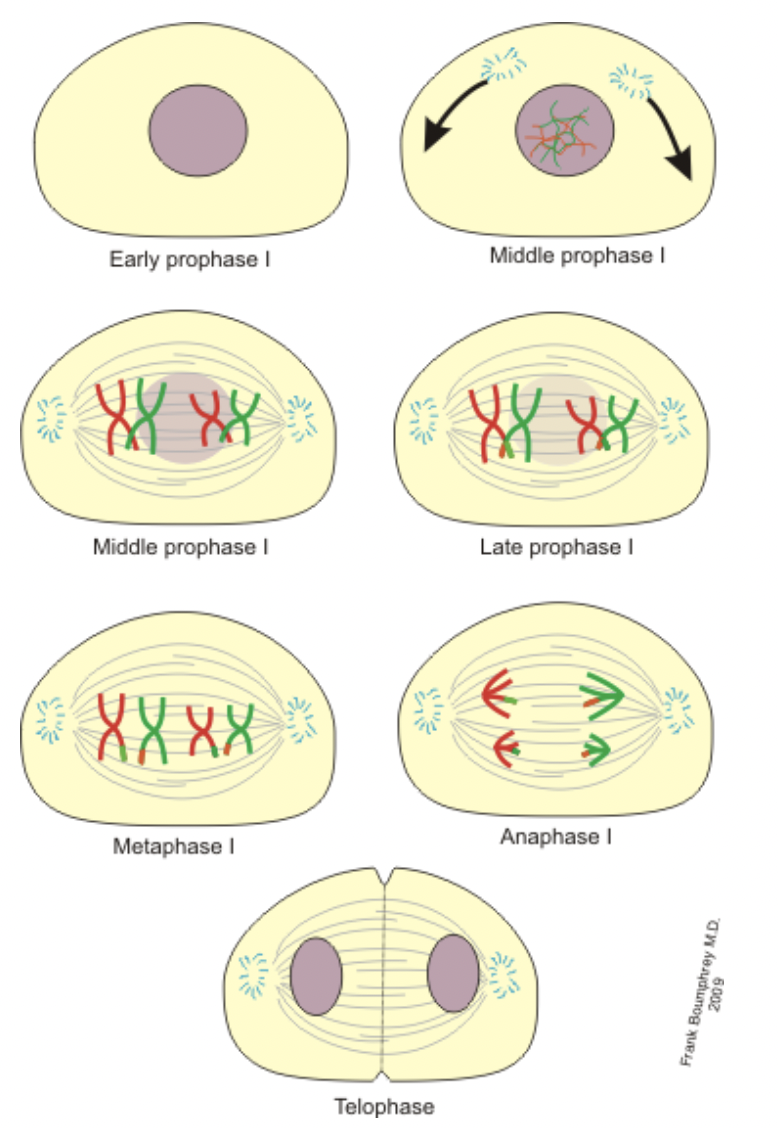
What is different about the way the chromosomes line up during prophase I?
- S phase occurs so that each of the 46 chromosomes is replicated into sister chromatids
- homologous chromosomes align themselves in pairs in a process called synapsis
- replicated maternal and paternal homologues line up with each other
- Following synapsis, crosslinking occurs which allows maternal and paternal chromosomes to swap some genetic material
- the point where the crosslinking occurs is called a chiasma
How is genetic variability produced during meiosis I?
How many daughter cells are produced by meiosis?
- crosslinking redistributes genetic material between maternal and paternal homologues
- there is random distribution of homologous chromosomes to the daughter cells as the way the pairs align on the equator during metaphase I is random
- meiosis produces 4 genetically unique haploid daughter cells
What is meant by oogenesis?
the process by which oogonia differentiate into mature oocytes
What happens to PGCs once they reach the gonad of a genetic female?
- PGCs differentiate into oogonia, which then undergo a number of mitotic divisions
- by the end of month 3 they are arranged in clusters surrounded by a layer of flat epithelial cells (follicular cells)
- these are derived from the surface epithelium covering the ovary



-
Gametogenesis56
-
Fertilisation, Implantation & ARTs62
-
Embryology of the Lungs37
-
Gastrulation40
-
Placenta & Foetal Circulation71
-
NTDs & Foetal Surgery49
-
Development of the Heart51
-
Development of the Face & Palate60
-
Prenatal Screening & Diagnosis44
-
Embryology of the Kidneys & Urinary System33
-
Twinning & Epigenetics39
-
Teratology59
-
Embryology of the Reproductive System54
-
Development of the GIT - Foregut32
-
Development of the GIT - Midgut & Hindgut36
-
Development of the GIT - GIT Associated Organs24
-
Development of the Heart 224
-
Congenital Heart Defects16
-
Extras48
-
Extras - Foetal Malformations78



