2 Primary Characteristics of PH Law
1. Govt power and duty to protect common good
Encompasses fact that PH law is in large part about govt action
Common goods – things that benefit many and that require collective action to achieve/maintain (ex: clean air, clean water, safe neighborhood, active city where people participate in government
2. Govt power and limits on power
- Voluntarism v. coercion* – line sometimes blurry (ex: immunization is “required” but technically voluntary because nobody is forcing you; it is coercive because it limits your ability to go to school)
- Power to compel* – ex: sanitarians can shut down a business
- Limits on state power* – ex: constitution
Population-Based Perspective of PH Law
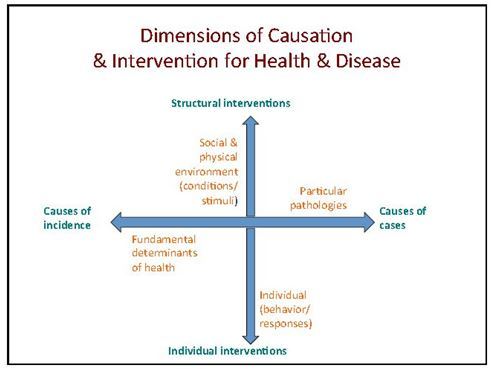
- 3 ways of reducing incidence
Identification, prevention, and interruption of incidence of disease
PH Law Basics:
Communities and Civic Participation
- importance of communities
- problems?
Importance:
Communities are important because they can cause good health, or cause bad health /instigate worse health (ex: violent communities) –> In many cases, the only way to change certain health behaviors/risk is to have engagement between PH enforcement and the community.
**Problems: **
- Hard to implement laws without cooperation of the community
- What is a “community”?
- Pointless to have laws without implementation and/or enforcement
Prevention
- Definition and Problem
Defined: interventions designed to avert the occurrence of injury or disease
Not sexy :( tends to inspire whining more than happiness (ex: forcing kids to pass a swim test to swim in the pool)
Role of Social Justice
- Core value of public health
- Health improvement for the population
- – ex: sanitarians required cities to have sanitation, ventilation, etc. before we even knew about causes of illness! The idea that you need to help the poorest among you, who are most vulnerable, has been an idea of PH since the beginning!
- Fair treatment for the disadvantaged
- Prioritize the most marginalized, who are often most vulnerable.
- Part of history of PH as well
- Fair sharing of common advantages and distributions of burdens – how do we make sure that areas of people with less money have the same access
PH Statutes
- what do they do?
- what is their focus?
In all states, these define the scope of power in PH, the mission, and sets limits on PH power.
The process of making the laws = important; meant to be transparent enough to make sure people know what is happening (community engagement = more investment in outcome!)
PH Legal Powers
- 7 powers
- Power to Tax and Spend (for the “general welfare”)
- Power to alter informational environment
- Power to alter the built environment
- Power to alter the socioeconomic environment
- Direct regulation of persons, profession, and business
- Indirect Regulation
- Deregulation
Federalism
Allocates power between fed and state govt
Supremacy Clause/Preemption
Separation of Powers
Each branch of govt influences health policy
Each branch has limited powers to protect its power
3 Questions to Ask - issues of Government action
- Does the govt have a duty to act?
- Does the govt have the power to act?
- How is govt power limited?
The Negative Constitution
Const’s language frames protections of individuals against restrictions by State
Strict interpretation would hold: State has NO duty to protect against invasions of rights by private actors (Rehnquist, 1989)
Problems:
Acts v. omissions – sometimes had to tell which the government is doing
Fed gov and courts failure to protect can leave states free to abuse citizens
Provides incentive to states NOT to act
Interpretation ignores the context of “positive rights”, or obligations inherent in 18th century.
Sovereign Immunity
11th amendment grants states immunity from certain lawsuits in federal court without the state’s consent.
Respects states being mini countries that rule their own land.
States can waiver this in exchange for getting federal funds
Federal Presence in PH
- Comes from the ___ Branch
- Examples?
Comes from Executive Branch
Examples:
USMHS à PHS
USMHS lab à NIH – National Institutes of Health
CDC – Centers for Disease Control and Prevention (in Atlanta)
HHS – Health and Human Services
Other Agencies: agriculture, labor, environment
Federal Govt Powers to Act
5 things
- Preemption
- Power to Tax
- Power to Spend
- Power to Control Commerce
- Necessary and Proper Clause
2 Main State Powers
Police Power
Parens patriae
New Federalism
Defined: “A principle of political change, spurred by conservative activism, that seeks to limit federal authority and return power to the states” (Hodge)
Limitations based in:
commerce clause – limits congressional authority
10th amend – reserved powers doctrine
11th amend – grants states immunity from certain lawsuits in federal court without state consent (Sovereign Immunity)
Limits on the Police Power
- Constitution and BOR
- Private v. Public Action
- Due Process (PDP and SDP)
- EPC
How much PDP is due?
- test?
3 Factors Courts Balance (per Matthews v. Eldridge, 1976):
- Nature of the interests involved
- Risk of erroneous deprivation of liberty – helps avoid incorrect decisions
- Fiscal or administrative burdens (Administrative cost is the cost of adding more PDP)
4 Qualifications for Suspect Classes
Immutable trait
History of discrimination
Deprived of ability to be heard in political process (Discrete & insular)
Stereotypes
PHAs
- Federal
From the US Marine Services to PHS, NIH, EPA, etc.
PHAs
- State
- 4 things
- plenary police power
- can be part of super-agency
- can be cabinet level independent agency
- centralized v. decentralized
- centralized - all work being done in state is by state employees
- decentralized - county or city level
PHAs
Local level
- authority delegated by state
lots of local activity
“home rule” in some situations
Powers of Executive Agencies
- Rule making
- admin procedure acts
- informal and formal paths
- enforcement
- legislature sets penalties
- agency monitors compliance
- quasi-judicial
- admin law judges conduct hearing with PDP to determine violations, penalties, etc.
How are agencies limited?
Doctrine of Non-Delegation
Defined: Legislatures may not delegate FULL legislative authority to agencies or any other body à because they have to pay some attention to what they are doing, we don’t want them just handing off power delegated to them in the constitution
Rarely used to invalidate federal laws




