What are risk factors for contracting STIs?
- Age <25
- Having a new sexual partner
- Having many sexual partners
- Lack of use of barrier contraception
- Low socioeconomic class
What are common symptoms that might make you suspect an STI?
Unfortunately, often STIs are asymtomatic.
Other symptoms include:
- Vaginal discharge
- Ulceration (painless or painful)
- Itching/soreness
- Abnormal bleeding: PCB, IMB
- Abdominal Pain, dyspareunia, dysuria
- ±Systemic symptoms (fevers etc.)
What is the commonest cause of abnormal vaginal discharge?
What are the symptoms?
The commonest cause is bacterial vaginosis. Whilst sexually associated, this is not an STI. It is also associated with certain hygiene practices such as vaginal douching.
It is defined as abnormal vaginal flora (which is usually lactobacilli, Gram-positive rods, and instead being colonised by anaerobic organisms notably Gardnerella vaginalis) leading to:
- pH >4.5
- Thin grey/white homogenous vaginal discharge (can smell fishy) NOT associated with itchyness nor soreness.
It is associated with preterm delivery in pregnant women
What investigations would you like to do for bacterial vaginosis?
Invetigations:
- A speculum examination can be used to visualise the cervix and vagina, looking for a thin grey/white coating of the vaginal wall and a vulva that has a fishy odour.
- High vaginal swab: Microscopy of Gram stain (will show reduced lactobacillus)
- pH of vaginal discharge: >4.5
- “Clue Cells” on microscopy of vaginal discharge
- “Whiff test”: 1% KOH is added to vaginal secretions which gives strong Fishy odour
Describe the management of bacterial vaginosis
- Consider referring woman at high risk of STI to a GUM clinic or other local specialist health service to facilitate screening for infections and partner notification.
- Advise to reduce exposure to contributing factors such as vaginal douching and the use of soap in vagina, bubble baths, or shampoos in the bath.
- Prescribe metronidazole either oral (400mg twice a day for 5-7 days) or intravaginal topically.
- Oral clindamycin and oral tinidazole are alternatives but are less preferred.
What is the commonest vaginal fungal infection?
What predisposes to this infection?
Candidiasis is the commonest vaginal infection. Usually caused by candida albicans.
Risk factors are:
- Diabetes
- Pregnancy
- Immunosuppression
Candida is part of the normal vaginal flora in a lot of women and is ususally asymptomatic.
It is not considered an STI.
What are clinical features of candidiasis?
- Signs of inflammation:
- Erythema
- Oedema
- Can cause itch, dypareunia and dysuria
- Discharge: White thick (“cottage cheese”) discharge; non-offensive
How would you investigate Vulvovaginal candidiasis?
Vulvovaginal candidiasis is a clinical diagnosis.
However you can also take a high vaginal swab for microscopy and culture. A pH reading of the vagina will be 4.5 or below unlike BV or trichomoniasis.
Important to ask patients how many times this has occurred, as recurrent infection may point to immunocompromise. Consider testing HbA1c to exclude diabetes mellitus.
How is vulvovaginal candidiasis managed?
For uncomplicated infection, intravaginal antifungals (e.g. clotrimazole pessary) is used for treatment. Oral azoles such as itraconazole or fluconazole can also be given, however not during pregnancy (who should only recieve intravaginal treatment). Advise the woman to return if the symptoms have not resolved within 7 days.
Aqueous cream or emollients can be used for symptomatic relief.
Consider referring woman at high risk of STI to a GUM clinic or other local specialist health service to facilitate screening for infections and partner notification.
What is the causative organism in trichomoniasis infection?
What are the symptoms of this infection?
Trichomoniasis is caused by trichomonas vaginalis, a protozoan.
It is sexually transmitted (so contact tracing is part of treatment).
Very common - up to 35% of vaginitis caused by this.
Symptoms:
- Asymptomatic in 50% of patients
- Vaginal discharge described as frothy in SBAs
- ± Signs of vulvovaginitis
- Strawberry Cervix in only 2% of women
- Might be associated with adverse pregnancy outcomes
How is the diagnosis of trichomoniasis made?
How would you manage this infection?
Testing is requried for symptomatic patients. Ix include:
- Wet mount mocroscopy shows motile trophozoites
- Nucleic Acid Amplification Test (NAAT) from a vulvovaginal or endocervical swab - Gold Standard
- Also test for other STIs (chalmydia/gonorrhoea; can be done on same sample)
- M&C and POCT can be used, but less preferred
Management:
- Contact tracing and treatment of any other sexual partners
- Treatment is with oral metranidazole.
- Also important to advise sexual abstinence for one week until the person and partner have completed the course.
- Consider referring woman at high risk of STI to a GUM clinic or other local specialist health service to facilitate screening for infections and partner notification.
What is the commonest bacterial STI?
What are the symptoms?
Chlamydia trachomatis (Gram negative) is the commonest bacterial STI, which commonly affect the endocervix, urethra or both. 1.5-10% of 15-24 year olds are infected.
Symptoms include:
- Often asymptomatic (85% of patients, hence screening!)
- Vaginal discharge
- PCB/IMB (due to inflammed, friable cervix)
- Cervical motion tenderness (Pain when moving the cervix)
- Deep dyspareunia/Pelvic pain
- (reactive arthritis, but this is more common in men)
Can cause PID by ascending.
What investigations would you like to perform in a woman with suspected chlamydia?
How would you manage it?
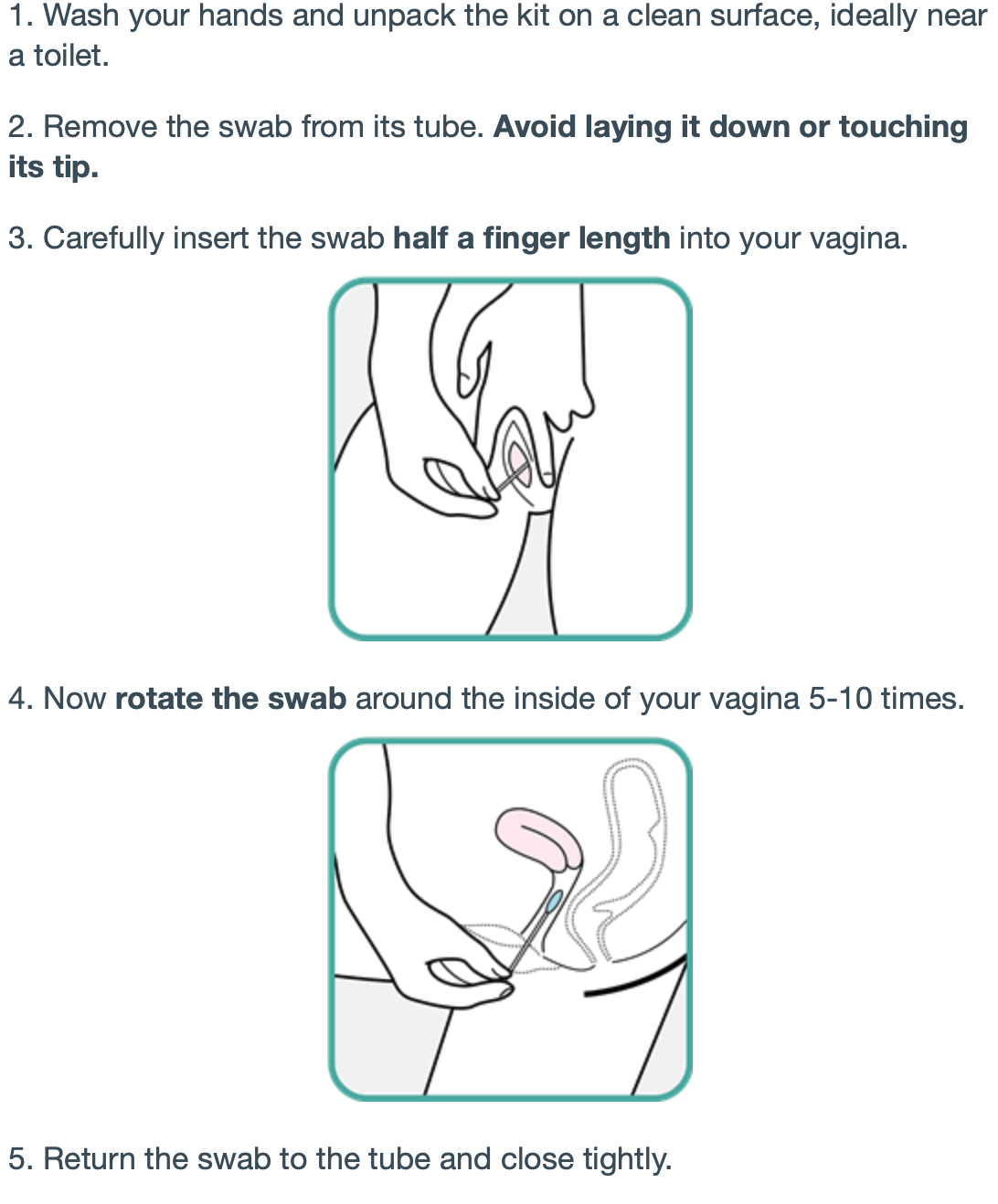
- NAAT from Vaginal swab (also test for Gonorrhoea)
- First clean catch urine (but less preferred)
The swab can be done by the woman herself (see image).
Management:
- Refer to a GUM clinic so they can be screened for other STIs, if they refuse, you can still manage in primary care.
- Prescribe doxycycline 100mg twice a day for 7-days. However, if they are pregnant, prescribe azithromycin.
- Advise that sexual intercourse (including oral sex) should be avoided until the person and their partner(s) have completed treatment.
- Partner notification can be done in GUM clinic, or in GP if patient refuses.
What organism causes gonorrhoea?
What are presenting symptoms?
Neisseria gonorrhoea (intracellular Gram negative, intracellular diplococci) is the cause of gonorrhoea. It is an STI.
Symptoms include:
- Asymptomatic (50%)
- Vaginal discharge
- Lower abdominal pain/Pelvic pain
- Can spread to rectum (also via receptive anal sex)
- Might get cervicitis
Can cause PID by ascending.
Rarely, haematogenous spread may result in disseminated gonococcal infection with a purpuric non-blanching rash and/or arthralgia or arthritis(typically monoarticular in weight bearing joint).
What investigations would you like to do for suspected gonorrhoea?
Investigations:
- Screening with NAAT from vulvovaginal swab, if positive:
- M,C&S to check for drug resistance
- Also check for other STIs, esp. Chlamydia
How do you manage gonorrhoea infection?
- Refer to a GUM clinic so they can be screened for other STIs, if they refuse, you can still manage in primary care.
- Send sample for resistance and antibiotic susceptibility before starting on antibiotics.
- Partner notification should be patient-led if possible. Empirical antibiotics is given to the partner while awaiting results of antibiotic susceptibility.
- (Usually not done in primary care) Ceftriaxone 1g IM can be used to manage uncomplicated infection.
- If the woman is pregnant: Ceftriaxone 500mg intramuscular (IM) injection as a single dose, plus azithromycin 1g orallyas a single dose.
- Follow-up after 1-week, needing a test of cure (TOC) using NAAT.
What is plevic inflammatory disease?
PID compirses a spectrum of inflammatory disorders of the upper female genital tract.
It occurs when there is ascending infection from the endocervix, causing endometritis, salpingitis, tubo-ovarian abscesses, pelvic peritonits, or any combination of these. Most commonly caused by Neisseria gonorrhoea, Chlamydia trachomatis as well as Mycoplasma genitalium.
It is the most common gynaecological reason for Hx admission.
The incidence is around 1:30, and most common in 20-24 year olds.
What are clinical features of pelvic inflammatory disease?
- Lower abdominal pain
- (deep) dyspareunia
- Dysuria
- Dynmenorrhoea
- On pelvic examination:
- Uterine tenderness
- Cervical motion tenderness
- Adnexal tenderness
- Vaginal discharge
- IMB/PCB
- Systemic symptoms (e.g. Fever)
What are long term sequalae of PID?
- Endometrial and fallopian tube inflamamation and damage
- Subfertility
- Ectopic pregnancy
- Chronic pelvic pain
- Perihepatitis (Fitz-Hugh-Curtis Syndrome)
- RUQ pain and perihepatic adhesions
- Adhesions in the abdominal cavity
How would you investigate a woman with PID?
Investigations:
- Pregnancy test
- Basic Obs (incl. check for fever)
- High vaginal swab (check for Gonococcus, Chlamydia and Mycoplasma genitalum) (contact tracing if appropriate)
- Bloods:
- ESR
- CRP
- WCC
- HIV test
- Imaging if indicated
- (TV)USS
How would you manage a woman with PID?
- Admit woman if she has a high risk of ectopic pregnancy, or has a high fever, signs of pelvic peritonitis, or if a surgical emergency cannot be ruled out.
- Perform a pregnancy test and investigations for sexually transmitted diseases. Also trace and treat contacts.
- Start on empiric antibiotic therapy - usually IM ceftriaxone stat, followed by doxycycline and metronidazole for 14 days. + analgesia
- Consider removing any intrauterine devices.
- Inform women of the disease course and possible sequelae from their infection.
- SafetyNet: high fever, feeling unwell
Which of the Herpesviruses casues genital herpes?
What are the symptoms?
HHV 2, aka HSV-2 is the most common cause of genital herpes (but HSV-1 can also cause it).
Symptoms:
- Superficial tender ulcers (+ regional lymphadenopathy)
How woudl you investigate and manage a woman with genital herpes?
Investigations:
- Swap sent for PCR
- Serology for HSV-1 and -2
Management:
- Course of aciclovir (also safe in pregnancy) (or related compound valciclovir)
- During pregnancy: neonatal herpes is devastating, therefore if first-acquisition herpes infection in 3rd trimester do pre-labour C/S to prevent contact.
What organism causes genital warts?
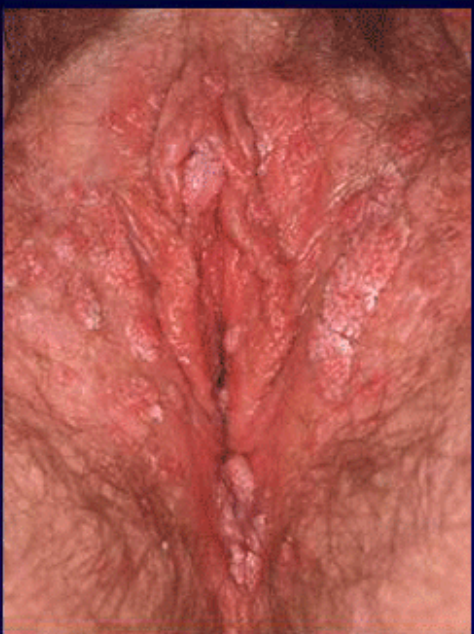
Genial warts are benign epithelial tumours caused by HPV infection. There are over 100 genotypes of HPV, but types 6 and 11 account for 90% of all genital warts. Infection in the genital epithelium via sexual transmission is extremely common, with the vast majority of cases being subclinical.


-
Contraception49
-
Abortion12
-
Menstrual Cycle23
-
Pubertal development10
-
Disorders of menstrual bleeding27
-
Implantation and early pregnancy37
-
Subfertility21
-
Menopause and post reproductive health16
-
Genitourinary Problems34
-
Urogynaecology23
-
Benign condition of the ovary and pelvis28
-
Malignant diseases of the ovary32
-
Benign Conditions of uterus, cervix, endometrium26
-
Benign Conditions of the vagina and vulva14
-
Malignant disease of the uterus and lower genital tract29



