Purpose of the GI Tract
Food digestion and absorption of nutrients and water
Primary disorders of the GI tract are related to:
Damage from gastric acid secretion and abnormal food movement through the GI tract

GI Tract: Route (start to finish)
- Mouth
- Esophagus
- Stomach
- Small intestine
- Large intestine
- Rectum
- Anus

Digestive Process
- Ingestion of food
- Movement of food from mouth to anus
- Secretion of mucus, water and enzymes
- Mechanical digestion of food particles
- Chemical digestion of food particles
- Absorption of digested food
- Elimination of waste products by defecation
GI tract layers- inside to outside
- Mucosa
- Submucosa
- Muscularis
- Serosa or Adventitia

Stomach Secretions
- Acid
- Enzyme (Pepsin)
- Mucus
Layers of Small Intestines (3:4)
- Smooth muscle- Longitudinal & Circular
- Mucosal folds
- Villus- functional unit
- Columnar cells
- Goblet cells
- Microvilli
- Lamina propria

Length of Small Intestine
5 to 6 meters long

Parts of the small intestine
- Duodenum
- Jejunum
- Ileum

Intestinal digestion and absorption- Process
- Initiated in stomach
- Continues in small intestine
- Pancreatic enzymes
- Intestinal enzymes
- Bile salts
- Intestinal motility
- Haustral segmentation
- Peristalsis
- After Breakdown- contents travel to liver via portal vein
- Carbohydrates
- Proteins
- After Breakdown- travel to liver via systemic circulation
- Fats
- Absorption- various GI regions
- Water, vitamins, and electrolytes

Large intestine- Parts
- Cecum
- Appendix
- Colon- Ascending, Transverse, Descending, Sigmoid
- Rectum
- Anal canal- Internal sphincter External sphincter

Length of Large Intestine
1.5M long
Layers of Large Intestine
- Muscle layers
- Longitudinal layers
- Circular layers
- Cell layers
- Columnar epithelium
- Goblet cells
- Arteriole
- Venule
- Lymphatic

Large & Small Intestine Innervation
- Gastrocolic Reflex (preferred pooping time)
- Parasympathetic and sympathetic innervation
- Propulsion
- Water reabsorption
- Sodium reabsorption- Aldosterone
- Relaxation of anal sphincter
- Control to hold and override defecation urge
- Valsalva maneuver function
- Intrinsic innervation of intestines
- Spinal innervation

Referral Patterns Right Upper (3)
- Gallstones
- Pancreatitis
- Stomach Ulcers
Called the Right Hyporchondriac Region

Referral Patterns Right Middle (4)
- Lumbar Hernia
- Urine Infection
- Constipation
- Kidney Stones
Called Right Lumbar Region

Referral Pattern- Right Lower (4)
- Appendicitis
- Constipation
- pelvic Pain (Gynae)
- Inguinal hernia
Called Right Iliac Region
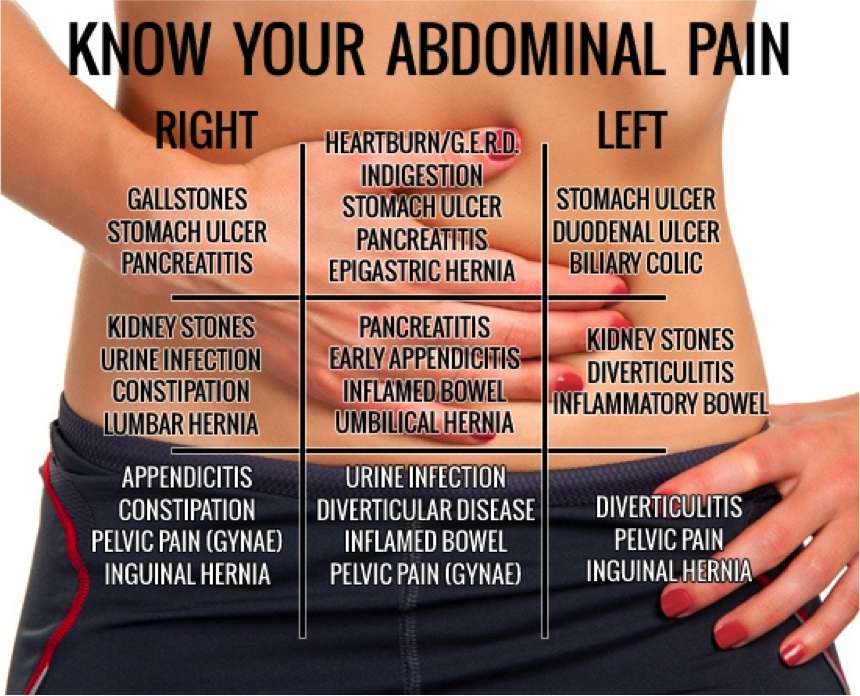
Referral Pattern- Mid upper (5)
- Epigastric Ulcer
- Heartburn (GERD)
- Indigestion
- Pancreatitis
- Stomach Ulcer
Called Epigastric Region

Referral Pattern- Mid-Middle/ center (4)
- Umbelical Hernia
- Pancreatitis
- Inflamed Bowel
- Early Appendicitis
Called Umbilical Region

Referral Pattern- Mid-Lower (4)
- Urine Infection
- Diverticular Disease
- Inflamed Bowel
- Pelvic Pain (Gynae)
Called Hypogastric Region

Referral Pattern- Left Upper (3)
- Billary Colic
- Duodenal Ulcer
- Stomach Ulcer
Called Left Hypochondriac Region

Referral Pattern- Left Middle (3)
- Kidney Stones
- Inflammatory bowel
- Diverticulitis
Called Left Lumbar Region

Referral Pattern- Left Lower (3)
- Diverticulitis
- Inguinal Hernia
- Pelvic Pain
Called Left Iliac Region

Referred pain patterns- pain from the vermiform appendix and colon to the area of sensory distribution for the 11th thoracic nerve
McBurney’s point on Spino-umbilical point - halfway between the ASIS and Umbilicus. usually on the R side. Gentle palpation of McBurney’s point produces pain or exquisite tenderness. Pinch an inch test should also be checked here.






