Small colon impactions are strongly associated with infection of which organism?
Salmonella
Factors that adversely affect surgical outcome of horses with descending colon obstructive disease include:
Small colon’s relatively poor blood supply High concentration of collagenase High intraluminal concentration of bacteria High muscular activity Presence of particulate faeces
List the horses most prone to rectal tears:
Arabians, ponies, small breed Young
Once a rectal tear is suspected, the veterinarian must:
- Advise the owner a rectal tear has occurred 2. Further assess the severity of the tear 3. Explain the nature of the problem openly with the owner 4. Initiate appropriate treatment (may include referral) 5. Contact liability insurance company
At what position do most rectal tears occur and why?
25-30cm from the anus at 10-12 o’clock - thickness of muscle decreases and weak area due to penetration of terminal arteries.
What grade rectal tear is this and what structures are involved?
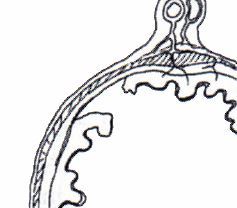
Grade 1 rectal tear - mucosa and submucosa
What grade rectal tear is this and what structures are involved?
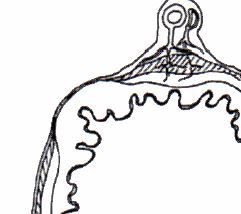
Grade 2 rectal tear - musularis only
What grade rectal tear is this and what structures are involved?
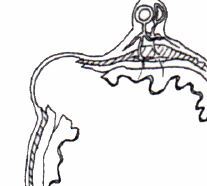
This is a grade 3A rectal tear - mucosa, submucosa and muscularis are torn. Diverticulum is formed from the serosa.
What grade rectal tear is this and what structures are invloved?
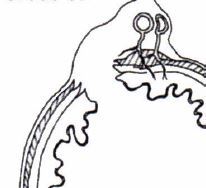
Grade 3B rectal tear - mucosa, submucosa and muscularis torn. Only serosa intact. Involved the mesocolon / mesorectum / retroperitoneal space.
What grade rectal tear is this and what structures are involved?
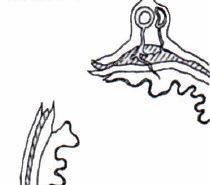
Grade 4 - Torn through mucosa, submucosa, muscularis and serosa
As soon as a rectal tear is diagnosed the following first aid should be applied:
- Reduce activity of the rectum
- Gently remove faeces from the tear and the rectum
- Rectal packing
- Broad spectrum antibiotics
- Analgesia
What treatment would you give to grade 1-2 rectal tears?
Should be able to sufficiently treat with broad spectrum antibiotics and laxatives - heal in about a week.
How would you treat grade 3-4 rectal tears?
Need referral and transport (leave rectal packing in place!). Usually require surgical intervention (temporary indwelling rectal liner / colostomy / pimary repair) as well as medical management (antibiotics and laxatives).
What type of rectal prolapse is this? Describe what is occurring.
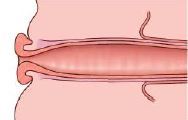
Type 1 rectal prolapse - prolapse of rectal mucosa and submucosa
What type of rectal prolapse is this? Describe what is occurring:
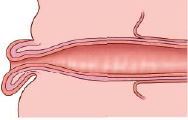
Type 2 rectal prolapse - prolapse of rectal mucosa and muscularis (full thickness rectum)
What type of rectal prolapse is this? Describe what is occurring:
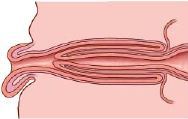
Type 3 rectal prolapse - prolapse of full thickness rectum and peritoneal portion of the rectum or colon intussuscepted
What type of rectal prolapse is this? Describe what is occurring?
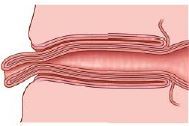
Type 4 rectal prolapse - peritoneal portion of the rectum or colon intussuscepted through the anus
At what length of rectal prolapse is mesenteric blood supply usually disrupted and what is the prognosis?
>30cm - the prognosis is terrible
What is the capacity of the equine stomach?
1.5% of body weight
What is the role of the mucus cells in the stomach?
- secrete bi-carbonate rish mucous
- coat and lubricate gastric surface
- protects epithelium from acid and other chemical insult
What is the role of the parietal cells of the stomach?
- Continuously secrete HCl
- Activation of pepsinogen and inagtivation of ingested microorganisms
What is the purpose of the chief cells of the stomach?
- Secrete protease: pepsinogen
- Pepsinogen activated by stomach acid into pepsin - digestion of proteins
- In folas: secrete chymosin (rennin) - protease that coagulates milk proteins
What is the role of G-cells in the stomach?
- Secrete gastrin - relax proximal stomach and increase contractions in distal stomach
What are the functions of the equine stomach?
- Short term storage reservoir
- Initiation of chemical and enzymatic digestion
- Liquefaction of food



