What are the properties of sound?
- Amplitude (intensity): How loud the sound is.
- Frequency: Pitch of the sound.
- Timbre: ‘Texture of sound’.
- Location: Source of sound.
- Spectral flux: Changes in sound over time.
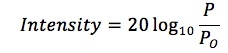
What is the intensity equation for sounds?
P = √(pressure)
P0 = 20 μPa (minimum sound pressure detectable by human ears)
Units = dB SPL (decibels sound pressure level)
What information can be obtained from a sound spectrum?
- Pitch: Fundamental frequency
- Timbre: Shape of the sound spectrum
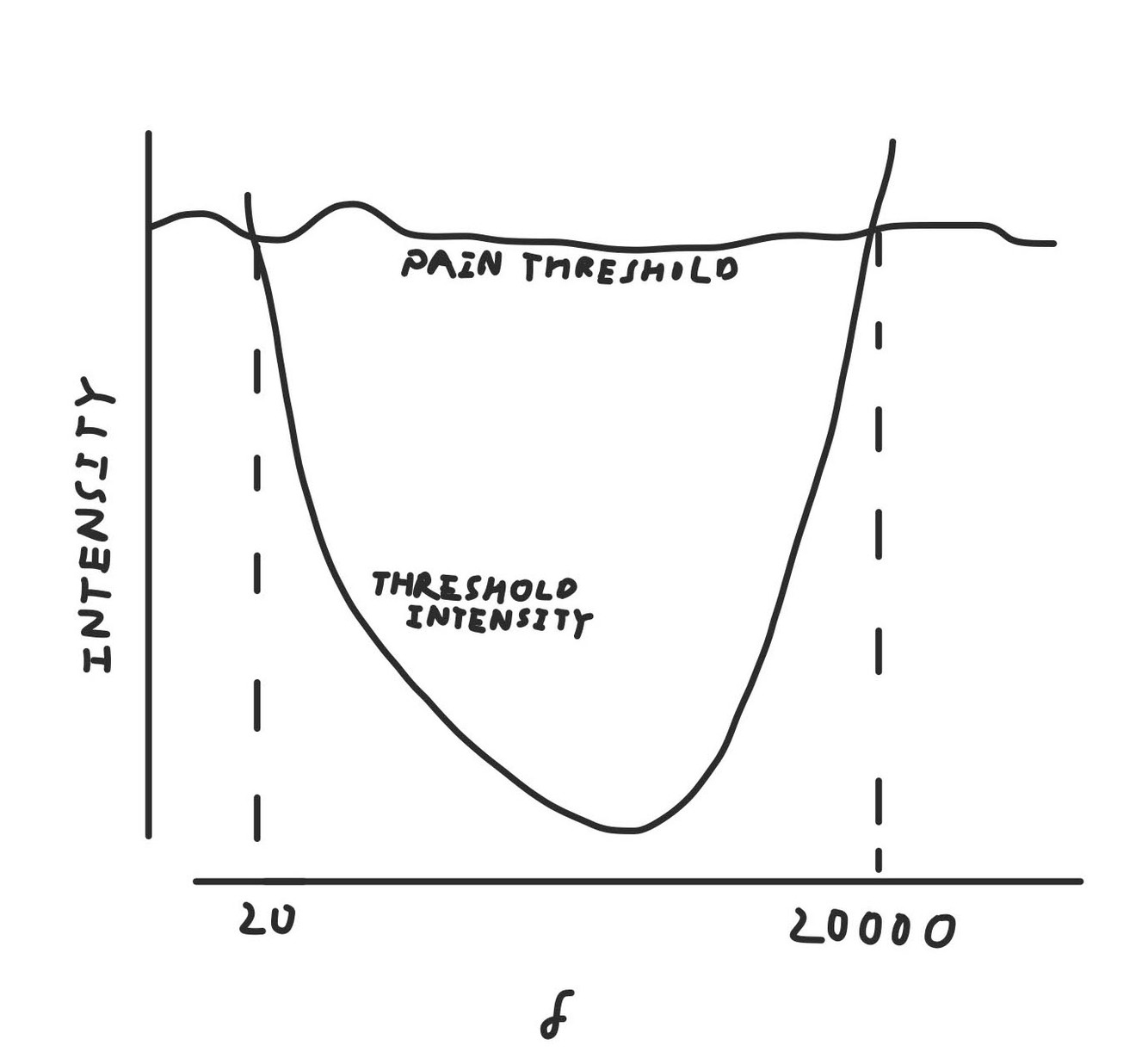
What is the range of audible frequencies in human hearing?
20 Hz - 20 kHz
What is the range of audible frequencies defined by?
- Range lies within the frequencies whose threshold of detection lies below the pain threshold, which is fairly constant.
- Sounds beyond thresholds are not un-necessarily inaudible, but cause substantial pain at volumes required for them to be audible.
What is the function of the pinna?
Colourises sound coming from different directions in distinct ways to aid in monoaural sound localisation.
What is the function of the external auditory meatus?
Acts as a resonator and amplifies sounds up to 4 kHz
Why is a large amount of sound reflected at the air-water interface between middle ear and cochlea?
- Density difference
- Compressibility difference
- Creates an impedence difference (most sound takes path of least resistance in air)
How can the middle ear structures amplify vibrations from air into perilymph?
- Tympanic membrane 14x area of footplate of stapes, so pressure at oval window 14x air pressure.
- Pivot action between ossicles allow for amplification of vibrations via moments.
What proportion of sound energy is transmitted from external ear to the perilymph of the cochlea?
~50%
What are the functions of the muscles associated with ossicles?
- Stapedius: Changes angle of stapes and decreases efficiency of transfer of vibrations into oval window.
- Tensor tympani: Contraction increases tension in tympanic membrane and thus impedence, causing more vibration energy to be absorbed.
What loss of sensitivity is caused by activation of the middle ear muscles?
30-40dB SPL
At what sound intensity level do the ossicle-associated muscles contract?
~80 dB
How is resonance minimised in the middle ears?
Numerous air cells and cavities in petrous temporal bone communicate with the middle ear, allowing sound waves to travel down them and become attenuated.
What is the function of the Eustachian tube?
Equalises pressure between atmosphere and middle ear.
What are the types of hearing loss?
- Conductive hearing loss: Caused by failure of sound reaching the inner ear efficiently. This is usually due to earwax in the external auditory meatus, but can also by a result if otitis media (inflammation of middle ear). Although gain in sound is reduced, the hearing loss can be overcome by amplifying incoming sounds.
- Sensori-neural hearing loss: Caused by damage to the hair cells or the neurones in the auditory pathway. E.g. presbycusis (age-related hearing loss).
Why are Eustachian tube infections more common in infants?
Their Eustachian tubes are shorter and wider than adults.
What is the significance of the spiral shape of the cochlea?
- Spiral shpae has no functional significance.
- Spatially, it allows a fairly long structure of the cochlea to fit in quite a tight inner ear space.
What is the structure of the cochlea?
- 3 compartments separated by 2 membranes:
1. Scala vestibuli
2. Reissner’s membrane
3. Scala media
4. Basilar membrane
5. Scala tympani - 3 openings:
1. Oval window
2. Round window
3. Helicotrema
What are the dimensions of the cochlea?
Length: 35mm
Width: 100μm (base) - 500μm (apex)
What is the path taken by sound as it travels through the ear?
- Changes in air pressure caused by sound in the external auditory meatus causes movement of the tympanic membrane.
- Movements of the tympanic membrane moves the ossicles, including the stapes which is pushed in/out of the scala vestibuli through the oval window.
- Perilymph (like all fluids) is incompressible, so displacement of stapes into perilymph displaces the flexible cochlear partition into the scala tympani.
- Compression of the partition into the scala tympani displaces perilymph through the round window.
- Ultimately, round window displaces into the middle ear which is filled with air and is compressible and connected to atmosphere through Eustachian tube, dissipating the pressure change.
What is the function of the helicotrema?
Vibrations below 20Hz displaces perilymph out of the helicotrema, preventing them from moving the cochlear partition and being transduced as sound. This is important for countering transient fluctuations in atmospheric pressure and is active all them time (in contrast to Eustachian tube which is only active transiently).
What is the tonotopic map of the cochlea?
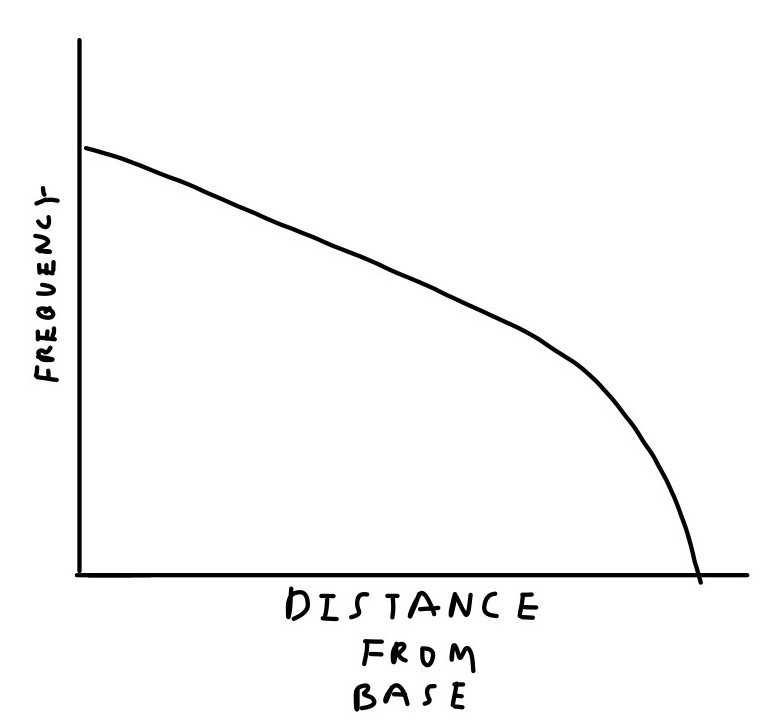
- Different frequencies of sound vibrate maximally at different parts of the cochlea, allowing different frequency components of sound to be separated out.
- Linear increments in cochlea distance represent logarithmic increments in frequency.
What are the principles behind tonotopic map of the cochlea?
- Sounds of higher frequencies prefer to traverse near the base. This is because their higher frequencies mean a lot of inertial force would be required to move perilymph if they travel to the apex.
- Sounds of lower frequencies prefer to traverse near the apex. This is because their lower frequencies mean that they are unable to effectively traverse the stiff basilar membrane at the basal aspects.



-
Introduction to the CNS14
-
The neurone46
-
Vision (Retina)80
-
Vision (Central processing)26
-
Vision (Colour & adaptation)33
-
Hearing61
-
Olfaction & taste20
-
Physiological constants (Michaelmas)27
-
Somatosensation43
-
Pain40
-
Emotion & Anxiety55
-
Motor systems62
-
Motivation20
-
Arousal & sleep36
-
Brain development and repair44
-
Practicals (Michaelmas)28
-
Eye movement (Practical)21
-
Disorders34
-
Ischaemic nerve block (Practical)10
-
Muscle electrophysiology (Practical)11



