Coagulation cascade activation complexes
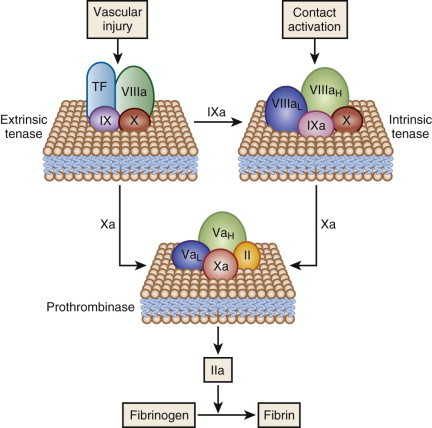
Factors in extrinsic pathway
- Tissue factor (thromboplastin)
- VII
- Ca++
- IX
vitamin K dependent factors
II, VII, IX, X
Intrinsic pathway factors
- HWMK
- prekallikrein
- XII
- XI
- VIII
- Ca++
Prothrombinase complex
PPL + Xa + Va
Platelet Function (receptors, important secretory molecules)
Secretion
- ADP
- COX-1 depedent synthesis of thromboxane A2 - vasoconstriction
- both function in activation of platelets and recruitment to site
- less important: V, XI, fibrinogen, XIII, vWF, fibronectin, thrombospondin
- PDGF + TGF-b - promote wound healing
Adhesion
- a2b1 and GP VI - bind collagen
- GPIba and GPIIb/IIIa - bind vWF
- promote fibrin formation and stabilization of plug
- platelet aggregation
Inherited hypercoagulable deficiencies
- Factove V Leiden**
- protein C/S deficiency
- antithrombin III deficiency
- lupus anticoagulant
Indications for IVC filter (5 absolute, 3 relative)
Absolute
- recurrent embolism despite anticoagulation
- DVT in patient with C/I to anticoagulation (intracerebral hemorrhage, stroke)
- complication of anticoagulation therapy
- recurrent PE with assocaited pulmonary HTN and cor pulmonale
- after pulmonary embolectomy for massive PE
Relative
- PE >1/2 of pulmonary vascular bed in patient who cannot tolerate any more emboli
- growing ileofemoral thrombus despite anticoagulation
- high risk patient with large free-floating iliofemoral thrombus on venogram
Coagulation screening tests
- PT/INR
- PTT
- thrombin time
- PT/INR - extrinsic and common
- PTT - intrinsic and common
- thrombin time - fibrinogen
Hemophilia A
VIII deficiency
X-linked, 30% spontaneous occurrence
Clinical features:
- present later (can form platelet plug)
- often suffer from hemarthroses, bleeding into deep tissues and not mucosal sites (since platelet function works fine)
Classification
- based on functional levels of VIII
- <1% spontaneous bleeding
- <2% severe
- 2-5% moderate
- 5-30% mild (Rare spontaneous bleeding)
- 30% minimum needed for hemostasis of minor hemorrhage, 50% for joint and muscle bleeding, 80-100% to prepare for elective surgery
Treatment
- ddAVP IV (0.3mcg/kg) or intranasal - raises VIII in mild and moderate disease (minor surgery)
- recombinant VIII and plasma based VIII concentrate (serious bleeding) - FFP not concentrated enough
- cryoprecipitate - good, only used if VIII not available
Hemophilia B (Christmas)
Defiency in factor IX
Inherited X-linked deficiency
Classification
- 20-40% activity = moderate deficiency
- >30% activity needed for hemostasis
Treatment
- prothrombin complex concentrate and pure IX concentrate
- 30% to protect against bleeding post-dental extraction or abort joint hemarthroses
- 50% if major joint or IM bleeding
- 100% in life threatening bleeding or before major surgery
von Willebrand Disease
Most common bongenital bleeding disorder (~1% prevalence)
Clinical: similar to platelet dysfunction (mucosal bleeding, petechiae, epistaxis, menorrhagia)
Classification
- Type I (AD) - quantitative deficiency of normally functioning vWF, abnormal bleed time and mild reduction in VIII and vWF
- Type II - variably inherited qualitative defect in vWF, many subtypes, depressed ristocetin assay (measures effectivess of vWF in agglutinating platelets
- Type III - AR, complete absces of vWF and severe bleeding
Treatment:
- ddAVP IV 0 48hrs between 1st and 2nd injection to allow for VIII and vWF to reaccumulate in endothelials, treats Type I; tranexamic acid give to suppress fibrinolysis
- cryoprecipitate - 1bag/10kg q8-12h for several days to prevent excessive bleeding after major surgery, all 3 types
Acquired thrombocytopathy (14)
- chemotherapy drugs
- thiazides
- EtOH
- estrogen (conjugated estrogens used to treat renal failure associated coagulopathy)
- antibiotics (sulfas)
- quinidine
- quinine
- methyldopa
- gold
- heparin
- ASA
- NSAIDs
- dextran (volume expander)
- hypothermia
Acquired thrombocytopenia (5)
- Splenic sequestration
- Consumption (DIC)
- Failure of production (marrow issue, aplastic anemia)
- dilution
- drugs
ITP
Most common cause of isolated thrombocytopenia
IgG autoantibody
Ix:
- blood smear shows decreased plts
- BM shows normal megakaryocytes
Treatment
- steroids
- splenectomy (if steroids fail)
Glanzmann’s thrombasthenia
Inherited defect of GpIIb/IIIa, resulting in inability of fibrinogen (and fibronectin and vWF) linking platelets together cannot occur
Acquired disorder or AR
Bernard-Soulier syndrome
Abscence of GpIb-IX, usually bind vWF, platelets unable to aggregate
Procoagulant states
- HIT
- antithrombin III deficiency
- protein C and S deficiencies
- Factor V Leiden (resistance to activated protein C)
- Lupus anticoagulant
Lupus Anticoagulant
Syndrome with clinical features of:
- recurrent fetal loss
- stroke
- migraines
- thrombocytopenia - observed in a small number of people (reaction between Ab and plt membranes)
- recurrent thrombus formation (arterial or venous)
- livedo reticularis
Mixture of IgG, IgM reactive against phospholipids, increased aPTT
Factor V Leiden
*(deficiency leads to what hemophilia?)
Most common cause for thrombosis, alone though is a low risk factor
Thrombosis likelihood increase results from change in V that results in resistance of Va conversion to activated protein C (APC)
?treat with long-term anticoagulation
*parahemophilia
Protein C and S deficiencies
Protein C and S from liver, vitamin K dependent
Protein S is a cofactor for APC, deficiency results in clincial states similar to protein C deficiency. Protein C is both an anticoagulant and fibrinolytic
Mechanism:
- inactivation of Va and VIIIIa –> decreased thrombin production (anticoagulant)
- inhibits tPA inhibitor –> increased plasminogen activity and fibrinolysis
Venous thrombosis most likely, arterial less common
Diagnosis: protein C levels measured, protein S (antigen levels measured)
Treatment: only if thrombosis occurs, treat with LMWH as bridge to warfarin (until INR reached)
Purpura Fulminans
Skin necrosis along with DIC. Due to thrombotic occlusion of small and medium sized vessels. Can be a complication of sepsis or reaction from benign childhood infection OR from natural protein C and S deficiency as neonate
Describe hypercoagulable state with warfarin
Warfarin can cause hypercoagulability in early stages, as it inhibits vitamin K which is used by coagulation cascade and factors II, VII, IX, X; protein C levels, an anticoagulant, also vitamin K dependent usually decline more rapidly initially before factors 1972
Antithrombin III deficiency
(7 causes for acquired antithrombin III deficiency)
Most important plasma protease inhibitor, a serine protease inhibito of II, 7a, 9a, 10a, 11a, kallikreinin
Life threatening thormboses <50 yoa, arterial or venous
Will be unable to anticoagulate through heparin. Giving heparin will decrease antithrombin further by 30% for 10+days
Diagnosis: measure antithrombin III levels and activity
Treatment for those who need anticoagulation (no need for patients without thrombus since bleed risk on anticoagulant is not worth the thrombus formation risk
- antithrombin III concentrates or FFP while on heparin
- LMWH is more unreliable than in normal patients, will have to monitor Xa activity
- oral anticoagulants (warfarin is mainstay of treatment) INR 1.5-2.5
Classification
- congenital
- acquired with no previous thrombi
- previous thrombi, acquired
Causes for acquired antithrombin III deficiency
- nephrotic syndrome
- liver disease
- malignancy
- malnutrition
- DIC
- decreased protein production
- genetic




