What is blood pressure?
Driving force for blood to flow
Systolic: upper value as ventricles contracting
Diastolic: lower value as ventricles are not contracting but filling (resting)
How do you calculate mean arterial pressure?
Diastolic + 1/3 pulse pressure
What is the standard ‘physiological’ blood pressure?
120/80 mmHg
What is ‘prehypertensive’ blood pressure?
SBP: 120-139 mmHg
DBP: 80-89 mmHg
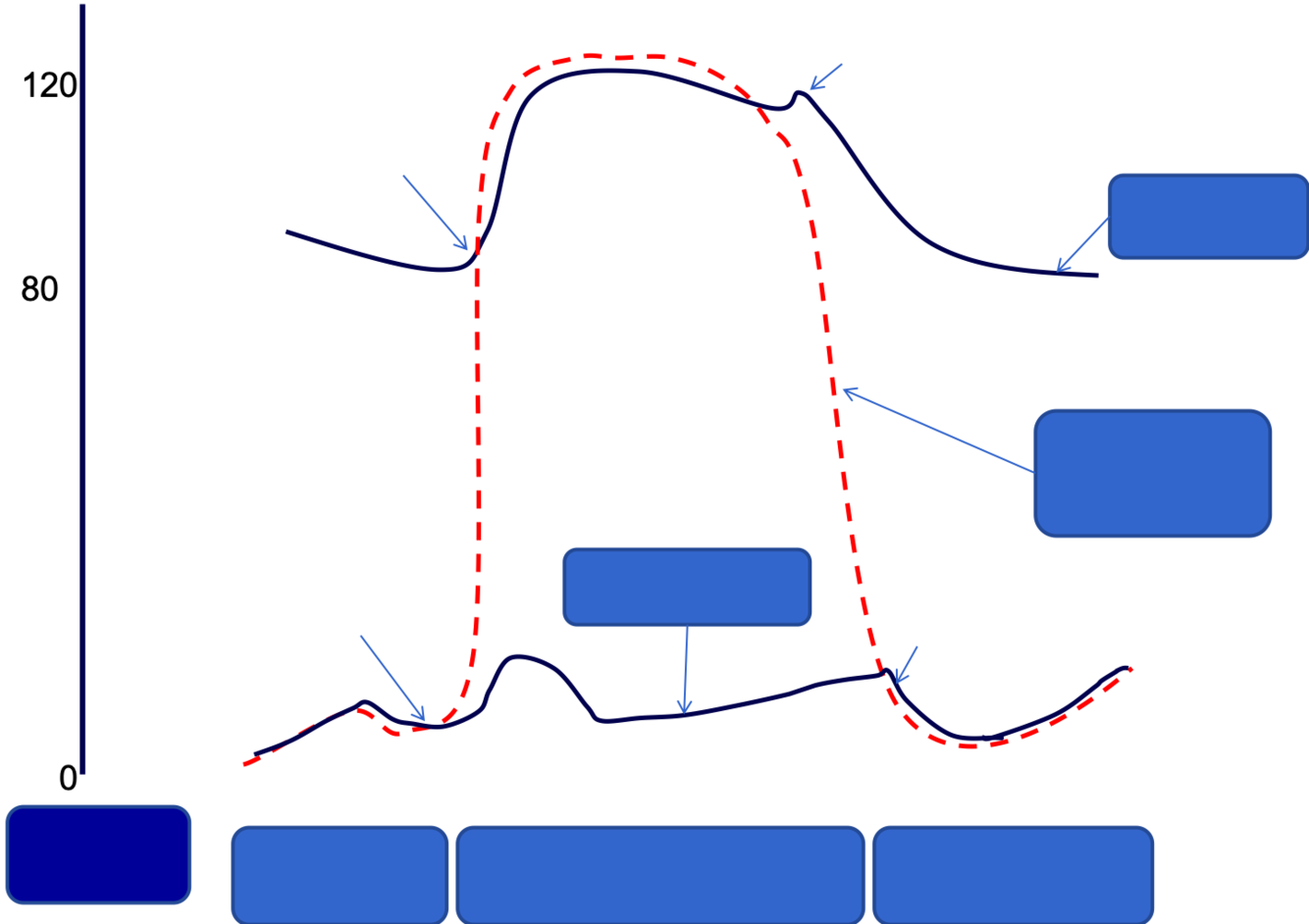
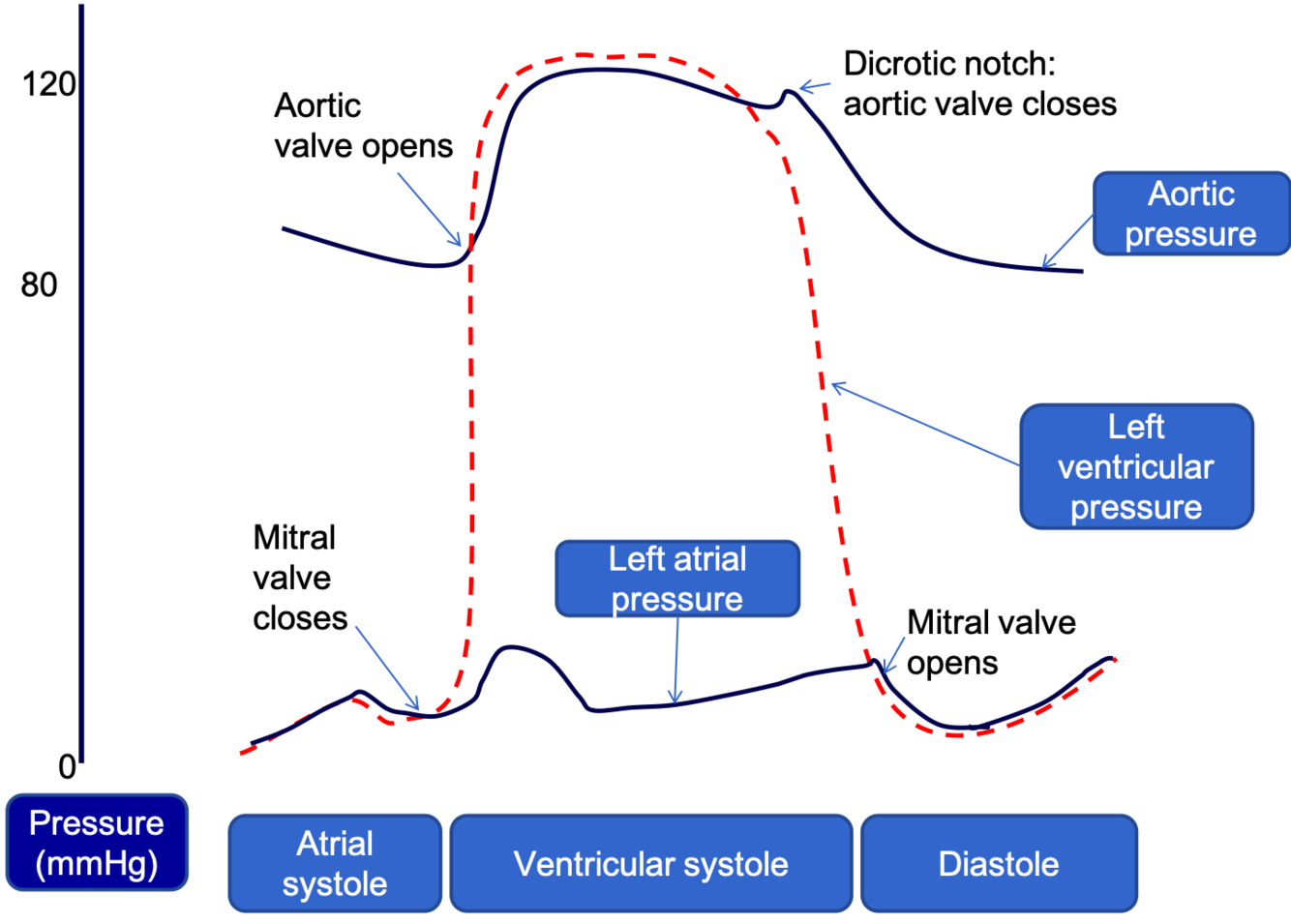
Label the diagram
How do you measure/regulate blood pressure?
BP = cardiac output x total peripheral resistance (TPR)
Use a sphgmomanometer (blood pressure machine) with auscultation (stethoscope)
Define essential hypertension
High blood pressure that doesn’t have a known secondary cause.
It has significant cardiovascular risk
It includes:
- obesity
- insulin resistance?
- excessive alcohol consumption
- genetics
- environment
- fetal programming?
- salt sensitivity
- age
- ethnicity
What is white coat hypertension?
Good evidence that stress of visiting GP can increase blood pressure leading to false diagnosis
What is isolated systolic hypertension?
When systolic blood pressure is higher than 130 but your diastolic blood pressure is under 80
Linked with aging (older people)
Aorta becomes stiffer - less recoil
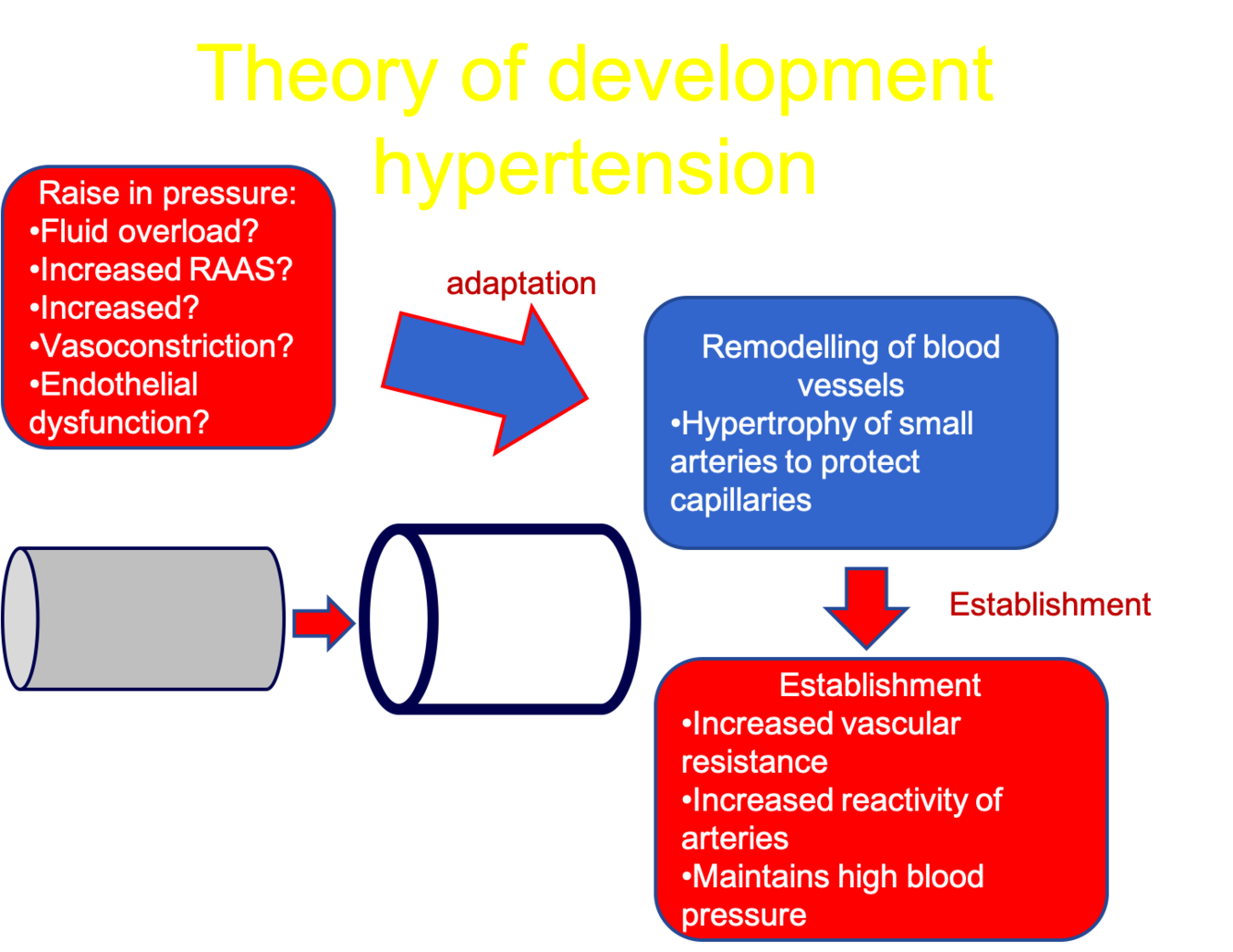
How does hypertension develop?
What are the causes of secondary hypertension?
Renal disease
Renovascular disease
Conn’s syndrome
Cushing’s syndrome
Hyperthyroidism
Phaeochromocytoma
Pregnancy
Drugs
State the consequences of essential hypertension
Risk of CVD doubles for every 20/10mmHg increase from 115/75mmHg
Left ventricular hypertrophy
Increased risk of myocardial infarction
Increased risk of stroke
Development of renal impairment
Development of chronic heart failure
Identify the goals of treatment for hypertension
A reduction in blood pressure and when this involves drug treatment, this should be with as few side effects as possible.
NICE treatment targets:
- SBP < 140mmHg (<130 mmHg in diabetes)
- DBP < 90mmHg (<80mmHg in diabetes).
Specific goals are:
- Reduction in cardiovascular damage.
- Preservation of renal function.
- Limitation or reversal of left ventricular hypertrophy.
- Prevention of IHD.
- Reduction in mortality due to stroke and MIs.




