Ograns of the immune system
- Tonsils are diffuse lymphoid tissue
- Lymph nodes protect lymph and contain lymphocytes and macrophages
- Spleen is the largest lymphoid organ; produces and stores immune cells; filters blood
- Gut-associated lymphoid tissue (GALT) is a diffuse lymphoid tissue
- Thymus produced T lymphocytes
- Bone marrow produces RBC
- Lympthatic vessels contain valves and have thin walls composed of smooth muscle and connectibe tissue; flexible to accommodate excess fluid
- The lymphatic system is a network of vessels that transport lymph, which contains excess fluid diffused into tissues from capillaries
- Lymph nodes are positioned along these vessels and filter the fluid transported via the system
Lacteal
A lacteal is a small lymphatic vessel found in a villus of the small intestine epithelium
- Plays major role in absorption of fats, which are first taken up by the lympathic system in the form of chylomicrons
3 lines of defense
- Physical barrier: skin, mucous, etc.
- Innate immunity: rapid, non-specific
- Macrophages, neurophils, mast cells, dendritic cells, NK cells, inflammation
- Aquired/specific immunity
- Lymphocytes (T & B cells)
B lymphocytes
B lymphocytes create and express antibodies (immunoglobulins) that have a high affinity for the antigen expressed by T cells
- B cells also stimulate the formation of memory cells
- Unlike T cells, B cells are produced and matured in the bone marrow
- Plasma and memory B cells
Innate immunity – inflammation
- Capillary permeability increases, allowing immune cells to access the infected sites
- Results in redness and swelling
- The infected area becomes warm
- The infected area is often painful due to swelling and presence of certain chemicals
- Function is to slow the spread of pathogens and mobilize local defense
- Fever are caused by pyrogens
Lysozyme
- Found in tears
- Catalyzes the breakdown of bacterial CW
- Part of innate response
Leukocyte
A leukocyte is a WBC, divied into:
- Monocyte
- Eosinophil
- Basophil
- Neutrophil
- Lymphocytes
Innate immunity – monocytes
Monocytes can differentiate into macrophages and dendritic cells
- Macrophages phagocytize (by phagocytosis) dead cells and pathogens
- If a pathogen is ingested, its antigens are then presented on the surface of the macrophage to stimulate other immune cells to mount a specific immune response to invading pathogen
- Spleen contains a very high number of macrophages
- Dendritic cells are focused on processing antigens and presenting them to other immune cells
- Found in areas of body where contact with external environment
Innate immunity – granulocytes
Granulocytes are attached to the site of injury, where they phagocytize antigens
- Neutrophils are the first responders to sites of inflammation
- Attracted to cytokines and attract more WBC once they arrive at the site of tissue damage
- Particularly adapted to attack bacteria; main component of pus
- The most abundant WBC (50-70%)
- Eosinophils are responsible for allergic and asthmatic responses
- Elevated eosinophils count indicates an allergic reponse or infection by a parasite
- Basophils and the related mast cells are involved in allergic response and parasite infections and the release of histamine
Granulocytes vs agranulocytes
- Granulocytes contain cytoplasmic granules, while agranulocytes do not
- Granules are small vesicles that contain enzymes and other cytotoxic substances
- Agranulocytes: monocytes, B and T lymphocytes
2 types of specific immunity
Cell-mediated and humoral immunity
- Humoral immunity involves antibodies (B cells)
- Cell-mediated immunity involves Tc cells
- It allows the destruction of body cells that have been marked for destruction after viral infection
T lymphocytes
Each T cells is reactive to only one random antigen type, presented by a major histocompatibility protein complex (MHC) (MHC I + MHC II) (glycoproteins on cell surface)
- In antigen presentation, MHC binds to antigens adn display them for T cells to recognize
- Most T cells undergo apoptosis (programmed cell death) bc either do not react with MHC or react too well and would attack self cells
- The ones that are not destroyed stay in circulation
- Cytotoxic (Tc) cells (killer) recognize and respond to antigen presented by MHC I complexes
- MHC I complexes come from cells infected with viruses or developing tumors and signal Tc cells to destroy those cells
- Contains CD8 surface protein
- Helper (TH) cells respond to antigens presented by MHC II complexes
- Releases cytokines to stimulate the immune response, causing WBC to mature and attack
- Chemically facilitate B cell and Tc cell activity
- Contains CD4 surface protein
- Natural killer (NTK) cells behave similarly to both Tc and TH cells but respond to antigens presented by other types of cells
- Once a reaction has occurred, memory T cells specific to the antigen are formed and remain in circulation for long periods of time
- Regulatory or suppressor (Treg) cells have counteracting effect that tones down the activation and continuation of immune responses
- T cell are formed in bone marrow and mature in the thymus, and then released into lymph
- Patients with AIDS have very low level of certain type of T cells
- HIV infects helper T cells
Role of MHC I receptor proteins
- MHC I receptors bind to normal proteins that are produced within the cells of the body
- When a cell becomes infected or cancerous, it triggers recognition as ‘non-self’ and can be marked for destruction by a T cell
- Antigens presented by MHC I are recognized only by Tc cells that contain the CD8 surface protein
- They are present on every body cell, except for those that do not contain nuclei (RBC)
Role of MHC II receptor proteins
- MHC II receptors bind to foreign antigens that have been broken down by phagocytosis
- When fragments of these antigens are presented on immune cells, helper T cells recognize a threat and can activate other immune responses
- Antigens presented by MHC II are recognized only by helper T cells that contain the CD4 surface protein
Antibody vs antigen
Antigens are attacked
by the attacking antibodies
Antibodies
- Variability of Fab fragments’ shape make immunity possible
- The Fab regions (two arms) are antigen-binding sites that offer the antibody’s specificity
- The Fc region the Ig class of the antibody
- When an antibody binds an antigen, it signals via the Fc chain
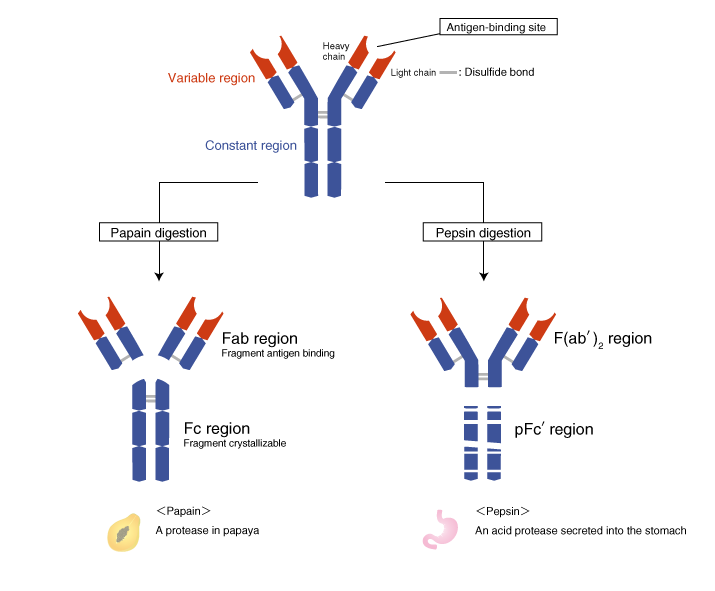
3 ways antibodies facilitate the destruction of pathogens
- Antibodies activate the complement system, a protein cascade that promotes immune function
- In agglutination, antibodies bind to antigens on an invading cell’s surface; limits the pathogen’s movement
- Antibodies perform opsonization, which alters phagocytes to engulf the pathogen; marks pathogen using opsonin
(Antibodies do not directly kill pathogens, they mark them)
Interferons
Interferons is a subtype of cytokines, associated with viral infection
- But can also be activated by bacterial infection or cancerous growth
Some autoimmune diseases
- Lupus: immune system attacks a variety of body tissues; produces anti-nuclear antibodies
- Psoriasis: immune system attacks the skin
- Rheumatoid arthritis: immune system attacks joints
- Grave’s disease: attacks the thyroid
Leukocyte extravasation
Leukocyte extravasation is the movement of WBC out of the circulatory system and towards the site of tissue damage or infection
Type of aquired immunity
Acquired (= Adaptive) Immunity is of two types: active immunity and passive immunity.
Active Immunity
In this immunity person’s own cells produce antibodies in response to infection or vaccination (self-produced antibodies)
- Natural: recovered from infection
- Artifical: produces antibodies in repsonse to vaccine
Passive Immunity
When ready-made antibodies are directly injected into a person to protect the body against foreign agents (antibodies from another source)
- Natural: antibodies from mother to baby
- Artificial: antibodies from another human/animal
Primary vs secondary immune response
Primary
- Exposure to antigen triggers clonal expansion and immune response
- B cells secrete antigens
- Can take 14 days or longer
Secondary
- When memory cells are exposed to the appopriate antigen, the clone expands more rapidly to create additional effector and memory cells
- Can eliminate a pathogen in less than a day
The integumentary system
- Sebaceous glands in the skin secrete sebum on surface to keep its pH relatively acidic to decrease bacteria growth and prevent skin from drying
- Sweat contains enzymes that help destory bacteria
- Skin is divided into the dermis and the epidermis, which are connected by the basement membranes
- Sudoriferous gland: sweat gland
- Ceruminous gland: specialized sweat gland that produces earwaxx




