what is inflammation? what is its purpose?
response to injury of vascularised living tissue. to deliver defensive materials to the injury site
what leads to edema during inflammation
-arteriolar dilatation leads to increase in hydrostatic p. - increased permeability of vessel walls leads to loss of protein into interstitium
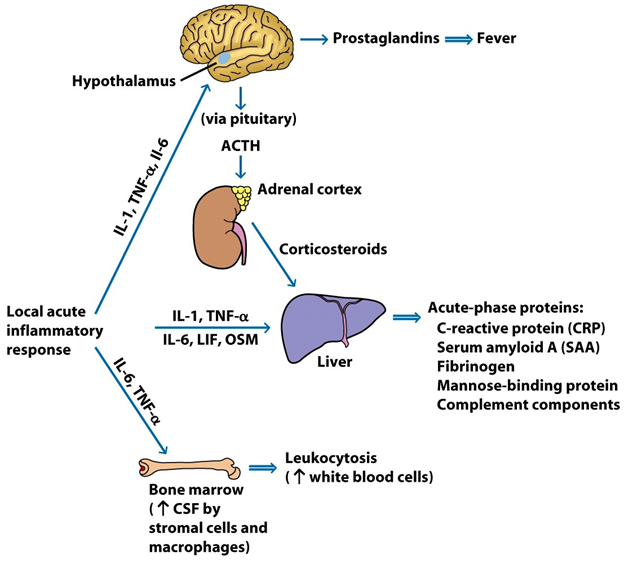
why is there ‘leucocytosis’ in acute inflammation?
macrophages and injured tissues produce ‘colony stimulating factors’ that stimulate the bone marrow to produce more neutrophils.
What is the role of histimine in inflammation?
-vasodiolater -causes pain -venular leakage (increased permeability, causes blood endothlaila cells to contract and pull apart forming gap where PP cam pass)
how does the neutrophils do their job of phagocytosing?
contact, Recognition, Internalisation
What r the chemical mediators of inflammation?
*Proteases (pp made by liver)
*Cytokines / chemokines
*Prostaglandins / Leukotrienes
*vasoactive amines ex: hist & seratonin 
Give 4 complications of gall stones (cholelithiasis) &; explain why they occur?
Kk
normally, the endothelium of the capillaries & venues act as a semi-permeable membrane. what does this mean?
it allows some escape of water and some electrolytes, but keeps the PP in!
Describe the changes in blood flow and blood vessels during inflamm.
- vasoconstriction (few secs)
- vasodilation of arterioles causing increase in Bf in capillaries and high P. 😱
- venules become more permeable (leaky), allows exudate to go in the tissues (Leaves blood)
- circulating blood becomes more viscous>> slows circulation (swelling)
What is pyrexia?
fever
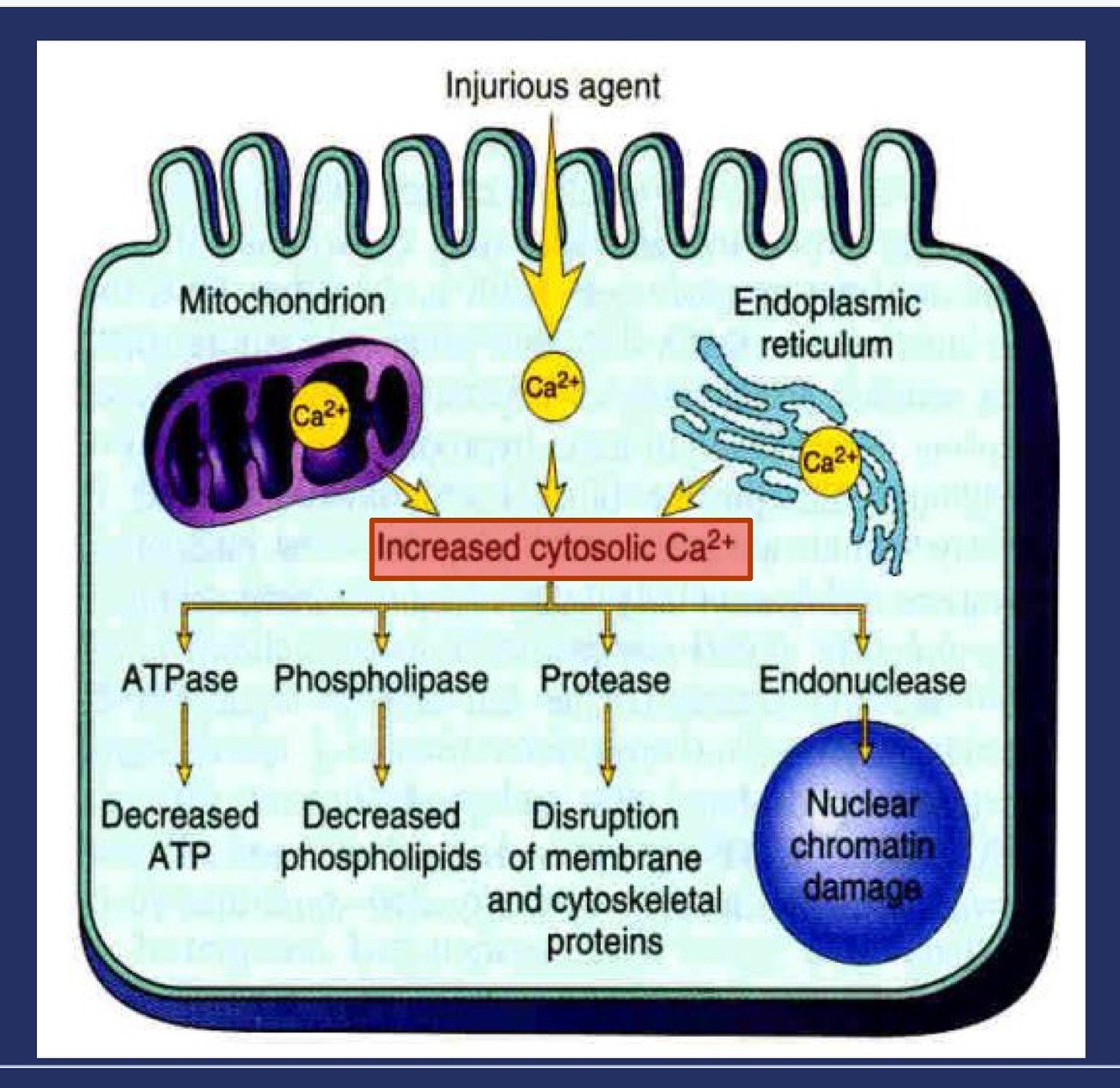
What do ca 2+ In the cell target?
Atpase Phospholipase Protease Endonuclease
what causes the sense of ‘heat’ and erythema at the area of inflammation?
vasodilation of the vessels, therefore increasing BF
mechanism of resolution in acute inflammation
– Mediators r short lived & r degraded
– Exudate drains to lymphatics
– Fibrin is degraded by plasmin and other proteases
– Neutrophils apoptose, break up & phagocytosed
– Damaged tissue might be able to regenerate.
What is anaphalyxis?
a serious, life-threatening allergic reaction
what is the link btw gallstones and hepatic abscess?
m
Another important mediator is derived from arachidonic acid. Name it
Prostaglandin
how does the lymphatic system play a role during inflammation?
during lymphatic drainage, lymphs delivers micro-organims to phagocytes and antigens to immune system
Systemic Effects of Acute Inflammation (4)
- Fever
- Leukocytosis
- Acute phase response 
- Shock
what is the acute phase response? how is it triggered
Decreased appetite, raised pulse rate, altered sleep patterns
• Acute phase repsonse is changes in patterns of protein synthesis. ( occurs w/ in hours of injury)
-triggered via cytokines released during inflammation
What r the roles of selectin and integrins when neutrophils bind to them
selectins>> produces ROLLING of neutrophils integrins>> makes them STOP and adhere
why is exudation of fluid important?
Delivers pp to injury, Immunoglobulins, mediators, Fibrinogen Dilutes toxins Increases lymphatic drainage 
In acute inflammation, what changes occur in the tissues?
- change in blood flow
- exudation of fluid into tissue
- infiltration of inflammatory cells
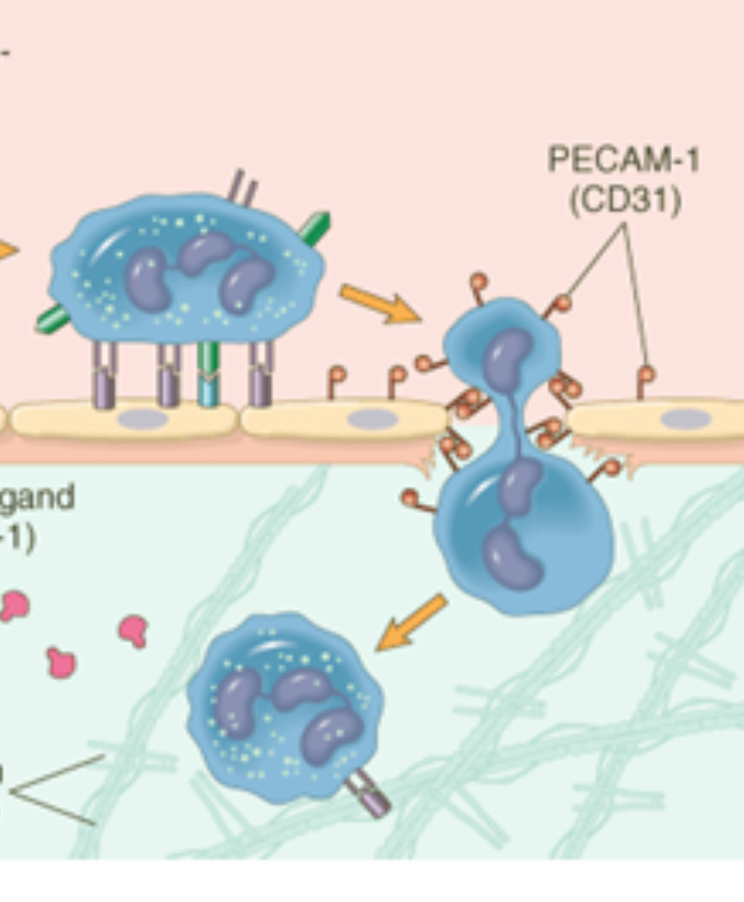
how do neutrophils escape from blood vessels? how long does this take?
they don’t use the gaps that exudate was released from, via Pcam, they transmigrate the endothelium and then produce collagenases that digest (dig) the basement membrane and they enter the tissue.
3-9 mins
DIAPEDISIS
what is exudate? transudate? edema?
ex= extracellular fluid that has HIGH protein content Trans= extracellular fluid that has LOW protein content EDEMA= excess of fluid in the interstitiam, can be exudate or transaudate.


-
12
-
Cell Injury92
-
Inflammation84
-
Inflammation 248
-
Healing And Repair63
-
Pathalogical Diseases106
-
Hemostasis & coagulation51
-
Theombosis And Embolism41
-
Cellular adaptation76
-
Bleeding Disorders24
-
Atherosclerosis46
-
Neoplasia 1 &273
-
Pathology disorders7
-
Inflammatory Bowel disease30
-
Neoplasia clinical qs28
-
Neoplasia 320



