What are the goals of inflammation?
- Eliminate initial cause of cell injury
- Remove necrotic cells/tissue
- Initiate process of repair
What are 2 components of the inflam process?
WBCs and plasma proteins
What is inflammation induced by?
Chemical mediators produced by damaged host cells (i.e. cytokines)
T or F: Inflamm is normally controlled and self-limited
True
What does inappropriate inflamm response when there are no foreign substances to fight off lead to?
Autoimmunity
What are the 5 cardinal signs of inflamm?
- Heat (calor)
- Redness (rubor)
- Swelling (tumor)
- Pain (dolor)
- Loss of function
What cells are involved in inflamm?
- Platelets
- Granulocytes (PMNs, Mast)
- Monocyte/Macrophages
- Lymphocytes
- Fibroblasts
What proteins are involved in inflamm?
- Complement
- Pentraxins
- MBL
- Ficolins
- Coagulation
- Kininogens
- Proteoglycans
What are granulocytes?
Phagocytes (PMN - polymorphonucleaur leukocytes)
- Basophil
- Eosinophil
- Neutrophil
- Mast cells
What are monocytes?
- Longer-lived phagocytes
- Present pieces of pathogens to T cells -> recognized in future and killed
- Leave bloodstream -> macrophages (which remove dead cell debris and attack microbes)
What are lymphocytes?
Produce cytokines, bind antigens of infected/tumor cells and kill them
- B cells
- T cells
- NK cells
What are mast cells?
- Contains granules full of histamine
- Most commonly known for role in allergy
- Involved in defense of pathogens
- Live in tissue
What comprises the cellular infiltrate in acute inflamm vs. chronic?
Acute = mainly neutrophils
Chronic = monocytes/macrophages/lymphocytets
What can trigger an acute inflamm rxn?
- Infections (bacterial, viral, fungal, parasitic) and microbial toxins
- Tissue necrosis: ischemia, trauma, physical/chemical injury (thermal injury, irradiation, some envir chemicals)
- Foreign bodies (splinters, dirt, sutures)
- Immune rxns (aka hypersensitivity rxns)
What are the 2 major components of acute inflamm?
- Vascular changes
- Cellular events
What vascular changes occur in acute inflamm?
- Vasodilation
- Vascular permeability
- Increased adhesion of WBCs
What cellular events occur in acute inflamm?
Cellular recruitment and activation of NEUTROPHILS
What causes vasodilation in acute inflamm? What results from vasodilation?
- NO, histamine -> vascular smooth muscle vasodilation
- Decreases BP; Increases blood flow -> heat/redness
- Microvasculature becomes more permeable -> protein-rich fluid into extravascular tissues -> RBCs in flowing blood more concentrated -> stasis (hyperviscosity, slows blood flow)
- Margination of circulating leukocytes and endothelial activation
What causes changes in vessel permeability in acute inflamm?
Histamines, bradykinins, leukotrienes cause endothelial cell contraction that widens intercellular gaps of venules
What forms as a result of increased permeability of the vasculature in acute inflamm?
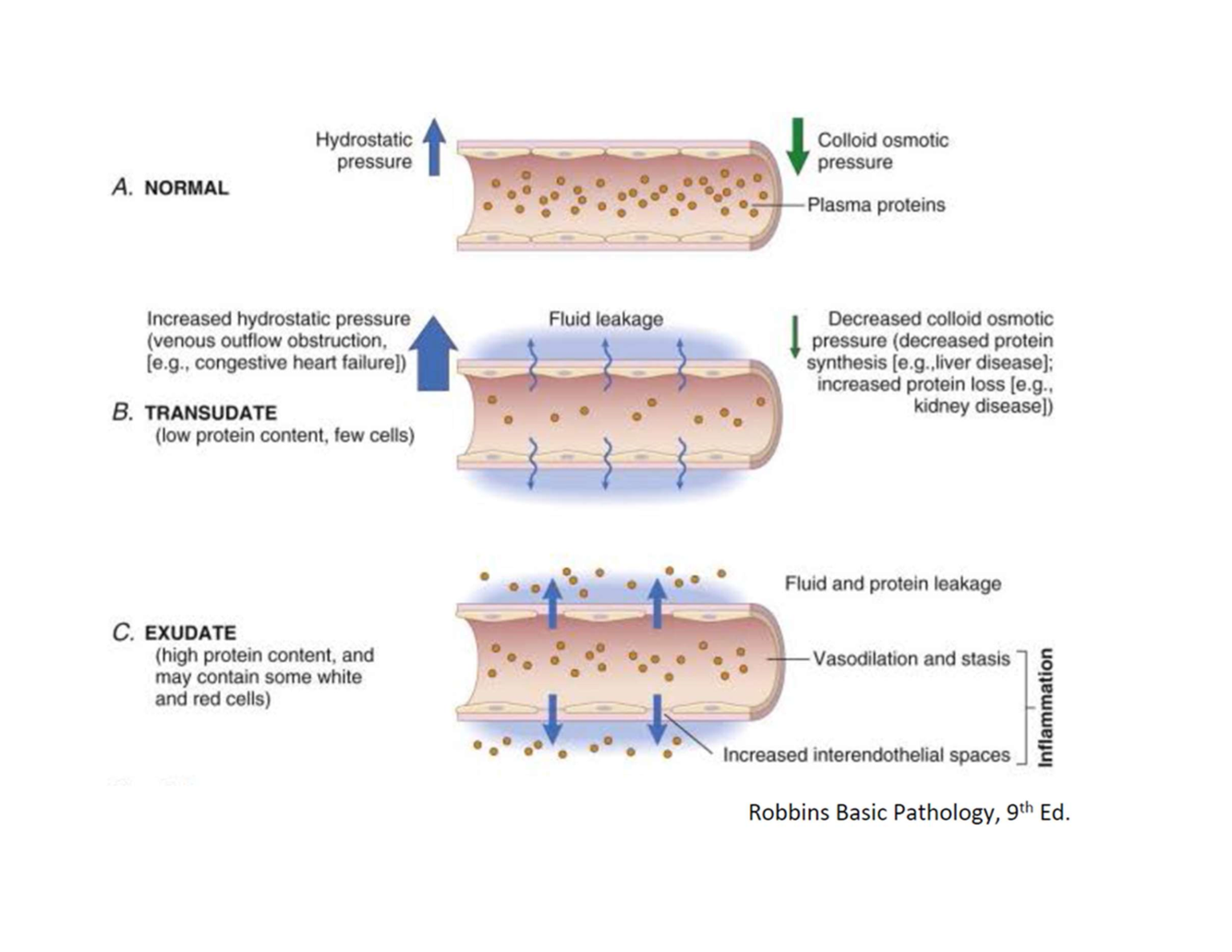
An early transudate (protein-poor filtrate of plasma) gives way to exudate (protein-rich filtrate) into extracellular tissues, which leads to:
- Reduction of intravascular osmotic pressure
- Increase in extravascular/interstitial osmotic pressure
- EDEMA (water + ions)
Why is an exudate formed instead of a transudate in acute inflamm?
Vascular permeability increases as a result of increase in interendothelial spaces
-Transudates are interstitial fluid accumulations caused by increased hydrostatic pressure (usually b/c of reduced venous return)
Through what sequence of events do leukocytes leave the vasculature in acute inflamm?
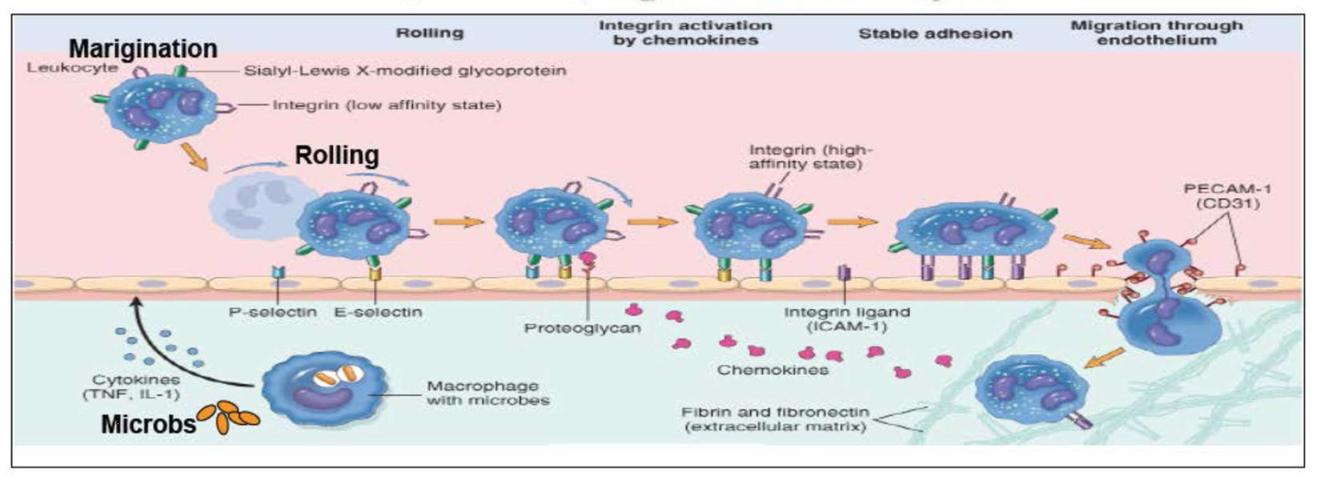
- Margination and rolling
- Activation and adhesion
- Transmigration
What happens in “margination and rolling” during acute inflamm?
- Fluid (exudate) leaves the vessel -> leukocytes “marginate” along endothelial surface
- In the process of “rolling” inidividual and then rows of leukocytes tumble slowly along the endothelium, adhere through surface adhesion molecules on endothelial cells and their complementary ligands on leukocytes
What is “adhesion” in acute inflam mediated by?
Selectin family (adhesion molecules)
- E-selectin (endothelium)
- P-selectin (platelets, endothelium)
- L-selectin (leukocytes)