Interview
What are five different types of interviews?
_________________________________
Which of these three interviews are we required to know about in the IB?

- Structured
- Semi-structured
- Unstructured
- Focus group
- Narrative
________________________
- Semi-structured
- Focus group
- Narrative
Interview
What is a semi-structured interview?

- A semi-structured interview is a face-to-face interview between an interviewer and a respondent.
- It is a combination between a structured and unstructured interview.
- It has a list of themes to discuss, and it is possible to add questions during the interview.
- There are both closed and open-ended questions.
- It is non-directive (the interviewer refrains from interpretation or explanation of what the respondent is saying).
Interview
What are the strengths and limitations of semi-structured interviews?

Strengths:
- Fairly flexible, sensitive and valid.
- A “natural”conversation is attempted, thought there is a with pre-set list of topics.
- Allows more interaction. Enables the interviewee to bring to light and consider their own feelings and concerns in their own terms.
- Natural conversation produces richness
- Interview questions can be adapted to context and supplimentary quasteions can allow the interview to exploration & identificatify themes
- Allows gathering of idiographic data in response to individual responses of the respondent.
- Fairly reliable and easy to analyse
Limitations:
- Flexibility, phrasing and timing can lead to low reliability. It is not fully conversational
- Questions should be piloted
- Important topics can be missed because it is somewhat structured
- Requires thoroughly trained interviewers
- Open-ended answers are more tricky to analyse
- Researcher’s theoretical beliefs can influence questions and interpretations (bias)
Interview
What can be some interpersonal variables in an interview, and what are their effects?
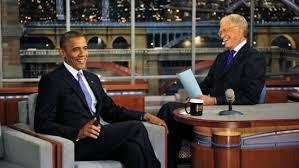
Evaluative cues – The interviewer may give critical reactions or reactions of approval. The respondent may search for these cues because they want to be a ’good’ participant. The interviewer needs to avoid reacting in ways that could interfere with the answers.
Gender – People respond more positively to interviewers of the opposite sex. (E.g. Californian Latino men reported having fewer sexual encounters and partners to female rather then male interviewers)
Ethnicity – Respondents who have a different ethnic group than the the interviewer react more formally. Interviewers rate respondents more positively if they are from the same ethnic group.
Formal roles – The interviewer, however relaxed, is an important figure to most respondents. The interview is not considerd to be a conversation between two equals, and because of this the respondent might alter their behaviour. They may change their language to be more formal, or change answers etc.
Personality –The ’chemistry’ between the two people may affect the outcome of the interview.
Interview
What are the characteristics of a focus group interview?

- A focus group interview is where a group of respondents discuss together their ideas, beliefes, feelings, etc. towards a particular topic in an interactive way.
- Normally, open-ended questions are used to encourages exploration and enable respondents to speak more freely
- There are normally 6-9 people. If more then it would be difficult for everyone to comment on and contribute to discussion
- They often have common socio-characteristics that are relevant to the topic of investigation, Thus purposive sampling is suitable.
- The goal is to allow them to interact just as they would if they were outside of the research context
- They should use everyday interpersonal communication patterns e.g. arguments and jokes
- The researcher is the facilitator, whos role is to direct the group, direct the timing of the discussion, and identify agreements/disagreements.
Interview
What are the strengths and limitations of a focus group interview?
Strengths:
- It is a quick and convenient way to collect data from several individuals simultaneously
- It is in a natural setting where the participants are encoraged to speak normally about the topic, this is has a higher ecological validity.
- It gains info. about WHAT, HOW, AND WHY the participants think. E.g by identifying the words they use, their cultural values, and group norms.
- Ideas are generated through group conversation which further increases depth.
- It captures turn-taking (who’s turn is it to speak next) and dynamics within a group.
_Limitations: _
- Sampling is a limit. because the group is homogeneous, and can’t be generalised to other groups.
- It is not appropriate for all research questions, such as sensitive issues, since people do not tend to speak openly about such things
- Some participants may contribute more than others Group dynamics leads to conformity, which causes issues with truthfulness of the data
- It is not replicable since the findings are of the unique perspective of the individuals participation.
- There can be demand characteristics that make the participants change their answer to what they think the experimenter wants them to say
- There may be ethical issues if people are confined to prisons or homes.
- Confidentiality can be a problem between participants when interacting in a group situation.
- There may be ethical issues if the participants know each other (anonymity)
Interview
What are the characteristics of a narrative interview?
- It is an unstructured, in-depth interview that uses story telling and listening with no pre-structured questions
- The purpose of a narrative interviews is to see how a person imposes social order through talk and interaction. It is used to obtain the stories people employ to interpret their lives and the world around them. It is the way that people organize and make connections between events that are of interest to the narrative interviewer.
- The interview is a mix of fact and interpritation from the respondent
- It can identify how the individual relates to culture and historical context e.g. what women and cannot do
- The length can be no more than 90 minutes at a time, which must be stated before hand. If more time required then the sessions can be broken up into two or three (interviews of this length yield approximately 23-30 pages of text).
Interview
What are the strengths and limitations of a narrative interview?
_Strengths: _
- There is little to no researcher bias
- Permits full exploration of ideas and beliefs, is a more valid account of social life
- It is a valuable means of exploring in depth how people construct their lives and experiences
- Participant feels relaxed (ethical) which allows them to speak freely without responding to a specific set of questions.
- Conversational interview is highly individualized and relevant to the individual.
- It can be used with all people (according to some, but not according to Marianne) because they can use everyday language and talk freely
_Limitations: _
- It renders an enormous amount of data, and the transcription is time-consuming
- Interviewers can repress narrative techniques by interrupting the respondent
- Requires an interviewer knowledgeable and experienced in the content area and strong in interpersonal skills (active listening and asking the right questions)
- Since different information is collected from different people, this kind of interview is not systematic or comprehensive, and it can be very difficult and time-consuming to analyse the data
Interview
What are the considerations one must take into account before conduction an interview
- The aim
- Sampling methods – pick one which is appropriate to the aim
- Choice of interviewer – Consider age, gender and ethnicity of interviewer and how it may affect interviewee
- Training of the interviewer Interview guide/schedule/script –Type of questions (open-ended, closed etc.) Design follow up questions. Conduct pilot questions.
- Data recording – Audio (recorder), Visual (video) or Written (notes)?
- Transcription of data – Traditional (word by word) or Postmodern (e.g. body language, pauses, interruptions, intonation, volume and pitch of speech)?
- Briefing
- Ethical considerations – Explain reason for interview to participants (informed consent)
Interview
What are the considerations one must take into account during an interview
- Report
- Participant expectations and researcher bias
- Ethical considerations – The right of the participant to withdraw at any time.
Interview
What are the considerations one must take into account after an interview
- **Transcription – **Traditional (word by word) or Postmodern (e.g. body language, pauses, interruptions, intonation, volume and pitch of speech)
- Ethical considerations – Confidentiality and anonymity of participants. If the participant is emotionally disturbed they should be offerd the chance to speak to a professional. Participants may be sent a report of research findings that arise from the investigation where they can make amendments, delete or add to the transcript. Participants may also participate in the research process in a consultative manner.
- Reflexivity
- Credibility
- Debriefing
What are the 4 kinds of questions an interviewer can ask?
- Descriptive questions -“what happened? “ “what does it feel like to…”
- Structural questions -“what does it mean to your life to suffer from aids AIDS?”
- Contrast questions -“did you prefer being in that school or the other one?”
- Evaluative questions - “Did you feel afraid when you had the HIV test?”
What are the strengths and limitations of audio and/or video-recording and taking notes
Audio and/or video-recording
Strengths:
- free to converse,
- can be transcribed at leisure
- gestures etc recorded
**Limitations: **
- Electronics can make the participants uncomfortable
Note taking
Strengths:
- It may be less stressful than being recorded
- Can be transcribed at leisure
**Limitations: **
- Not taking can be distracting for the respondent
- Interviewer is multi-tasking – demanding. and note taking can be slow
- Interferes with eye-contact and non-verbal communication
What is the difference between traditional and postmodern transcription?
_Traditional Transcription (verbatim) _
A type of transcription that records the interview word by word. It is generally enough for thematic analysis.
_Postmodern transcription _
A type of transcription that also record other element in the interview other that the conversation. (pauses, interruption, intonation, volume of speech, incomplete sentences, false starts, and laughter)
Describe grounded theory in inductive content analysis (thematic analysis) and how is it used on interview transcripts?
It is used when one is trying to develop a theory from qualitative data. It enables researches to study social processes.
It is the identification of key themes, concepts, and catagories in qualitative data. Themes are recurrent ideas or topics. The same theme can be described using different words, it can emerge in different contexts, or be raised by different people. Coding is used to find specific categories. Low-level categories emerge, and as the coding process continues, higher-level categories emerge. This way of analysing data identifies and intigrates categories of meaning, with the aim of developing a new theory based on the data.
Describe interpretaive phenomenological analysis (IPA) in inductive content analysis (thematic analysis) and how is it used on interview transcripts?
IPAs allow researches to gain an insider’s view of how individual participants make sense of the world, and how they percive and explain a phenomenom.
IPA works with transcripts of semi-structured interviews.
Stage 1: Reading or re-reading of transcripts, noting items of interest that could be useful for analysis, e.g. language use, key phrases, preliminary interpretations, connections, contradictions, language use, summary statements etc. These are not themes in their final form
Stage 2: I dentification of emergen themes. These themes are assumed to capture something essential about the text.
Stage 3: Structuring emergent themes by seeing if they relate to each other in clusters, hierarchies. Themes are rejected and and selected. Clusters are given labels that capture the essence of the new theme. They can be titles like “the families perception of friends”. They can be catigorized into high-order themes and subordinate themes. They should be read and re-read.
Stage 4: Summery table of the structured themes and the relevant quotations that illustrates each theme. It should have the name and definition of the theme, and supporting data and examples from the transcripts




