Why does the membrane potential exist?
Give an example of some common membrane potentials and their concentration inside and outside cells
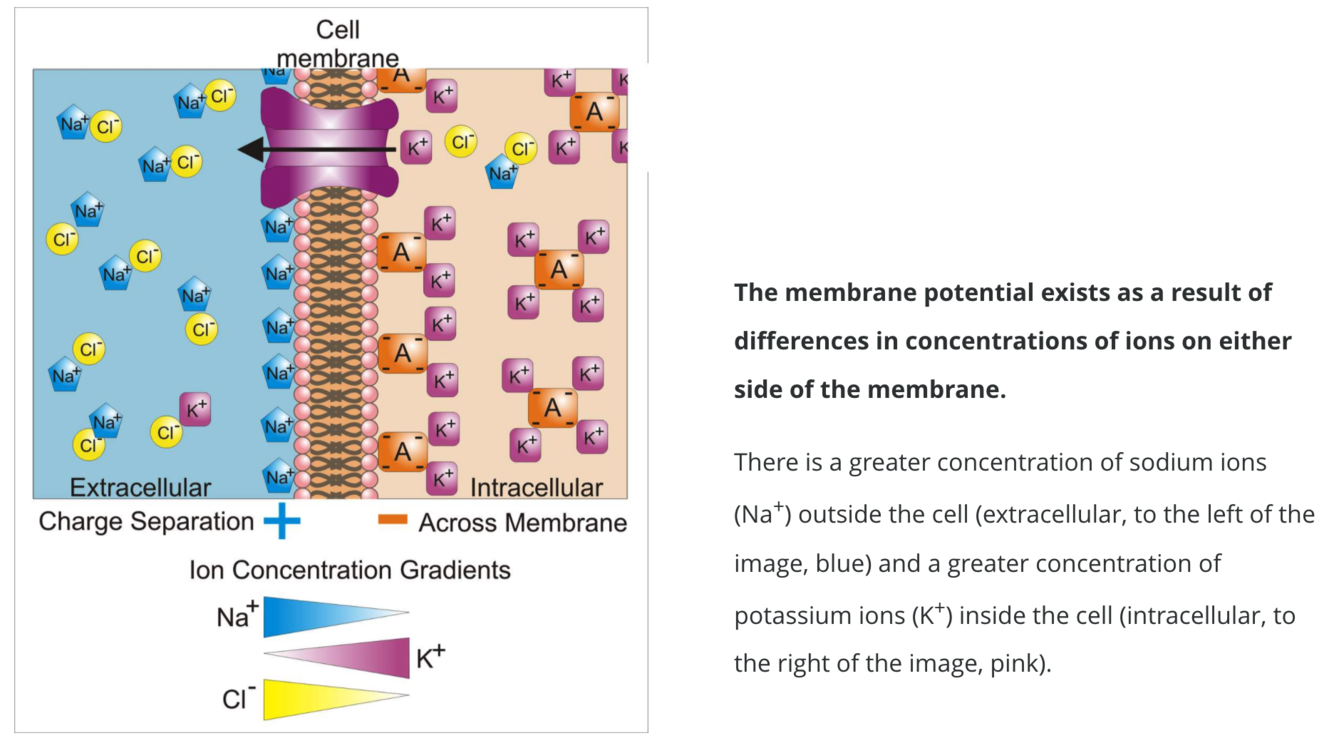
- the membrane potential exists due to the differences in concentration of ions on either side of the membrane
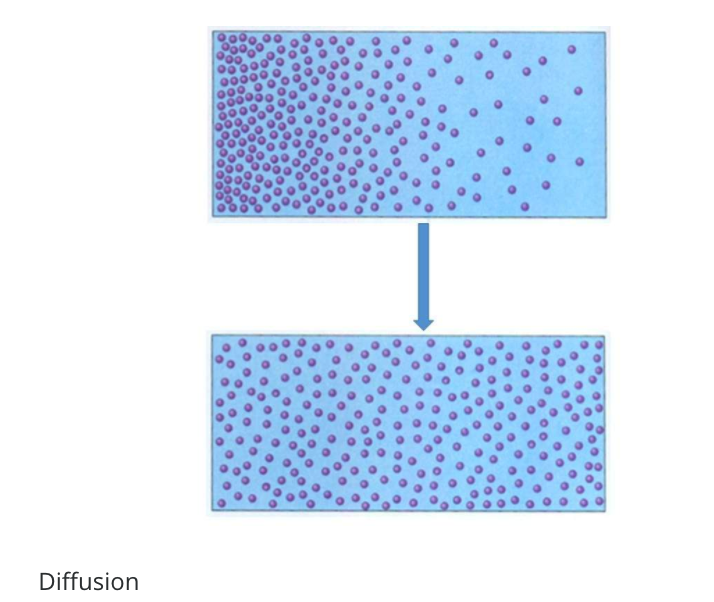
Define diffusion
- the movement of molecules (or ions) down their concentration gradient until equilibrium is achieved
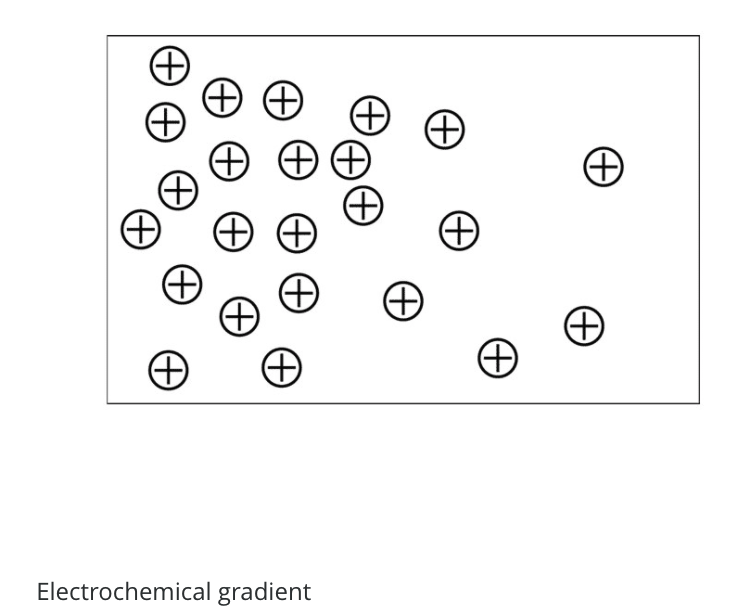
Define the electrochemical gradient
- an electrochemical gradient shows an electrochemical potential difference
- allowing an ion to move across a membrane
- comprises of two parts:
- the chemical gradient: difference in concentration across the membrane
- the electrical gradient: difference in charge across a membrane
How do neuronal membranes allow ions to diffuse across the membrane?
- neuronal membranes contain channels
Describe the properties of membrane channels
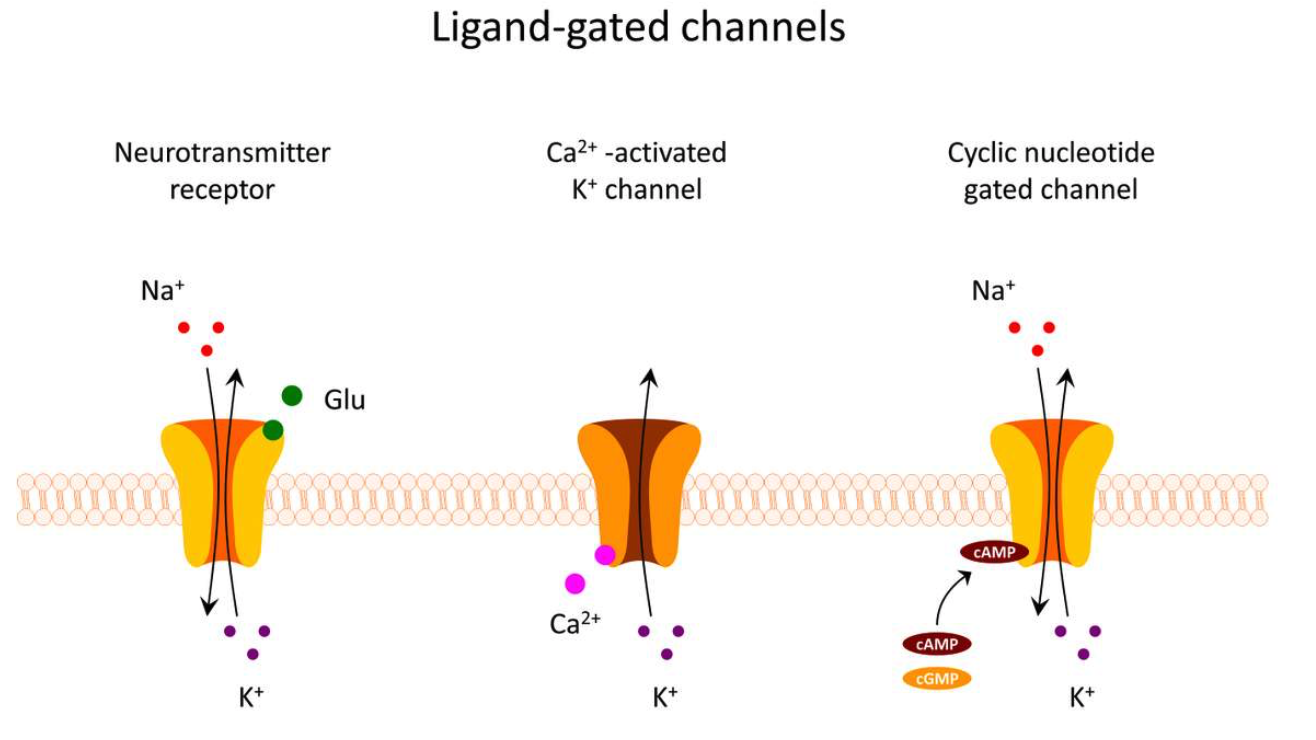
Describe the different types of membrane channels
Look at images
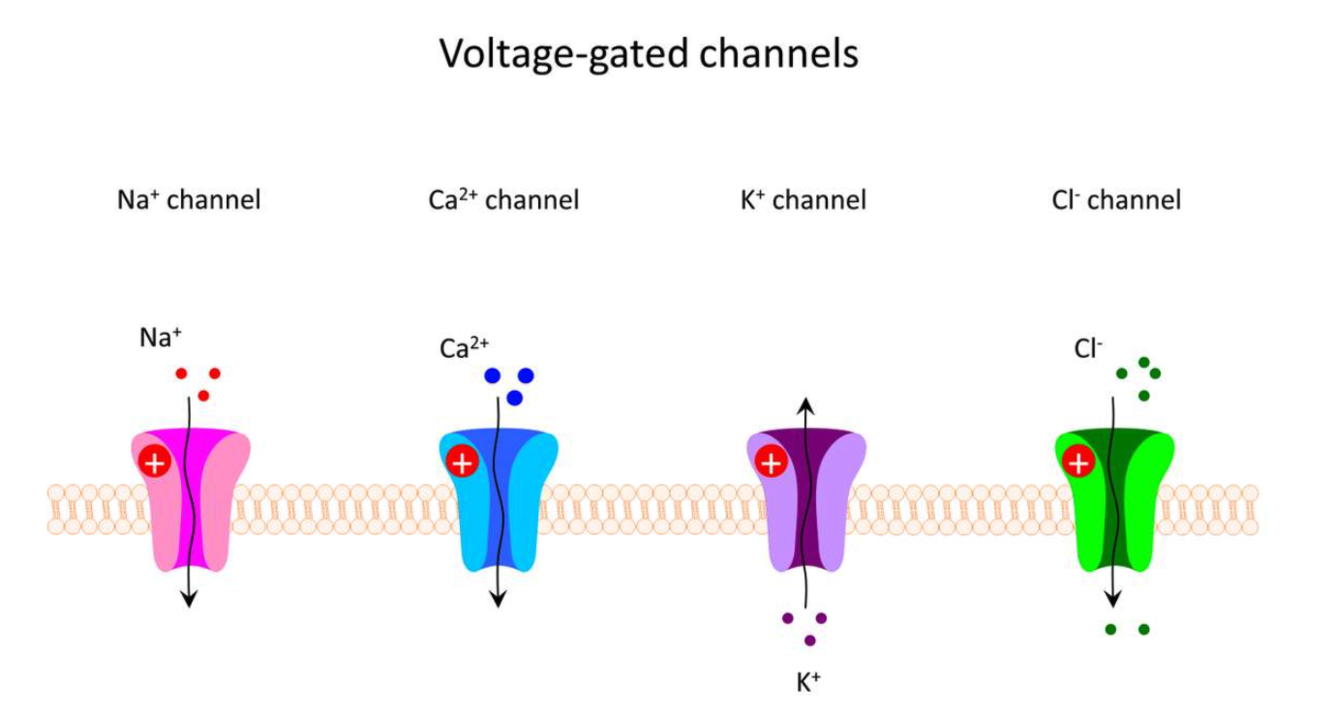
- channels are proteins embedded in the neuronal membranes that are selectively permeable to one ion
- they allow passive diffusion of ions down their electrochemical gradient
- no energy is required
- two types:
1. voltage-gated: open in response to changes in the membrane potential
2. ligand-gated: open in response to binding of a chemical messenger or ligand
What is the action potential and when and where can they be produced?
- the action potential is a specialised potential
- it can be produced in the neurons when the membrane potential reaches a certain level
- which is called the threshold potential
What is the equilibrium potential?
- when the diffusion potential (or driving force) balances or opposes the tendency of ions to move down their concentration gradients
- the movement of ions across the membrane creates a diffusion potential
- each potential is unique to each ion and is determined by a set of ion concentrations on either side of the membrane
Describe the general principle of the equilibrium potential for potassium (K+)
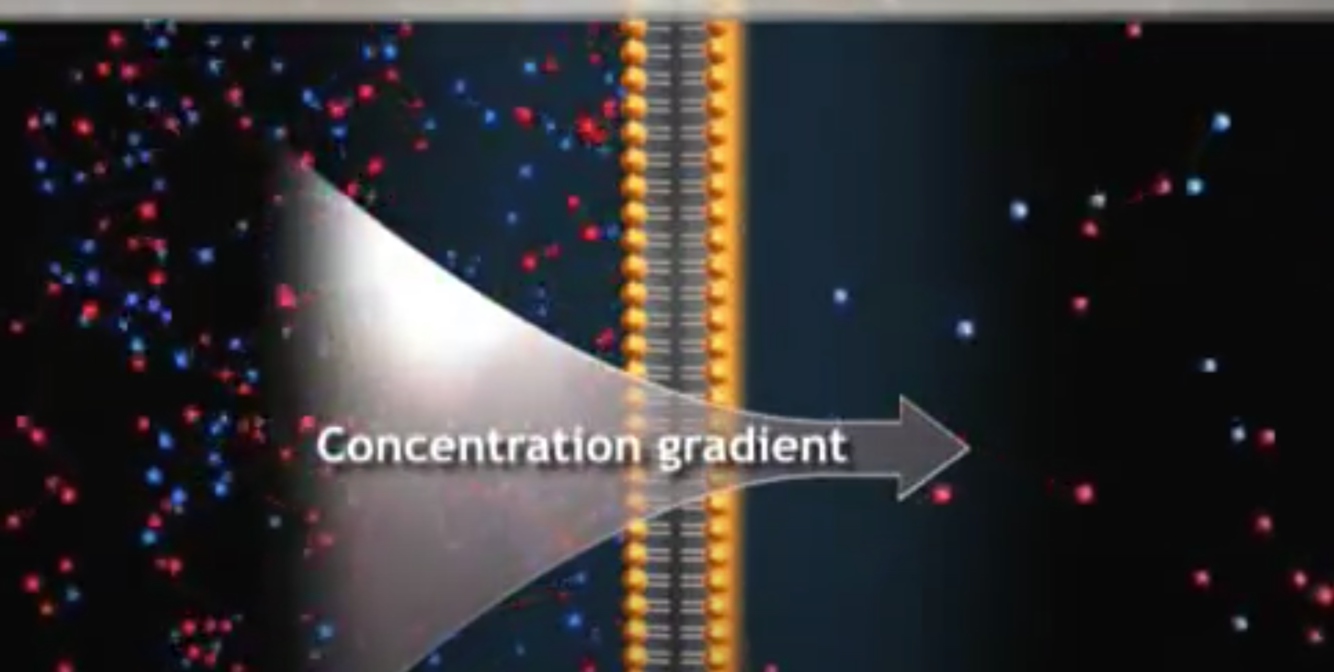
- there are two compartments, inside and outside, (check image) with sodium and potassium ions and a concentration gradient
- if a potassium channel is added, the potassium ions will be diffuse down the concentration gradient and move outside the cell
- a net negative charge develops inside the cell
- initially, the net force is diffusion down the concentration gradient, but as the inside fluid becomes more negative, the positive potassium ions are pulled back in by electrical force
- eventually the electrical force counterblances the diffusion force
- this is the equilibrium potential
- electrical and diffusion forces are equal and opposite
- no net movement of potassium ions into the channel
- the charge difference between the two sides is the equilibrium potential and for potassium, it is approx -80mV
What is the resting potential?
-70mV (negative)
List the five phases of the action potential
- how long does this take?
- Rising phase
- Peak phase
- Falling phase
- Hyperpolarisation
- Refractory period
- this whole process is rapid and takes around 4ms
Describe how an action potential is generated, using Na+ as an example
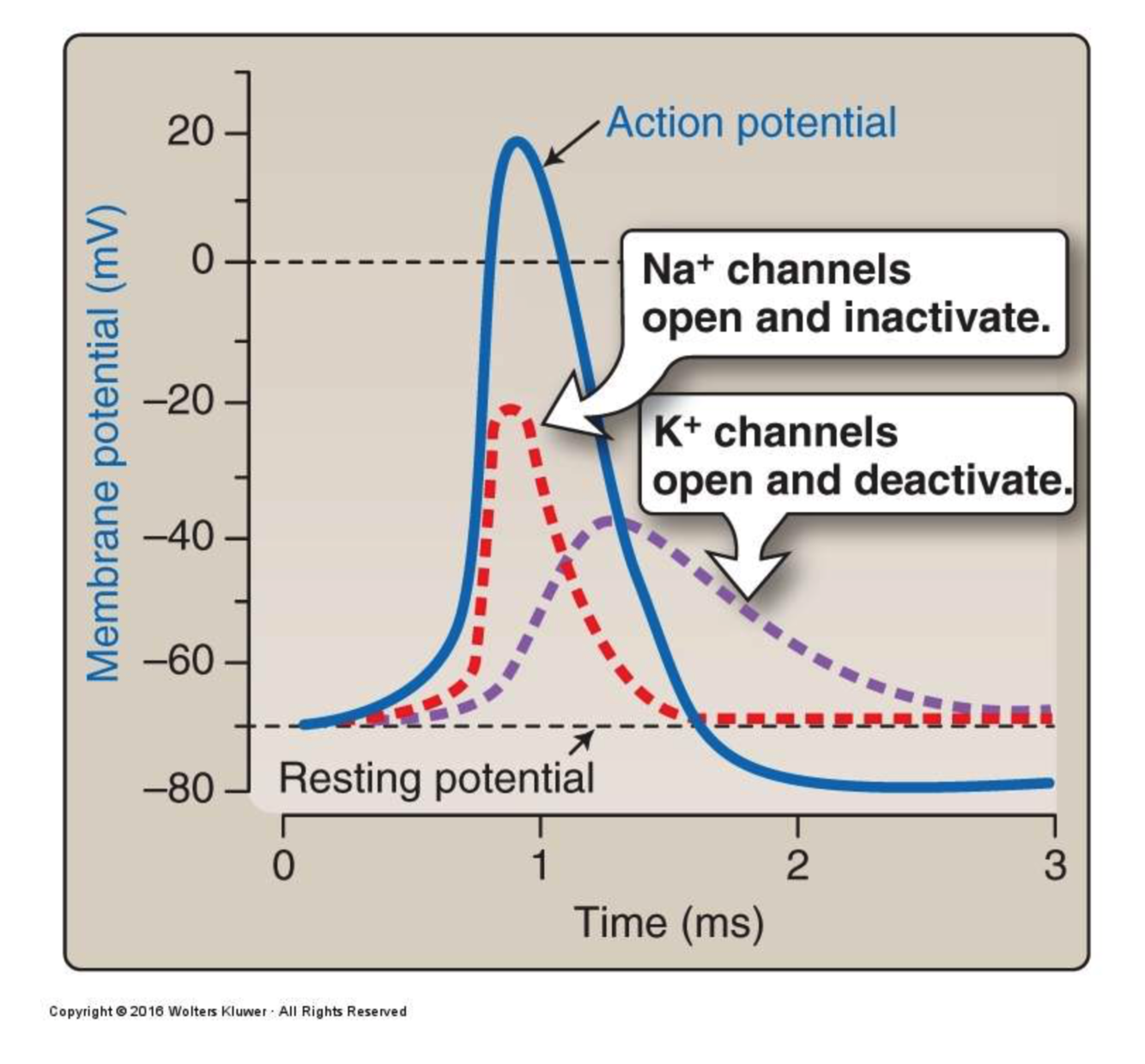
- when the permeability of the membrane to ions, such as sodium ions, changes, the membrane potential is altered
- if the potential reaches the threshold, an action potential can be generated
- this threshold is around -55mV, less negative than resting potential
- this depolarisation occurs when sodium ion channels open and sodium ions move across the membrane into the cell
- this depolarisation is rapid and the membrane potential eventually reverses to about +20mV
- the inactivation of sodium channels prevents further influx of sodium ions
- the opening of potassium ion channels allow efflux of potasssium ions out of the cell, repolarising the membrane potential
- there is an overshoot when the membrane potential becomes more polarised than the resting potential and the potential eventually becomes resting state
Why does the refractory period occur?
Explain absolute refractory period and relative refractory period
Use sodium and potassium ions as an example
- the refractory period is due to the inactivation of sodium ion channels and the speed with which potassium channels close
- while the sodium channels are inactivated, depolarisation will not open them
- when most of the channels are in this state, this is the absolute refractory period
- following this period, enough Na+ channels are in the active state and they are capable of being activated by depolarisation
- however, because the speed with which voltage-gated potassium channels close is slower, a large stimulus is required to induce a further action potential
- this is relative refractory period
What are the distinct states of the voltage-gated Na+ channel?
When does each occur?
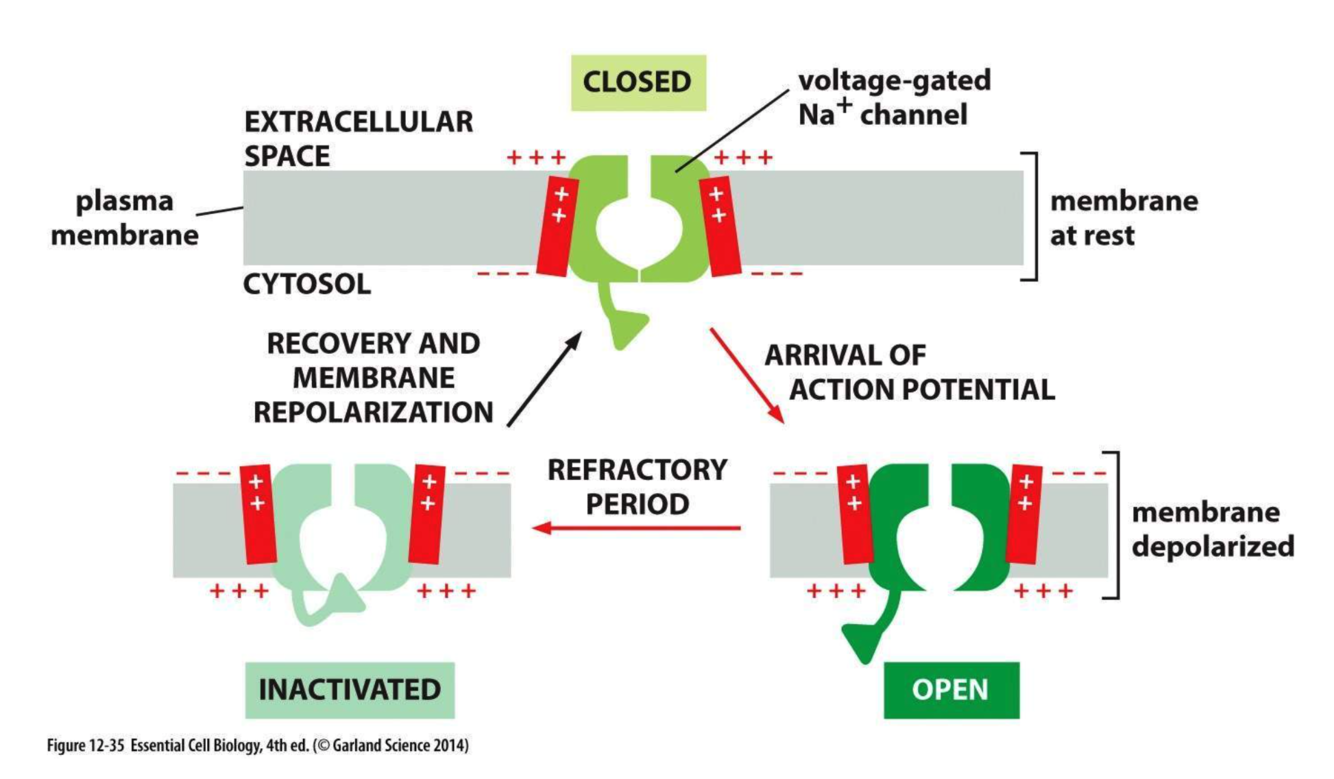
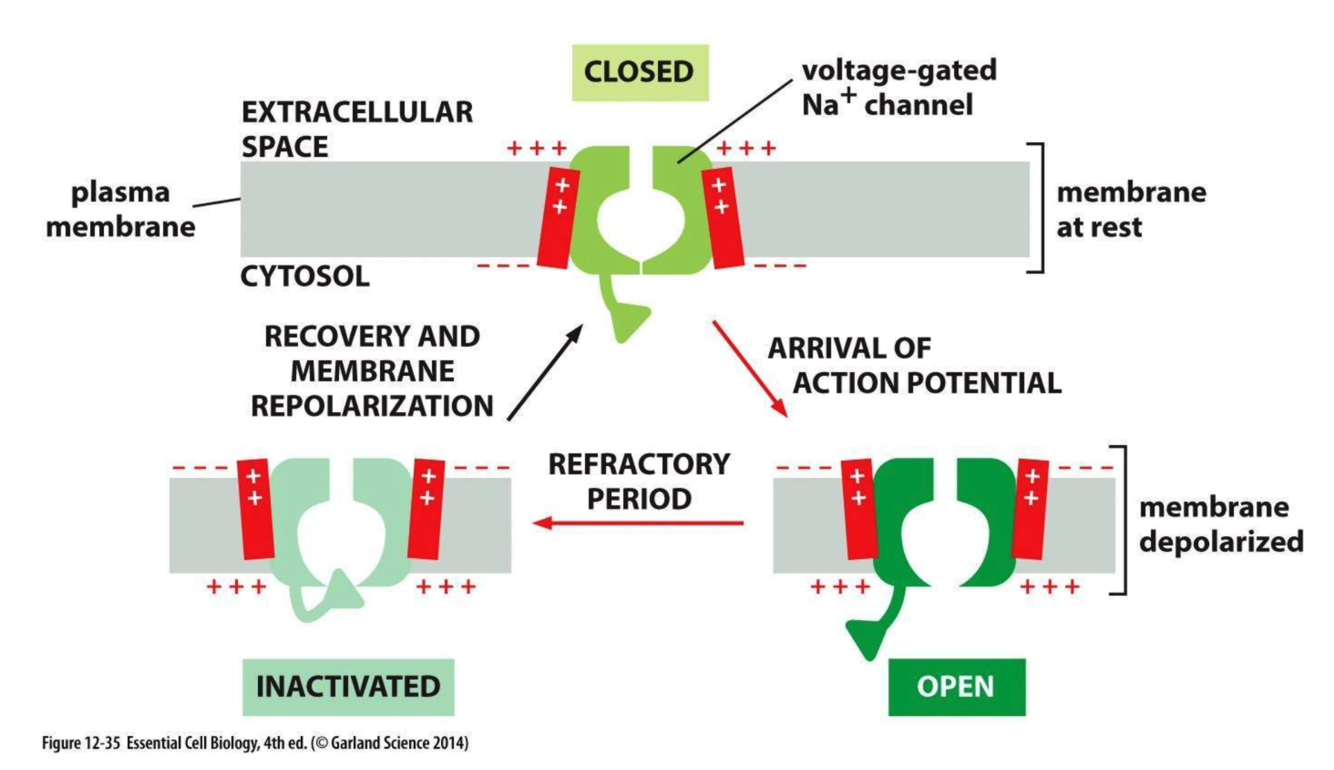
- closed: when the membrane is at the resting membrane potential
- open: during the depolarisation phase
- inactivated: after initial opening, the channels rapidly adopt a special inactive conformation, in which they cannot open even though the membrane is still depolarised
Why does the pore of a channel (e.g. sodium ion channel) have an inactivated state when depolarised?
- once the membrane is depolarised, the channel opens, but the inactivated conformation is more stable
- so, after a brief period spent in the open conformation, the channel becomes temporarily inactivated and cannot open until the membrane is re-polarised again
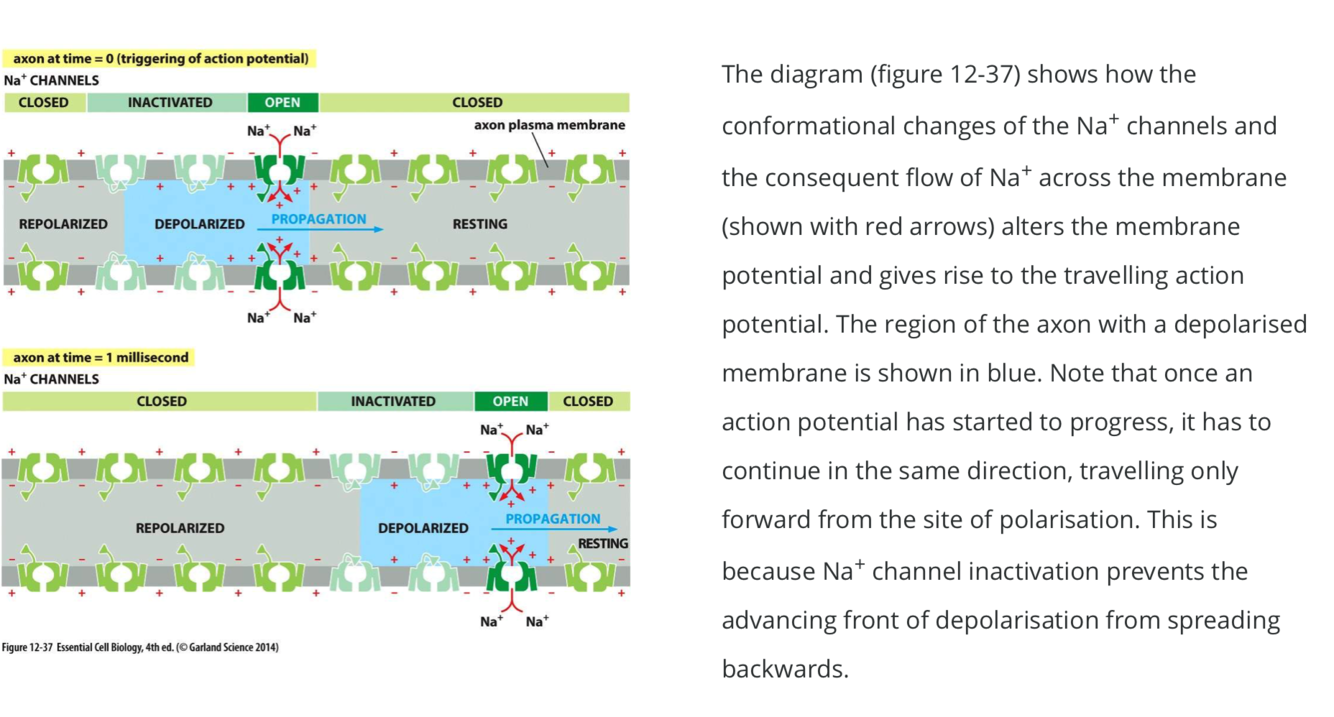
Once an action potential has started to progress, can it travel backwards?
- it has to continue in the same direction, travelling only forawrd from the site of polarisation
- the channel inactivation prevents the advancing front of depolarisation from spreading backwards
What can increase the speed with which action potentials are transmitted along the axon?
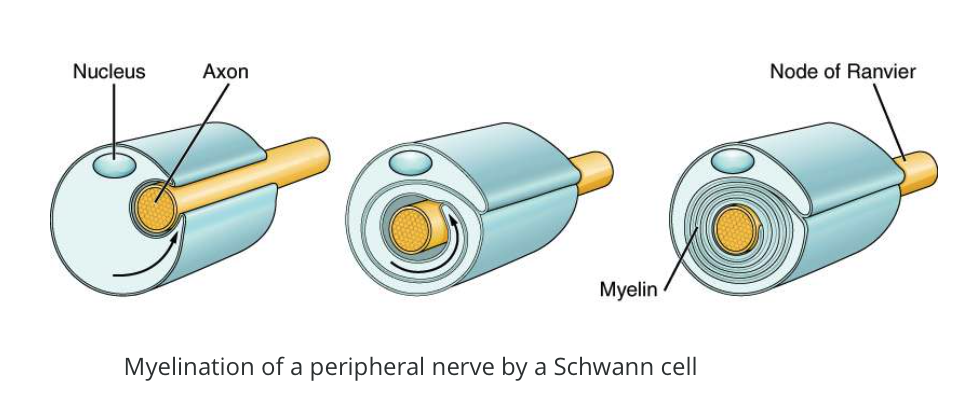
- the presence of myelin
- it is wrapped around the axon
Where is myelin produced?
- glial cells
- the Schwann cell in the peripheral nervous system
- one cell can myelinate only a single axon
- oligodendrocyte in the central nervous system
- can myelinate many axons
What are the unmyelinated portions of myelinated axons called?
- node of Ranvier
What diseases are loss of myelin a hallmark of?
- some neurodegenerative diseases
- e.g. multiple sclerosis
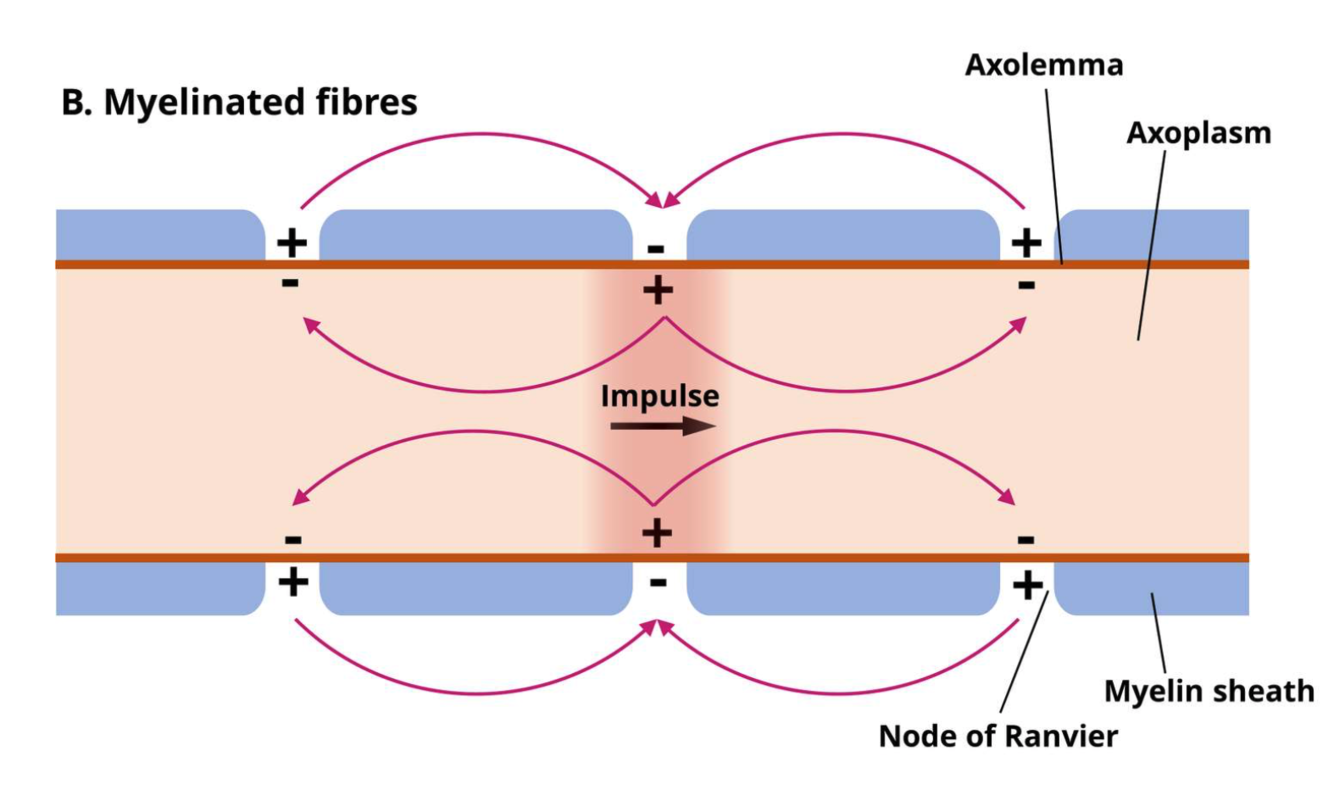
Why do action potentials travel at great speed along myelinated axons?
What speed?
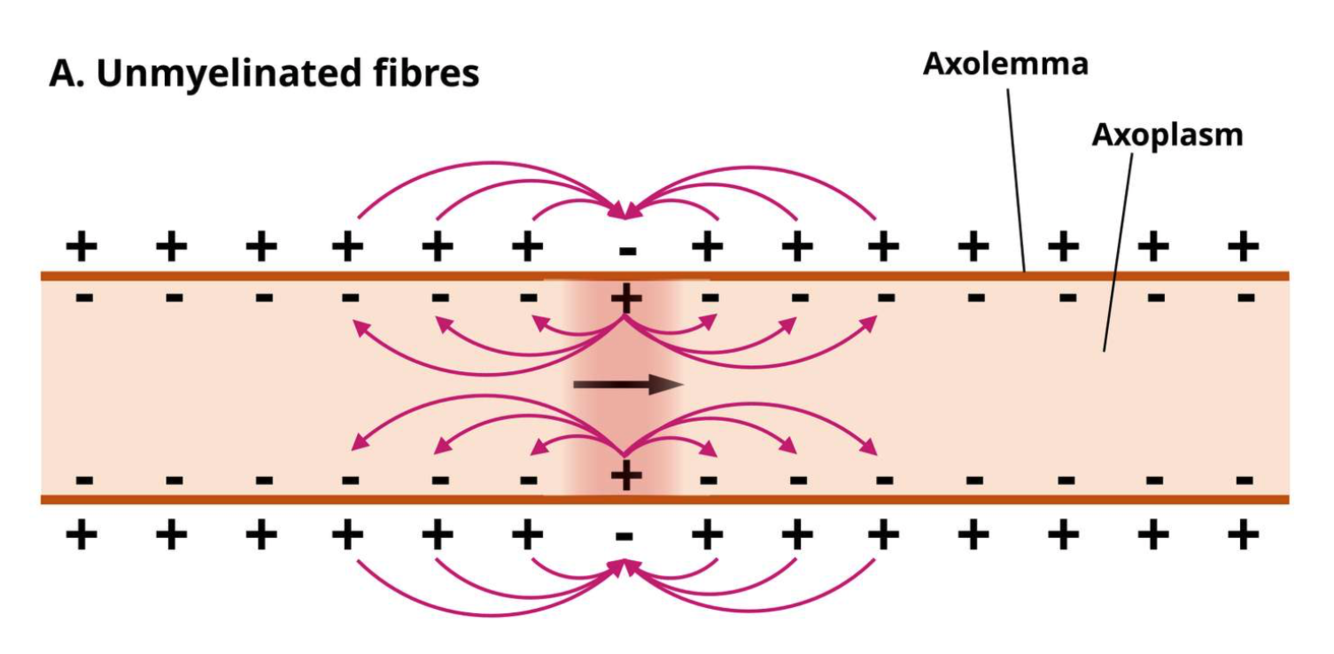
- due to saltatory conduction
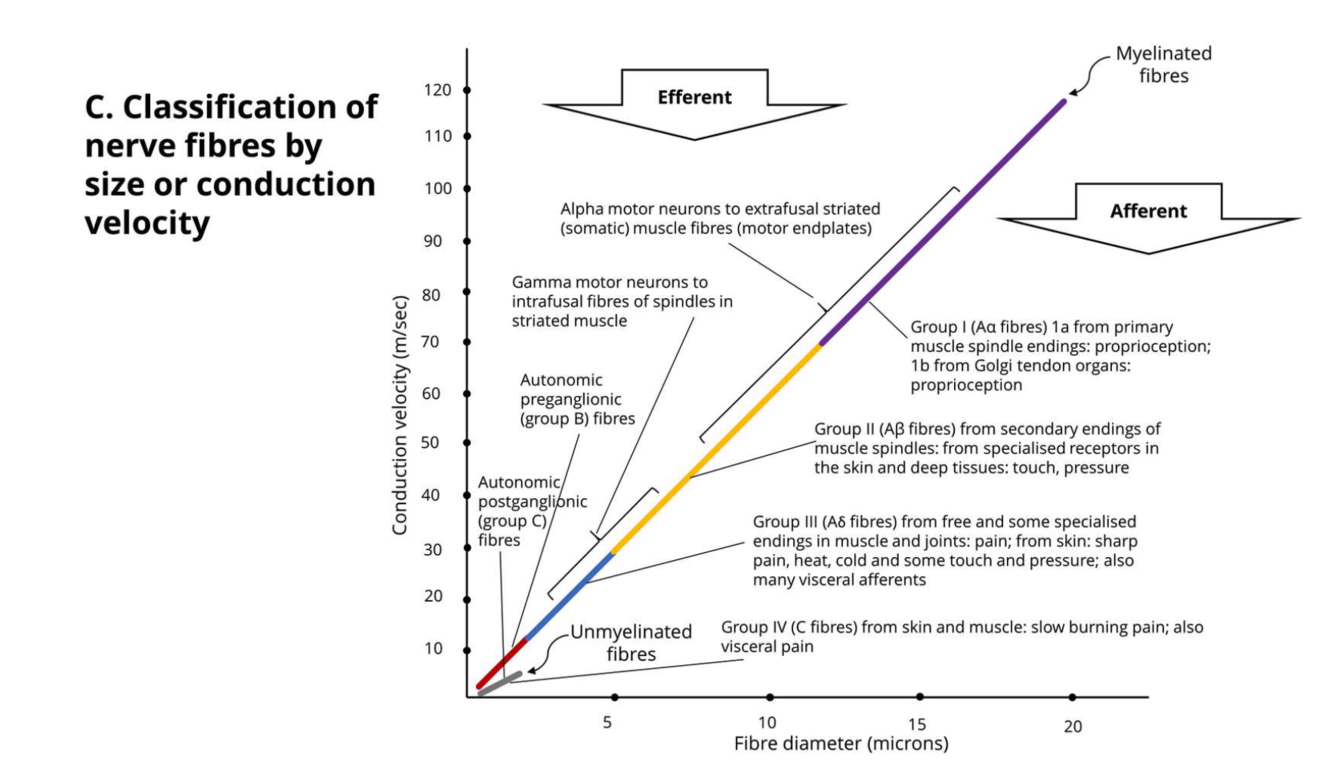
- myelinated axons conduct speeds up to 120m/s
- unmyelinated axons conduct speeds of up to 5m/s
Study these images on myelinated and unmyelinated axons
Examine this image of the classification of nerve fibres by their size and conduction velocity
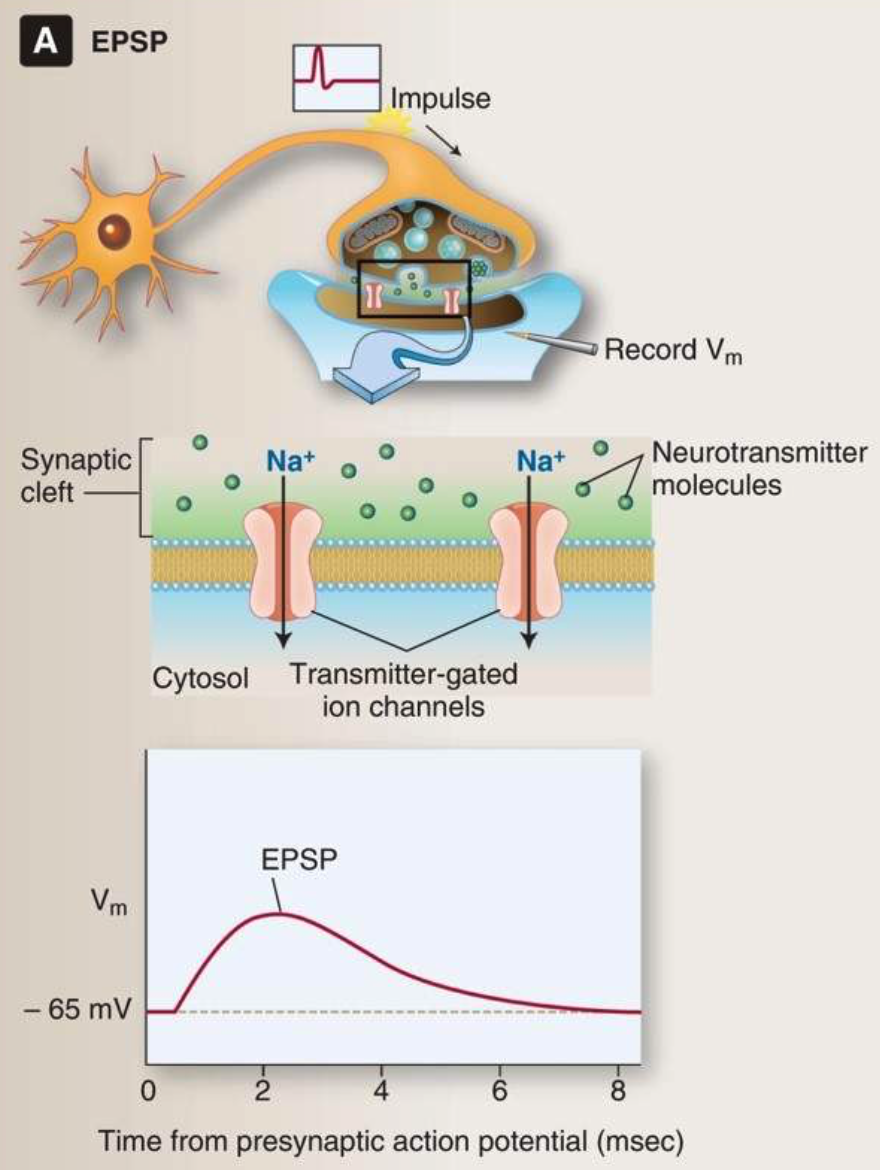
What determines whether the post-synaptic potential is excitatory or inhibitory?
- the type of ion channel which opens on the post-synaptic membrane
Describe excitatory post-synaptic potentials (EPSP)
- these post-synaptic potentials bring the membrane potential closer to the firing threshold by making it less polarised
- i.e. they increase the likelihood of an action potential being generated
- these are mediated by the influx of Na+ ions


-
INTS 2: The Haematopoietic System82
-
INTS 3: Innate and Acquired Immunity42
-
INTS 4: The Technologies30
-
INTS 5: Red Cells and Related Disorders22
-
INTS 6: Introduction to Nervous and Musculoskeletal Systems48
-
INTS 7: Human Anatomy (Musculoskeletal and Nervous Systems)71
-
INTS 8: Membrane Potentials28
-
INTS 9: Motor and Sensory Pathways24
-
INTS 10: Muscle Contraction, Bone Development, Disease and Injury28
-
INTS 11: The Hypothalamic-Pituitary Axes46
-
INTS 12: The Endocrine Regulation of Metabolism56



