Starch Digestion
- polysaccharide composed of glucose
- digestion begins in the mouth with enzyme salivary amylase
- continues in the duodenum with enzyme pancreatic amylase
Protein Digestion
- macromolecules constructed of one or more polypeptide chains
- digestion begins in the stomach
- continues in the duodenum
- enzyme pepsin breaks down proteins
- presence or absence is detected by biuret reagent
Lipid Digestion
- digestion begins in the duodenum
- assisted by secretions of bile from the liver and lipase from the pancreas
- bile salts emulsify fats so lipids can react with lipase
- end result: lipolysis forms fatty acid and glycerol
Layers of the Small Intestine
-mucosa, submucosa, muscle (muscularis), serosa
Mucosa
- top layer of the small intestine
- outer layer of columnar epithelial cells
- contains lamina propria, venules, arterioles, and lacteals
- contain villi: fingerlike extensions projecting toward the lumen
- contain microvilli: brush border; enhance surface area and absorptive capabilities of the intestine
- goblet cells: secrete mucus
- lacteal: located in the center of the villi; blood vessels
Submucosa
- second layer of the small intestine
- composed of connective tissue and blood vessels
- contains lymph duct
- nutrients pass through the blood vessels of the mucosa and submucosa
- nutrient-rich blood then flows to the liver for processing
Muscle (Muscularis)
- third layer of the small intestine
- two layers of smooth muscle: circular and longitudinal
Segmentation
- contraction of the circular muscle layer
- aids in mixing the partially digested food with enzymes
Peristalsis
- contraction of the longitudinal muscle layer
- aids to propel food along the digestive tract
Serosa
- fourth layer of the small intestine
- thin layer(peritoneum)
- composed of squamous epithelial cells
- protects intestinal surface
Anatomy of the Human Digestive System
(Labeling)
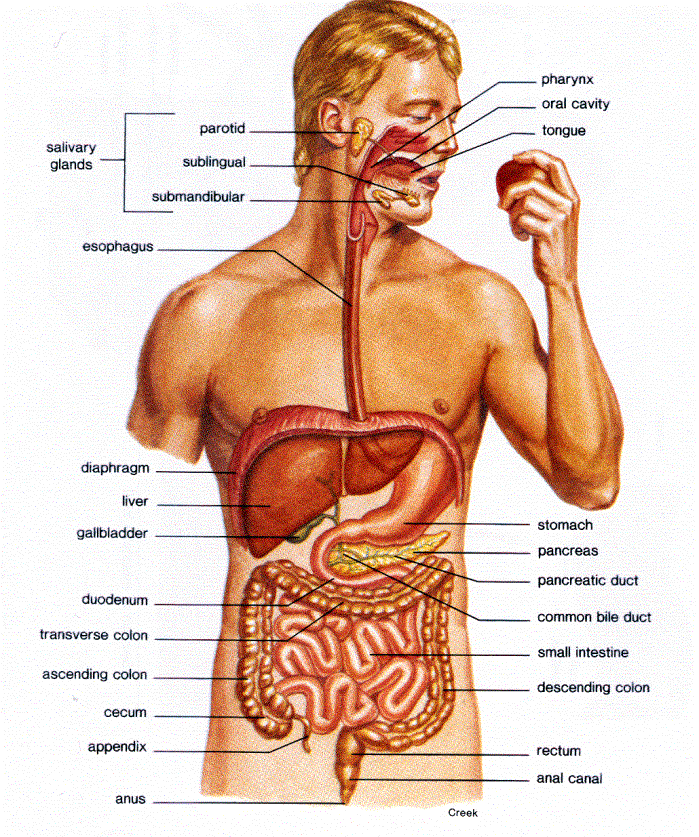
The digestion of food begins in the mouth by the action of the enzyme _________ secreted by the _________ __________
amylase, salivary glands
This enzyme begins the breakdown of _____
starch
When you swallow, the _____ blocks the entrance to the larynx
epiglottis
The bolus of food moves down the esophagis by muscular contractions called _____
peristalsis
In the stomach, the action of _____ and ____ aid in the breakdown of ______.
hydrochloric acid, pepsin, chyme
After leaving the stomach, the acidc mixture of partially digested food, called ____, enters the _____
chyme, duodenum
In the duodenum, digestion is completed by the action of enzymes and secretions from the two accessory organs, ______ and the ______
pancreas, liver
Carbohydrate and protein digestion are completed by ____, ______, and ____, additional components of pancreas secretions
trypsin, chymotrypsin, bicarbonate
Fats are first broken into smaller droplets by a process called _________
emulsification
This is accomplished by the action of a substance called _____________, which is secreted by the ______ and stored in the ___________.
bile, liver, gall bladder
The action of the enzyme ____________ which is secreted by the ________ hydrolyzes the fat molecules.
lipase, pancreas
Nutrient absorption takes place in the remaining two poritions of the small intestine, the _______ and the _______.
jejunum, ileum
The primary function of the large intestine is to reabsorb _________ , which is stored in the ___, until it leaves the body through the ________
water, rectum, anus




