Methods in cell biology
Light microscopy:
- non fluorescent
- fluorescent: tags, fluorophores, antibodies, specific applications, resolution
Electron microscopy:
-TEM Correlative microscopy
Diseases arise from
abnormal cellular function
What does the normal protein do?
Location within the cell - location suggests function and specifity
Time of expression - switching on/off suggests function
Partners - other proteins that work together/influence on another, eg. protein A cannot function without protein B, this also suggests function
Regulation - when and how proteins are regulated, e.g. phosphorylation switches proteins on and off suggests function
What does the abnormal protein do?
Delocalisation of the protein from normal site of activity
Degradation/timing of expression
Partners - cannot interact with its associated proteins
Dys/unregulation
Identification and cure
Can we retarget the protein?
Can we make sure the protein is there?
Can we force interactions?
Can we mimic its regulations?
Light microscopy
Light is electromagnetic radiation
Radiation has 3 properties: energy, frequency, wavelength lambda is the distance between tops of waves, defines the length of the wave
Wavelength 380-760nm is detected by human eye and is visible light
Different wavelengths are seen as different colours - white light is a combination
Light microscopy
When white light passes through a living cell, the phase of the wave is changed depending on the density of the part of the specimen
These phase changes are undetectable by the human eye under normal (brightfield) microscopy
Phase Contrast and Differential Interference Contrast (DIC) microscopy: very dense regions appear darker than the background. DIC highlights the 3d nature of the specimen
Darkfield microscopy illuminates the sample from the side so only scattered rays hit the lens
Data Handling Practice - types of microscopy
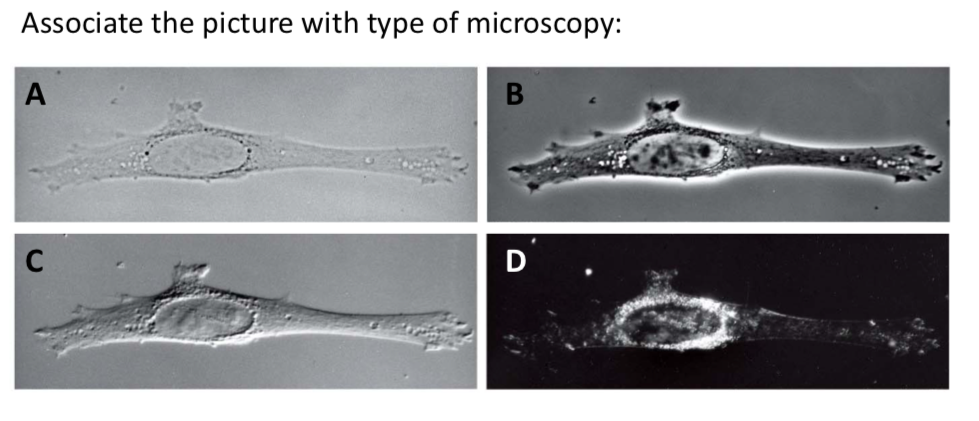
A, Brightfield
B, Phase contrast
C, DIC
D, Darkfield
Fluorescence
Must be excited to glow
More sensitive than non‐fluo dyes
Very specific
Possibility to co‐stain
Principle of fluorescent microscopy
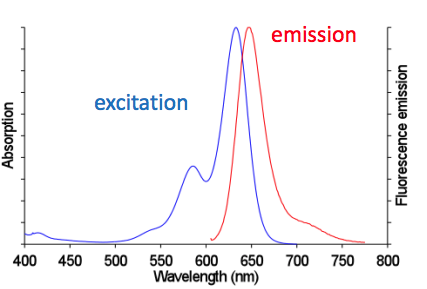
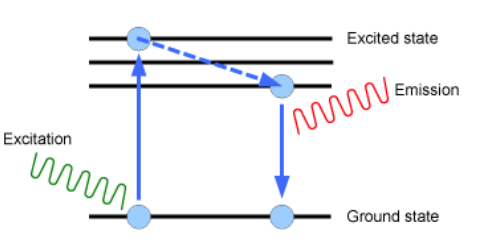
Fluorescent molecules absorb photons of light at one wavelength and emit at a lower energy one – If illuminated at the correct wavelength and viewed through a filter corresponding to the emission, will “glow” against a dark background
Fluorescent molecules can be chemical compounds (dyes, aka fluorophores)
proteins (eg. GFP)
or others (eg. nano‐dots).
Green Fluorescent Protein GFP
Can use standard molecular biology to tag your protein with GFP or derivative (either N‐ or C‐ terminal), and express in cells of interest
Data Handling Practice
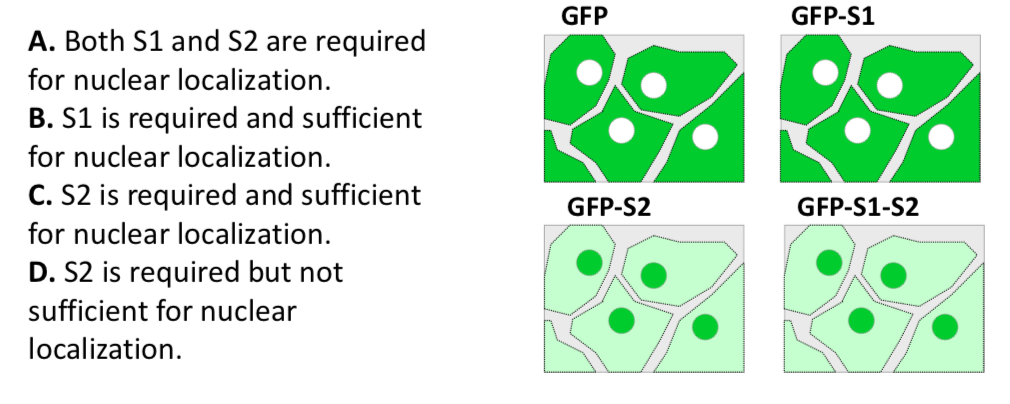
Correct answer is C, S2 is required and sufficient for nuclear localization
Bimolecular fluorescence complementation (BiFC)
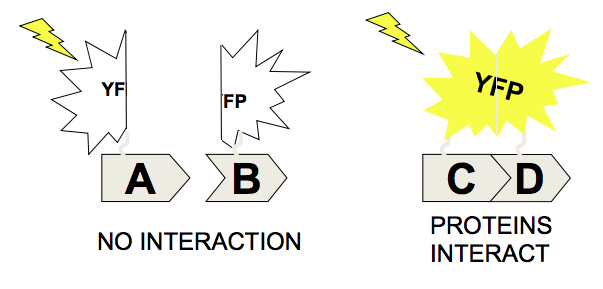
Used to determine if 2 proteins interact
- Each protein is tagged with half the fluorophore.
- If the two proteins come close and interact, the 2 halves of the fluorophore are reconstituted.
- Each half emits no light, but the reconstituted fluorophore does
- Hence, if the 2 proteins interact, light is emitted.
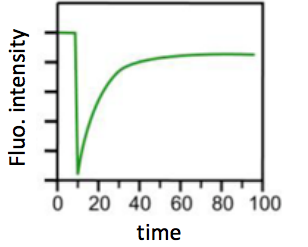
Fluorescence Recovery After Photobleaching (FRAP)
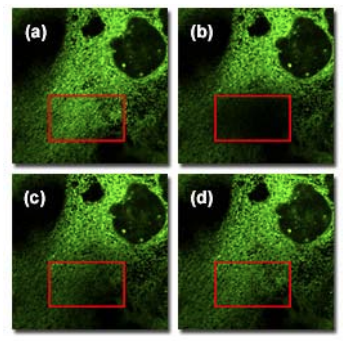
Used to measure protein dynamics in cells
- Photobleaching = fading = fluorescence is permanently lost
- A strong, focussed laser beam irreversibly bleaches the fluorophore it is exposed to
- Recovery of fluorescence has to come from elsewhere in the cell
- Provides a measure of diffusion coefficients (in the cytosol) or the dissociation of a protein from its location
Data Handling Practice
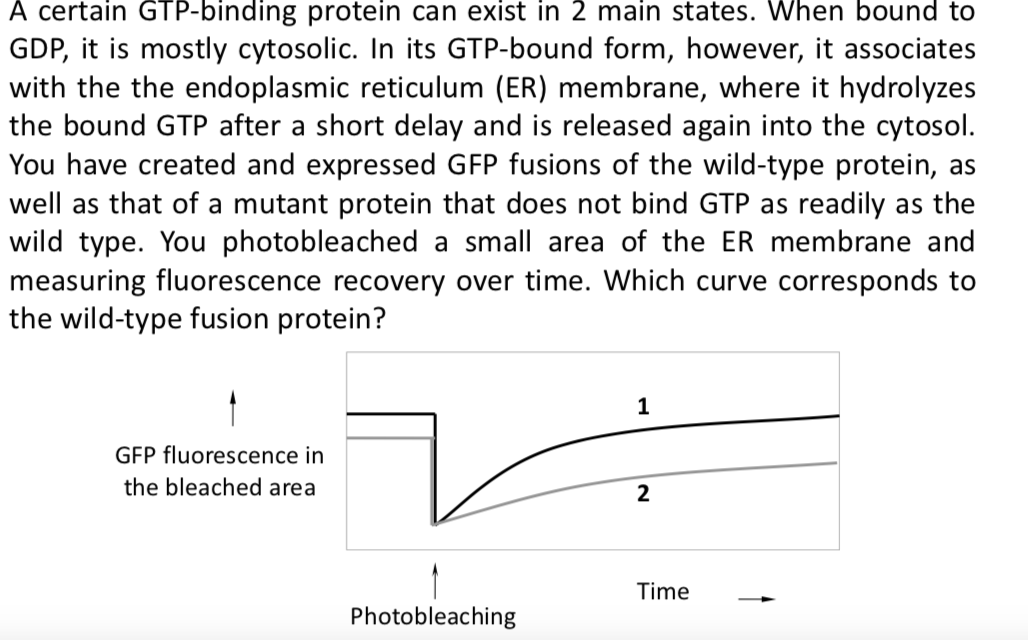
Correct answer: 1
Immunocytochemistry
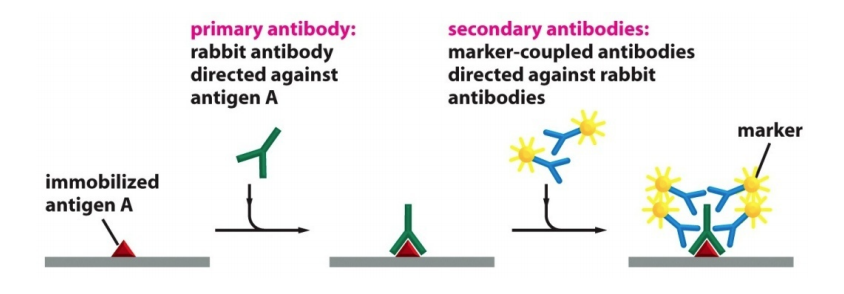
- Sometimes a protein cannot be tagged
- Specificity can be achieved using antibodies (indirect immunocytochemistry)
- Can combine multiple primary and secondary antibodies to co‐localise molecules of interest
- Can use live (if inject into cells), but generally used in fixed tissue
Resolution of light microscopy
- The limit of resolution is the limiting separation at which 2 objects can still be seen as distinct.
- The resolution (R) depends on the wavelength of light () and the ability of the objective to gather light (NA) of the lens used.
- R is a distance
- Under the best condition, with violet light ( = 400 nm) and NA=1.4, a limit resolution of just under 0.2 m can be achieved by a light microscope. A resolution of less than 0.2 m by light microscopy is simply impossible
Data Handling Practice
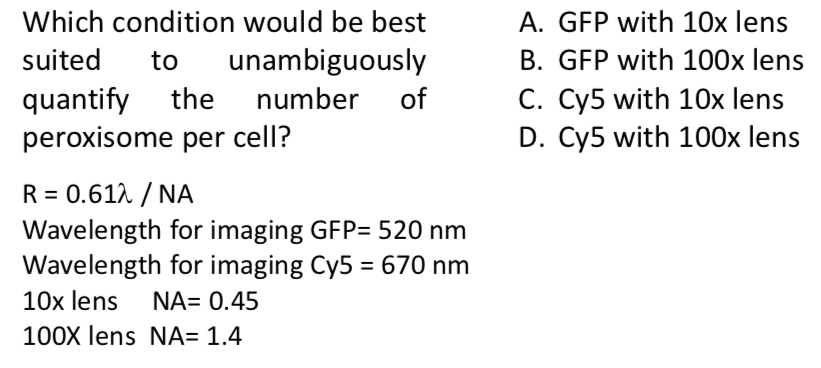
Correct answer: R= (0.61 x 520)/1.4 = 227nm
Spatial vs. temporal resolution
Light microscope
Light (photons)
Limit of resolution 200 nm ‐
Fixed or live sample
Electron microscope
Electrons
Limit of resolution 0.05 nm
Fixed
Transmission electron microscopy TEM
Can use antibodies in much the same way as light microscopy to highlight specific proteins
• Instead of fluorophore, gold particles are used (gold is electron dense)
EM tomography
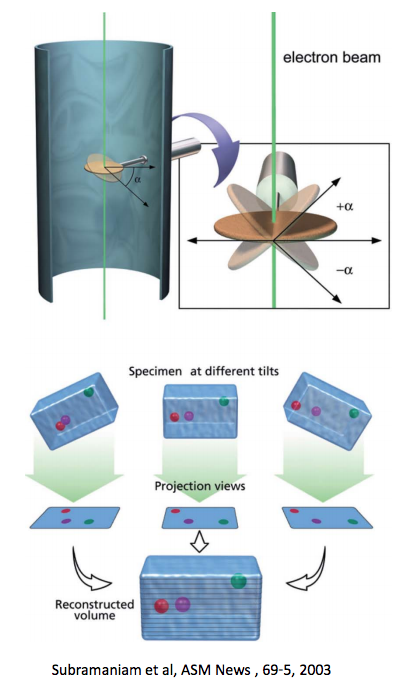
The specimen is tilted to varying angles along an axis perpendicular to the electron beam
‐ Each image is projected in 2D
‐ All 2D images are stacked into a 3D reconstitution
Correlative Light Electron Microscopy
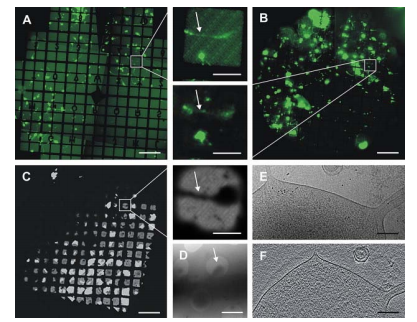
Combines advantages of both types of microscopy (eg: dynamics + resolution)
- The slide is a grid, essential to navigate and re‐identify the cell of interest.
- Technically very challenging
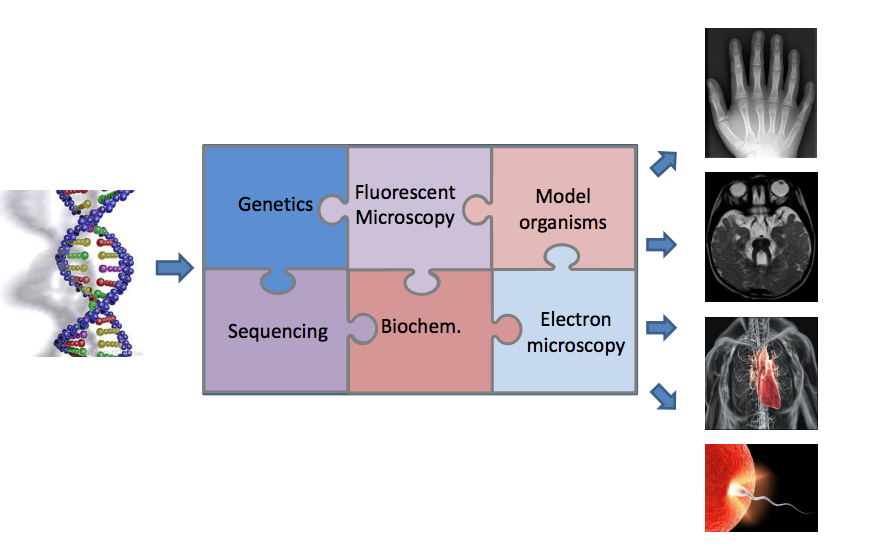
Techniques are not isolated but are complimentary
Summary
- The microscope is a cell biologist’s best friend
- Snap‐shots of cellular and sub‐cellular organisation can be studied by fixing, staining and imaging samples – allowing excellent spatial resolution
- Temporal aspects can be studied using the light microscope and molecule‐specific fluorescent markers
- Advanced techniques in both electron and light microscopy combine expert observation with computational and physical tools to yield more detail than ever before
- Complementary techniques required to answer one question/hypothesis

-
Lecture 11
-
Lecture 2 - Methods24
-
Rec Reading Mol Bio Cell Chapter 9 Visualising Cells12
-
Lecture 3 - Model organisms21
-
Rec Reading Mol Cell Bio Chapter 1 Cells and Genomes11
-
Lecture 4 - The Cytoskeleton: Microtubules25
-
Rec reading Mol Cell Bio Chapter 16 The Cytoskeleton13
-
Lecture 5 - The Cytoskeleton: IF and Actin20
-
Lecture 6 - The Cell Cycle: Mitosis and Cytokinesis26
-
Rec Reading Mol Cell Bio Chapter 17: The Cell Cycle1
-
Lecture 7 - Cell Polarity25
-
Lecture 8 - Cell migration and adhesion (MT based)58
-
Lecture 9 - Cell migration and adhesion (Actin based)80
-
Important Proteins97
-
Lecture 11 - The Extracellular Matrix90
-
Types of cells5
-
Lecture 12 - Intracellular compartments and protein sorting107
-
Lecture 12 - Intracellular compartments and Protein Sorting Part II53
-
Lecture 13 - Principles of Cell Communication29
-
Lec 13 reading0
-
Lecture 14 - Signal Processing Pathways83
-
Lecture 15 - Signal Processing Pathways II36
-
Lecture 16 - Apoptosis98
-
Apoptosis Rec Reading0
-
Lecture 17 - Wnt Network59
-
Cell communication Mole Cell Bio Chapter 15 Rec Reading0
-
Lecture 18 Intercellular Signal Trafficking37
-
Lecture 19 Endocytosis57
-
Lecture 20 Morphogens and Patterning30
-
Rec reading Lecture 200
-
Cytoskeleton summary44



