What do we mean by nesting when referring to preparing the stl file for printing?
Positioning the object to be printed, within the volume of the printer or on the material bed
What problems can you encounter when you are using a machine specific build software or build software in general?
The problems of each individual software differ but some common problems are
- Sometimes they only offer a 2d view (not ideal for orientating and nesting in a 3d space)
- sometimes they wont tell you about collisions (most should)
- Sometimes not great user interface (can be quite clunky/not intuitive)
Lecturer uses and reccomends magics as a good multipurpose build software
What implications can part orientation regarding the material bed have?
The orientation in which parts are printed affects
- Surface finish (some processes perform better than others in different orientations)
- Mechanical properties (a part printed vertically may have differn properties than a part printed horizontally)
- Build time (the more material layers i.e. the taller the build, the longer the build will take)
- Assembly of parts (horizontally printed parts often have better accuracy than vertically printed parts) - generally print parts that need to be fitted together in the same orientation
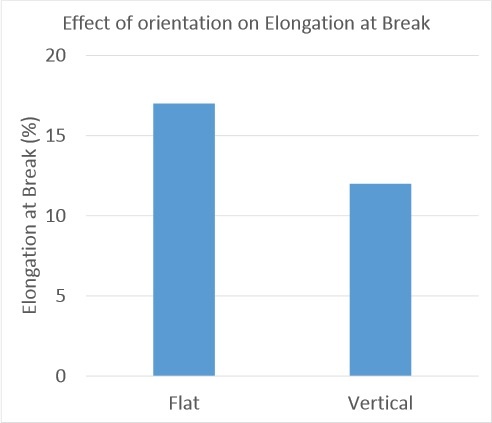
How can your surface finish requirements affect your 3d printing process?
Certain processes perform better in different orientations than others
e.g. stereo lithography has a great top surface finish but the sides are not so good
As AM is a layer by layer process you get stair stepping - in some processes this is more pronounced than in others (can be very obvious in curved segments)
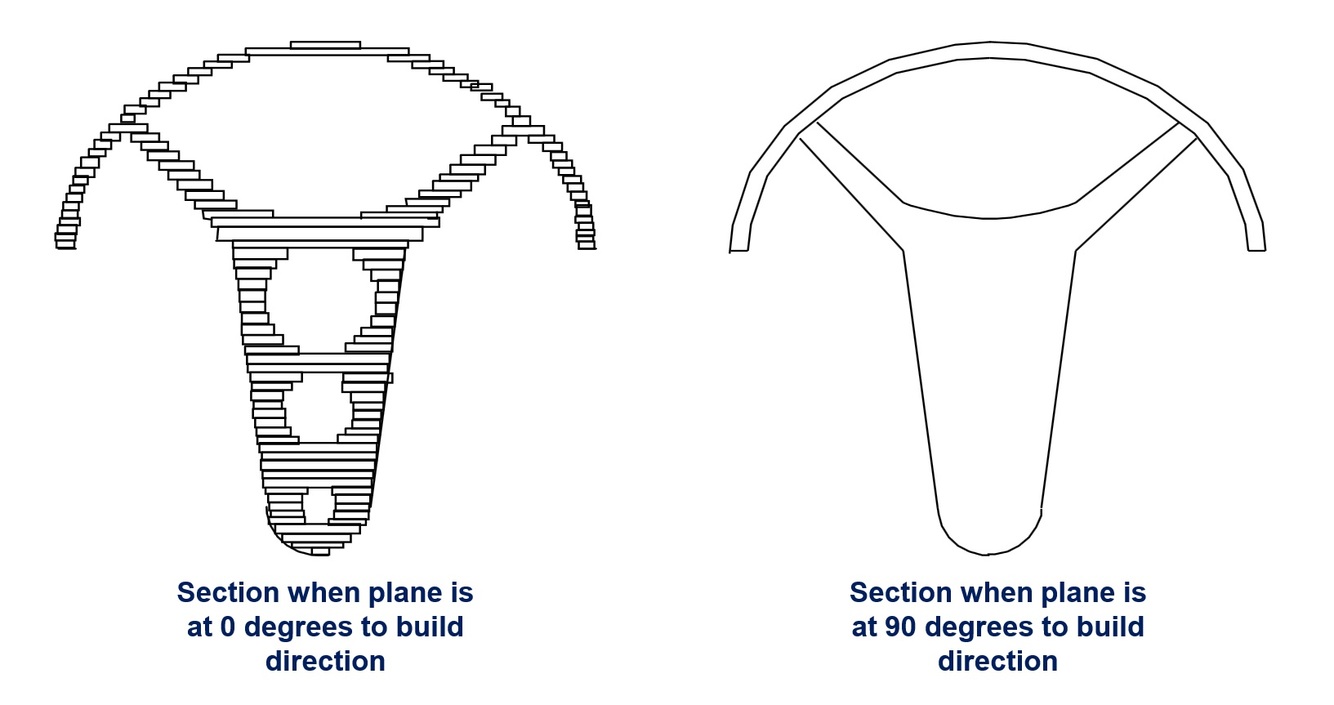
What considerations do you need to take into account when thinking about mechanical properties for a certain process?
Orientation - different build orientations have different properties in the vertical to the horizontal
Nesting/where you position your part on the material bed can affect your properties, sometimes if on the edge of a build space properties can suffer
Build height vs Surface finish what are some of the main considerations in this discussion?
- adding a layer takes longer than building a greater area on the same layer
- can be a trade off between build time and surface finish, what is more important to you
- Have a go with machine to see how surface finish is affected for the process in different orientations
- Talk to technitions/people who use the machine about what is important to you in your build, let them help you decide what to do
When we have multiple parts to build what are some considerations we need to think about?
- Machining time, we want to put as many parts on one build as we can, minimize time needed for setup/warmup etc…
- what outcome we want for each different part regarding material properties, surface finish and build time (not just one part to think about, priorities must be picked and compramises must me made)
- higher cost per part if we produce less in one build
- we may want to avoid placing parts in certain areas of build volume (variable property outcomes)
- Minimizing build height (powder on lazer sintering exposed to less heat and so can be recycled more time on a shorter build)
- if objects are placed too close to each other then geometrical accuracy can be affected
What are some of the challenges when trying to nest multiple parts on one build?
- Sometimes nesting is a manual process and can be very time consuming
- Kind of like a 3d jigsaw puzzle
- Automation is possible with some software
- When choosing a system make sure orientations and distances between parts can be specified
Why do need support structures?
We need them because of gravity, a material cannot support itself in mid air
What sort of support structures are there?
Same material but thinner - to be snapped off
Weaker material - to be snapped off
Dissolvable material to be soaked in solvent
What considerations do you need to take when thinking about support material?
How can I remove it - can I access the material to snap it off
Do I need to use a solvent to remove material
Will it affect surface quality
What sort of thing do we need to do in file prep before we can print?
- Slice part up into layers to be printed - in some cases select slice thickness
- Fix any errors that may come up
What sort of things may we have to do to prepare build material?
- Snap pre made cartridge in place - it could be that this ties us down to one material supplier
- sieve powder
- Mix powder
- shoveling powder
- This could all be automated in the AM machine
- it may be that masks are needed to be worn whilst woking to stop inhilation
What are some things you need to consider before you can acutally use your machine?
- Some machines take a long time to warm up , this needs to be taken into account for build time
- It may be that a material needs to be brought to a certain temp before it can be worked with
- In resin based processes bubbles need to be dealt with or the build could crash
In some operations layer thickness can be chosen, what do you need to think about when you are deciding on thickness?
- The thicker the layers the shorter the build time, build quality and detail is compramised though
- The thnner the layers the longer the build time, build quality and detail is improved though
- There is speculation as to weather thickness could be varied for different parts of the build to allow for detail without increasing build time too much
What are some possible post processing procedures?
Cool-down procedure - E.g. in High Speed Sintering process, removing parts
before properly cooled (~Tg) can lead to warpage
Post-curing - E.g. Stereolithography parts require further UV curing
Removal from base-plate - certain processes build directly onto a solid base
Painting/colouring
Infiltration - Sometimes necessary to improve properties
The time/difficulty/level of automation of support removal depends on process, what are some problems that can be caused by manual removal? (4 points)
Lower levels of part complexity (e.g. internal geometries)
Poor surface finish when snapping away supports
Possible part damage!
Can be time and labour intensive
What are two possible benefits of water-soluble supports?
Removing all support material can give better finish
May allow more intricate internal geometries
What are the two general methods for removing water soluble supports?
Leave parts submerged in solution
- Can be less manual, but:
- May require chemicals/temperature/time
- Possible manual removal of majority of supports
High-pressure water jets
- May still damage intricate areas of part
- Need line of sight
Why would you want to smoothen or roughen a part post process?
Smoothing, e.g. for visual or tactile purposes
Roughening, e.g. for certain paint/adhesives
Name some methods of smoothing/roughing an object? (4 points)
- Bead-blasting
- Machining
- Polishing
- Chemical treatment (e.g. smoothing station for FDM parts)
What will your choice of finishing method depend on?
- Part material
- Required surface finish
- Restricted chemicals
- Required accuracy - E.g. shot-blasting may round off sharp corners
- Geometry - E.g. do we want blast media stuck inside our part?
- Availability?

-
Lecture 1 part 212
-
Lecture 1 Part 119
-
Lecture 1 Part 320
-
Lecture 2 part 118
-
Lecture 2 part 222
-
Lecture 4 part 119
-
Lecture 528
-
Lecture 38
-
Lecture 4 part 217
-
Powder-based polymer processes part124
-
Lecture 723
-
Lecture 6 part 210
-
Lecture 8 part1 - Other polymer and non-metal processes16
-
Lecture 8 part 214
-
Lecture 9 - Metal AM19
-
Lecture 9 part 214
-
Medical devices - part 28
-
Medical devices - part 15



