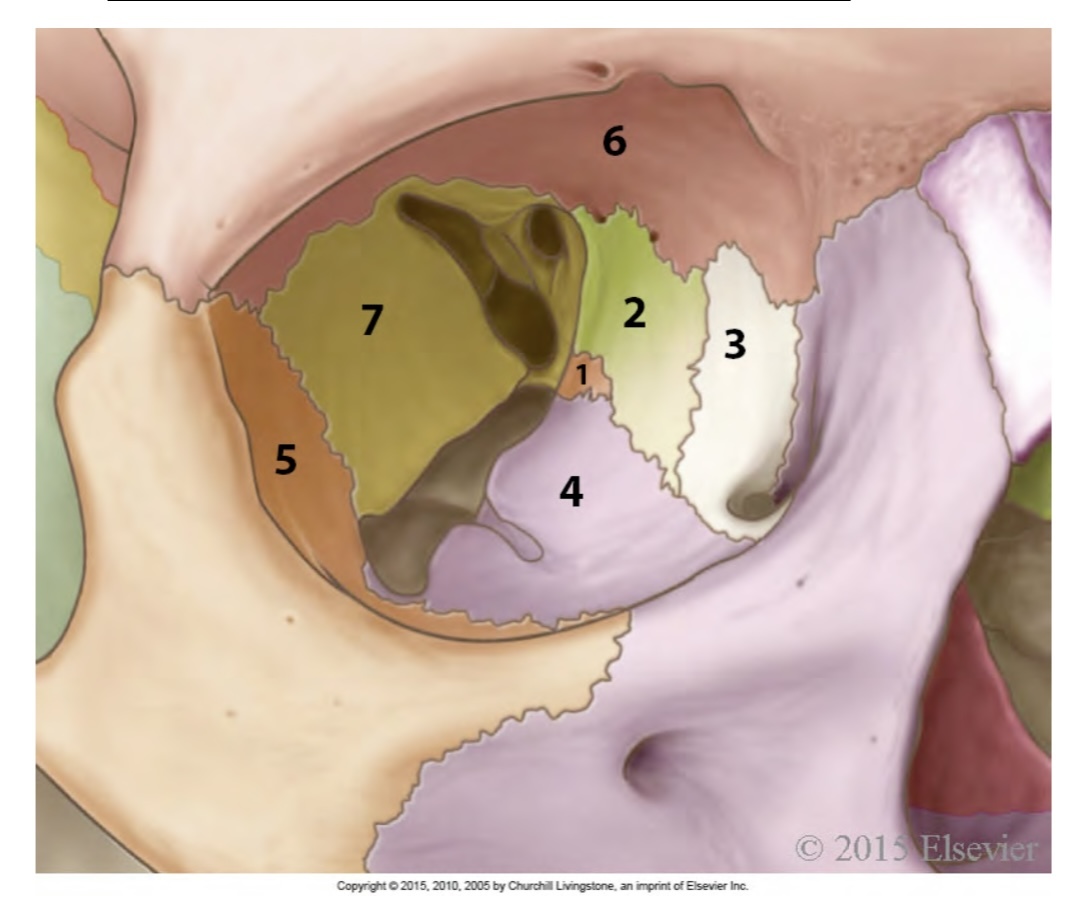
- Palantine bone
- Ethmoid bone
- Lacrimal bone
- Maxilla
- Zygomatic bone
- Frontal bone
- Sphenoid bone
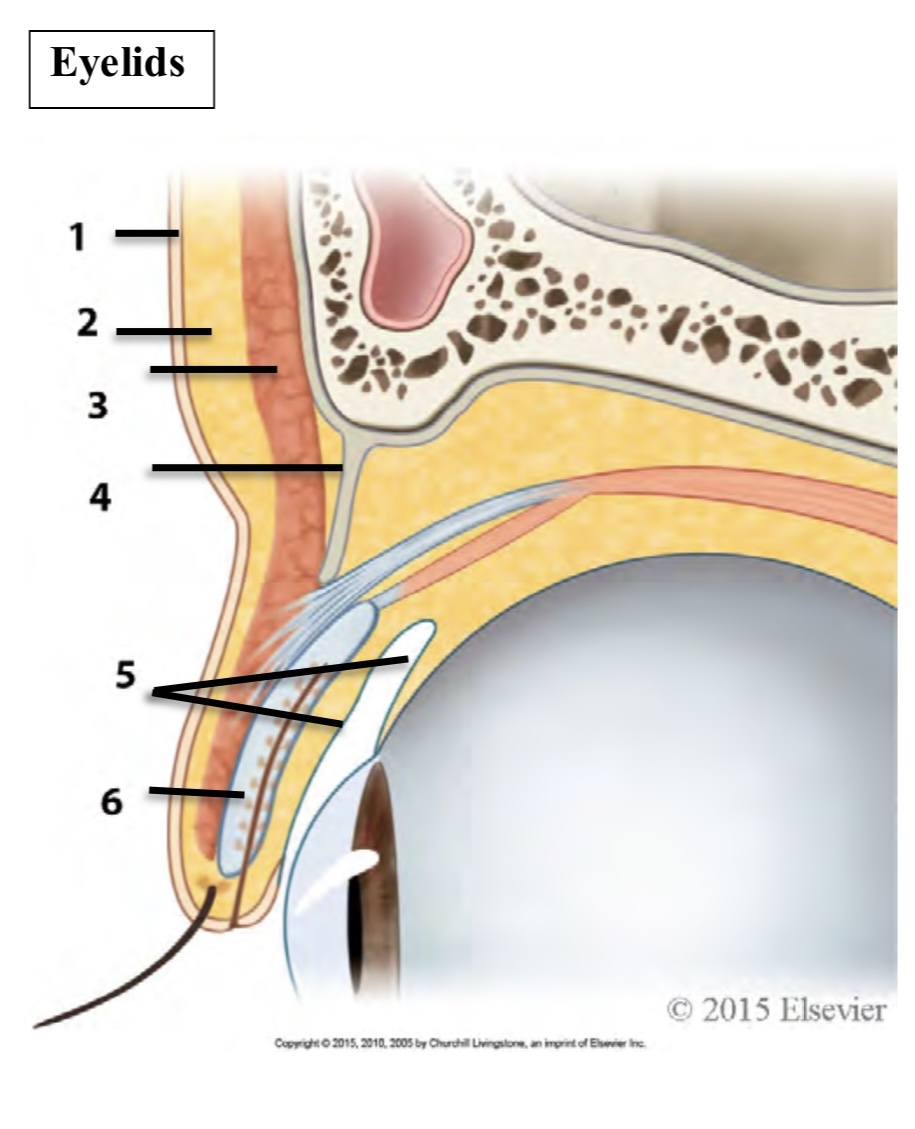
1.
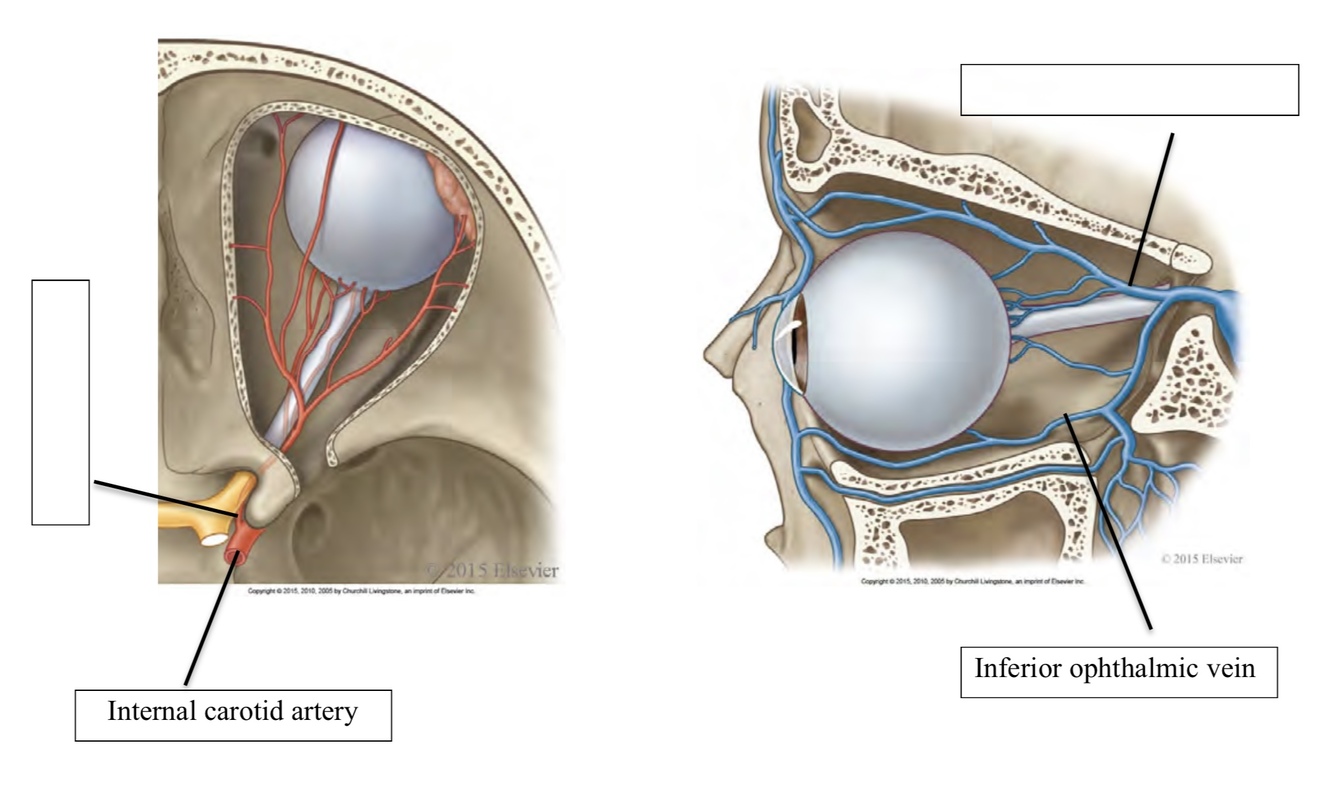
- Opthalmic artery
- Superior opthalmic vein
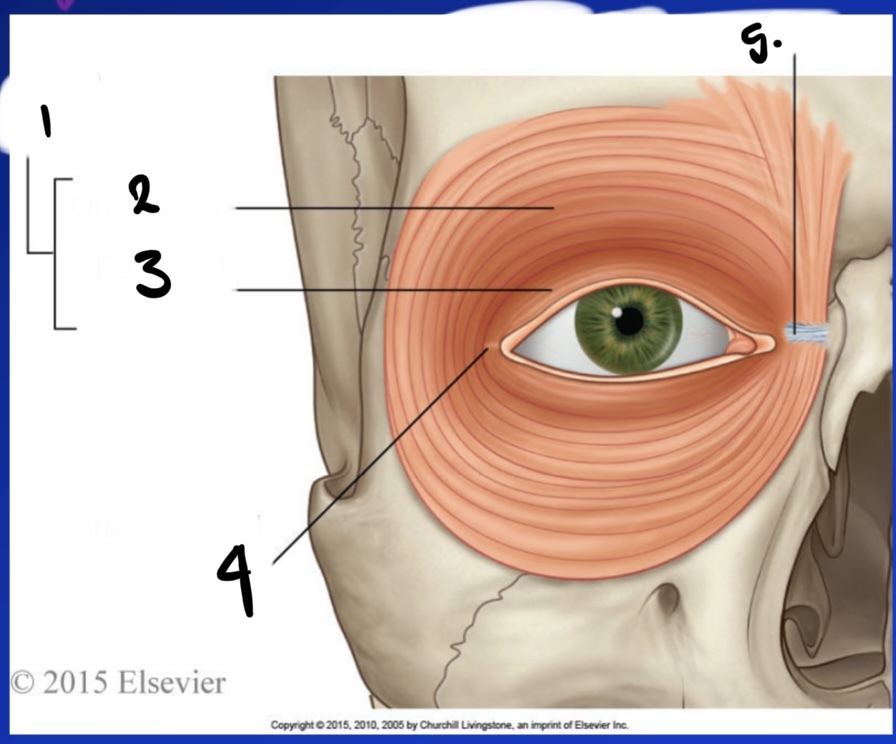
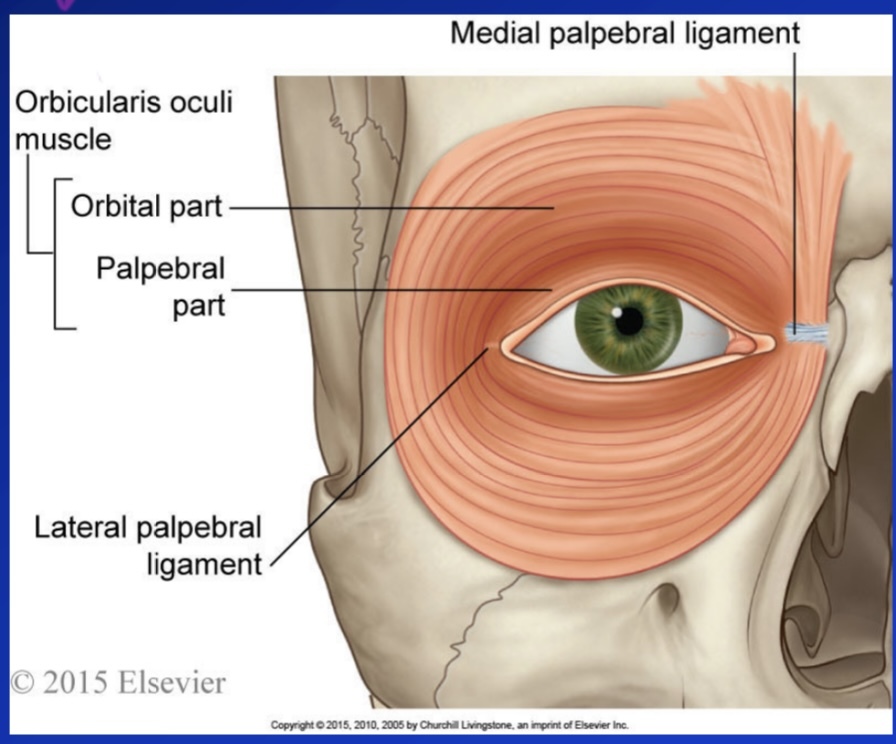
Label as many features as you can.
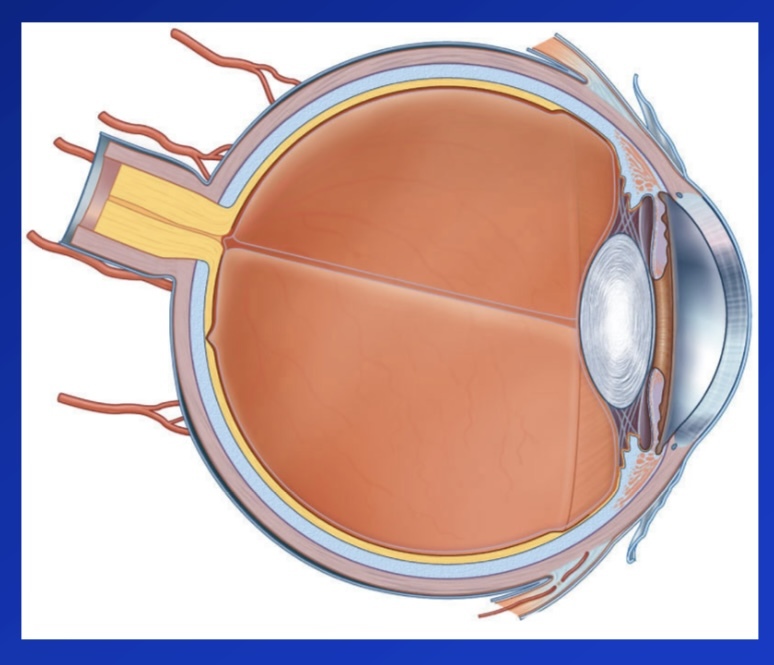
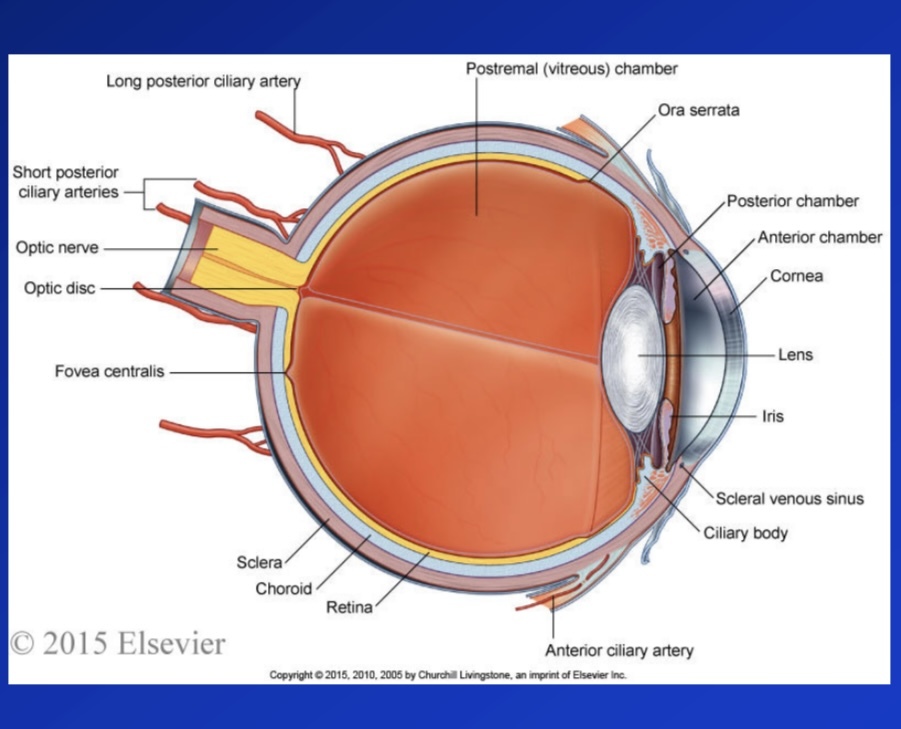
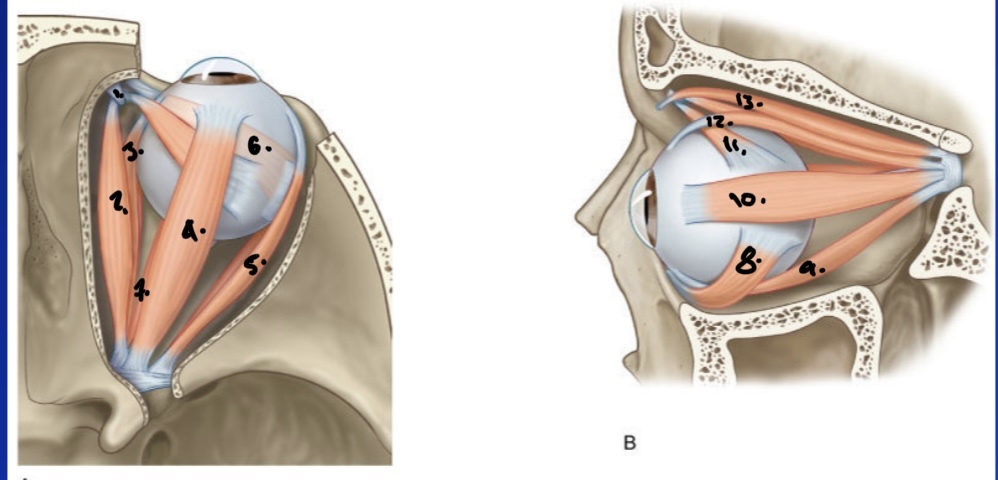
- Trochlea
2 & 11. Superior oblique
3 & 12. Sup. rectus
- Medial rectus
5 & 9. Inferior rectus
6 & 8. Inferior oblique
7 & 10: Lateral rectus
- Levator palpabrae superioris
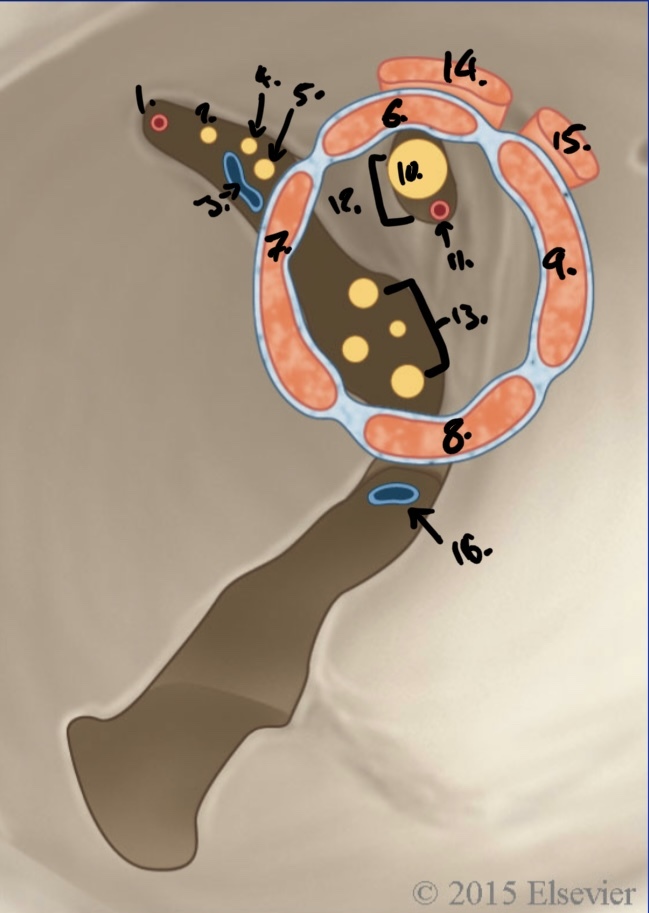
- Superior orbital fissure
- Lacrimal nerve
- Sup. opthalmic vein
- Frontal nerve
- Trochlear nerve (CNIV)
- Sup. rectus
- lateral rectus
- Inf. rectus
- Medial rectus
- Optic nerve
- Opthalmic artery
- N/A
- Sup. division of CN3, Nasocillary nerve, Inf div of CN3, CN6 (Clockwise notation)
- LPS
- SO
- Inf. opthalmic vein
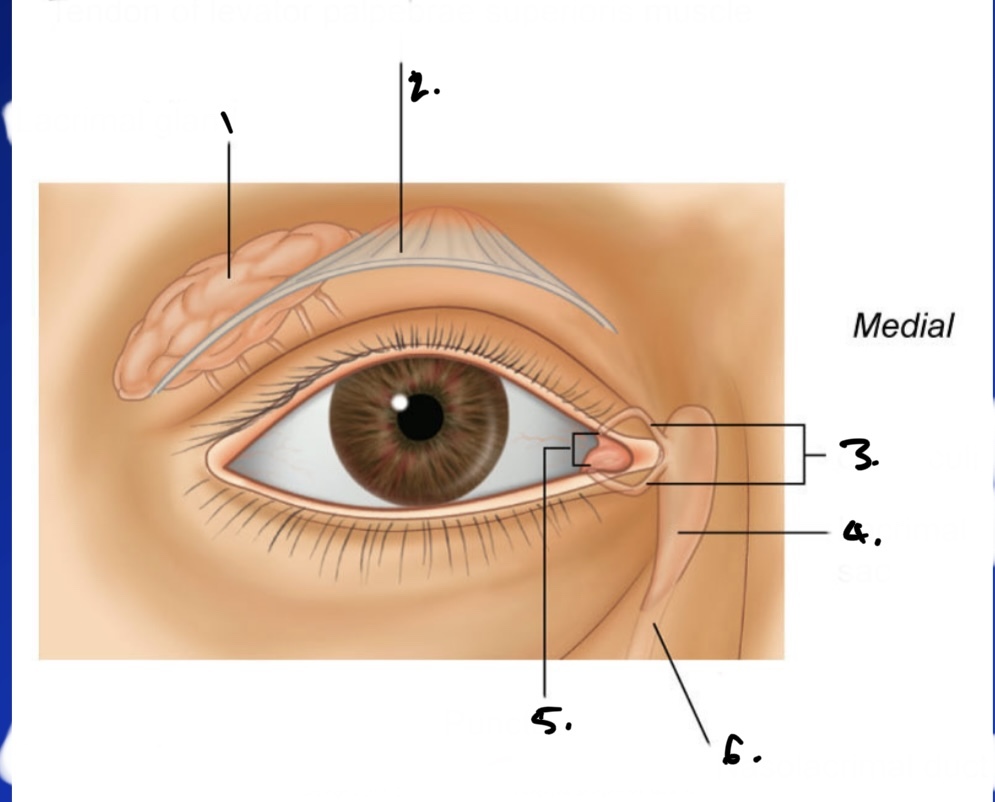
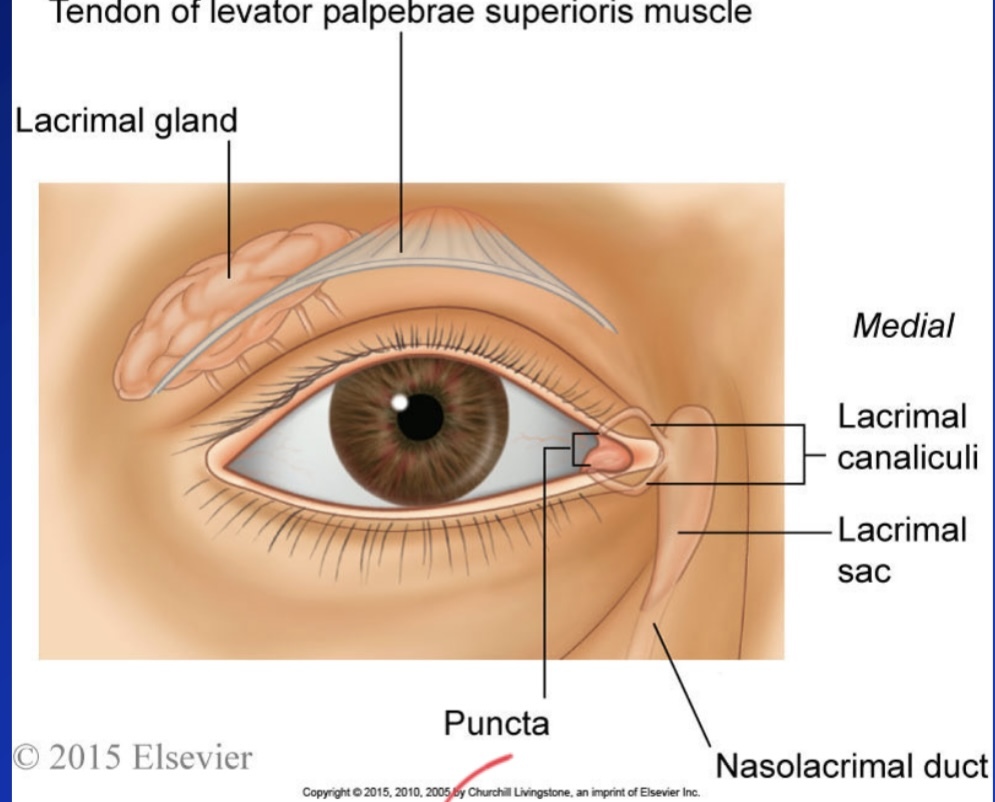
Whats this nerve?
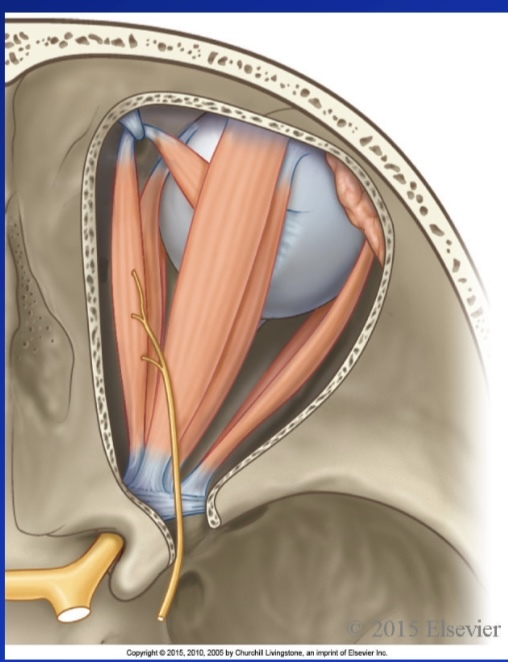
Trochlear (CN4)
Whats this nerve? What branches does it give off?
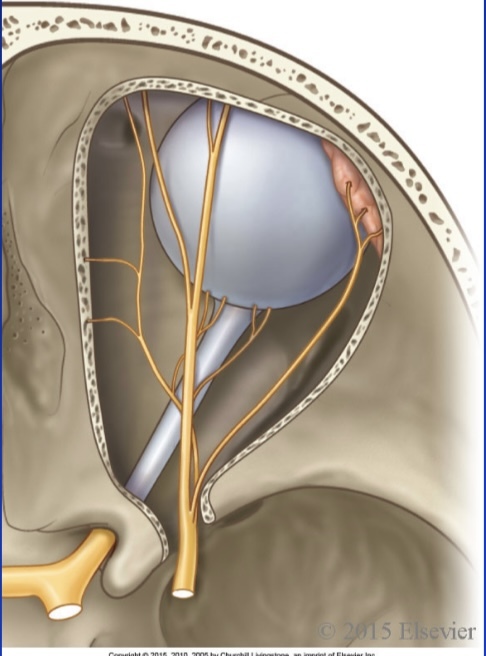
Opthalmic nerve:
- Lacrimal nerve
- Frontal nerve
- Nasocilliary nerve
What defines the apex of the orbit?
What defines the base?
Apex: Posteriormedial bit
Base: Anterior orbit
What makes of the roof of the orbit?
- Orbit portion of frontal bone
- Small sphenoid portion
What makes up the medial part of the orbit?
- Ethmoid
- Lesser wing of sphenoid
- Lacrimal
- Palantine (may be included in floor)
- Maxilla
What does the lateral aspect of the orbit consist of?
- Zygomatic bone
- Greater wing of sphenoid
What does the floor of the orbit consist of?
- Maxilla
- Zygotmatic
- Palantine
Where do most fractures of the orbit occur?
In the floor as the resultant force tends to be downwards
The subcutaneous space of the eye represents what?
A potential space. Therefore blood can enter and cause the swelling seen with black eyes.
What nerve innervates the orbicularis oculi?
Facial n. CN7
What are the layers of the eyelid?
- Tarsus+levator palpebrae superioris and superior tarsal muscle
- Orbital septum (periosteum)
- Obicularis oculi muscle
What does the tarsal gland secrete?
Oil, assits gentle closure of the eye (vs just water)
What nerve(s) innervates the superior tarsal muscle and superioris muscle?
Superioris (CN3)
Superior tarsal (ANS specifically SNS)
What does a partial ptosis of the upper eyelid represent?
SNS damage.
LPS is voluntary (CN3). SUperior tarsus muscle is under ANS control therefore partial ptosis suggests preservation of voluntary muscles
Describe the blood supply of the eyelid:
Art: Branches of opthalmic, facial and superficial temporal artery.
Venous: Sup&Inf opthalmic vein branches, facial and angular veins (large network of veins likely)
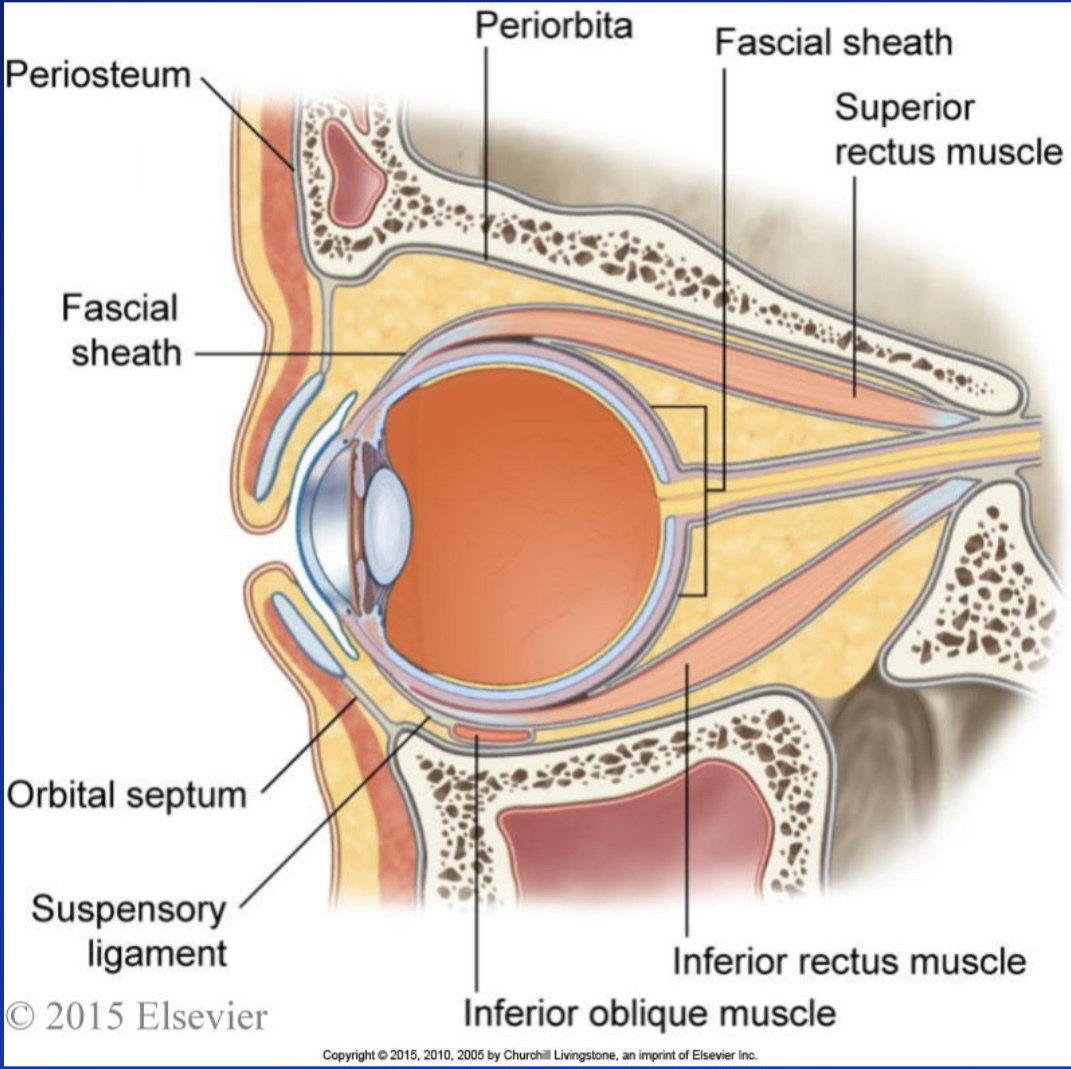
What creates the periosteal layer of the orbit? (refer to diagram if unsure)
Perioribta
Dura mater
Periosteum
Orbital septum

-
Lecture 1: The Skull11
-
Lecture 2: The eye41
-
Lecture 3: Science of the eye0
-
Lecture 4: Visual field deficits0
-
Lecture 5: Orbit27
-
Lecture 6: Meninges15
-
Lecture 7 & 8: Posterior Triangle20
-
Lecture 9 & 10: Anterior Triangle35
-
Lecture 11: The Ear20
-
Lecture 12 & 13: Face and Parotid37
-
Lecture 14 & 15: Oral Cavity27
-
Lecture 16: Nasal Cavities0
-
Extra details7



