4 unpaired accessory digestive organs
Liver
Gallbladder
Spleen
Pancreas
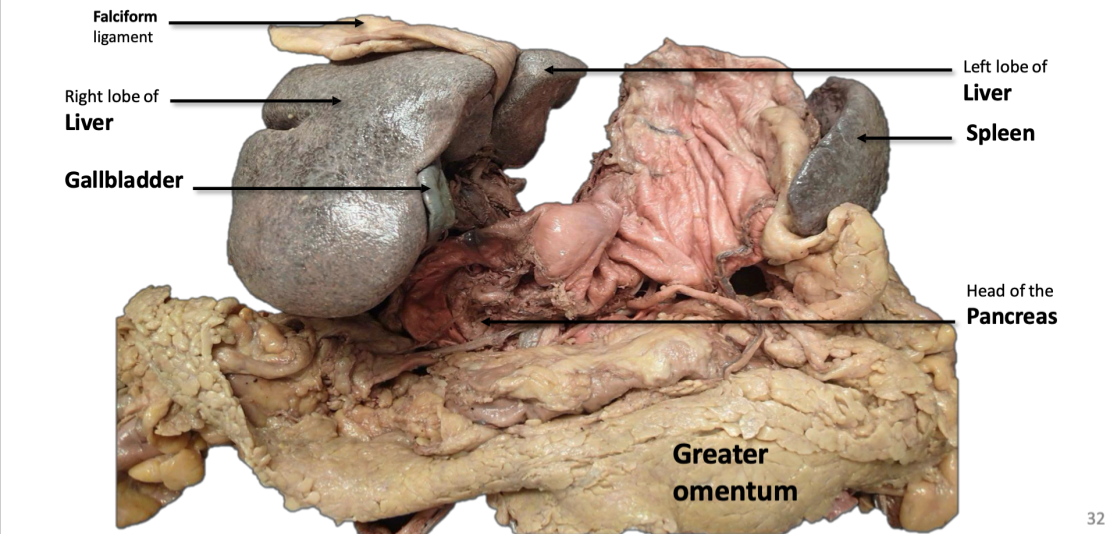
Is the liver intraperitoneal or retroperitoneal
What does the liver have low levels of
INTRAperitoneal
Connective tissue
Where is the liver located
RUQ
What is the liver a major producer of
Lymph
25-50% of lymph
What is the largest gland in the body
Liver
What does the liver synthesise
- Bile
- AAs
- Gluconeogenesis
- Cholesterol
What does the liver break down
- TOXINS
- Hormones
- Drugs
- Ammonia
What does the liver store
Glucose
Iron
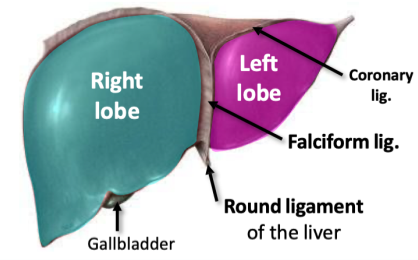
Name the 4 anatomical lobes of the liver
What are these functional lobes based on
- Right lobe
- Left lobe
- Quadrate Lobe
- Caudal lobe
Based on blood supply - independent segments can undergo surgical resection
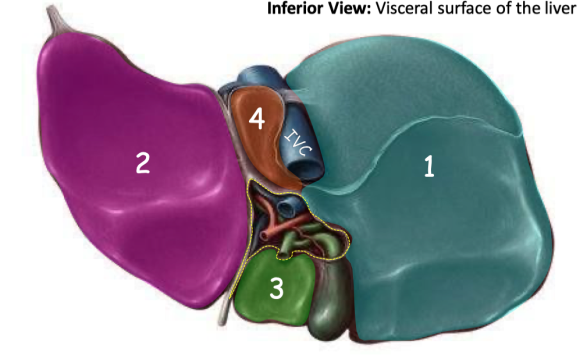
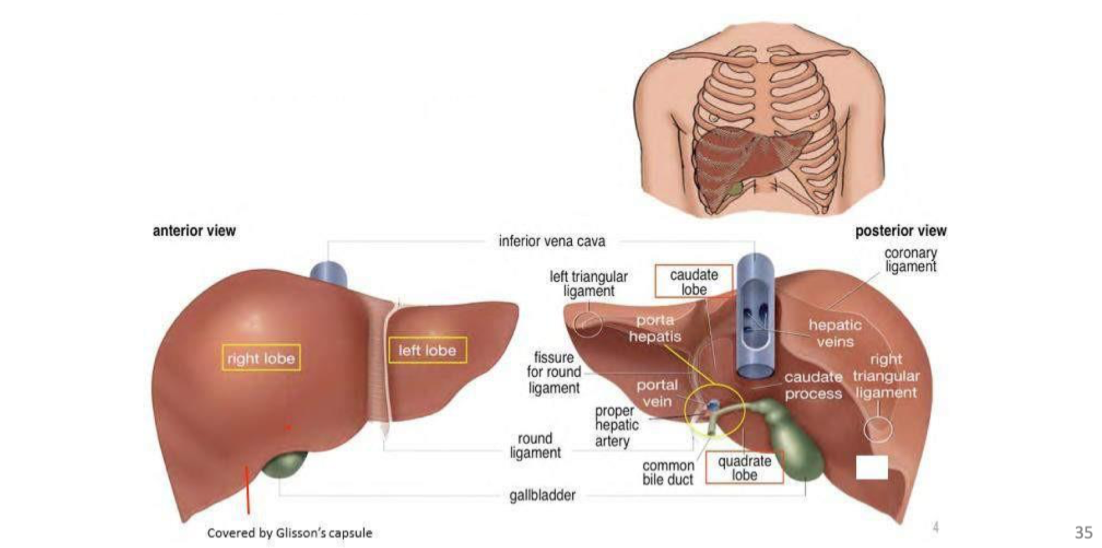
What is the porta hepatis
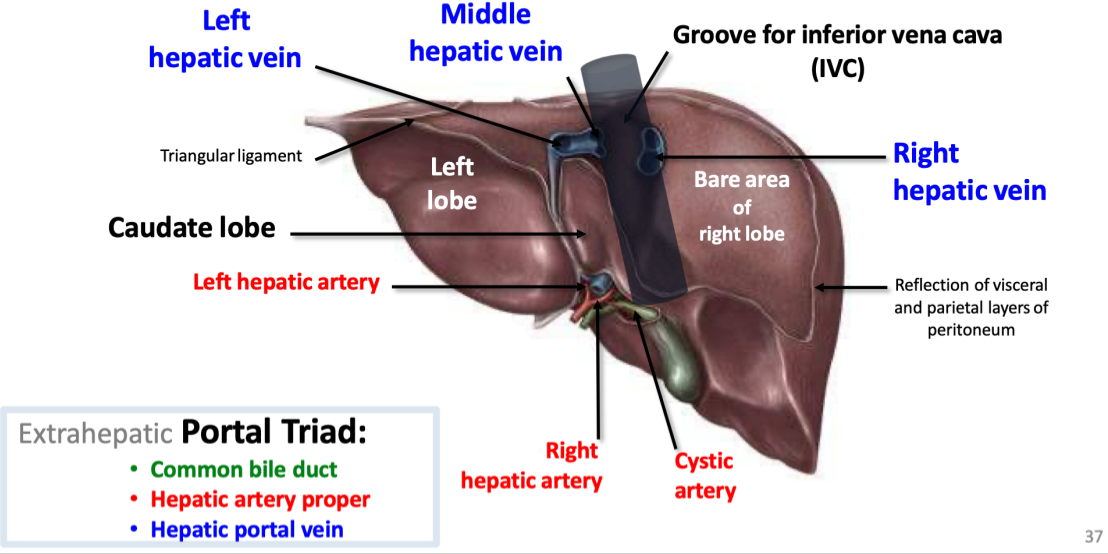
Where does the hepatic vein drain
“hilum” of liver where abdominal structures can enter or leave
Hepatic vein drains posteriorly to IVC - drains blood away from liver but does not pass through the porta hepatis
Lobes of liver - different views
Embryological diagram
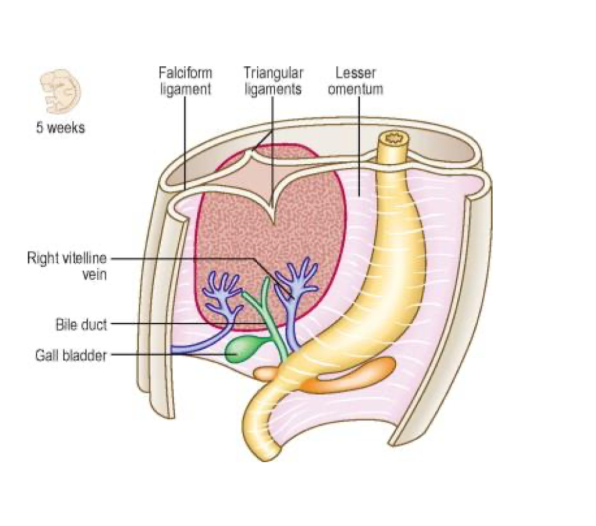
What is the ligamentum venosum
Remnant of ductus venosus
What are the 3 components of the portal triad
- Common bile duct
- Hepatic artery proper
- Hepatic portal vein
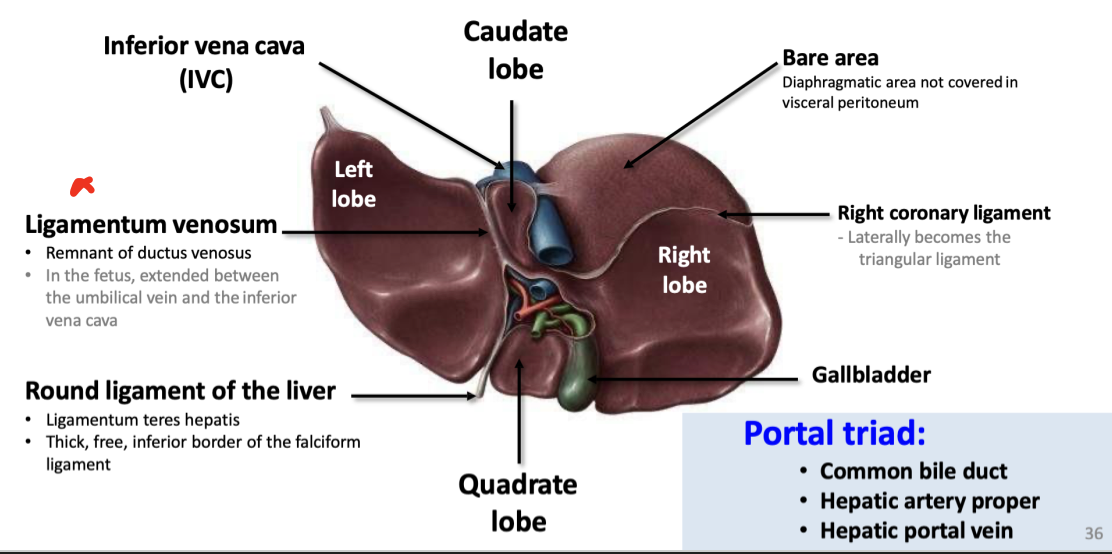
Posterior surface of liver - arterial and venous supply
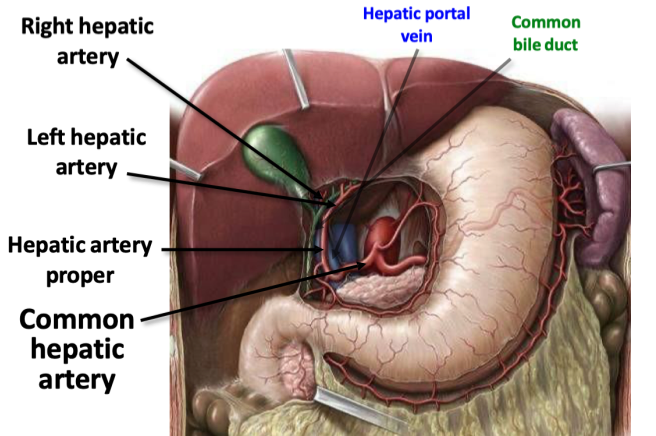
Where does the common hepatic artery branch from
Celiac trunk
When does the common hepatic artery become the hepatic artery proper
When the gastroduodenal artery branches off to travel inferiorly
Where does the hepatic artery proper branch
At the PORTA HEPATIS to become the right and left hepatic arteries
Where does the liver receive blood from
ARTERIAL
Hepatic arteries - 20-25%
VENOUS
Hepatic portal vein - 75-80%
Where does the hepatic portal vein carry blood to and from
Carries all nutrients (carried in venous blood) from GIT directly to the liver
What is special about the O2 content in the hepatic portal vein
Has a slightly higher O2 content than the venous blood in the systemic system
(Blood that has drained from the muscles in lower limb drains into IVC)
When does the hepatic portal vein form
When the superior mesenteric and splenic veins unite
Venous drainage of the liver
Hepatic vein drains blood away from liver and back to systemic system
What do the central veins of the liver form
central veins of liver unite together and drain to form the left, right and middle hepatic veins respectively






