What are these landmark lines?
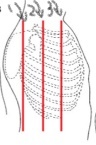
- Posterior Axillary Line (PAL)
- Mid Axillary Line (MAL)
- Anterior Axillary Line (AAL)
What are these landmarks?
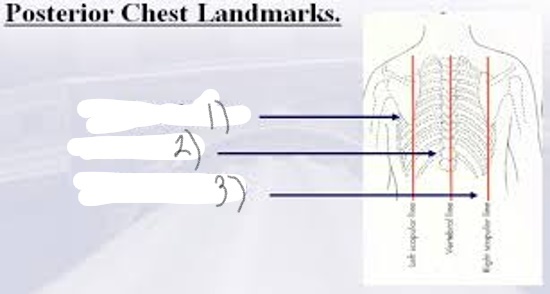
- Left-scapular line
- Vertebral Line
- Right-scapular line
The top part of the lungs:
The bottom of the lungs from T10-T12:
Apex of lungs
Base of lungs
How many lobes do the lungs have?
Right lung= 3 lobes
Left Lung= 2 lobes
What part of the lung do you listen to when ausculating anterior?
Ausculating posterior?
Anterior= Upper lobes (listening to bronchial)
Posterior= Lower lobes (For fluid/infection)
What triggers involuntary breathing?
- Increase in CO2 in blood (hypercapnia)
- pH of blood
What is orthopnea:
What is Dyspnea:
Ortopnea: Difficulty breathing when lying down
Dyspnea: Shortness of breath
What is blood sputum referred to as?
Hemoptysis
A respiratory rate >24:
A RR >24 and deep:
>24: Tachypnea
>24 and deep: Hyperventilation
A RR <10:
A RR <10 and shallow:
A RR <10: Bradypnea
RR <10 and shallow: Hypoventilation
What are common risk factors for lung disease?
- Smoking
- Environmental
- Family History
- Being Immunocompromised (> infections)
What subjective data is important to collect about the lungs?
- Persistant cough
- Bloody sputum
- Voice change
- Orthopnea
- Activity intolerance
A patient exhibits
- pursed lip breathing,
- clubbing,
- sitting in a tripod position
What might these symptoms indicate?
COPD
- Slow expiration prevents airway collapsing
- Position allows all muscles to aid in expiration
When inspecting the patient, what do you look for?
- RR: 10-20
- Quality of breath
- Trachea (midline?)
- Use of accessory muscles
What is this condition?
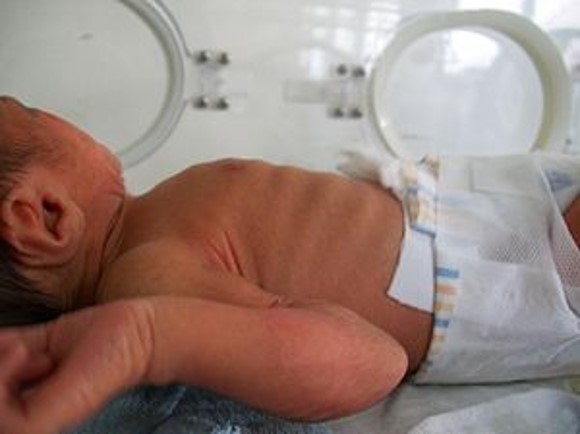
Intercostal retractions when breathing (abnormal)
When inspecting the thorax, what is expected symmetry?
Anterior-posterior diameter: 1
Transverse diameter: 2
Barrel chest (AP=Transverse) indicates:
Long term hypoxia with emphyzema
When palpating the thorax, what are you assessing for?
- Tenderness
- Lesions
- Temperature
- Moisture
When percussing the thorax (intercostal spaces), what are expected findings?
Expected: Resonance
What do these abnormal percussion noises of the thorax indicate:
- Hyper resonance (hollow)
- Dullness (dense)
- Flat (very dense)
- Hyper resonance= emphysema
- Dullness= Pneumonia
- Flat= Tumor
How many regions do you inspect when auscultating the lungs?
Anterior= 6-8 (Above clavicles, 2nd ICS-4th ICS)
Posterior= 8-10 (above first rib, 4th ICS, 6th, 8th, 9th)
Right side= 1 (5th ICS)
Normal tracheal and bronchial sounds:
Harsh, hollow, high pitched, and loud
Normal bronchiovesicular sounds:
Soft blowing, medium pitch, moderate loudness
Normal vesicular sounds:
Rustling, low pitch, soft loudness




