MD PEDIATRIC Flashcards

(131 cards)

1
Q

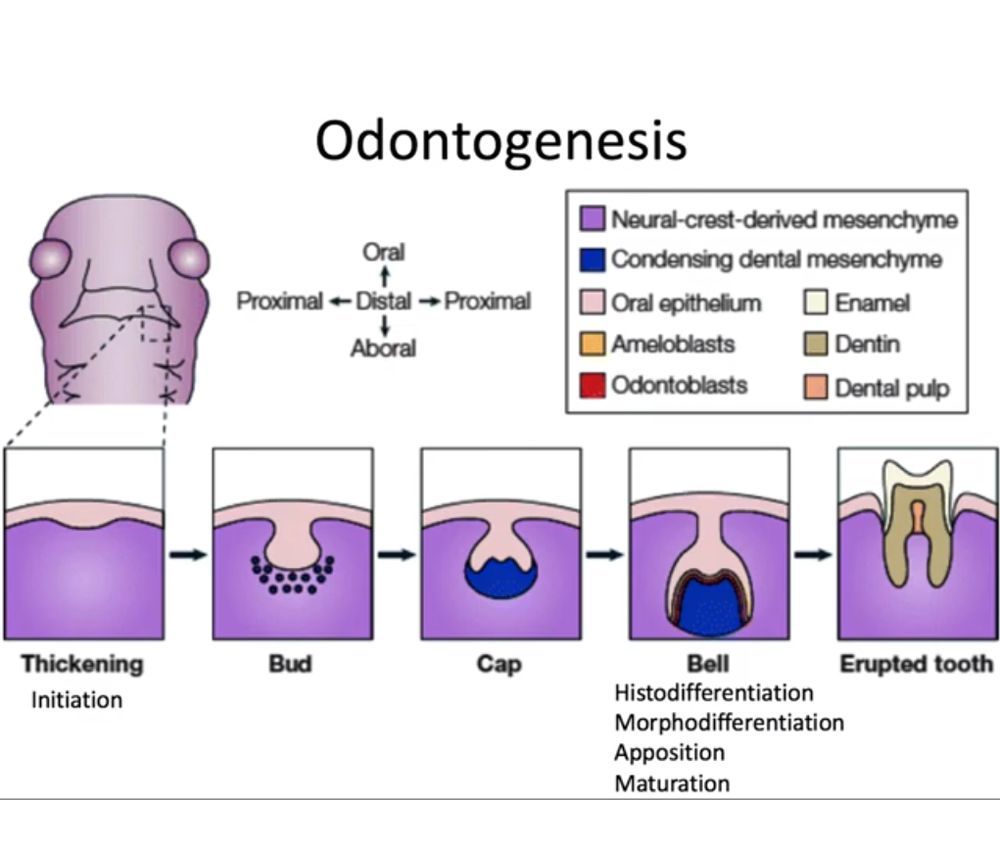
what are stages of tooth development and time?

A

initation stage ( 6 weeks )

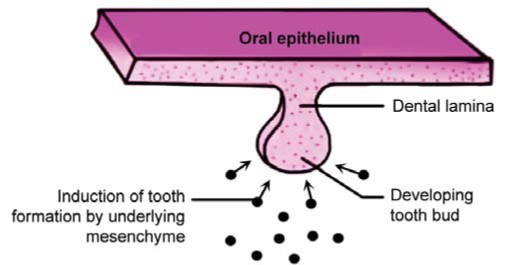
bud stage ( 8 weeks)

Cap stage (9 weeks)

Bell stage ( 11 weeks)

Maturation ( 14+ week)

eruption
2
Q

all primary teeth and permanent molars arise from what tissue ?

A

DENTINAL LAMINA !!

BUD STAGE

3
Q

what stage does enamel begin to develop? how long does it take to get to this stage?

A

CAP STAGE ( after bud stage): enamel organ that makes enamel

  • dentinal papilla: rest of tooth bud creates dentin and pulp
  • Dental follicle: surrounding sac surrounds dentinal papilla and enamil organ

9 weeks

4
Q

what is the dental follicle?

A

Sac of cells surrounds both the enamel organ and the dental papilla (creates dentin and pulp)

5
Q

what stage follows cap stage and what is being created?

A

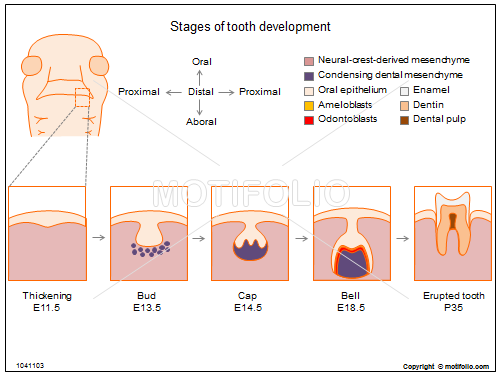
Inner cell layer (IEE) : ameloblasts

Dental Papilla: odontoblasts (dentin making)
6
Q

what are the stages of BELL stage?

A

Histodifferntiation: IEE -> ameloblasts ; Dental papilla -> odontoblasts

Morphodifferntiation: shape and size of crown determined during this process

Apposition: odontoblasts: deposit dentin matrix (collagen) ; ameloblasts: deposit enamel matrix; Cervical Loop: IEE and OEE join (HERS and epi rests of Malassez)

IEE + OEE = REE ( functional epithelium)

Maturation : depsit enamel and dentin; calcification begins at cusp tips and goes down
7
Q

what is the longestr stage of tooth development?

A

maturation ( bell stage)

8
Q

how long does it take to complete maturation of primary tooth crown?

A

2 years

9
Q

how long does it take to complete permanent tooth crown ?

A

4-5 years

10
Q

SUMMARY OF ERUPTED TOOTH

A

Enamel organ: emloblasts -> enamel

Dental Papilla: odontoblasts -> dentin; central cells-> pulp

Dental Follicle: cementoblsts -> cementum; osteoblasts -> alveolar bone ; fibroblasts -> PDL

11
Q

calcification order :

central incisors

lateral incisors

canines

first molars

second molars

A

central Incisors : 14 weeks

First molar: 15 weeks

Lateral incisors: 16 weeks

Canines: 17

second molars: 18 weeks

12
Q

development order

calcification order :

central incisors

lateral incisors

canines

first molars

second molars

A

central inciros ( mandibular first) : 6-7

lateral incisors ( max first) : 7-8

first molars: 9-11

canine: 10-12

second molars : 10-12

13
Q
A
14
Q

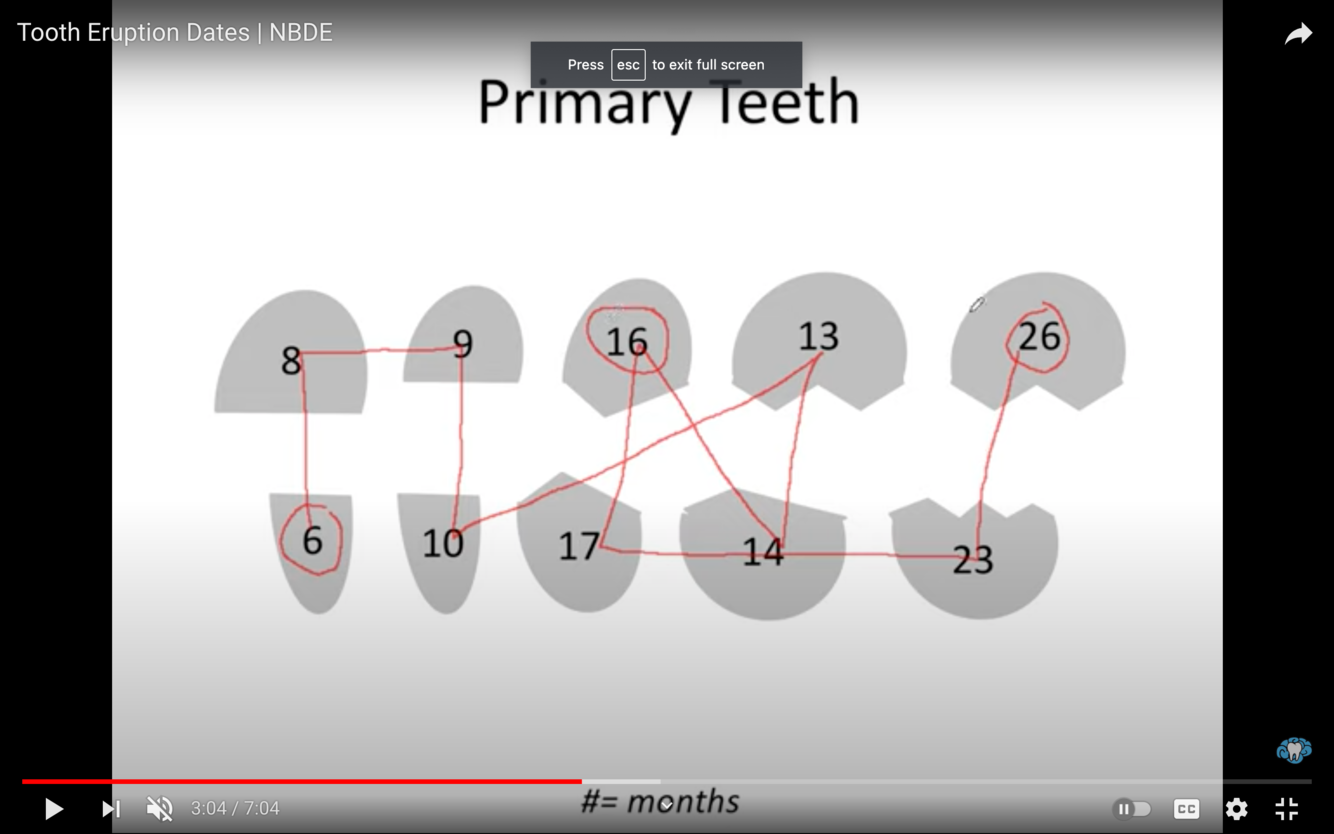
primary tooth development?

A
15
Q

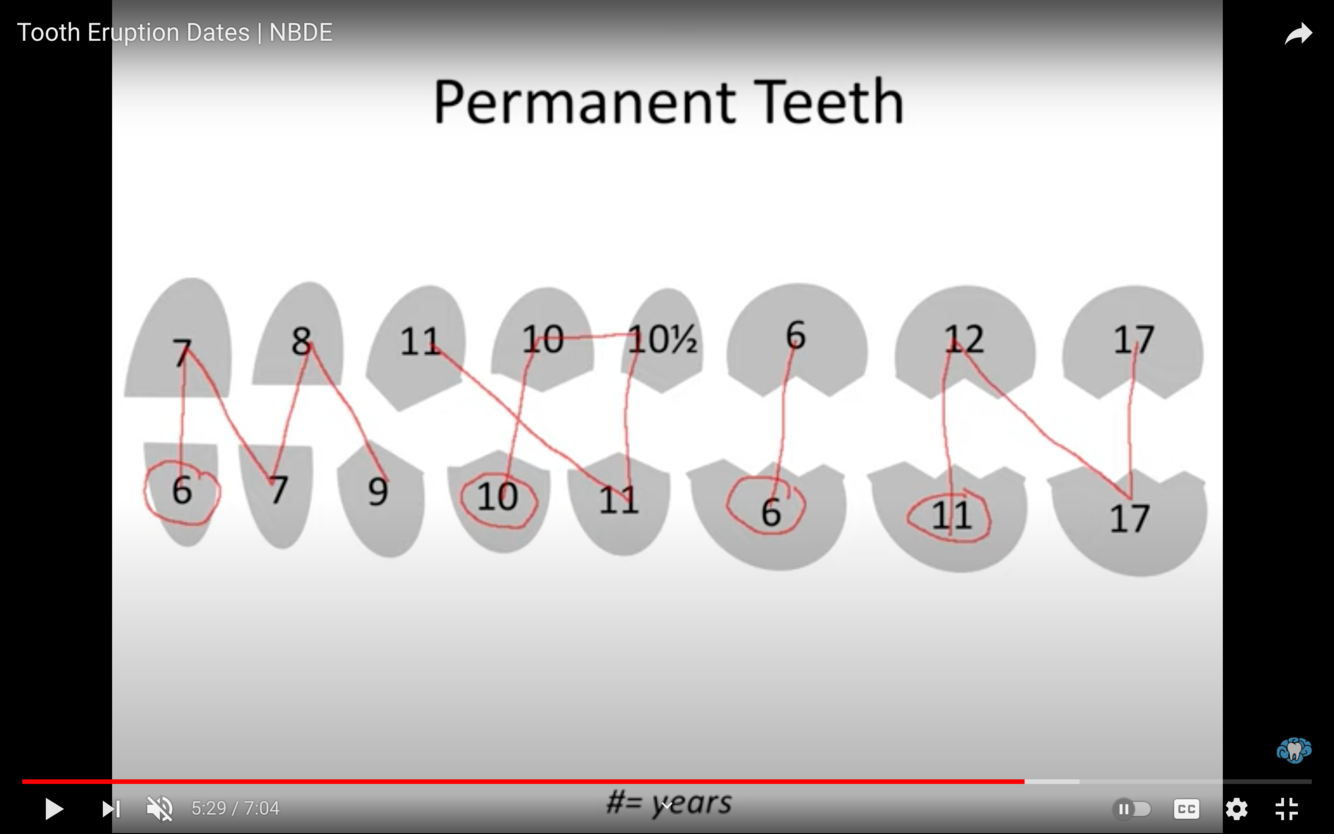
permanent tooth development

A
16
Q

most common supernumery teeth?

A

mesiodens ( middle ebtween 8 and 9)

17
Q

most common missing teeth order?

A

3rd molars

mandibular 2nd PM

maxillary Laterals

Maxillary second PM

18
Q

most common congenitally missing primary tooth?

A

Maxillary Lateral Incisor

19
Q

which one affects cap stage/ bell stage?

microdontia

fusion

gemination

macrodontia

A

Bell: Micro and Macro

Cap: FUsion and Gemination

20
Q

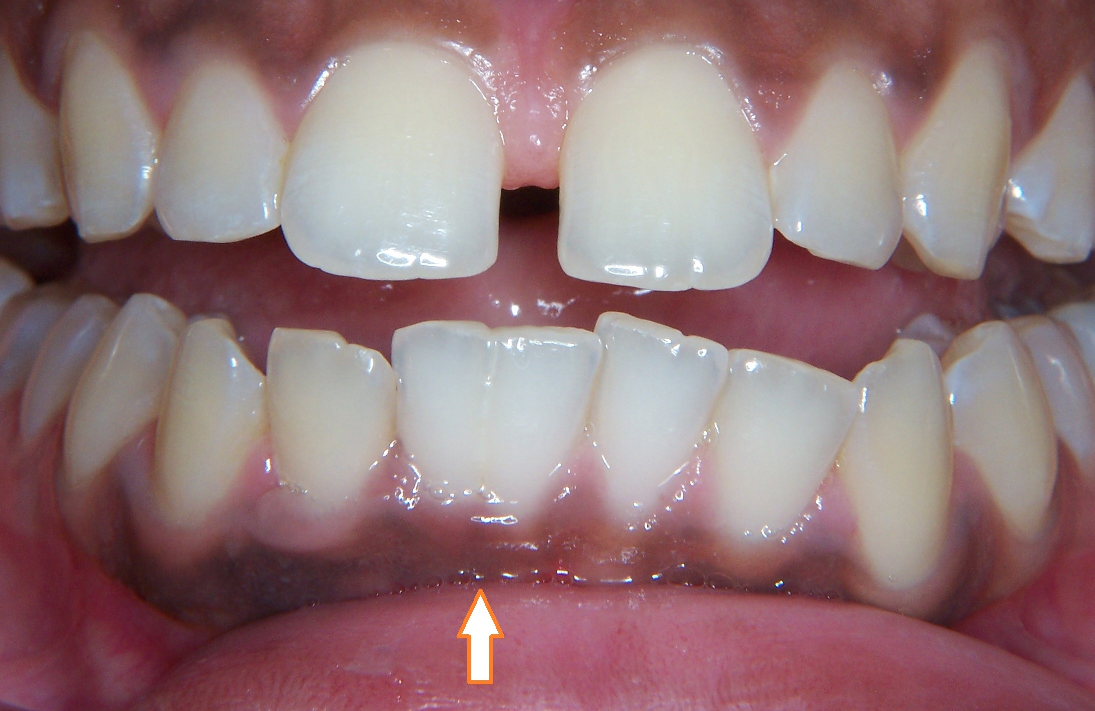
patient walks in count was one less than normal. what do they have?
A

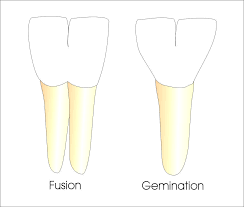
FUSION

always anterior

2 buds merge into 1 tooth

21
Q

patient comes in with normal count of teeth. what is this called? what happens during it?
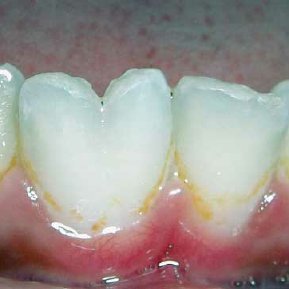
A

gemination !

  • 2 crown 1 root

tooth count normal

22
Q

patient has tooth with extra cusp. what is this ?

dens invaginatus

dens evaginatus

tauradontism

dilaceration
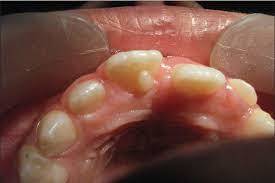
A

dens Evaginatus :

talon cusp, has pulp, dentin , enamel ( dont extract)

23
Q

patient walks in and radiographs shows a tooth growing inside anotherl . what does this patient have? what causes this ? what tooth mostly found in?

dens invaginatus

dens evaginatus

tauradontism

dilaceration
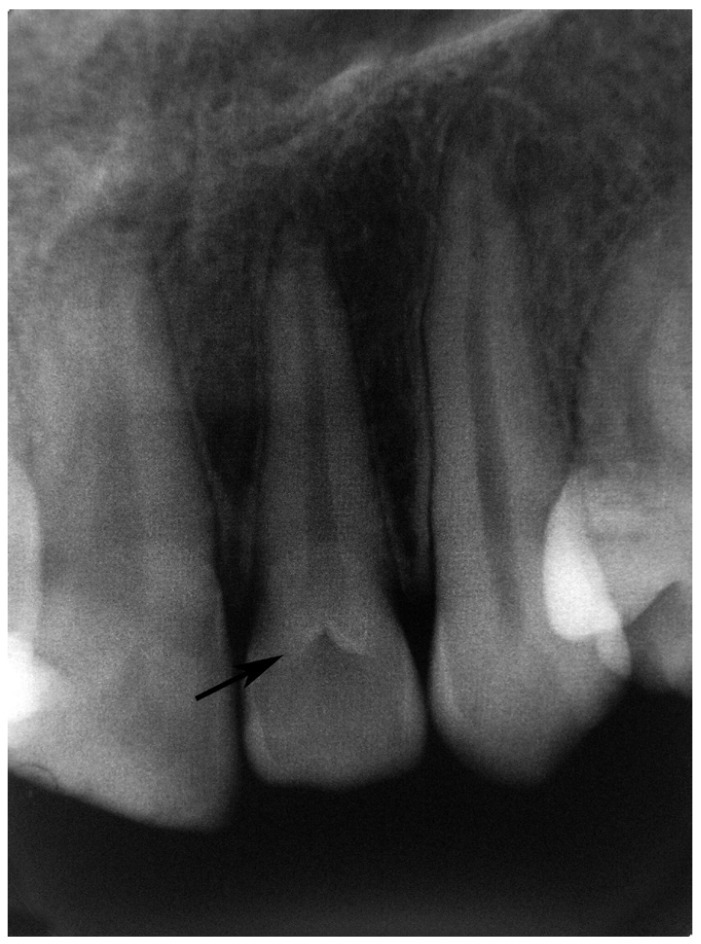
A

dens invaginatus ( dens in dente)

caused by invagination of IEE

permanent maxillary lateral

24
Q

what does this radiograph show an image of ?
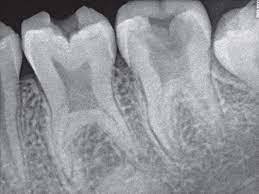
A

taurodotism

elongated pulp chamber and short roots

25
what does this show an image of and what causes it ?
DILACERATION traumatic injury to primary tooth
26
patient walks in with this radiograph. what do they have? amelogenesis imperfects dentinogenesis imperfects regional odontodysplashia enamel hypoplasia
dentinogenesis imperfects ( no pulp)
27
a patient walks in with blue scelera in her eye. this is a feature of what? ## Footnote amelogenesis imperfects dentinogenesis imperfects regional odontodysplashia enamel hypoplasia
dentinogenesis imperfecta
28
what does this patient have? ## Footnote amelogenesis imperfects dentinogenesis imperfects regional odontodysplashia enamel hypoplasia
amelogenesis imperfecta : alteration of enamel
29
what does this patient have? amelogenesis imperfects dentinogenesis imperfects regional odontodysplashia dentin dysplasia concreasence enamel hypoplasia
dentin dysplasia !! chevron pup;s, short roots, messed up dentin short roots: type 1 Chevron pulps: type 2
30
what does this patient have? ## Footnote amelogenesis imperfects dentinogenesis imperfects regional odontodysplashia dentin dysplasia concreasence enamel hypoplasia
REGIONAL ODONTODYSPLASIA ghost teeth
31
after extraction. adjacent teeth look as though fused together by cementum. what is this concreascance fusion gemination
concreascene
32
difference between gemination fusion concreascence
fusion: 2 buds / 1 tooth ( one less) gemination (one root 2 crown ( normal) concr: adjacent fuse togehter
33
patient walks in with this. what is this condition? amelogenesis imperfects dentinogenesis imperfects regional odontodysplashia dentin dysplasia concreasence enamel hypoplasia
ENAMEL HYPOPLASIA turners hypoplasia
34
patient walks in with this. what is this condition? amelogenesis imperfects dentinogenesis imperfects regional odontodysplashia dentin dysplasia concreasence enamel hypoplasia
enamel hypoplasia congenital syphilis ( hutchinsons incisors and mulberry molars)
35
difference between primary and secondary mandibular first enamel in terms of - enamel - pulp - rootsa
primary: thinner enamel bigger pulp more divergent roots
36
this tooth is widest anterior tooth M-\>D direction and only ant tooth where width is bigger than height
primary maxillary central inciros
37
this tooth is widest anterior tooth FL direction
primary maxillary canine
38
what has longer and sharper cusps - primary maxillary canine - permanent maxillary canine - primary mandibular canine
PRIMARY MAX CANINE
39
this tooth resemebles oermanent maxillary 1st premolar
primary max 1st molar
40
this tooth has most prominent MF cervical ridge of max primary teeth
primary maxillary 1st molar ( resembles perm max 1st PM)
41
wides FL of ALL primary teeth and what does it resemble?
PRIMARY MAX 2ND MOLAR resembles perm max 1st molar last primary tooth to erupt onlyp rimary tooth with cusp of carabelli, oblique ridge, and DL groove
42
this is the only primary tooth with cusp of carabelli, Oblique Rirdge , and DL groove
primary max 2nd molar
43
this primary tooth has smallest FL
primary mandivular central incisor
44
this tooth is the most symmetrical tooth !
Primary Mand Central Incis.
45
this is the most unique tooth in dentition. has ML ice cream cone cusp which is highest and sharpest, 4 cusps and 4 pulp horns, CEJdips more on mesial half resulting in S shape cervical
Primary mand 1st molar \*\*\*
46
which cusp is the largest and highest on primary 1st mandibular molar ?
MB : LARGEST ML: HIGHEST AND SHARPEST
47
this tooth has widest MD in whole dentition
prim. mand. 2nd molar
48
how many cusps and roots of primary mandibular 2nd molar
2 roots and 2 canals prim mand 1st: 4 cusps 3 pulp horns
49
this tooth crown resembles perm mand 1st molar
primary mand second molar
50
primary tooth amalgam depth and isthmus width
depth: 1.5 mm isthmus width: 1/3
51
area of primary tooth where composite rstoration most common failure
gingival margin
52
stainless steel crown for teeth affected by caries that extend where? direction youre suppose to seat SSC?
past axial line angles lingual to buccal
53
patient walks in and has caries on primary incisors is worried about ESTHETICS. what rsetorative procedure should be done?
**strip crown** for primary incisors w/ proximal caries 1 mm incisal reduction !!
54
child walks in with R/L under tooth with pain, mobiity. what does this mean?
furcation r/l sign of necrosis for a primary pulp
55
what material should you use for Indirect pulp cap
CaOH or RMGI
56
when doing a procedure, accidentily have pinpoint pulp exposure on primary tooth. how shouls this be fixed and what is complication that could happen?
CaOH directly on pulp RMGI placed over as restoration INTERNAL ROOT RESORPTION
57
PULPOTOMY is for what type of pulp and what material should be used ?
VITAL and restorable primary tooth with exposure Formocresol: coagulation ZOE for BU SSC for coverage formecrosl -\> ZOE -\> SSC
58
PELPECTOMY PROCEDURE: what type of pulp? what tooth to not do on? material
NECROTIC and RESTORABLE teeth ( non resotrable= extraction) Primary first molars: acessory canals basically RCT but using ZOE
59
under what circumstance to EXT primary tooth
necrotic 1st molar nonresotrable root resorption ( except secondary primary molar so acts as space maintaner)
60
procedure for primary first molar with furcation ?
extraction
61
procedure for primary second molar with furcation ?
pulpectomy
62
procedure for tooth with no furcation involvement but endo sympms
pulpotomy
63
WHAT IS THE PRIMATE SPACE ON MAND AND MAX?? \*\*\* WHEN IS IT GONE?
Max: **M** to canine ( lat incisor and canine) Mand: **D** to canine ( 1st molar and canine)
64
WHAT IS LEEWAY SPACE
difference in size of the mesiodistal crown widths of the primary canines and molars compared with that of their permanent successors (canine, first and second premolars primary = more upper: 2.5 mm lower : 1.5 ,,
65
interdental space is caused by what? \*\*
growth of dental arches !!! ( Board ?)
66
what is the ugly duckling stage? age? \*\*
preceeds eruption of **_max canines_** ( 7-11 y/o)
67
match the terms: space management Space maintanence Space Regaining Reactive, Retroactive, Proactive
mange: proactive ( manage and hold leeway space) maint: reactive regaining: retro (want 3 mm max)
68
primary incisor loss causes what? and how to fix it?
localized space loss kiddie partial for speech and esthetics
69
primary canine loss? how to fix it?
cause lingual collapse of incisors and loss of arch ength LOWER LINGIAL ARCH or NANCE from perm first molars
70
when to use LLHA? and what teeth do they wrap around?
PRIMARY CANINE LOSS permanent first molars !
71
what to use for primary first molar loss ?
BAND AND LOOP LLHA or NANCE
72
what to use when primary second molar is lost?
**DISTAL SHOE** : from primary first molar to unerupted permanent 1st molar LLHA or NANCE: if permanent first molar is already erupted
73
when do we use : LLHA? NANCE? Distal Shoe? band and loop
LLHA or nance: if Perm first molar erupted BAND AND LOOP : primary fitst molar loss DISTAL SHOE : primary second molar loss
74
average tooth pierces bone with how much root formation?
2/3
75
average tooth pierces gingiva with how much root formation?
3/4
76
rule of 7 with primary molar lost?
lost before 7: eruption of PM delayyed Lost after 7: PM accelerated
77
space closure accours within ____ months after tooth loss
first 6 months
78
lingual eruption of teeth. how to treat?
double row of teeth: resolve on their own
79
(ectopic eruption) patient walks in with their teeth erupting laterally. what procedure should be done?
extract contralateral primary lateral teeth asap to avoid midline deviation
80
patient walks in. his molars are out of occlusion and have a hollow sound when tapped. what does patient have and treatment?
ANKYLOSED PRIMARY MOLARS no tmnt necessary
81
healthy gingiva in children vs adults color?
children: reddish due to thinner epithelium less keratinization, grater vascularity Adults: coral pink
82
children vs adults healthy gingiva features: contour
kids: rounded and rolled margins due to edema adults: knife edged
83
children vs adults healthy gingiva features: texture
kids: flabby adults: firm and resilient
84
children vs adults healthy gingiva features: sulcus
kids: deeper Adults: less deep
85
gingivits in children is induced by what?
**plaque**!!!!!
86
parents should participate in kids oral hygiene until what age
8 !!! b/c manual dexterity
87
what is ANUG? tmnt?
acute necrotizing ulverative gingivitis A; painful fever N: dying tissue U: pseudomembrane G: bleeding, inflammed gums, blunted papilla tx: Debridement, oxidizing mouth rinse, AB
88
what is RAG?
reduced **attached** gingiva atached gingiva: best gingiva
89
most common cause of inadequate attached gingiva?
labial eruption path
90
kid walks in with bump on crest of alveolar ridge. what is this and tx?
eruption cyst txx: nothing, simple surgical excision if symptomatic
91
tx for this high frenum?
CLOSE SPACE FIRST! THEN FRNECTOMY !
92
PREPUBERTAL PERIODONTITIS INVOLVES WHAT TEETH FIRST? tx?
PRIMARY MOLARS tx: debridement and AB
93
most common teeth for trauma in children? overjet in children?
maxillary anteriors \> 6 mm ( usually)
94
concussion or subluxation of teeth. what is it and what is tx?
mobility of tooth but no displacement ( luxators loosen teeth) no tmnt
95
child walks in tooth pushed in. what is this? tx? issue with this?
INTRUSION tx: none: spont erupt can damage permanent teeth - hypoplasia: during apposition - hypocalc: during calcification - dilaceration: during toot formation
96
child walks in and tooth pulling out. what does patient have? tx?
EXTRUSION of primary teeth TX: extruded more than 3mm = extraction if patient seen before PA blood clot then **REPOSITION** and **FLEXIBLE splint** 1-2 weeks
97
patient has avulsion of primary tooth. tx \> and \< than 30 minutes?
\<30: replant, flexible splint 1-2 weeks, soft diet, AB, endo tmnt \> 30: extract and space maint.
98
crown fracture of primary tooth. what to do if in enamel only? enamel and dentin? E and D and P ? \*\*\*\*\*\*
E: smooth D: restore EDP: pulpotomy: if vital Pulpectomy: non vital extract: if pathologic root resorption
99
a child walks in with root fracture. what to do if its in the apical half? coronal half?
apical: no tmnt coronal: rigid splint or ext
100
what is damaged in internal root resorption? External root resorption?
IRR: odontoblastic layer in pulp ERR: cementoblastic layer in PDL
101
age of most common child abuse and neglect?
0-3
102
dentist suspect child is being abused or neglected. he has no proof. what should the dentist do? \*\*
by law they have to report it !!!!
103
what is the frankl rating scale?
1: definitely negative 2= negative resistence 3= positive acceptance 4 = definitely positive
104
this is a no-tmnt dental visit to be introduced to dental setting
familiarization
105
the knee-toknee exam is for what patients? where is the childs head?
infants \<2 y/o Head: in DENTISTS lap
106
when should reinforcement be ?
immediate and specific to desirable behavior !
107
punish with the purpose of extinguishing or imporving negative behavior is caleld what? what patients does this not work on? defiant ucnontrolled timid tense cooperative whining
Aversive Conditioning not for **timid** and **tense-cooperative** palce hand over mouth to gain attention of **uncontrolled** patient
108
ADHD more common in M or F? age appears? most common meds?
M 3-6 methylphenidate ( ritalin) atomexetin (straterra) aphetamine (aderall)
109
patient with repetitive behavior and heightened sense of light and sound usually has what?
autism
110
MAX RECOMMENDED DOSE OF ANESTHETIC? \*\*
4.4 mg/kg
111
nitrous sedation in children steps
- fil bag w/ O2 and place on patients nose with flow rate 4-6 L/min - inc 10% increments to about **30**% for operative procedures - after stopping lungs fill with nitrous so give patients 100% O2 3-5 minutes
112
MOST COMMON COMPLICATION OF NITROUS SEDATION?
nausea
113
what is minimum alveolar concentration ( MAC) ? Mac of nitrous oxide?
conc required to render 50% of patients immobile 105%
114
is asthma a contraindication to nitrous ?
No !!! mild to moderate asthma is okay
115
3 contraindications to nitrous?
\<2 y/o uncooperative wheezing episode (asthma is okay tho)
116
4 stages of anesthesia?
1 paresthesia 2 vasomotor (warm) 3 Drift 4 Dream" eyes closed, jaw sagging
117
how is fluoirde in children given?
prescription only
118
fluroide for children \> 3 y/o?
fluoride tablets and lozenges !!! lozenges only above 3
119
fluoride in children \<3 y/o
fluroide drops !!! children cant swallow tabs
120
fluoride children \> 6
fluoride **mouth rinse**
121
thumbsucking very common in what age?
up to 3 !!
122
effects of thumbsucking? overjet, ant teeth. max, posterior?
increased overjet ant open bite maxillary constriction posterior crossbite
123
what age should appliance to intervene with thumbsucking be placed and what are 2 examples?
5 or 6 Crib BLuegrass : roller on ant plate crib: steel fixed appliance in anterior palate region
124
teeth present at birth called?
natal teeth !
125
teeth that erup within first 30 days called?
neonatal teeth
126
most common natal and neonatal teeth?
primary mandibular incisors
127
baby walks in and teeth causing ulceration on ventral tongue. what is this and what is tx?
riga-fede disease smooth or extract
128
EARLY CHILDHOOD CARIES also called what? patient what age? 2 things that cause it?
- baby bottle syndrome - younger than 6 years - constipation -\> fruit juice consumption - ear infection -\> AB with high sucrose
129
when should infants drink from a cup? age of first dental visit?
1 by age 1
130
age infant should use pea size of toothpaste?
2-5
131
age patient should use smear of toothpaste?
before age 2