what are three methods of solute transport across cell membranes
- passive/non-carrier mediated
- passive/carrier mediated
- active
three examples of passive non carrier cell transport
- simple diffusion across the cell membrane
- simple diffusion through pores
- simple diffusion through gated channels
what is an example of carrier mediated transport
facilitated diffusion
what are three methods of active solute transpoirt
- active transport requiring ATP
- active transport using energy from redox reactions
- secondary active transport
osmosis
the diffusion of water across a cell membrane
what happens in secondary active transport
two simultaneous movement of two link substances across a cell membrane
two types of secondary active transport
- symport
- antiport
symport
coupled transport where the linked substances move in the same direction
antiport
coupled transport where the two substances move in opposite directions
what types of solutes are capable of simple diffusion? examples (3)
solutes must be uncharged and hydrophobic
- gasses
- steroid hormones
- anesthetics
what is the driving force behind simple diffusion
the concentration gradient on either side of the cell membrane
define all variables
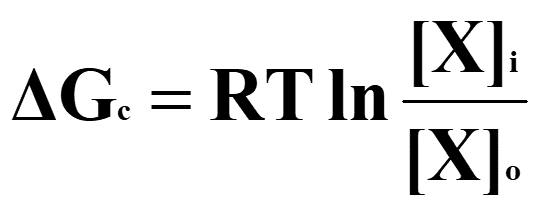
R = ideal gas constant (.002kcal/mol)
T = temp in Kelvin (310 in humans)
Xi = intracellular fluid concentration of X
X0 - extracellular fluid concentrationof X
flux
the number of moles of a solute that cross a unit area of a membrane per unit of time (moles/cm2 * s)
what is ficks first law of diffusion
flux will move from areas of high concentration to areas of low concentration
what two factors determine the amount of flux (diffusion)
- permeability of the membrane to X
- magnitude of the gradient fo X across the membrane
pores
intergra membrane proteins that for conduits that are always open
channell
a gated pore that can be opened or closed
describe the variables and what this equation means (3)
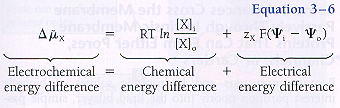
- the electrochemical difference is the the driving force behind passive diffusion
- the electrochemical difference is the sum of the chemical energy difference and electrical energy difference
- z = valence of the ion, F = .023kcal/mol *mV, psi1 - psi0 = the membrane potential
describe the variables
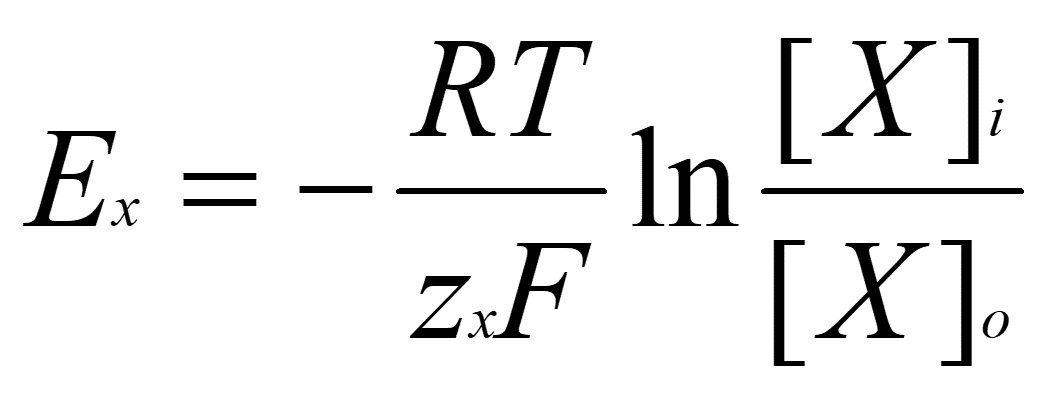
- E si the equilibrium potential for the ion
- R is the ideal gas constant
- T is the temperature in kelvin
- Xi is the ICF solute concentration
- Xo is the ECF solute concentration
- zx is the valence of electron x
- F is Farraday constant
what are six steps in passive membrane transport through integral membrane proteins
- the carrier protein is open
- x enters the protein and bind to the binding site
- outer gate closes and x becomes trapped in the protein
- inner gate opens with x still bound
- X exits the inside of the cell
- the outer gate closes, occluding the empty binding site
primary active transport
solute movement against electrochemical gradiant that requires energy
what are two sources of energy for primary active transport
- ATP hydrolysis
- directly from a primary metabolic reaction
aquaporins
specialized water channels in the cell membrane
what are two types of cells that always have aquaporins (AQP1)
- RBCs
- Renal proximal convoluted tubule






