What is computer data storage?
Computer data storage refers to computer components and recording media that retain digital data used for computing for some interval of time. Computer data storage provides one of the core functions of the modern computer, that of information retention. It is one of the fundamental components of all modern computers.
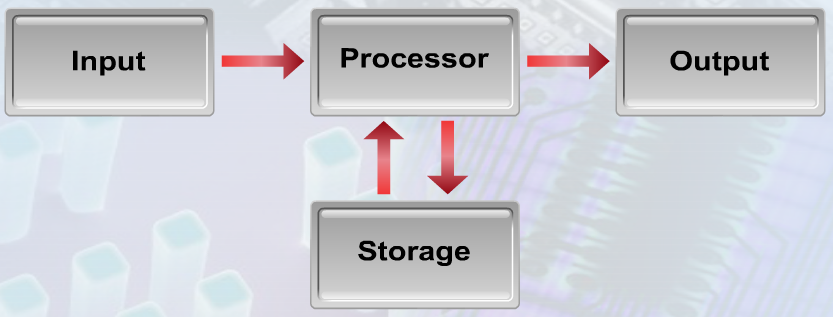
Describe the characteristics and state examples of:
primary storage
- Directly connected to and accessed by a computer’s CPU
- Typically volatile memory (except ROM), meaning it can only retain data as long as there is power provided
- Used for processing data
- Data on primary storage is accessed about a million times faster than data on secondary storage
- Typically smaller than secondary storage
Examples: Read Only Memory (ROM), Random Access Memory (RAM) and DVD-RAM
Describe the characteristics and state examples of:
secondary storage
- Indirectly accessed, typically by a cable
- Non-volatile memory, meaning data is retained when the computer is turned off
- Used for storing long-term data
- Data accessed slower than on primary storage, as it must first be copied into the primary storage in order to be used
- Typically larger than primary storage
Examples: Hard Disk Drive (HDD) and Solid State Drives (SSDs)
Describe the characteristics and state examples of:
off-line storage
- Removable from computer
- Cannot be accessed without human interaction (physically inserting/removing the device)
- Used to transport data
- Can be used to backup data
- Can increase security when stored in a remote location, therefore not vulnerable to computer-based attacks (e.g. viruses)
Examples: Digital Versatile Disks (DVDs), Compact Disks (CDs), Blu-ray, USB flash memory and removable disks
What is the difference between memory and backing storage?
- processor can only use data or software in the memory
- memory is not large enough to store all the data and software required by user
- RAM is lost when computer is turned off and ROM cannot be changed, so there is nowhere in the memory for data to be stored long term and be changeable.
- backing storage (auxiliary storage) stores programs and data for future use
- data in backing storage is usually changeable and non-volatile
- access to backing storage is slower than access to internal memory, as data needs to be copied into the memory in order to be used
What is the difference between a storage medium and a storage device?
The storage device is the machine that reads/writes the data; the storage medium is the material on which the device stores data.
Describe the characteristics and give examples of:
magnetic storage media
- Data held magnetically on a medium that moves past a read/write head
- Tiny areas magnetised in different ways to store bits
- Data read by detecting the presence of a change or the absence of a possible change in magnetisation between successive regions
- If the device can read the medium then it can turn it back into codes for the computer
Examples: hard disk drive (HDD), magnetic tape
Describe the characteristics and give examples of:
optical storage media
- Held on surface by ‘pits’ burnt by a laser
- Laser shined on pits. The differences can be used to store the code
- Media can be read by a shining less intensive laser and detecting the intensity of light reflected from successive regions
Examples: CDs, DVDs, Blu-ray
Describe the characteristics and state examples of:
solid-state storage media
- Like internal memory, it is electronic and made as integrated circuits or chips
- No moving parts (makes it robust)
- Fits directly into the computer
- The device and the medium are the same thing
Examples: solid-state drives (SSDs), USB flash memory, flash memory disks

-
Input devices27
-
Serial and parallel data transmission6
-
Output devices22
-
Logic gates28
-
Computer architecture and the fetch-execute cycle13
-
Memory, storage devices and media9
-
High- and low-level languages and their translators10
-
Binary systems and Hexadecimal6
-
Data storage11
-
Security5
-
Ethics0
-
Operating systems21
-
Security aspects0
-
Internet principles of operation23
-
Pseudocode0



