Why are psychiatric clients admitted to the hospital?
Because of suicidal or homicidal tendencies, or because they are unable to care for themselves such as a drug addiction or another psychological disorder.
What is the priority when working with a client with a mental health problem?
Keep the client SAFE by preventing them from harming themselves or someone else:
- Implement suicide precautions
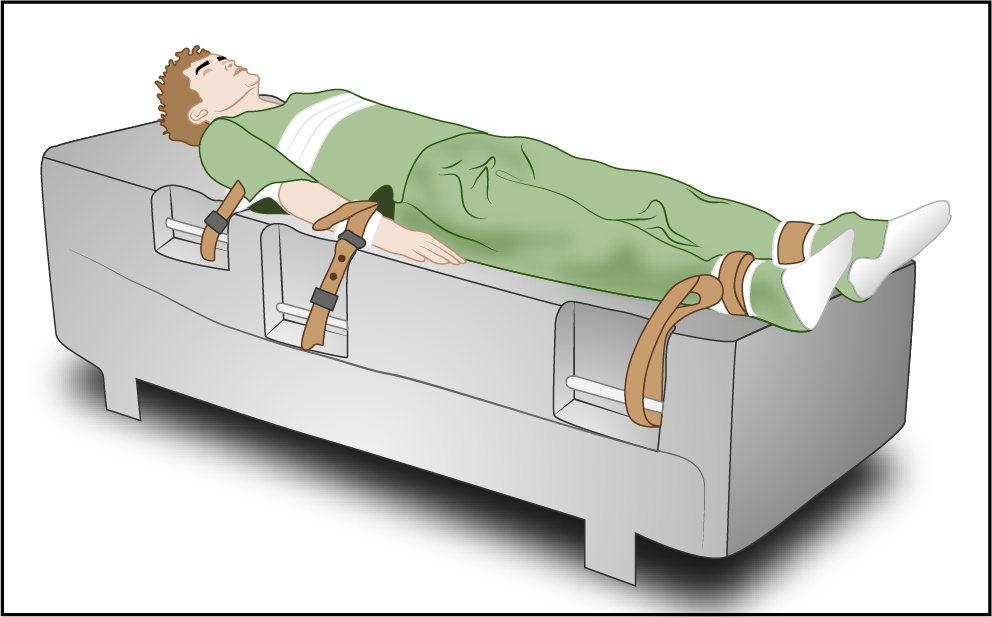
- Restraints if client is violent
What is the difference between a psychotic and a non-psychotic mental health problem?
- Psychotic clients are not grounded in reality and can have delusions and hallucinations. They do not realize that they have a problem.
- Non-psychotic clients understand that they have a problem such as depression or anxiety, but aren’t sure how to manage it.
What are the main psychotic disorders?
- bipolar
- schizophrenia
- schizotypical
What is the treatment for psychotic clients?
- antipsychotics
- therapeutic communication focuses on presenting reality and acknowledging feelings
What are the main non-psychotic disorders?
- depression and anxiety
- Post-traumatic stress disorder (PTSD)
- Obsessive-compulsive disorder (OCD)
- phobias
What is the treatment for non-psychotic clients?
- antidepressants and anxiolytics
- therapeutic communication focuses on getting client to open up about problem and learning how to cope and problem solve
Describe:
Anxiety
A feeling of apprehension, uncertainty, or dread.
It is a normal response to stress and can be mild to severe.
Describe:
Panic
A severe type of anxiety where death can occur.
Clients can experience panic attacks.
Signs and symptoms:
Severe anxiety
- increased tremors
- pounding heart
- hyperventilation
Interventions:
Anxiety
- provide a quiet environment
- promote relaxation techniques
- monitor vital signs and give anxiolytics
- don’t force client into situations that cause anxiety
What are therapeutic communication techniques for a client with mild to moderate anxiety?
- ask client to identify what and how they feel
- encourage discussion of feelings
What are the immediate interventions for severe anxiety and panic?
- stay with client
- provide clear, simple instructions
- use a low-pitched voice
- give anxiolytics
Describe:
Generalized anxiety disorder
An unrealistic anxiety about everyday worries that persist for more days than not for at least 6 months.
It is not associated with any other mental health or medical problem.
Describe:
Post-traumatic stress disorder (PTSD)
When a client experiences a psychologically traumatic event and experiences scary flashbacks.
The symptoms last at least 1 month and can occur months to years after the event.
Interventions:
Post-traumatic stress disorder
- encourage client to talk about feelings
- encourage recognition between feelings and traumatic experience
Describe:
Phobia
An irrational fear of an object, activity, or situation. The phobia can cause severe anxiety and panic.
Interventions:
Phobia
- allow client to discuss fears
- teach relaxation techniques
Describe:
Obsessive-compulsive disorder (OCD)
A preoccupation with thoughts or impulses. It is brought on by anxiety and the need for control.
Ritual behaviors are performed such as constant handwashing or checking the locks.
Interventions:
Obsessive-compulsive disorder
- help client recognize what caused behavior
- let client do behavior unless safety is an issue
- set limits on behavior
- provide activities to distract from behavior
Describe:
Somatic symptoms
Also known as the “hypochondriac”. The client frequently thinks there is a medical problem when there is NO medical problem.
Interventions:
Somatic symptoms
- put a time limit on letting client discuss symptoms
- don’t respond with positive enforcement about physical complaints
Describe:
Conversion disorder
When a mental health issue is converted into physical symptoms.
Example: a client that was emotionally abused becomes blind.
Interventions:
Conversion disorder
Let client talk about relating the physical symptoms with their feelings.



