What materials can be used in metal casting?
1-pure metals: aluminum and magnesium 2-non ferrous alloys: copper 3-ferrous alloys: iron, steal
what are the steps of metal casting?
1-Design: material, surface finish, dimensions and volume 2-Casting using mold/pattern 3-inspection
what are the considerations for creating cavity?
1-Bigger size for metals 2-Shrinkage for metal removal 3-draft angle
what are the two types of molds? give examples.
1-Expendable molds: sand, investment, shell 2-permenant molds: die, continuous, centrifugal
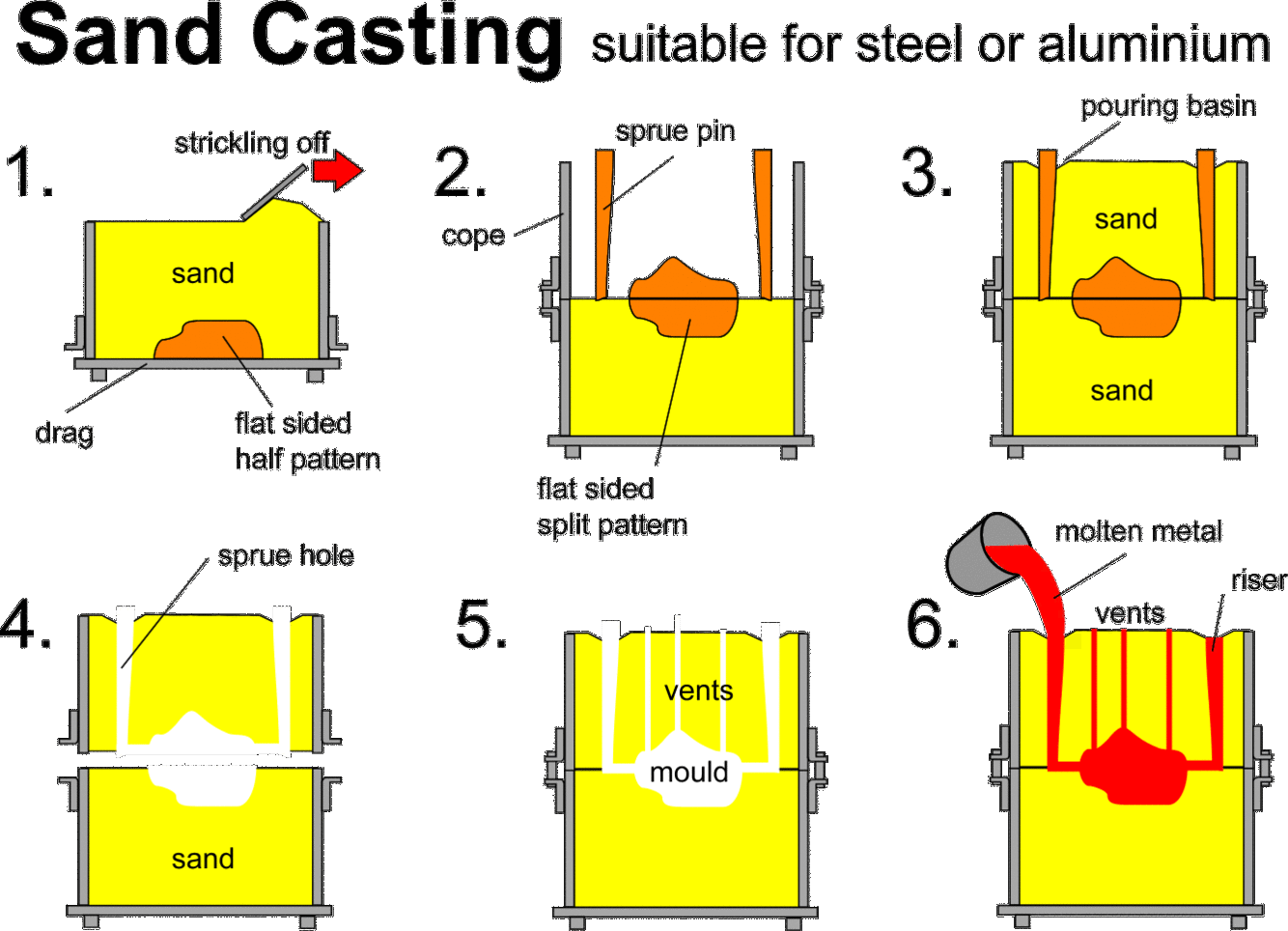
explain the sand casting processes
1-replica making: making replica of the object using wood or plastic 2-mold making: by closing cope and drag 3-casting: pouring molten metal using runners 4-cooling: leaving metal to cool at room temp. 5-removal: breaking the mold and extracting the metal
Why is refractory clay used in sand casting?
to make the sand more solid
where does the runner system lie in the sand casting process?
below the parting line
what are the functions of the riser?
- indicates complete filling of the mold
- venting to reduce humidity in mold
- venting gases
- compensate for shrinkage
what is the function of the draft angle?
allow easy removal of metal from pattern
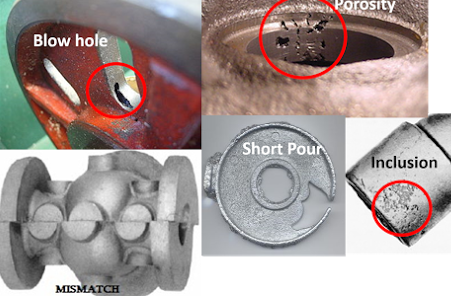
what are the common defects in sand casting what are their causes?
- mismatch: misallignment between cope and drag
- incomplete mold filling (misrun): molten metal cooles too quickly, not enough material, problem in ruuners.
- flashes: excess metal at parting line
- blowholes: humidity and gases trapped because of lack of venting
- inclusions: weak sand
what are the applications of sand casting?
bulky and low cost products: ex. Machine tool beds • Pistons • Mill rolls • Manhole covers • Wheels • Housings
what are the advantages of sand casting?
- produce large products
- cheap
- used with any metal
what are the disadvantages of sand casting?
- poor surface finish
- low dimensional accuracy
- lots of waste
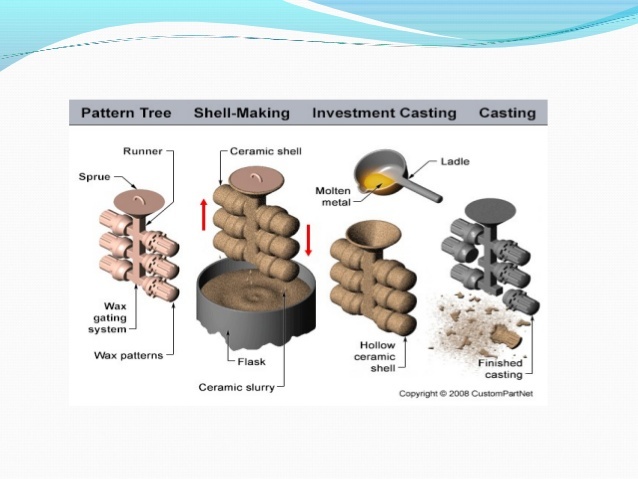
describe the investment casting process?
- dip in ceramic mold
- leave to dry
- put in oven to remove wax
- mold is made of ceramic and pattern made out of wax
what are the applications of investment casting?
• Jewelry • Surgical Implants • Aerospace • Military Equipment • Special Automotive Parts
what are the advantages of investment casting?
- produces products which are small and thin and complicated
- high mechanical accuracy
- great surface finsih
what are the disadvantages of investment casting?
- expensive
- can’t produce large products
- requires skill to operate
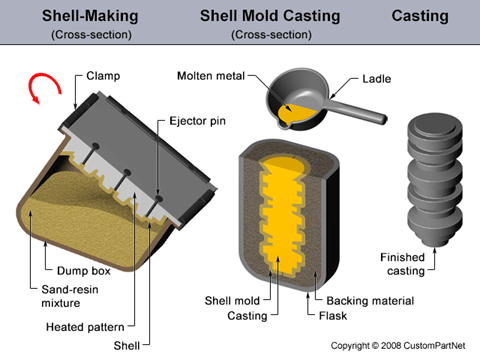
describe shell mold casting?
- pattern is inserted into sand
- the whole thing is flipped
- put in the oven to dry
- pattern made of metal
- mold made out of sand
what are the applications of shell mold casting?
large copmlex objects: • Cylinder Heads • Bearing Housings
advantages of shell mold casting?
- mass production
- good surface finish
- high dimensional accuracy
disadvantages of shell mold casting?
- expensive equipment and material
- limited product weight
- gating must be part of the mold
describe pressure die casting?
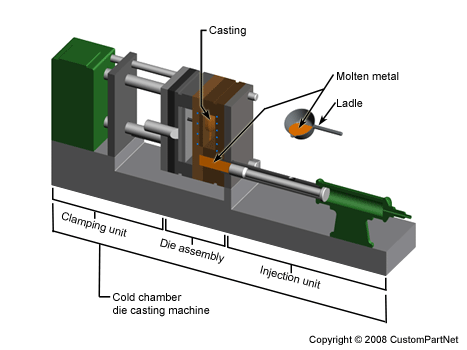
advantages of pressure die?
- low cost
- small products
- great surface finish
- high dimensional accuracy
- economical
disadvantages of pressure die?
- expensive
- limited shapes
- require high investment cost



