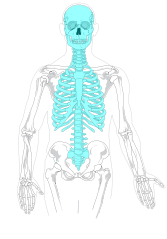
axial skeleton
ribs, sternum, vertebral column, and skull
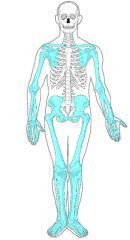
appendicular skeleton
pectoral girdles, upper limbs, pelvic girdle, and lower limbs
how many bones in the body
206
function of bones
- form body structure
- protect vital organs
- provide a point of attachement for muscles
- store minerals
- form blood cells
3 types of muscles
skeletal muscle
smooth muscle
cardiac muscle
skeletal muscle
voluntary
critical for physical mobility
640 muscles
smooth muscle
involuntary
forms the supporting tissue of blood vessels and hollow internal organs
cardiac muscle
involuntary
myocardium
joints
2 bones meet
hold skeleton together
provide mobility
ligaments
connect bones to other bones to form a joint
tendon
connect bones to muscles
carry contractile forces from muscle to bone to cause movement
cartilage
flexible connective tissue found throughout the body
- ribs to sternum
- structure for nose
epiphyseal plate
growth plate
-only pediatric
pediatric differences
- epiphyseal plate
- cartilage between epiphysis and diaphysis
- osteoblasts at growth plate produce new bone within the diaphysis to increase the length of the bone
- bones more porous, less dense = high risk of fracture
older adult differences
- low bone density (more bone resorped than made)
- bones are thinner, weaker
- spinal discs are thinner, loose fluid and thinner bones of the spine=spinal compression
- muscle fibers derease or atrophy (muscle strength, slower rxn time and impaired balance)
- tendons and joints are less elastic
Relationship between comfort and mobility/immobility
- acute and chronic pain
- end of life care
- fatique
- fibromyalgia
increased pain—>
less activity—>increased muscle atrophy and bone resorption
increased fatique—>
decreased muscle control—>decreased balance
end of life–>
decrease in mobility in general
Relationship between health/wellness/illness and mobility/immobility
increased physical activity–>increased muscle mass/strength and bone density
Relationship between stress and mobility/immobility
decreased mobility–>increased stress–>difficulty coping
Relationship between collaboration and mobility/immobility
interaction between multiple clinicans to regain full mobility
Relationship between safety and mobility/immobility
developmental considerations
- infants learning mobility—>increased risk of injury
- children in sports/activities—>increased risk of injury—>decreased mobility
- decreased mobility—>increased risk of falls and fractures in older adults esp.
back and spinal cord alternations
common causes: herniated discs and scoliosis
-overweight and poor physical fitness




