What is an endocrine gland
a group of cells specalised to secrete hormones to target cells through blood plasma
The pancreas and adrenal gland are both examples of what kind of gland
endocrine
Describe the action of a peptide hormone-like adrenaline
- Adrenaline is a first messenger
- the binding of adrenaline activates adenyl cyclase
- this converts ATP to cAMP
- cAMP is a secondary messenger which can cause a cascade of reactions inside the cell
- For example :making glucose more readily available by catalysing breakdown of glycogen into glucose
Describe the action of steroid hormones
- because they are lipid-based can diffuse through the plasma membrane
- bind to receptor in cytoplasm
- this can form a hormone-receptor complex
- which in turn can become a transcription factor
What are the two parts of the adrenal gland
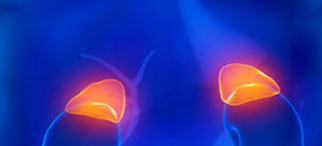
- cortex
- medulla
What kinds of hormones does the cortex secrete and list their roles
-secretes steroid hormones
Glucocorticoids
- stimulate the breakdown of proteins and fats into glucose
- suppress the inflammatory response
Mineralocorticoids
-maintain salt conc to regulate blood pressure
Andorgens
What kinds of hormones does the medulla secrete and list their roles
Peptide hormones
proudces adrenaline and noroadrenaline
adrenaline: increases heart rate and blood glucose conc
noradrenaline: dilate pupils, cause vasoconstriction
Describe the histology of the pancreas
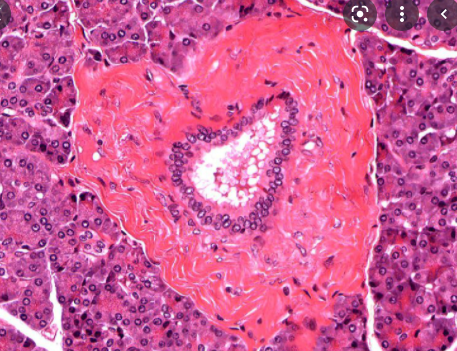
Pancreatic acini
Islets langerhans
Alpha cells
Beta cells
State the role of alpha cells
To secrete glucogon
State the role of beta cells
to secrete insulin
What is the role of insulin
activates enzymes to turn glucose into glycogen
can also increase rate of respiration of glucose in muscle cells
what is the role of glucogon
activates enzymes to break glycogen into glucose
decreases rate of respiration of glucose in cells
What does glycogenisis mean
when glycogen is formed from glucose
happens due to insulin being released
What is glycogenolysis

when you break down glycogen into glucose
What is gluconeogenisis
process of forming glucose from glycerol and amino acids
State the stages of negative feedback when
glucose concentration is high
stimulas: rise in blood glucose conc
receptor: pancreas detects change away from normal
communication response: beta cells in the _islets of langerhan s_ecrete insulin and stops glucagon secretion
effector: Liver and muscles respond by taking up more gluocse, glycogenesis, cells respire more glucose
Stages of negative feedback when blood glucose concentration is low
stimulas: fall in blood glucose conc
receptor: pancreas detects change away from normal
communication response: alpha cells secrete glucogn and stops insulin secretion
effector: Liver cells
-cells respire less glucose, gluconeogensis happens, glycogenolysis happens
Describe the mechanism of insulin secretiton by beta cells
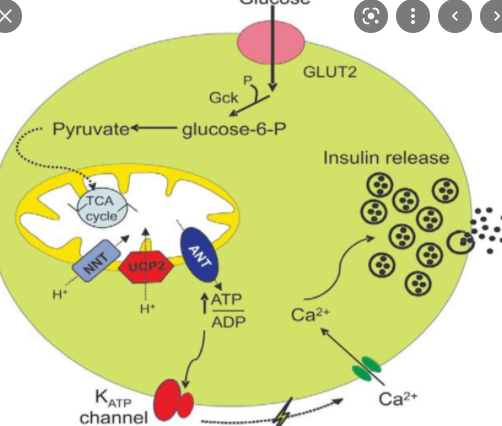
- Blood glucose conc is high, so glucose enters beta cells by facilitated diffusion
- glucose is respired/metablosied/phosphorolated to produce ATP
- ATP blocks pottassium ion channels, causing them to close
- so there is a build up pottassium ions in the cell
- membrane is depolarised
- depolarisation causes volatge gated claiucm ion channels to open and Ca ions enter by diffusion
- increase in Ca ions results in movement of vessciles
- then describe exocytosis
What is type 1 diabeties and what does it do to the body and what is the consequence of this
What is it?
Autoimmune disease
What does it do?
-Attacks and destroys beta cells
Consequence
-Unable to proudce insulin
What is type 2 diabetes, how does it affect the body and what are the consequences
What is it
-when beta cells don’t proudce enough insulin, or body cells don’t properly respond to insulin
How does it affect the body
-insulin recptors on cells don’t work properly, so cells don’t take up enough glucose
Consequence
-higher blood glucose level
How is type 1 diabetes treated
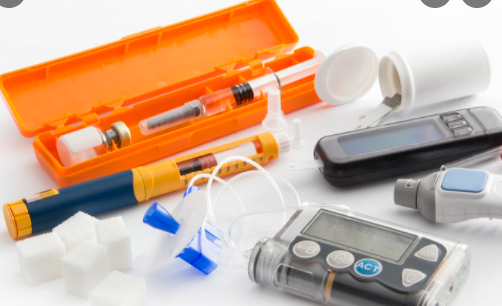
insulin therapy: taking regular insulin injections throughout the day, or an insulin pump
islet cell transplantation: allows pancreas to produce its own insulin
Having a carefully planned diet and regular excersise
What are the treatments of type 2 diabetes

Lifestyle changes: eating a healthy balanced diet, getting regular excerise
medication:
metaformin (acts on liver cells telling them to reduce amount of glucose released into body), sulfonylureas (stimualte pancreas to proudce more insulin), Thiazolidinediones (make body cells more sensative to insulin)
What are the advantages of using insulin from GM bacteria
- cheaper
- larger quantaties can be proudced
- GM make human insulin which is more effective than pig insulin (pig insulin may vause allergic reactions)
- people may prefer GM insulin due to ethical and religous reasons
How can stem cells be used to treat diabetes in the future
Stem cells can be grown into beta cells
can be implanted into a persons pancreas
so body can produce its own insulin

-
Module 3.3 Transplant In Plants42
-
Module 3: Transport In Animals36
-
Module 3.4 Nucleotides20
-
Module 4.2 Biodiverity56
-
Module 2.5 Biological Membranes33
-
Module 2.3 Enzymes38
-
Module 6 Ecosystems23
-
Module 6: Populations and sustainablity52
-
Module 2.2 Biological Molecules32
-
Exchange and transport33
-
Immune and Disease49
-
Classification and evolution35
-
Module 5: Homeostasis14
-
Module 6: Cellular Control37
-
Module 5: Hormonal control24
-
Module 5: Excretion18
-
Module 5: Neuornal communication41
-
Module 5: Plant responses29
-
Module 5: Animal responses38
-
Module 6: Evolution33
-
Module 6: Manipulating genomes13
-
Module 6: Cloning And Biotechnology46
-
Module 5: Photosynthesis26
-
Module 5: Respiration27



