What are headaches?
Subjective sensation of pain involving any part of the head- scalp, face, sinuses, or cranium, with or without associated symptoms.
What are the two categories of headaches?
Primary headaches - 3 types
a. Cluster
b. Migraine
c. Tension
Secondary headaches- 3 types
a. Acute new onset
b. Intermittent discrete
c. Chronic persistent
What causes headaches?
- Caused by vasodilation/constriction of blood vessels due to cortical spreading
- They most commonly are benign
What type of headaches are common in women? What type are common in men?
- Migraine headaches have a 3:1 female to male ratio
- Cluster headaches occur predominantly in men > 65 years of age
What questions should be asked when taking a history of a patient with head pain?
- Prodromal symptoms (preceding symptoms)
- Time of peak and severity of symptoms
- Duration of symptoms
- Precipitating factors
- Associated symptoms
- Alleviating symptoms
- Review factors that predisposes patients to QT interval prolongation:
- History of unexplained syncopal episodes
- Structural heart disease
- Renal or liver disease-related altered drug clearanc
- History of cardioactive medications.
8. History of prior headaches
- Consistent headache history or different symptoms
- Family history of headaches or sudden death of family members
- Correlation or relationship of headaches to particular events/activities
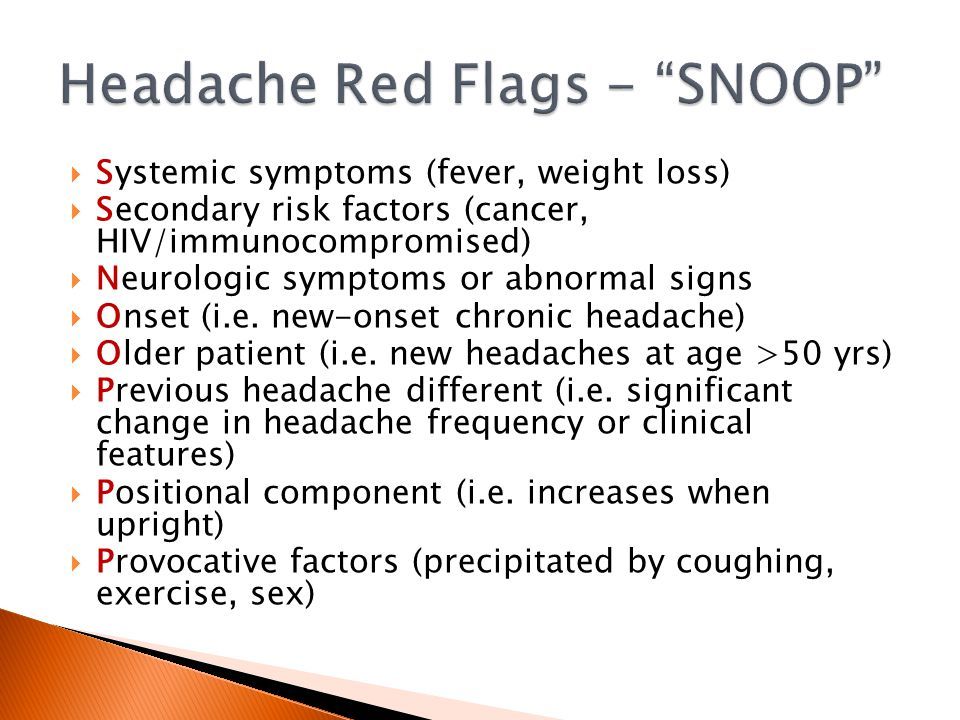
What are Red Flags when assessing patients with headaches?
- Acute onset, severe in nature, ‘worst headache of my life’; no previous history of headaches
- Possible Subarachnoid hemorrhage
- Constant, unrelenting headache not relieved with OTC meds
- New onset headache after age 50; no previous history of headaches
- Increased risk of a serious cause (i.e. tumor, giant cell arteritis)
- ‘Ice pick’ headache
- Severe headache associated with meningeal signs- stiff neck (nuchal rigidity) and/or fever
- Possible: Meningitis, subarachnoid hemorrhage, subdural empyema
- Headache associated with mental status changes
- Possible: Encephalitis, subdural hematoma, subarachnoid hemorrhage, intracerebral hemorrhage, tumor, mass, increased ICP
- Persistent headache after trauma to head/neck
- Different presentation of headache from previous history of chronic headaches
- Headache most severe upon rising in am and with coughing, but improves later in day- indicative of increased intracranial pressure (ICP)
- Red eye and halos around lights
- Acute closed angle glaucoma
What are some diagnostic tests used when diagnosing headaches?
- MRI – with or without contrast is the imaging procedure of choice for diagnosis of occult or organic disorders; in the case of renal disease withhold IV contrast.
- CT scan – screening tool for emergent detection of expanding mass lesions- (i.e. subdural and epidural hematomas, hemorrhagic stroke and large mass lesions) - less sensitive than MRI
- CT Angiography (CTA) or MR Angiography (MRA) – useful for imaging arteries and veins; must be administered with IV contrast
- Plain skull x-rays – identifies bony abnormalities (i.e. skull fractures or lesions); cannot identify intracranial abnormalities
- Lumbar puncture – invasive test; useful if CT or MRI is non-diagnostic
What laboratory tests are useful when diagnosing headaches?
Consider CBC, erythrocyte sedimentation rate (ESR), basic metabolic profile to rule out infectious cause, anemia; Consider thyroid studies
What are the 5 diagnostic criteria for migraine headaches without auras?
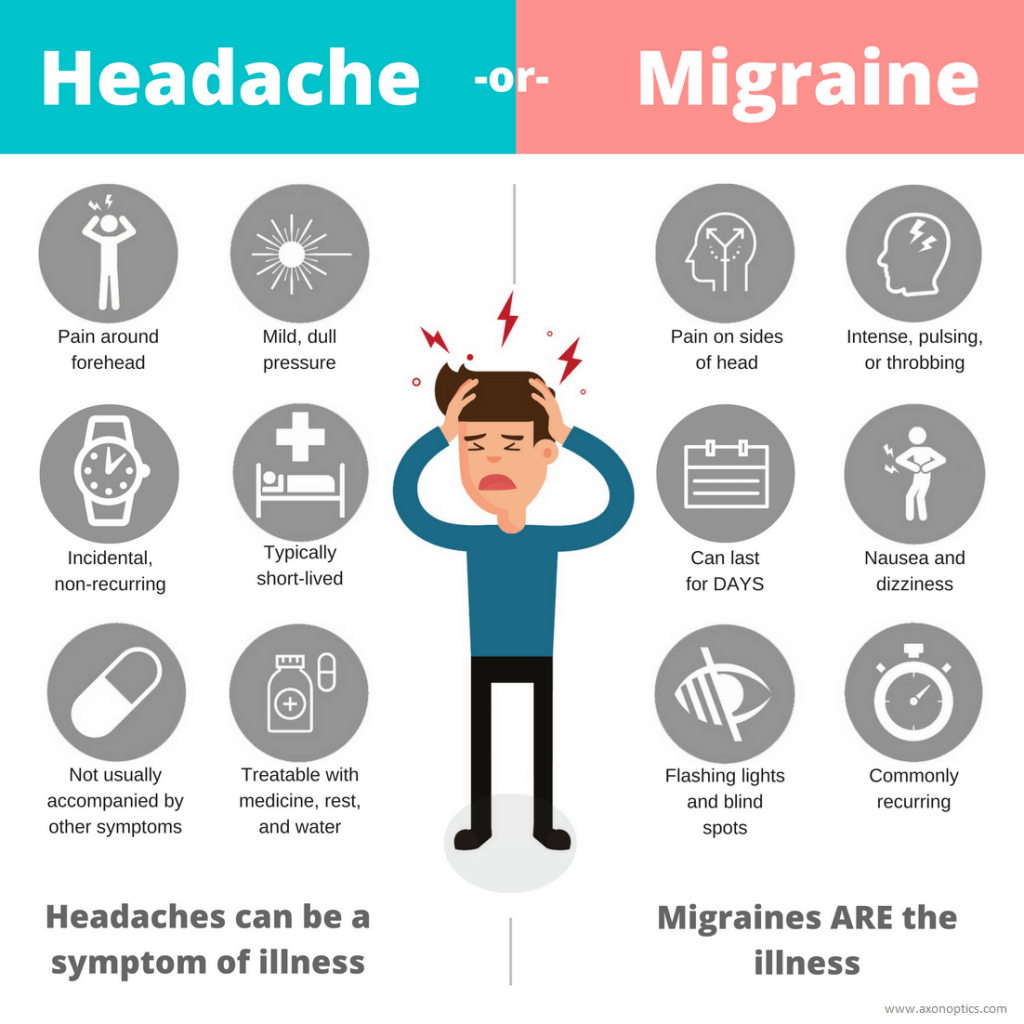
- Duration 4-72 hours.
- Must have at least 2 (two) of the following:
a. Unilateral location
b. Pulsating or throbbing quality
c. Moderate to severe intensity
d. Aggravated by routine physical activity
e. Interferes with activities of daily living - Must have at least 1 (one) of the following:
a. Nausea or vomiting
b. Photophobia, osmophobia, and/or phonophobia - At least 5 (five) attacks that fulfill the preceding criteria in 1, 2 and 3
- No evidence of organic disease.
What is the diagnostic criteria for migraine headaches with auras?
- Pain is preceded by at least one of the following neurologic symptoms, which gradually develops over 5-60 minutes (auras may be visual, motor, sensory or verbal disturbances):
- Visual: (combination of field defects and luminous visual hallucinations) – most common
- Scintillating scotoma (visual migraine) - most common
- Fortification spectra – pattern resembling walls of a medieval fort)
- Unformed light flashes (photopsia)
- Hemianopsia (decreased vision or blindness in half the visual field)
- Geometric visual patterns
- Occasional hallucinations
- Somatosensory disturbance of face/arms
- Paresthesia
- Numbness
- Clumsiness
- Weakness in a circumscribed area
- Speech disturbances
- No evidence of organic disease
What is the diagnostic criteria for tension headaches?
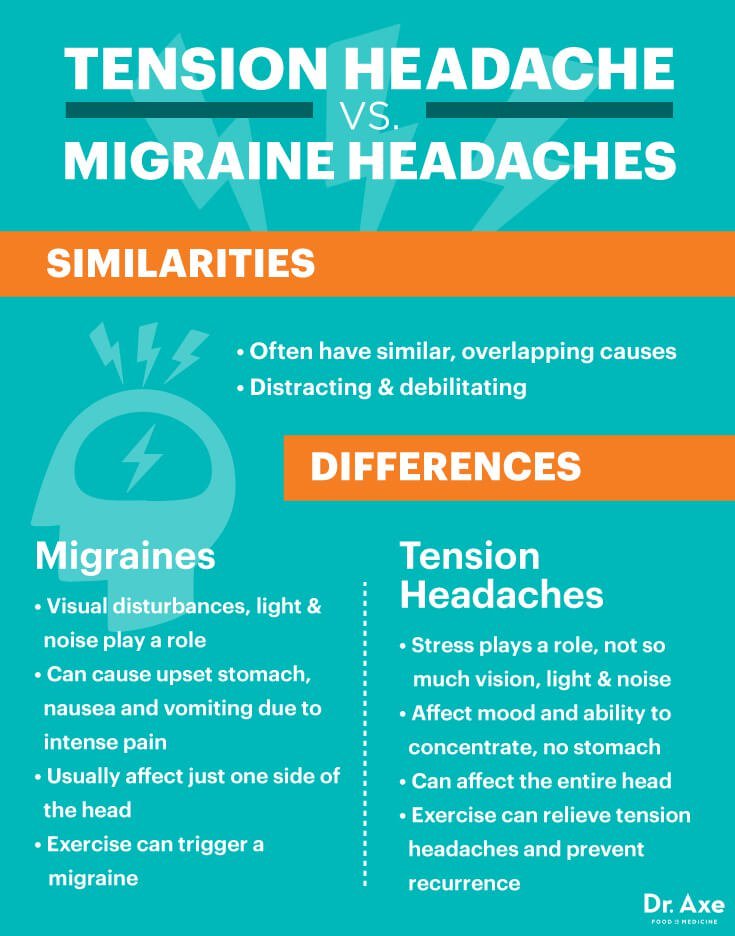
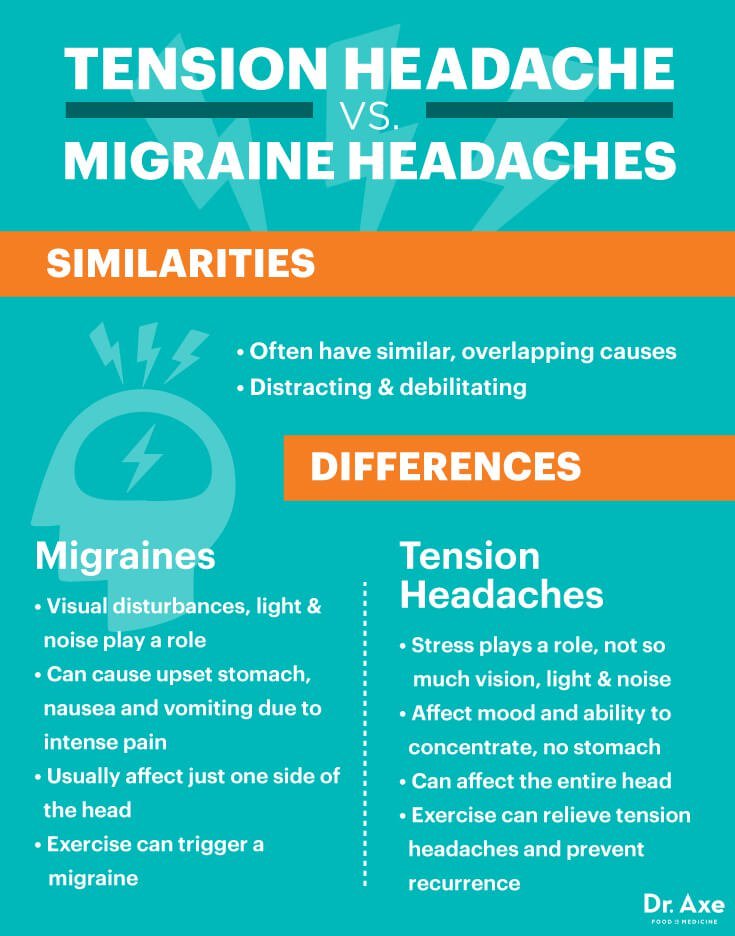
1. At least two (2) of the following:
- Vise-like or tightening and nonpulsatile pressure quality
- Bilateral mild to moderate pain- generalized
- Pericranial tenderness at back of head or neck
- Not aggravated by routine physical activity.
- Not associated with focal neurologic symptoms
2. Both of the following:
- No nausea or vomiting
- Photophobia and phonophobia absent or only one (1)
3. No evidence of organic disease
What is the diagnostic criteria for cluster headaches?
- Severe, unilateral, periorbital, supraorbital, or temporal pain lasting 15-180 minutes
- At least one of the following on the headache side:
- Reddened conjunctive
- Facial sweating
- Lacrimation
- Miosis (constriction of the pupil)
- Ipsilateral nasal congestion
- Rhinorrhea
- Horner syndrome (ptosis of eyelid, miosis and anhidrosis)
- Bouts last 4-8 weeks and may occur severe times during the year
What are the pharmacologic and non pharmacologic treatment options for tension headaches?
- Pharmacological: Acetaminophen, Aspirin, NSAID’s or Ketorolac IM
- Non-pharmacological: Heat, ice, massage of neck/temples, rest, regular sleep, f/u 2 weeks, consult with MD if conservative treatment fails.
- Prevention: 1st line treatment: nortriptyline (Elavil) daily at bedtime
What are 5 pharmacologic treatment options for migraine headaches?
For acute attacks:
- A simple analgesic, such as aspirin, acetaminophen, ibuprofen or naproxen taken immediately may abort the headache
- Butorphanol tartrate nasal spray (Stadol NS) 1 mg (1 spray) in one nostril, repeat 2nd dose in 60 minutes.
- Cafergot combination (ergotamine maleate) - Contains (1mg + caffeine 100mg), 1-2 tablets at onset, may repeat 1 tab q 30 minutes up to 6 tabs (comes in suppository, inhaler and sublingual forms- refer to individual type dosage instructions)
- Dihydroergotamine mesylate (DHE 45), 0.5-1 mg IV, or 1-2mg SC/IM; repeat every hour prn to maximum of 3 mg. (comes in nasal spray form-see dosage instructions); NOTE *Serious life-threatening peripheral ischemia on black box warning
- Triptans include: sumatriptan, zolmitriptan, naratriptan, risatriptan, almotriptan, eletriptan and frovatriptan
What are 2 common triptans prescribed?
- Sumatriptan (Imitrex), 6 mg, SQ to rapidly abort headache, may repeat once in 2 hours; max 12mg/24 hours (comes in oral and transdermal form- refer to dosing recommendations for each)
- Zolmitriptan (Zomig), 1.25-5mg po; may repeat after 2 hours, max 10mg/24hours (comes in nasal form- refer to dosing recommendations)
What 4 medications can be given prophylactically to prevent migraine headaches?
These medications should be considered if 2-3 attacks per month occur; treatments may not be FDA labeled for migraine prophylaxis. They are indicated if headaches are frequent, long-lasting, or account for significant degree of disability:
- Beta-blockers: Propranolol (Inderal) 20mg tid or Metoprolol (Lopressor) 50mg daily
- Anti-epileptics: Valproic acid (Depacon) 250mg bid or Topiramate (Topamax), 25mg daily
- Anti-depressants: Amitriptyline (Elavil) 10-150mg nightly or Venlafaxine (Effexor), 75mg/24 hours
- Onabotulinumtoxin A (Botox): 155 units as 5 units (0.1ml) IM into each of 31 sites divided across 7 head/neck muscle areas. Retreat every 12 weeks.
What are some non-pharmacologic methods used to treat migraine headaches?
- Diet counselling – Avoid artificial sweeteners, MSG, nitrates, phenylethylamine (in chocolate), tyramine (in aged cheeses/wine), yellow food coloring; alcohol, and caffeine
- Stay in dark, quiet room during attacks
- F/u at regular intervals to assess effectiveness of treatment
- Consultation with MD if patient does not respond to traditional management.
What medications can be given for cluster headaches (acute attacks & prophylactically)
- Acute attacks - Sumatriptan (Imitrex), Zolmitriptan, Ergotamine, 100% oxygen for 15 minutes, NSAIDs.
- Prophylaxis - Verapamil 240-480mg/day, lithium carbonate 150-600mg/day; topiramate, 50-200mg/day or valproic acid 500-2000mg/day
- NOTE* Avoidance of overuse: Medication overuse headache (MOH) All acute symptomatic medications used to treat headaches have the potential for causing MOH. Degree of risk differs depending upon the specific class of medication*
- High risk meds for overuse headaches: Opioids, butalbital-containing analgesics, triptans*
What are some non-pharmacological methods used to treat cluster headaches?
- Lifestyle modifications and supportive care are of limited benefit. Some foods, alcohol, stress, glare may precipitate an attack.
- F/U at regular intervals during treatment.
When should triptans be used to manage headaches?
Triptans should be used only in patients who are not at risk for coronary disease
- Eletriptan (Relpax) for acute migraines.
- The various triptans are similarly effective; if one does not work, try another.
A stratified approach to pharmacologic management is recommended:
- Start low and build up dosage over time if symptoms are not managed on lower dosing.
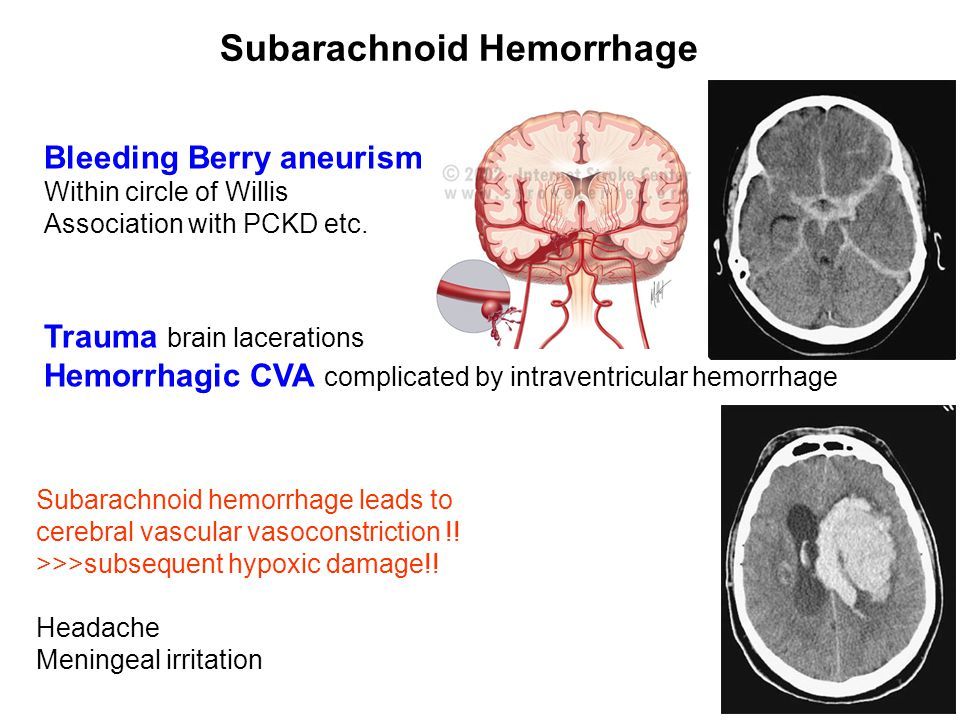
What causes Subarachnoid Hemorrhage (SAH)?
- Cerebral aneurysm rupture
- Cerebral arteriovenous malformation
- Bleeding from a tangle of blood vessels called an arteriovenous malformation (AVM)
- Bleeding disorder
- Bleeding from a cerebral aneurysm
- Head injury
- Unknown cause (idiopathic)
- Use of blood thinners
What are the signs and symptoms associated with subarachnoid hemorrhage?
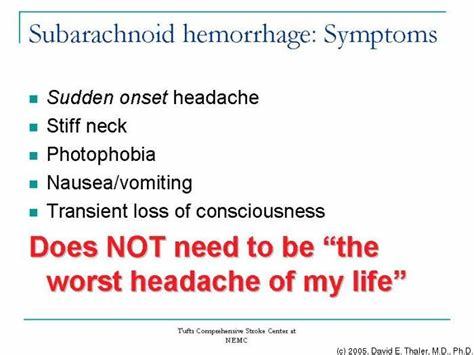
- ‘Worst headache of my life’ with sudden onset, no precipitating factors, no relief with OTC pain meds
- Altered consciousness
- Mental status changes, confusion and irritability
- Nuchal rigidity
- Nausea and vomiting (due to increased ICP)
- Photophobia
- Seizures
- Cranial nerve deficits
- Motor or sensory deficits
How is a Subarachnoid Hemorrhage (SAH) diagnosed?
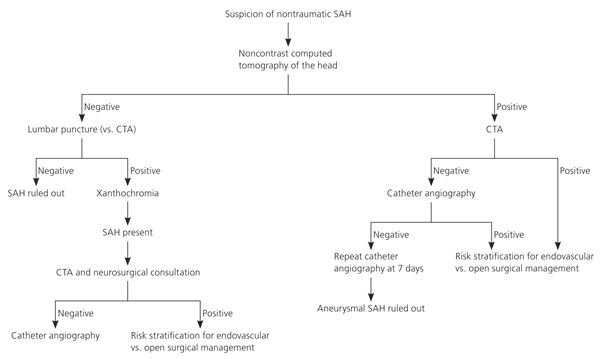
- Obtain a noncontrast CT head ( high sensitivity within 6 hours of onset of symptoms)
- If CT head negative, but clinical evidence of SAH exists, then obtain lumbar puncture (RBCs 100-10,000 in final tube generally correlates with a diagnosis of SAH )
- Consider CT angiography (CTA) if noncontrast CT head negative and an LP is unable to be performed (overweight patient, uncooperative or history of lumbar spine surgery). Sensitivity 100% if performed within 6 hours of onset of symptoms
What are the goals of treatment for Subarachnoid Hemorrhage (SAH)?
To prevent further hemorrhage and secondary complications such as acute hydrocephalus, cerebral vasospasm, delayed cerebral ischemia, increased ICP, seizures and cardiac dysrhythmias

-
Module 4.0 - Diagnostic Concepts of Oxygenation & Ventilation/Pulmonary Function Testing38
-
Module 4.1 - Lower Respiratory Tract Pathogens18
-
Module 4.2 - Obstructive Lung Disease56
-
Module 4.3 - Restrictive (Inflammatory) Lung Diseases38
-
Module 4.4 - Obstructive Sleep Apnea13
-
Module 5.0 - Headaches26
-
Module 6.0 - Peptic Ulcer Disease26
-
Module 6.1 - Gastroesophageal Reflux Disease13
-
Module 6.2 - Liver Disease42
-
Module 6.3 - Inflammatory Bowel Disease17



