A 22-year old woman presents to the ED with wheezing, hives, and a sensation that her throat is closing. She has a known peanut allergy, and just ate at a Thai restaurant. Her heart rate is 115 beats/minute, blood pressure is 85/50, respiratory rate is 30 breaths per minute, and her temperature is 98.9 F. She has swelling of her lips and tongue. Which of the following is true regarding epinephrine use in this patient?
- This patient does not have an indication for treatment with epinephrine, and should not receive it
- She should receive an immediate dose of intravenous or intramuscular epinephrine
- She has an absolute contraindication to epinephrine (tachycardia) and should not receive it
- She should receive immediate fluid resuscitation with normal saline, and then epinephrine if her heart rate returns to a normal range
Answer: She should receive an immediate dose of intravenous or intramuscular epinephrine
The patient has anaphylaxis. The most important, appropriate, and immediate treatment is epinephrine.
- She has an absolute contraindication to epinephrine (tachycardia) and should not receive it Incorrect: There are no absolute contraindications to epinephrine use. Tachycardia, especially in a young person, is well tolerated.
- She should receive immediate fluid resuscitation with normal saline, and then epinephrine if her heart rate returns to a normal range Incorrect: Fluid resuscitation is part of the supportive care provided to patients with anaphylaxis, but will not treat her condition. It is not appropriate to delay definitive treatment (epinephrine) for fluid
- This patient does not have an indication for treatment with epinephrine, and should not receive it Incorrect: This patient has anaphylaxis. The treatment is epinephrine.
A patient needs a new kidney. After testing a panel of potential donors, the physicians find a “best match” donor. Following transplantation, one of these immunosuppressive drugs will be prescribed: cyclosporine, FK-506, or rapamycin. Although these drugs do not all work by exactly the same mechanism, they have a common effect. This effect is BLOCKING
- the ability of the proteasome to cleave ubiquitinated cytoplasmic proteins.
- the T cell receptor (TCR)-mediated increase in LFA-1 avidity.
- tyrosine phosphorylation of the CD3 ITAMs.
- signaling pathways that stimulate T cell proliferation.
- cell surface expression of CD28 by T cells.
Answer: signaling pathways that stimulate T cell proliferation CORRECT - These drugs block the signaling pathways that activate transcription factors.
- cell surface expression of CD28 by T cells Incorrect - These drugs do not influence cell surface expression of CD28.
- the ability of the proteasome to cleave ubiquitinated cytoplasmic proteins Incorrect -These drugs do not influence proteasome function.
- the T cell receptor (TCR)-mediated increase in LFA-1 avidity Incorrect- These drugs do not influence TCR mediated FFA-1 avidity.
- tyrosine phosphorylation of the CD3 ITAMs Incorrect - These drugs do not influence tyrosine phosphorylation of the CD3 ITAMS.
What laboratory test is the most sensitive confirmatory test in SLE?
- Anti-smith antibody
- ANA
- Rheumatoid factor
- CCP
Answer: ANA. ANA is seen in 99+% of patients with SLE and, thus is very sensitive in patients with suspected SLE. It is not, however, specific as it is seen in up to 5% of the general population and its positivity in the general population increases with age.
- CCP Incorrect. CCP is highly specific (>97%) for the diagnosis of rheumatoid arthritis.
- Rheumatoid Factor Incorrect. Rheumatoid factor is sensitive for the diagnosis of rheumatoid arthritis (80%), but less specific. It can be positive in many inflammatory conditions, but is not commonly seen in SLE.
- Anti-smith Antibody Incorrect. Anti-smith antibody is highly specific for a diagnosis of SLE with a specificity of >97%. Its sensitivity however is poor with only 30% of SLE patients having an anti-smith antibody.
Multi-drug antimicrobial therapy is often necessary to treat complex infections. In fact, certain combinations of antibiotics such as aminoglycosides and penicillins are synergistic in their actions. However, some antibiotic combinations, for example erythromycin and penicillins, have been observed to have a negative effect on each other’s actions. What is an explanation for the synergistic activity of penicillins and aminoglycosides?
- Aminoglycosides inhibits the synthesis of proteins that are necessary for penicillins to destroy the cell wall.
- Penicillins inhibit cell wall synthesis and destroy the normal binding sites of aminoglycosides.
- Penicillins inhibit cell wall synthesis and facilitate the entry of aminoglycosides into the bacterial cell.
- Aminoglycosides inhibit P450 enzyme activation of penicillins.
- Aminoglycosides cause a misreading of the mRNA, which would normally code for proteins to make the cell wall resistant to the action of penicillins
Answer: Penicillins inhibit cell wall synthesis and facilitate the entry of aminoglycosides into the bacterial cell.
Explanation: Penicillins inhibit cell wall synthesis and facilitate the entry of aminoglycosides into the bacterial cell is correct because aminoglycosides must pass through the cell wall and enter the bacterial cytoplasm to encounter their molecular targets. Penicillins, by inhibiting cell wall synthesis, allow aminoglycosides to more easily enter the bacterium.
Many antimicrobials exert their action at sites or within processes that are unique to the DNA replication of prokaryotic cells. This confers a degree of selectivity to these agents, which should limit potential adverse effects in humans. Which of the following statements regarding the selectivity of an antimicrobial drug and its adverse effects is correct?
- Bacterial topoisomerases are structurally different from eukaryotic topoisomerases, contributing to the lack of adverse effects from fluoroquinolones.
- Chloramphenicol inhibits mitochondrial protein synthesis, accounting for its selectivity as an antimicrobial agent.
- Chloramphenicol specifically inhibits bacterial protein synthesis and has a low rate of adverse effects.
- Tetracyclines inhibit both bacterial and mammalian protein synthesis and have a high rate of adverse effects.
- The bacterial RNA polymerase is identical to eukaryotic RNA polymerase, contributing to the high rate of adverse effects associated with rifampin.
Answer: Bacterial topoisomerases are structurally different from eukaryotic topoisomerases, contributing to the lack of adverse effects from fluoroquinolones.
Explanation:
Bacterial topoisomerases are structurally different from eukaryotic topoisomerases, contributing to the lack of adverse effects from fluoroquinolones is the correct answer because Fluoroquinolones target DNA replication of bacteria because of the differences between the machinery required for eukaryotic and prokaryotic DNA replication.
A 35 year old female presents with polyarticular joint pain. Synovial fluid analysis shows yellow fluid with 52,000 WBCs/L, 75% of which are polymorphonuclear leukocytes. No crystals or RBCs are noted and the culture is negative. Which of the following is the most likely diagnosis?
- Gout
- Neisseria gonorrhoeae infectious arthritis
- Pigmented villonodular synovitis
- Rheumatoid arthritis
- Osteoarthritis
Answer: Rheumatoid arthitis
Explanation: The synovial fluid analysis is indicative of an inflammatory (Group II) classification of arthritis, of which rheumatoid arthritis is the only example of an inflammatory etiology. Osteoarthritis is noninflammatory ( WBCs < 5,000, PMNs < 30%); PVS is either noninflammatory or hemorrhagic (WBCs < 10,000 with RBCS); Gout is crystal induced; and N. gonorrhoeae is infectious (WBCs > 50,000 with >90% PMNs, RBCs present and positive culture)
Which of the following antibiotics can be nephrotoxic?
- Colistin
- All of the answers
- Aminoglycosides
- Penicillins
- Vancomycin
Answer: All of the above.
Explanation: All the answers are correct. Although the classes and mechanisms or targets of action of these drugs are all different, it is important to remember that all have the possibility of causing or exacerbating renal damage.
Bonus:
Colistin- polymixin antibiotic for Gram (-) bacilli, also used as a last resort for multi-drug resistant Pseudomonas aeruginosa, Klebsiella pneumoniae, and Acinetobacter.
Aminoglycosides- Antibiotic used to treat Gram (-) aerobic bacteria and some Gram (-) anaerobes (most have resistance, though). These drugs inhibit protein synthesis. ex: Streptomycin.
Penicillins- Antibiotic used to treat species of the Streptococci, Staphylococci, Clostridium, and Listeria genera, along w/ Neisseria meningitidis. Penicillin inhibits peptidoglycan crosslinks in bacterial cell walls.
Vancomycin- Antibiotic used to treat C. diff and Staph infections in the intestines (colitis).
A 23-year-old male complains of repeated shortness of breath and itchy eyes after mowing his lawn or playing outdoor sports. Suspecting an allergic reaction, his physician injects small quantities of numerous known outdoor allergens beneath his epidermis. The site at which a mixture of grass pollens was injected shows redness and swelling within minutes. An essential mediator of this skin reaction made only by cells of the adaptive immune system is:
- IgE
- Interleukin 8 (IL-8)
- Interleukin 1 (IL-1)
- IgA
- Histamine
Answer: IgE. IgE binds to Fc epsilon receptor on mast cells and basophils.
- Histamine Incorrect – Not made by cells of adaptive immune system; pre-formed mediator.
- IgA Incorrect – This isotypes is not related to hypersensitivity reactions but to mucosal responses.
- Interleukin-1 (IL-1) Incorrect - IL-1 is a cytokine made by macrophages and is pro-inflammatory
- Interleukin-8 (IL-8) Incorrect - Chemokine produced and secreted by macrophages that recruit neutrophils to a site of inflammation
A 65 year old female presents for evaluation of color changes in her fingers. She reports 6 weeks of symptoms with her fingers changing color from white to blue upon exposure to cold. In most instances this is followed by pain in her fingers accompanied by redness. She is very active and is the primary caregiver for her 5 grandchildren during the day. Over the past several months she has noted difficulty picking up small objects and the skin on her fingers feels “tight.” Her ROS is otherwise unremarkable. What physical examination finding will be most helpful in distinguishing primary from secondary Raynaud’s phenomenon in this case?
- Nailfold capillaroscopy
- Fundoscopic exam
- Deep tendon reflexes
- Auscultation of the lungs
Answer: Nailfold capillaroscopy
Explanation: Nailfold capillaroscopy is the key exam in the evaluation of Raynaud’s. Primary disease is characterized by normal nailfold capillaries where secondary disease will have dilatation or dropout of these capillaries.
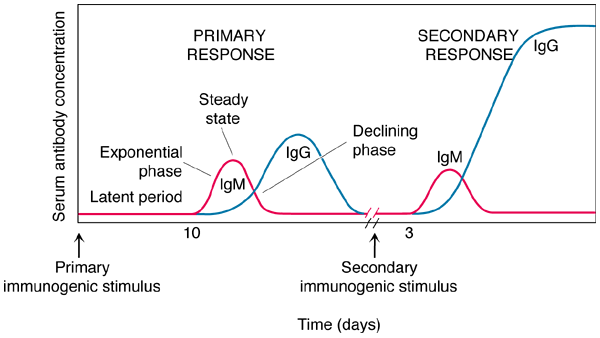
A 21 year old native of New York who has just enlisted in the Army receives a Td (Tetanus diphtheria) shot. Which one of the following phrases best characterizes the nature of the soldier’s MOST LIKELY immune response 2 weeks after immunization? He has a
- Secondary response, mainly IgG, against both diphtheria and tetanus toxoid
- Primary immune response, mainly IgG, against both diphtheria and tetanus toxoid
- Primary immune response, exponential phase, mainly IgM against diphtheria and tetanus toxoid.
- Secondary immune response, mainly IgM, against both diphtheria and tetanus
- Primary immune response, mainly IgM, against tetanus toxoid and secondary immune response, mainly IgG, against diphtheria toxoid
Answer: A. Secondary response, mainly IgG, against both diphtheria and tetanus toxoid.
Explanation: This man grew up in the United States and can be presumed to have received a series of childhood vaccinations that would have included DTaP. Thus, he should develop a brisk secondary immune responses against both diphtheria toxoid and tetanus toxoid. Secondary antibody responses to proteins are primarily IgG.
The purpose of T cell depletion from donor bone marrow aspirates used in heterologous transplantation is to:
- minimize chances of graft vs. host reaction.
- optimize induction of anti-graft antibodies.
- eliminate tumor antigens.
- eliminate the majority of MHC Class I-positive cells.
- stimulate proliferation of host cytotoxic T lymphocytes (CTL).
Answer: Minimize chances of a graft vs host reaction. Elimination of T cells from the donor decreases the probability of grant reject due to lack of matching at the MHC loci.
- eliminate the majority of MHC Class I-positive cells. Incorrect – MHC class I is expressed on all nucleated cells in the body; elimination would be counterproductive to survival
- eliminate tumor antigens. Incorrect – Not relevant to the elimination of tumor antigens.
- optimize induction of anti-graft antibodies. Incorrect- Would not want to induce antibodies as the graft would be destroyed..
- stimulate proliferation of host cytotoxic T lymphocytes (CTL). Incorrect – Stimulation of host CTL would destroy the graft
Vancomycin and teicoplanin are glycopeptide antibiotics that also inhibit cell wall synthesis in bacteria. The difference between these antibiotics and β-lactam antibiotics is
- Glycopeptide antibiotics bind to the D-Ala-D-Ala terminus of the murein monomer, and not to the penicillin binding proteins
- These glycopeptide antibiotics are exclusively effective against Gram negative bacteria.
- The glycopeptide antibiotics have a broader spectrum of activity, inhibiting growth in Gram positive and Gram negative bacteria.
- Glycopeptides are easily transported through the porin channel in Gram negative bacteria.
Answer: Glycopeptide antibiotics bind to the D-Ala-D-Ala terminus of the murein monomer, and not to the penicillin binding proteins.
Explanation: The glycopeptides bind to the tail of the murein at the D-Ala-D-Ala moiety, thus inhibiting crosslinking of the disaccharide precursors. The beta lactam antibiotics bind to the penicillin binding proteins, including to the transpeptidases, inhibiting the enzymes directly.
You have just evaluated a patient with a history of various uncommon infections, suggesting immunodeficiency. Testing has ruled out HIV and known immunodeficiencies. Based on a hunch, you have sequenced the B2-microglobulin gene of this patient and found that neither allele encodes a functional protein. This patient would MOST LIKELY exhibit diminished
- IgE responses to helminthic worms.
- killing of intracytoplasmic pathogens.
- antibody neutralization of bacteria.
- phagocytosis of bacteria by macrophages and neutrophils.
- complement lysis of fungal and bacterial pathogens.
Answer: killing of intracytoplasmic pathogens. B2-microglobulin is a critical component of the MHC class I complex. In the absence of MHC class I, CD8+ T cells do not develop in the thymus, resulting in a profound defect in killing of intracytoplasmic pathogens such as viruses.
- antibody neutralization of bacteria Incorrect - b2-microglobulin does not directly influence the development of antibody responses.
- complement lysis of fungal and bacterial pathogens. Incorrect - b2-microglobulin does not influence complement activity.
- IgE responses to helminthic worms. Incorrect - b2-microglobulin plays no role in the development of IgE responses.
- phagocytosis of bacteria by macrophages and neutrophils. Incorrect - b2-microglobulin plays no role in the phagocytosis of bacteria.
A serviceman returns from Iraq with a large ulcerated lesion on his forearm caused by Leishmania major, a protozoan parasite that replicates within the phagolysosomes of macrophages. The lesion spontaneously heals over the course of several months, as the macrophages become activated to kill the parasites through interactions with T cells. Which pair of molecules is MOST LIKELY to be responsible for directly activating macrophages?
- CD28 and B7
- TCR and MHC class II
- Fas and Fas-ligand
- CD40 and CD40-ligand
- LFA-1 and ICAM-1
Answer: CD40 and CD40-ligand.
Interaction between CD40 on the macrophage surface and CD40-ligand on the T cell surface confers a potent activating stimulus to the macrophage.
- CD28 and B7 Incorrect – interaction between CD28 on the T cell surface and B7 on the antigen-presenting cell surface provides an important co-stimulatory signal to the T cell, but is not directly responsible for activating macrophages.
- Fas and Fas-ligand Incorrect – interactions between Fas and Fas-ligand are not directly involved in macrophage activation.
- LFA-1 and ICAM-1 Incorrect – LFA-1 and ICAM-1 mediate adhesion between cells but are not directly responsible for macrophage activation.
- TCR and MHC class II Incorrect - engagement of TCR on CD4+ T cells by MHC class II on macrophages must occur for macrophages to be activated by T cells, but this is not the signal directly responsible for macrophage activation.
A deficiency in which ONE of the following molecules would most seriously impair an effective and long-lasting antibody response to the measles virus vaccine?
- C3b
- CD40-ligand
- IgE
- CD8
- IL-8
Answer: CD40-ligand.
CD40-ligand on the surface of T helper cells engages CD40 on the surface of B cells. This interaction is critical for stimulation of antibody isotype switching, affinity maturation and the development of memory B cells.
- C3b Incorrect – C3b is a product of complement activation and does not influence the induction of antibody responses.
- CD8 Incorrect – CD8 is not involved in the induction of effective antibody responses.
- IgE Incorrect – IgE is an antibody isotype that does not mediate protection against viral pathogens.
- IL-8 Incorrect – IL-8 is a chemokine that is not directly involved in the induction of antibody responses.
A 3-month-old male presents with pneumonia, persistent diaper rash and a failure to thrive. Laboratory tests reveal Pneumocystis carinii infection and persistent cytomegalovirus viremia. Flow cytometric analysis of the patient’s peripheral blood demonstrates an absence of T cells and NK cells, but B cells are detected. A mutation of which X-linked gene would account for this patient’s phenotype?
- γc (common gamma) chain
- IL-7 receptor α chain
- JAK-3 kinase
- RAG-1
- Bruton’s tyrosine kinase (Btk)
Answer: γc (common gamma) chain.
The common gamma chain is a critical component of several cytokine receptors, including the receptors for IL-7 and IL-15. Mutations in the common gamma chain gene, which is located on the X chromosome, results in a profound immuno-deficiency associated with a lack of T and NK cells, which require IL-7 and IL15 for their development, respectively.
- Bruton’s tyrosine kinase (Btk) Incorrect – Btk is required for signaling in B cells, but not in T cells and NK cells
- IL-7 receptor α chain Incorrect – IL-7 receptor alpha chain is a specific component of the IL-7 receptor and is not required for NK cell development. This gene is also not X-linked.
- JAK-3 kinase Incorrect – JAK-3 kinase mediates signals from the common gamma chain and JAK-3 deficiency closely resembles common gamma chain deficiency. However, the JAK-3 kinase gene is autosomal (i.e. not X-linked).
- RAG-1 Incorrect – RAG-1 is a critical component of the VDJ recombinase that is required for the development of both B and T cells. Therefore, a patient with a RAG-1 deficiency would not have B cells.
You are sent to sub-Saharan Africa as part of a peace keeping mission following a civil war. In your travels around the region you enter a village reputed to be a “leper colony”. You are surprised to find that very few individuals manifest the extreme disfiguration of lepromatous leprosy, but most of the infected have contained nodular types of infections. The MOST LIKELY reason why the tuberculoid form of leprosy is seen in most of these patients is
- Th1-mediated cellular immunity has controlled the infection
- a strong Th2 cell response has contained the infection
- infection with Mycobacterium tuberculosis is prevalent.
- the cytokines IL-4, IL-5 and IL-10 directed a protective immune response
- they have high levels of circulating antibodies against M. leprae
Answer: Th1-mediated cellular immunity has controlled the infection
Explanation:
Th1 T cells produce interferon gamma, a cytokine that activates macrophages to control intracellular pathogens such as M. leprae, whereas, a Th2 response, driven by Il-4, Il-5 or Il-10 stimulates an antibody mediated response that is not helpful with intracellular pathogens. Mycobacterium TB infection may also be present but does not confer cross-reactive immunity.
Which anti-HIV drug is CORRECTLY matched with its mechanism of action?
- fosamprenavir – inhibition of HIV binding to host cells
- ritonavir – inhibition of HIV-encoded integrase
- indinavir – inhibition of HIV-encoded protease
- saquinavir – inhibition of HIV entry into cells
- atazanavir – inhibition of HIV-encoded DNA polymerase
Answer: indinavir – inhibition of HIV-encoded protease
Explanation: Each of the drugs listed above is an inhibitor of the HIV-encoded protease, thus only indinavir is matched with its correct mechanism of action.
All of the following statements in the management of an HIV-Infected patient are true EXCEPT:
- Metabolic complications with the use of antiretroviral therapy include: diabetes, hyperlipidemia and lactic acidosis.
- The excellent bioavailability of the fusion inhibitor Fuzeon (T-20, Enfuvirtide) makes it an ideal once a day oral agent.
- Efavirenz, a non-nucleoside reverse transcriptase inhibitor, is a teratogen and should not be used in pregnancy.
- After beginning antiretroviral therapy, the expected reduction in viral load should be at least 1 log in 4 weeks
- A 20 year old patient infected with HIV in 2013 who has access to health care and antiretroviral agents likely has a life expectancy of at least forty years
Answer: The excellent bioavailability of the fusion inhibitor Fuzeon (T-20, Enfuvirtide) makes it an ideal once a day oral agent.
Explanation:
“The excellent bioavailability of the fusion inhibitor Fuzeon (T-20, Enfuvirtide) makes it an ideal once a day oral agent” is FALSE. The fusion inhibitor, Enfuvirtide (T-20, Fuzeon), blocks attachment of HIV at gp41 so targets HIV entry but it is an injectable anti-retroviral and is administered subcutaneously twice a day. There is no oral formulation of this medication.
All other answers are true statements.
A 49 year old female presents for follow up of recently diagnosed HIV infection. She feels well and denies any fever, headache, change in vision, cough, shortness of breath, chest pain, abdominal pain, nausea, vomiting, or diarrhea. What lab would order to evaluate whether she needs prophylaxis against any opportunistic infections?
- AFB blood cultures
- No lab evaluation is needed as she is asymptomatic
- CD4 count
- HIV RNA PCR (viral load)
- 3rd generation HIV ELISA
Answer: CD4 count
Explanation:
Persons infected with HIV can be asymptomatic despite having low CD4 counts. In order to determine whether someone needs prophylaxis against opportunistic infections, we evaluate their CD4 count. Normal CD4 counts are around 400 – 500 cells/mm3. When someone’s CD4 count is less than 50 cells/mm3, they are at increased risk for infections with Mycobacterium Avium Complex (MAC), when less than 100 they’re at increased risk of Toxoplasma gondii infection, and when less than 200 they’re at increased risk of Pneumocystis jiroveci infection. HIV RNA levels themselves do not determine risk for opportunistic infections.
All of the following are indications to start antiretroviral therapy in an HIV infected patient in 2015 EXCEPT:
- Hepatitis B co-infection, when HBV treatment is indicated
- History of AIDS-defining illness
- HIV associated nephropathy
- Syphilis
- Pregnancy
Answer: Syphilis
Explanation:
A diagnosis of Syphilis does not indicate enhanced risk of disease progression and is not a marker for the need to begin ART. In addition to CD4 cell count, pregnancy, HIV associated nephropathy, Hepatitis co-infection and other AIDS-defining illnesses are all indications to start antiretroviral therapy. While syphilis is an indication to screen for HIV infection, it is not an indication to start anti-retroviral therapy in an HIV infected patient.
Based on the information provided and what you know about health disparities, socio-economic status, regional variations in access to care, race, and sexual orientation, which of the following patients is LEAST likely to receive good comprehensive health care?
- Osafo, a recent immigrant of African descent who lives in an urban neighborhood.
- Bill, a middle income Caucasian male who identifies as heterosexual living in a suburban neighborhood.
- Elizabeth, a low income Caucasian woman who identifies as lesbian.
- Justin, a highly educated Latino man who identifies as heterosexual living in a suburban neighborhood.
- Mary, a low income African American woman who is living with a mental disorder in a rural environment.
Answer: Mary, a low income African American woman who is living with a mental disorder in a rural environment.
Explanation: Mary, a low income African American woman who is living with a mental disorder in a rural environment is probably the most disadvantaged of these people in having access to good health care. Being a person of color in a rural envirionment places Mary in an underserved community. Additionally with the mental health needs she would be better served in a more urban environment.
Which of the following drugs is commonly used for a patient with PPD skin test conversion?
- Cycloserine
- Linezolid
- Any fluoroquinolone
- Ethionamide
- Isoniazid
Answer: Isoniazid
Explanation:
Isoniazid is the correct answer. Isoniazid is an inhibitor of mycolic acid production in mycobacterium that is used as a first line drug for chemoprophylactic treatment of TB, including patients with PPD skin test conversion, children exposed to risk of infection and patients with a positive PPD who undergo immune suppression (AIDS). The other drugs listed are second line drugs for active infections.
Bonus:
- Cycloserine-Used for TB infections and UTIs
- Linezolid- Used for drug-resistant Gram (+) skin and pneumonia infections. (streptococci, vancomycin-resistant enterococci (VRE), and methicillin-resistant Staphylococcus aureus (MRSA))
- Fluoroquinolones-Broad-spectrum antibiotic used especially for nosocomial and drug-resistant bacterial infections.
- Ethionamide- Antibiotic used to treat active TB
You are a Family Practice doc following a 50-year-old man who has been HIV positive for 28 years. He had CD4+ T cell counts well below 200 cells/cumm for several years, was treated for Pneumocystis once, Varicella Zoster twice, and oral Candida albicans too many time to remember. He has had at least two episodes of Haemophilus influenzae and has had anal intraepithelial neoplasia grade 2 (same thing as cervical intraepithlieal neoplasia, except a different anatomic location) treated by a colo-rectal surgeon about 5 years ago. There were only a few scattered condylomata present at his last exam about a year ago. He has been on combination ART since 1995 with excellent control of viral replication, CD4+ T cells have recovered to mid-300s.
Other relevant medical history: Patient has a 40 pack year smoking history, quitting in 1995. He has chronic obstructive pulmonary disease for which he uses an inhaler twice daily. Today he reports a productive cough which developed about 3 months ago. Sputum is white, without blood. He has had no fevers. He has tried the usual over the counter cough suppressants without much effect. He otherwise feels well. A chest x-ray shows a spiculated 2 cm mass in the RUL with associated right hilar adenopathy. What should you be thinking?
- I am going to send the patient for a CT of the chest to better define this lesion. I am worried about lung cancer because of the patient’s long history of chronic immune suppression and history of pulmonary infections associated chronic inflammation.
- Common things being common, I will treat for H flu and see the patient back in 3 months.
- Anal cancer takes a long time to develop. He was treated for grade 2 intraepithelial neoplasia, it is possible he progressed to grade 3 then invasive disease in the year since he saw his colo-rectal surgeon. Now he may have metastatic disease in the lung.
- He hasn’t smoked for 18 years and is only 50, so lung cancer is unlikely. Furthermore, this patient is too fragile for lung cancer chemotherapy.
Answer: I am going to send the patient for a CT of the chest to better define this lesion. I am worried about lung cancer because of the patient’s long history of chronic immune suppression and history of pulmonary infections associated chronic inflammation.
It is best to send the patient for a CT of the chest to better define this lesion.
- To assume that since he hasn’t smoked for 18 years and is only 50, lung cancer is incorrect. Furthermore, even if you assess that this patient is too fragile for lung cancer chemotherapy a correct diagnosis should be pursued. It is CORRECT that lung cancer can develop at an earlier age in HIV infected people. Lung cancer risk never goes away for a smoker, even after 25 yrs of abstinence. Many HIV /AIDS patients do tolerate standard therapies for solid tumors like lung cancer.
- Anal cancer takes a long time to develop. He was treated for grade 2 intraepithelial neoplasia, it is possible he progressed to grade 3 then invasive disease in the year since he saw his colo-rectal surgeon. Now he may have metastatic disease in the lung. INCORRECT It would be unlikely for grade 2 AIN to progress to metastatic disease in one year, especially in a person whose HIV replication is controlled. Furthermore, metastatic disease usually presents as multiple masses on chest x-ray.
- Common things being common, I will treat for H flu and see the patient back in 3 months. INCORRECT This chest x-ray appearance is not consistent with H flu, let alone the fact that the patient otherwise feels well.






