Management of Minimal Change Disease
- Corticosteroid
- Tuberculosis must be first ruled out
- Uncomplicated nephrotic syndrome between 1-8yo are likely to have steroid responsive MCNS
- Initiate steroids even without biopsy
- Do biopsy if with features less likely of MCNS
- Gross hematuria, hypertension, renal insufficiency, hypocomplementemia, < 1yo or > 12yo
- Prednisone or Prednisolone (60mg/BSA/day or 2mg/kg/day, max 60mg daily) for 4-6 weeks
Linear IgG and C3 on Immunofluorescence is seen in
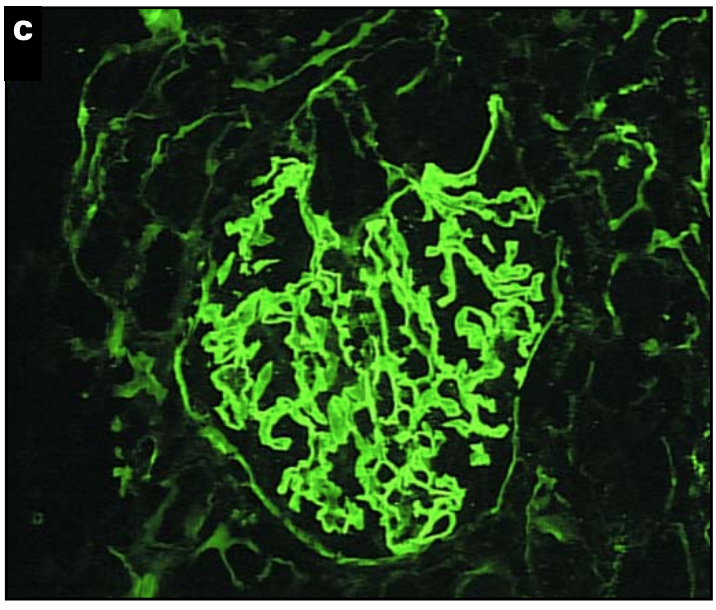
Goodpasture syndrome
Children who fail to respond to prednisone therapy within 8 week
Steroid resistant
Cloudy urine
can be normal; due to crystal formation at room temp.
In APSGN, what major noxious products of complement activation are produced after C3 activation?
anaphylatoxin (increases vascular permeability) & C5a (release substances that damage cells & basement membranes)
The most common cause of gross hematuria in pediatric population is?
Urinary Tract Infection
Relapse within 28 days of stopping prednisone therapy
Steroid dependent
Nephrotic Syndrome most responsive to steroids
Minimal Change DIsease
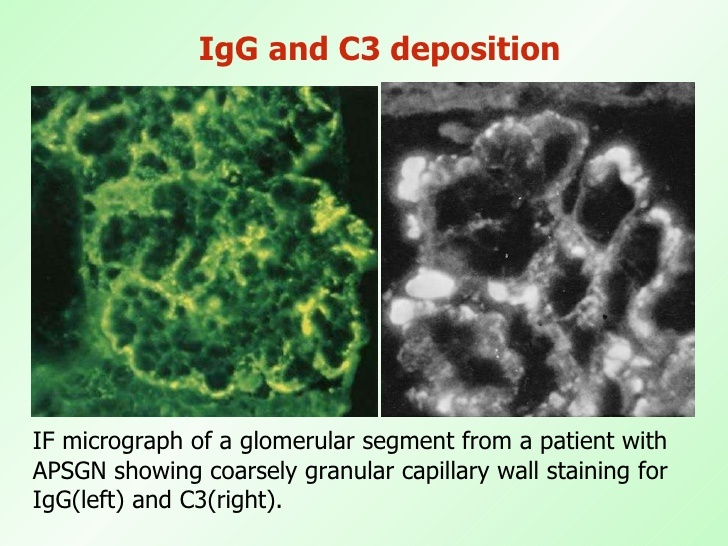
GRANULAR IgG, C3 on Immunofluorescence is a characteristic of
APSGN
Triad of Hemolytic Uremic Syndrome
- Microangiopathic Hemolytic Anemia (mechanical damage to RBCs as they pass through damaged endothelium)
- Thrombocytopenia (d/t intrarenal platelet adhesion or damage)
- Uremia
- Onset is preceded by gastroenteritis (fever, vomiting, abdominal pain, bloody diarrhea)
- Sudden onset of pallor, irritability, weakness, lethargy & oliguria usually occurs 5-10 days after the initial gastroenteritis or respiratory illness
- PE: dehydration, petechiae, hepatosplenomegaly, marked irritability
- Peripheral smear: helmet cells, burr cells, fragmented RBCs
- Increased reticulocyte count, negative Coombs test, leukocytosis, thrombocytopenia, anemia, hematuria & proteinuria, normal PT & PTT, stool culture is often negative
- Supportive care: fluids & electrolytes, early institution of peritoneal dialysis, BP control, red cell transfusion
- Platelets NOT generally administered regardless of platelet count (almost immediately consumed by active coagulation and can worsen the clinical course)
- NO antibiotic therapy (can lead to increased toxin release)
Laboratory criteria for diagnosis of TTP
The following are both present at some time during the illness:
- Anemia (acute onset) with microangiopathic changes (schistocytes, burr cells, helmet cells) on peripheral blood smear
- Renal injury (acute onset) evidenced by hematuria, proteinuria, or elevated creatinine level: equal or > 1 mg/dL in < 13 years old or >1.5 mg/dL in > 13 years old or equal or >50% increase over baseline
- The urinalysis reveals 3+ or 4+ proteinuria
- Spot urine protein/creatinine ratio exceeds 2.0 and urinary protein excretion exceeds 3.5 g/24 hr in adults and 40 mg/m 2 /hr in children.
- The serum albumin level is generally <2.5 g/dL, and the serum cholesterol and triglyceride levels are elevated.
- C3 and C4 levels are normal.
- Renal biopsy is not required for diagnosis in most children.
• >95% respond to corticosteroid therapy
NEPHROTIC SYNDROME (MINIMAL CHANGE DISEASE)
In APSGN, When wil microscopic hematuria resolve and normalize?
1-2 years
Best single Ab titer to document skin infection s DNAse B antigen
DNAse B antigen
Nephrotic Range 24 hr urine protein
Nephrotic range > 40mg/m2 /hr
o Normal is = 4mg/m2/hr
o Abnormal 4-40mg/m2/hr
NEPHRITIC SYNDROMES
- PSGN
- RPGN
- IgA Nephropathy (berger disease)
- Alport Syndrome
- GoodpastureSyndrome
- MPGN - Nephrotic/Nephritic
- SLE - Nephrotic/Nephritic
In PSGN, C3 sould normalize within ___
8 weeks
Children who continue to have proteinuria (+2 or greater) after 8 week of steroid therapy
Steroid resistant
BOTTOM-UP approach - identify upper and lower tract abnormalities
UTZ then VCUG then DMSA
In APSGN, patient develops nephritic syndrome how many weeks after skin infection?
3 - 6 weeks
Subepithelial humps are seen in
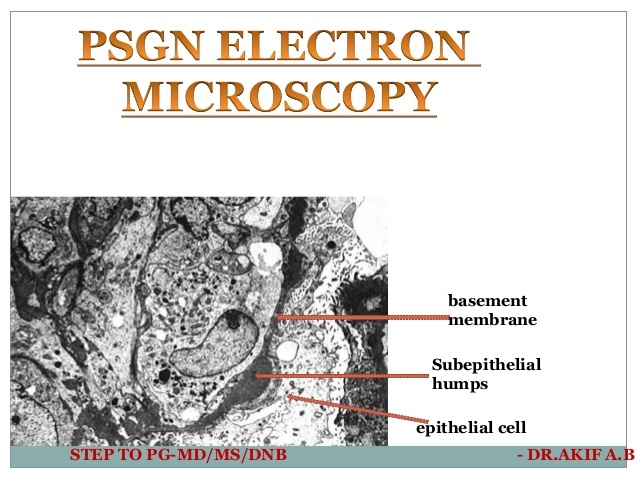
PSGN
Diffuse mesangial deposits are seen in
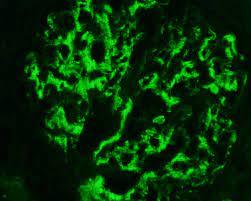
IgA nephropathy
Detect posterior urethral valves
VCUG


-
NEONATOLOGY116
-
NUTRITION53
-
PREVENTIVE PEDIATRICS45
-
INTEGRATED MANAGEMENT OF CHILDHOOD ILLNESSES10
-
GROWTH AND DEVELOPMENT63
-
GASTROENTEROLOGY48
-
NEPHROLOGY76
-
HEMATOLOGY/ONCOLOGY58
-
NEUROLOGY73
-
PULMONOLOGY70
-
RHEUMATOLOGY29
-
CARDIOLOGY71
-
INFECTIOUS DISEASES75
-
ENDOCRINOLOGY27
-
IMMUNOLOGY/ALLERGOLOGY35



